How to Choose Modern Lights for Your Home
Choosing Modern Lights is less about chasing a trend and more about shaping how each room feels and works. A sculptural pendant may look striking above a dining table, yet cast harsh shadows on dinner plates. A slim wall light can soften a hallway, while a focused desk lamp helps keep paperwork visible. Small details matter. So does the way a room is used at different times of day.
Architect Le Corbusier wrote, “Architecture is the masterly, correct and magnificent play of masses brought together in light.” His words offer a useful lens for selecting fixtures: consider how light reveals surfaces, furniture, and the room’s proportions. For practical guidance, compare the fixture’s brightness, color temperature, beam direction, and dimming options. Check whether the light reaches the countertop, reading chair, or artwork—not just the center of the ceiling. If possible, test a bulb in the room before choosing several. Paint colors can shift under different light, and product photos rarely show that clearly.
A beautiful fixture is not automatically a comfortable one. Glare from a bare bulb can make a carefully decorated room tiring, especially after sunset. Layered lighting often works better: combine general illumination with task and accent lights. There is no perfect formula. I still find it easy to favor a dramatic shape before considering where its shadows will fall. A little restraint—and a real-world test—can make Modern Lights feel considered, useful, and personal.
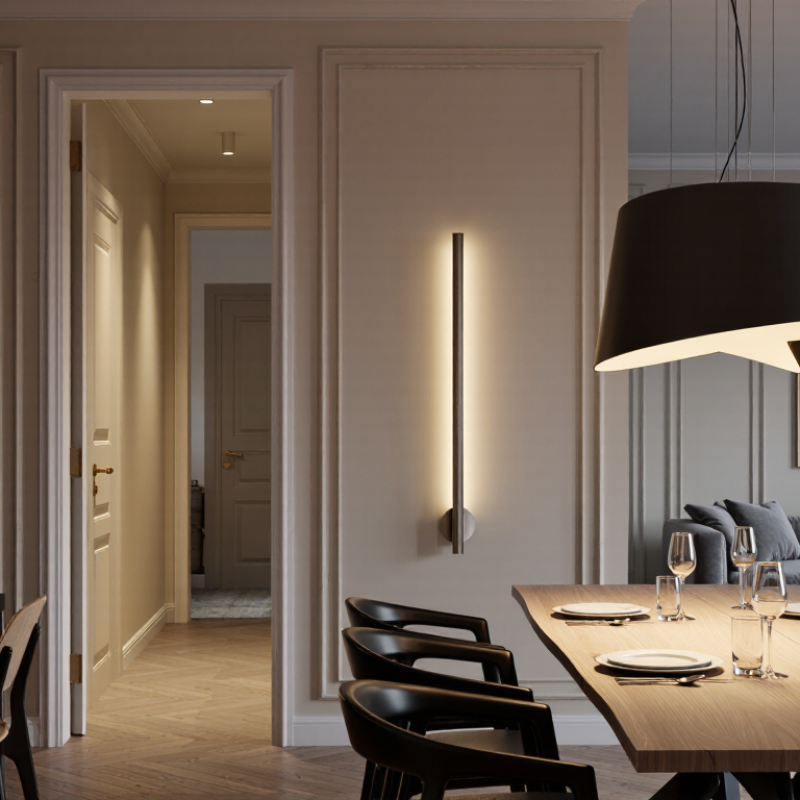
Understanding Modern Lighting Types and Their Functions
Ambient lighting provides general visibility through recessed fixtures, ceiling pendants, or diffused flush mounts. Choose enough light for safe movement without washing out wall color. A soft, warm-white source often feels comfortable in living rooms, while kitchens may benefit from a more neutral tone. The exact preference varies. Test samples at night.
Task lighting directs light onto a specific activity. A desk lamp should illuminate papers without reflecting sharply off a screen; under-cabinet strips can brighten counters and reduce shadows from overhead lights. In bathrooms, vertical fixtures near a mirror usually show facial details more evenly than one ceiling light.
Accent lighting draws attention to art, textured walls, or shelves. A narrow beam can create drama, but it may also exaggerate surface flaws. Details matter.
Check whether a fixture is dimmable, and confirm that its bulb and control are compatible. Measure before choosing a pendant; a low-hanging shade can obstruct sightlines over an island.
Light placement is easy to misjudge on a floor plan. Mark possible positions with tape, then observe them from seated and standing height. That small test can reveal awkward glare before installation.
Assessing Each Room’s Lighting Needs
Assessing each room’s lighting needs starts with its actual tasks, not its square footage. In a kitchen, check whether your hands cast shadows across the cutting board. Add focused light over counters, while keeping softer ambient light for meals. In a living room, combine reading light beside a chair with gentle background illumination. A single bright ceiling fixture often feels harsh.
Bedrooms need enough light to dress safely, but bedside lamps should not glare into tired eyes. In bathrooms, place even light near the mirror to reduce facial shadows. Hallways need clear, consistent illumination, especially around steps. Test the room at night. Daylight can hide weak spots.
Energy efficiency matters, but it should not dictate every fixture choice. The U.S. Department of Energy reports that LED bulbs use at least 75% less energy and last up to 25 times longer than incandescent bulbs. Use that comparison when estimating running costs, then check brightness, color appearance, and dimming compatibility. I still find it easy to over-light a room when shopping by bulb brightness alone. Measure how the light lands on the surface you use, and adjust after living with it for a few evenings.
Comparing Brightness, Color Temperature, and Efficiency
When choosing modern lights, compare brightness by lumens, not watts. Watts describe energy use; lumens indicate visible light. A desk lamp may need a focused, brighter beam, while a living room often feels better with several softer sources. Try reading in the space before deciding. Shadows matter.
Color temperature, measured in kelvins, changes how a room feels. Warm light around 2700K can make wood and fabric look cozy. Cooler light near 4000K often helps kitchens or work areas feel crisp. These are useful starting points, not strict rules. Wall paint can shift the effect, and I have found that a bulb that looked pleasant in a shop felt stark at home. Check samples after dark.
Efficiency is often listed as lumens per watt: more light for less energy generally means better performance. Yet the most efficient bulb is not automatically the best fit. Confirm that it works with your dimmer, and check whether its brightness suits the fixture. A shaded pendant may soften output more than expected. Keep the packaging details until you have tested it for a few evenings. Small differences show up.
Matching Fixtures to Your Home’s Style and Layout
Modern lights should feel connected to the room, not simply fashionable. Start with the home’s lines and finishes: a slim metal pendant suits a clean, contemporary kitchen, while a fabric-shaded fixture can soften a room with warm wood and layered textiles. Repeat one finish in small doses, such as a brass sconce beside a matching cabinet pull. Too many matching pieces can make a space feel staged.
Let the layout guide the fixture. Hang a pendant where it lights the dining table without blocking sightlines, and use adjustable task lights near counters or reading chairs. In a narrow hallway, compact flush mounts preserve headroom; in a tall entry, a larger fixture can help fill the vertical space. Measure before buying. Scale matters. I still find it easy to choose a beautiful fixture that casts light in the wrong place.
Think in layers: ambient light for general visibility, task light for detailed work, and accent light for art or architectural features. The International Energy Agency has estimated that lighting accounts for about 15% of global electricity use, making efficiency part of a practical design choice. The U.S. Department of Energy says LEDs use at least 75% less energy than incandescent bulbs. Check bulb compatibility and dimmer support before installation; otherwise, a carefully planned room may still feel harsh at night.
Planning Placement, Controls, and Installation
Planning light starts with observing how each room is used. Mark the spots where you read, cook, work, or get dressed. A ceiling fixture may brighten a room, but it can leave a shadow across a chopping board or desk. Add focused task lighting where hands and eyes need it, then use softer lamps for evening comfort. Measure the space and note nearby outlets before choosing fixture sizes. Small test first.
Controls shape how a room feels throughout the day. Put switches near the room’s entry, and consider a separate control for each lighting layer. Dimmers can help shift a dining area from bright cleanup light to a calmer setting. Check that bulbs and dimmers are compatible; not every combination dims smoothly. Smart controls can be useful, but a simple wall switch should still be easy to find and use.
Installation deserves careful planning. Confirm ceiling height, fixture weight, and wiring conditions before ordering. For hardwired work, ask a qualified electrician to assess the existing wiring and make the connection. Follow the fixture instructions, and do not guess when a junction box or support looks unsuitable. One small regret is common: people plan the fixture but forget where its shadow will fall. Mocking up the position with tape, or testing a portable lamp first, can reveal awkward glare before installation.
How to Choose Modern Lights for Your Home
Plan lighting by the activity in each area. These typical illuminance ranges, measured in lux at the task surface, can help guide fixture placement; use layered lighting and dimmers to adjust for comfort, and check applicable local requirements.





