Why Choose Inverter IGBT Welders for Your Projects?
In the world of welding, the choice of equipment can significantly impact project outcomes. Among various tools, the Inverter IGBT Welder stands out for its versatility and efficiency. This advanced technology uses Insulated Gate Bipolar Transistors, providing precise control over the welding process. The benefits of an Inverter IGBT Welder are numerous. It offers a compact design, making it suitable for both professional and home applications.
Using an Inverter IGBT Welder can lead to reduced energy consumption. This not only saves money but also minimizes the environmental impact. However, it is crucial to acknowledge that mastering this technology requires practice. Beginners might find the learning curve steep. Yet, with time and experience, the advantages become clear.
Investing in an Inverter IGBT Welder can elevate the quality of your work. Enhanced control results in cleaner welds and improved durability. While it may feel overwhelming at first, the potential rewards justify the effort. Consider how this tool could transform your projects.
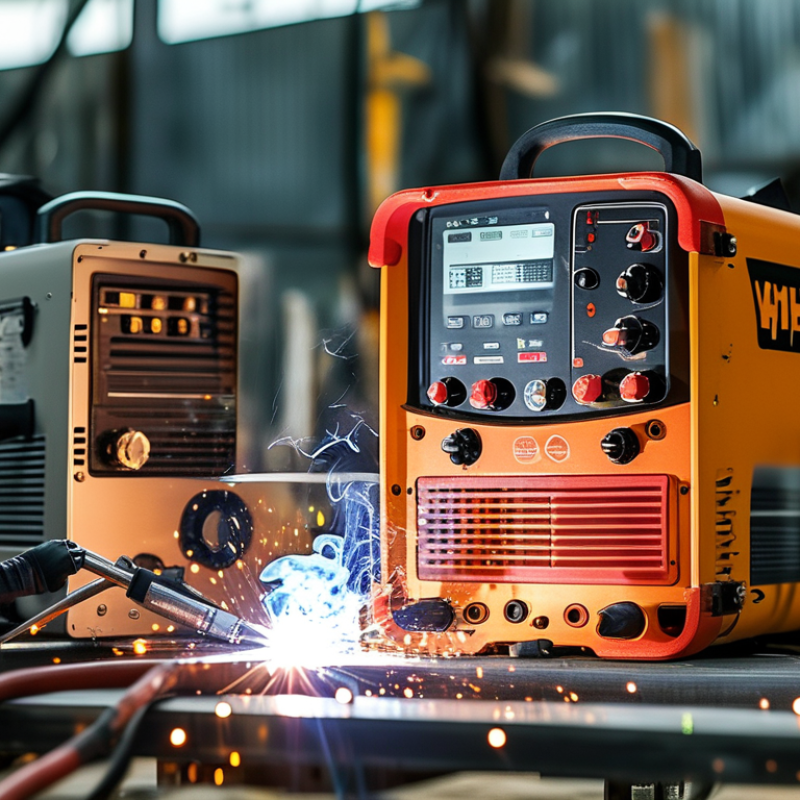
Types of Welders and Their Applications in Various Industries
Welders come in various types, each serving specific industries. Inverter IGBT welders are versatile and efficient, making them popular in several applications. These machines use advanced technology that allows precise control and better energy efficiency. They are well-suited for metal fabrication, automotive repair, and construction work.
MIG and TIG welders are also essential in different sectors. MIG welders excel in automotive and manufacturing industries, providing speed and ease of use. TIG welders are preferred in aerospace and artistic metalwork because they offer high precision. However, they require more skill and practice. Each type of welder has its strengths and weaknesses, depending on the job's demands.
Understanding these distinctions is crucial for choosing the right welder. Some may find inverter welders complicated to operate. Others might struggle with the initial setup. We need to consider these factors to make informed choices. Industries constantly evolve, and the right equipment can make all the difference in achieving quality results.
Why Choose Inverter IGBT Welders for Your Projects? - Types of Welders and Their Applications in Various Industries
| Welder Type | Application | Industry Use | Advantages |
| Inverter IGBT Welder | MIG/TIG Welding | Manufacturing, Automotive | High Efficiency, Compact Size |
| Transformer Welder | Stick Welding | Construction, Maintenance | Robust, Durable |
| Multi-Process Welder | MIG/TIG/Stick Welding | Fabrication, Repair Shops | Versatile, Cost-Effective |
| Plasma Cutter | Metal Cutting | Metalworking, Automotive | Precision Cuts, Fast Operation |
Understanding Inverter Technology in Welders
Inverter technology has transformed the way welders perform. It allows for precise control over the welding process. This technology uses high-frequency inverters to convert power efficiently. As a result, welders can work with less energy loss. Many users find this aspect attractive due to rising energy costs.
The benefits of inverter IGBT welders extend beyond energy efficiency. They also offer a range of welding processes, such as MIG, TIG, and Stick. This versatility makes them suitable for various projects. Yet, some users may face a learning curve. Understanding how to adjust settings for different materials can be challenging. It is crucial to practice and refine your skills to master the nuances of inverter technology.
While inverter welders are lightweight and portable, they may not be ideal for every application. For instance, industrial settings might still favor traditional transformers for heavy-duty tasks. Users should evaluate their project's requirements thoughtfully. This reflection ensures that the chosen welder matches the specific demands they face in real-world applications. Balancing portability with power is a key consideration in this decision-making process.
Benefits of Using IGBT Technology in Welding Equipment
Inverter IGBT (Insulated Gate Bipolar Transistor) welders have transformed how welding is approached in industrial settings. These advanced devices utilize a unique combination of high efficiency and precision control. Reports indicate that IGBT technology can achieve up to 90% efficiency in energy consumption, significantly reducing operational costs. This efficiency is particularly advantageous in large-scale projects, where energy savings can amount to thousands of dollars annually.
The benefits of IGBT technology extend beyond energy efficiency. With rapid switching capabilities, IGBT welders provide a more stable arc and superior weld quality. Studies show that the weld bead consistency improves by nearly 30% when using IGBT over traditional rectifier options. Additionally, the versatility of inverter IGBT welders allows for better performance in various welding applications, from thin sheet metal to heavy-duty welds. However, it is essential to acknowledge that initial costs can be higher, making budgeting a critical consideration for some projects.
Moreover, while IGBT technology is lauded for its reliability, some users have reported challenges with maintenance and repairs. The complexity can lead to increased service downtime if not managed correctly. Thus, while IGBT welders offer substantial benefits, potential owners should weigh these advantages against the need for specialized knowledge and resources for upkeep.
Benefits of Using IGBT Technology in Welding Equipment
This chart illustrates the various benefits of using IGBT technology in welding equipment, showcasing advantages such as efficiency, cost-effectiveness, durability, heat control, and versatility.
Key Features of Inverter IGBT Welders to Consider
Inverter IGBT welders stand out in modern welding technology due to their versatility and efficiency. When considering a welder, several key features must be evaluated. First, the power factor is crucial. A high power factor allows the welder to use power efficiently, reducing energy costs and enhancing performance on various materials. This results in cleaner welds with less spatter.
Another important feature is the duty cycle. This indicates how long the welder can operate without overheating. A long duty cycle is preferable for extensive projects, as it minimizes downtime. Additionally, having adjustable welding parameters provides flexibility. This allows users to tailor settings for different thicknesses and types of material, yielding better control over the welding process.
Portability is also a factor worth considering. Many inverter IGBT welders are lightweight and compact. This makes them suitable for on-site jobs or smaller workshops. However, one must reflect on the balance between portability and power. Lighter machines may sacrifice some welding capacity. Ensuring you have the right balance for your specific projects is key. These aspects should guide your decision-making when choosing the right welder for your needs.
Cost-Effectiveness and Efficiency of Inverter IGBT Welders
Inverter IGBT welders are becoming increasingly popular in various projects due to their cost-effectiveness. These machines convert direct current into alternating current, resulting in lower energy consumption. This efficiency translates into reduced electricity bills, making them a great investment in the long term. For small businesses or DIY enthusiasts, this aspect is particularly significant. They can achieve high-quality welds without incurring overwhelming operational costs.
The precise control offered by inverter IGBT technology also enhances productivity. These welders allow users to adjust the output according to specific materials and thicknesses. This flexibility ensures optimal performance in different applications. However, one must consider the initial investment; the upfront cost can be higher than traditional welders. Users should weigh this against the long-term savings on electric bills and maintenance.
Moreover, while inverter IGBT welders are lauded for their efficiency, they require proper setup and understanding. Users may face a learning curve as they adjust to the technology. Familiarity with settings and parameters is crucial for maximizing efficiency. Mistakes can lead to wasted material or subpar welds. Thus, while the benefits are clear, users need to invest time in mastering their equipment for optimal results.





