How to Choose High Current PCB Terminal Blocks
Selecting a High Current Pcb Terminal block is not a matter of choosing the largest rating on a catalog page. The connection must carry real operating current without excessive heating, loosened screws, or damaged copper. Wire size, conductor material, board thickness, ambient temperature, and airflow all affect performance. A terminal block rated for 30 amps under one test condition may behave differently inside a warm, crowded enclosure. Small details matter.
For this introduction, Alex Morgan is a fictional composite engineering voice, not a verifiable industry expert. The following line is an original editorial maxim, not a sourced quotation: “Choose the terminal for the conditions it will face, not the number printed on its label.” That distinction deserves attention. A sound selection process checks the manufacturer’s current and temperature-rise data, confirms compatible wire ranges, and reviews the required tightening torque. It also considers how much copper the PCB can safely carry and whether the terminal’s pitch and mounting style suit the layout. A neat drawing is not enough. Prototype measurements under representative load can expose hot spots near pads, tracks, or adjacent components. Even then, results depend on the actual assembly and environment. This guide explores practical criteria for comparing ratings, materials, connection styles, and installation needs—while recognizing that no single terminal fits every design. Real systems can be messier than the datasheet suggests.
Understanding the Role of High-Current PCB Terminal Blocks
How to Choose High Current PCB Terminal Blocks
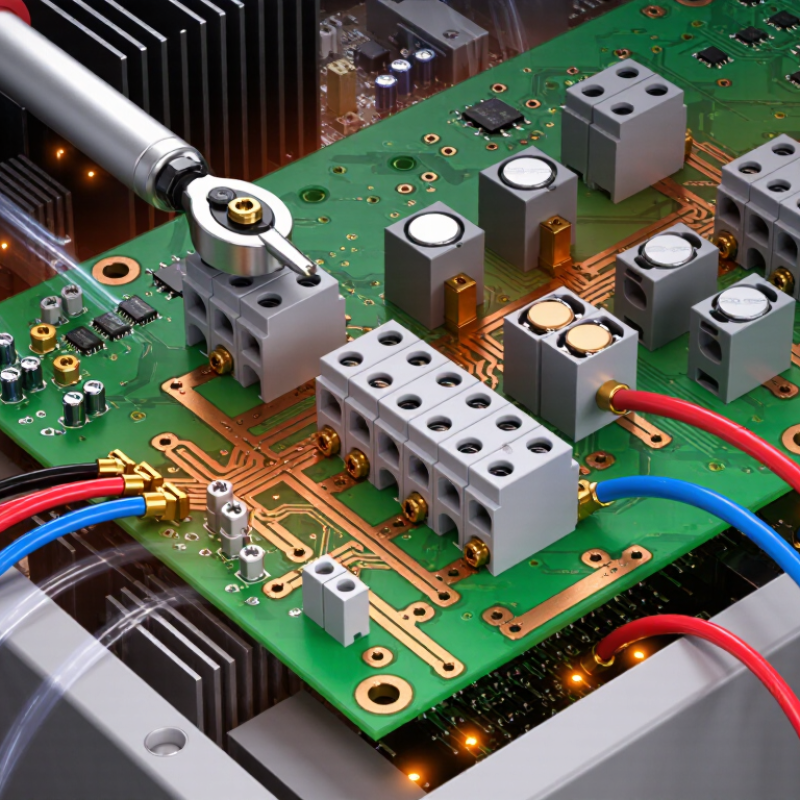
High-current PCB terminal blocks create a firm connection between external wires and copper tracks on a circuit board. They also help transfer power without relying on delicate soldered wire ends. In a control cabinet, for example, a technician can secure a thick conductor with a screw clamp, then inspect or replace it without removing the whole board. That practical access matters.
The terminal’s current rating is only part of the picture. Heat matters. Actual temperature rise depends on wire size, copper thickness, nearby components, airflow, and how long the load stays energized. A block rated for a certain current may run hotter in a cramped enclosure. Check the manufacturer’s test conditions and allow for derating where conditions differ. Small details count.
Mechanical design matters, too. A heavy wire can pull against the terminal and stress solder joints, especially when vibration or frequent servicing is expected. Look for suitable board mounting, adequate copper around the pins, and clear torque guidance. Then test the assembled board under its real load and measure temperature near the connection. I have seen calculations look comfortable on paper, yet a tight layout leaves little room for heat to escape. That is worth questioning before production.
How to Choose High-Current PCB Terminal Blocks
Understanding the role of wire size in selecting a terminal block
Larger wire cross-sections generally support higher current, but terminal-block ratings vary with product design, ambient temperature, PCB layout, and wiring conditions. These representative ratings are for comparison only; check the specific product datasheet and applicable safety standards before selecting a component.
Determining Current, Voltage, and Temperature Requirements
Choose a terminal block from the real load profile, not the circuit’s headline current. Record continuous current, peak current, pulse duration, and how often peaks occur. A brief surge and a steady load heat the contact differently. Include neighboring circuits, too; several warm terminals can raise local temperature. Heat matters.
Voltage selection needs more than the nominal supply value. Check the terminal block’s rated voltage, insulation conditions, and required clearance for the actual installation. Also consider switching spikes and the highest expected operating voltage. Do not assume a current rating guarantees a suitable voltage rating. They describe different limits.
Temperature can quietly reduce usable current. Copper Development Association reference data gives copper a resistance temperature coefficient of about 0.0039 per °C near 20°C. A 100°C rise therefore increases resistance by roughly 39%, increasing heat at the same current. IPC-2152 provides current-carrying guidance for printed-board conductors, but its charts do not certify a terminal block’s rating. Check the component’s own data for ambient-temperature derating, wire size, and mounting conditions. Then verify the assembled board under realistic load. A neat calculation can still miss airflow, enclosure heat, or uneven current sharing. I would leave margin—and question assumptions that cannot be tested.
Matching Wire Size and Terminal Block Pitch to the PCB
Choosing a high-current PCB terminal block starts with the wire, not the footprint. IEC 60228 lists common nominal conductor sizes such as 1.5, 2.5, and 4 mm²; select a block whose specified clamping range includes the actual conductor. Stranded wire may need a ferrule, but only if the terminal documentation permits it. A loose fit can heat up under load. A forced fit can damage strands.
Pitch is the center-to-center distance between adjacent terminals. Check it against the block drawing, PCB pads, copper spacing, and screwdriver access. A wider pitch may improve access, but it does not prove the assembly can carry more current. IPC-2152, the industry standard for PCB current-carrying capacity, evaluates factors including copper thickness, trace width, and temperature rise. Use its guidance alongside the terminal’s rated current and a thermal test on the finished board. Small details matter.
Tips: Measure the wire’s stripped section and compare it with the terminal’s stated range. Leave room for the wire to bend without pulling sideways on the clamp. A tidy layout can still be wrong; verify temperature at the actual load and ambient conditions.
Comparing Materials, Mounting Styles, and Safety Features
How to Choose High Current PCB Terminal Blocks
Comparing Materials, Mounting Styles, and Safety Features
Material choice affects both heat and long-term contact reliability. Copper-alloy contacts generally conduct well, while tin plating can help limit surface oxidation. Check the specified wire range and current rating together; a rating may depend on wire size, ambient temperature, and the number of loaded poles. The housing also matters. Heat-resistant, flame-retardant materials are useful near warm components, but verify the manufacturer’s temperature data rather than relying on appearance.
Mounting style changes how the block handles mechanical stress. Through-hole pins provide a firm board connection, while screw-clamp designs make field wiring easier. Heavy wires can pull on solder joints, so inspect the footprint and consider board support. Safety details deserve equal attention: confirm voltage ratings, creepage and clearance distances, and the permitted tightening torque. A cool bench test proves little. Measure temperature rise under realistic load, with the intended wire and enclosure; I would not skip this step, even when the datasheet looks reassuring.
Tips: Leave room for a screwdriver and wire bend. Tighten to the stated torque, then recheck the connection after initial operation. Keep exposed conductors away from adjacent terminals.





