How to Choose the Best Twin Shaft Mixers for Your Needs?
Choosing the best Twin Shaft Mixers can be challenging. The right mixer can enhance production efficiency and product quality. Tom Brown, a mixing technology expert, emphasizes, “Selecting the correct mixer is crucial for optimal performance.”
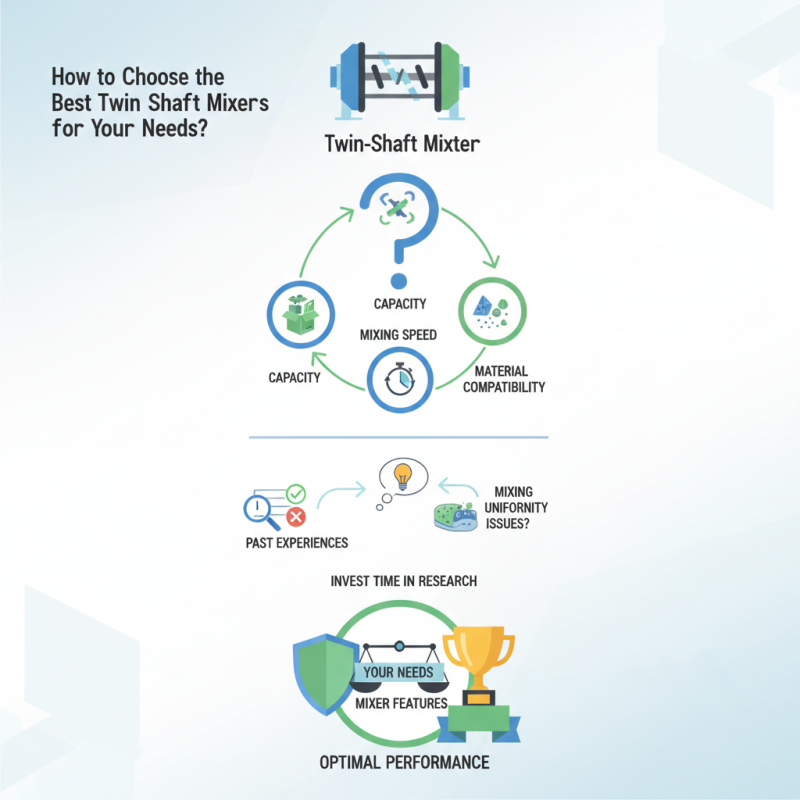
When considering Twin Shaft Mixers, focus on your specific needs. Each type offers distinct features that can impact your operations. Evaluate aspects such as capacity, mixing speed, and material compatibility. Understanding these factors aids in making an informed choice.
It's also important to reflect on past experiences with mixers. Did they meet your expectations? Were there issues with mixing uniformity? Learning from previous challenges can guide future decisions. Investing time in research is vital. Achieving the best results requires more than just picking a well-known brand. Your unique requirements should drive the selection process.
Understanding Twin Shaft Mixers and Their Applications
Twin shaft mixers are integral in various industries for their efficiency and versatility. These mixers use two parallel shafts to create uniform mixing, making them ideal for high-viscosity materials. They are popular in construction, food processing, and chemical manufacturing. Each application requires specific features, influencing the choice of mixer.
When selecting a twin shaft mixer, consider material properties and required consistency. Different materials behave uniquely under mixing. For instance, cement and aggregates require robust mixing to achieve desired strength. Additionally, factors like batch size, mixing speed, and maintenance requirements should be evaluated. Understanding these parameters helps in selecting the right equipment for your specific needs.
Not all twin shaft mixers perform equally well. Sometimes, the initial mix may appear consistent, but over time, issues can arise. Some mixers might struggle with heavier materials, leading to uneven results. This variability can impact production quality. Reflecting on these aspects can help users make informed decisions, ensuring the mixer meets their long-term operational goals. Enhanced understanding of mixer dynamics ultimately leads to better outcomes.
How to Choose the Best Twin Shaft Mixers for Your Needs?
| Feature | Description | Application | Capacity (m³) |
| Mixing Efficiency | High shear mixing for homogeneous blends | Concrete, asphalt, and more | 1.0 - 4.0 |
| Power Consumption | Energy-efficient motors available | Heavy duty industrial applications | 1.5 - 6.0 |
| Material Construction | Steel or stainless steel options | Food processing, pharmaceuticals | 2.0 - 5.0 |
| Maintenance | Easy access and low maintenance | Construction materials and mixing | 2.5 - 7.0 |
| Versatility | Suitable for various materials | Polymer, glass, ceramics | 1.5 - 3.0 |
Key Features to Consider When Selecting a Twin Shaft Mixer
When selecting a twin shaft mixer, it’s essential to focus on several key features. The mixing capacity is crucial. You need a model that matches your production volume. A mixer with insufficient capacity can lead to inefficiencies. Consider the size and power of the motors as well. These elements directly impact the mixer’s performance and energy consumption.
The mixing action is another important factor. Look for mixers with adjustable shaft speeds. This allows for versatile mixing processes. Ensure that the design facilitates easy cleaning and maintenance. A mixer that is hard to clean can become a breeding ground for contaminants.
Material longevity is also critical. Opt for mixers made from durable materials to withstand the wear and tear of daily use. The mixing blade design can influence the quality of the end product. Experimenting with different blade shapes can provide insights into what works best for your needs. Don't forget about safety features too. A reliable mixer should have emergency shutdown mechanisms.
Evaluating Capacity and Performance Needs for Your Application
When evaluating twin shaft mixers, capacity and performance are crucial. Consider the volume you need to mix. Assess the material types and their specific requirements. Some materials may require a higher power input for effective mixing. Understanding the density and viscosity of your materials can help you make a better decision.
Mixing efficiency is another factor that demands attention. The design of the mixer affects how well materials intermix. Some mixers may not achieve uniform consistency, leading to subpar results. Performance also relates to the speed of mixing. A slower mixer may be inadequate for high-demand applications. Testing different models in your operational environment can provide insight into their effectiveness.
Look at the mixer’s maintenance needs as well. Some models may demand frequent repairs, which can affect your production schedule. Investing in a mixer that has a reputation for reliability is wise. However, even the best mixers can face unexpected issues. Regular checks and a good maintenance schedule can mitigate this.
Material and Build Quality: What to Look For in Mixers
When choosing a twin shaft mixer, material and build quality are crucial. Look for robust materials that can withstand heavy-duty operations. Stainless steel and high-grade alloys often provide excellent durability. These materials resist corrosion and enhance the longevity of the mixer. If the construction is subpar, it may lead to costly repairs over time.
Pay close attention to the design features. A well-designed mixer ensures effective blending. Components like shafts, paddles, and seals should be built to last. Standard plastic parts may wear down quickly. Contemplate how often the mixer will be used and adapt your choice accordingly. Heavy usage demands rigorous build quality.
Consider the maintenance aspect as well. Some mixers are easier to clean than others. Built-in access panels can simplify this process. If maintenance isn’t easy, the mixer may become neglected. When buying, scrutinize the build quality carefully. An informed choice will save you time and headaches later. Always be ready to question if the mixer meets all your specific needs.
Budget Considerations and Long-Term Maintenance for Mixing Equipment
When investing in twin shaft mixers, budget considerations play a crucial role. A lower initial cost can be tempting, but it's essential to analyze the long-term expenses. Cheaper mixers may require more frequent repairs and replacements, leading to higher overall spending. Think about the cost of parts and labor over time. This will impact your total investment significantly.
Moreover, maintenance is often overlooked in the purchasing decision. Regular maintenance extends the life of your mixer. Skipping routine checks can result in more significant issues later. Ensure you have a plan for ongoing upkeep. Consider training your staff on proper use and care. Over time, this will pay off by reducing downtime and costly repairs.
Choosing the right equipment means assessing both immediate and future expenses. Look for mixers that offer durability and reliable performance. Also, reflect on your operation's specific needs, even if they change over time. Prioritize what adds value, and don't just settle for the lowest price. Always keep in mind that the best choice balances cost and quality.