How to Choose the Best Honeycomb Ceramic Plate for Your Needs?
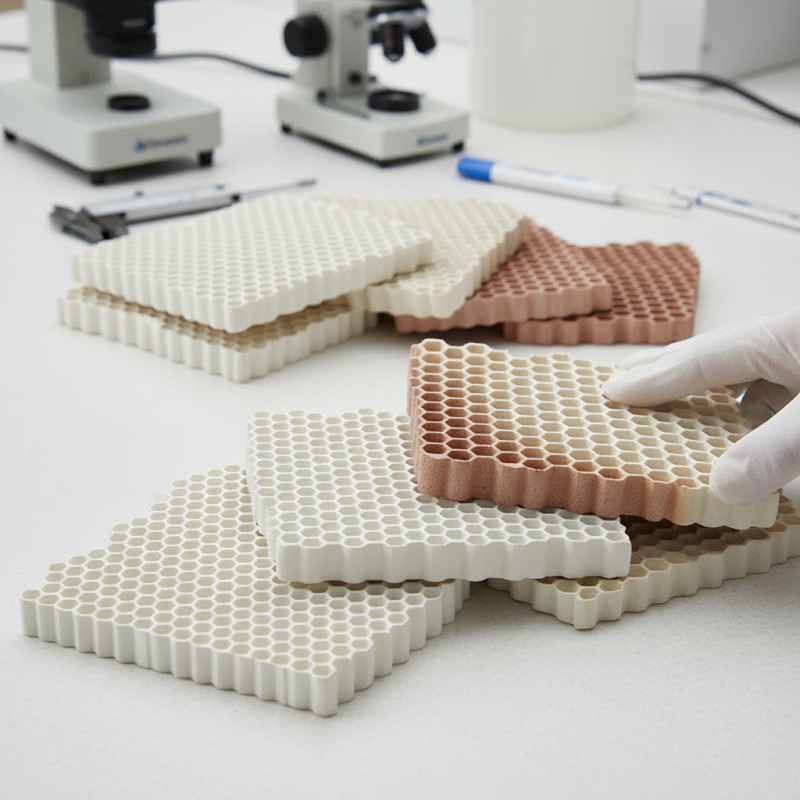
Choosing the ideal Honeycomb Ceramic Plate can significantly impact your project or application. With the market growing at a staggering rate of 8.1% annually, understanding the nuances of these materials is crucial. The honeycomb structure provides excellent thermal insulation and strength, making it popular in various industries, including aerospace and automotive.
Recent studies show that Honeycomb Ceramic Plates are effective in reducing weight while maintaining structural integrity. This makes them a preferred choice for modern engineering solutions. However, not all honeycomb ceramics are created equal. Specific designs and compositions cater to unique requirements, impacting performance.
Manufacturers often provide data on thermal conductivity, mechanical strength, and durability. However, it can be challenging to navigate these specifications without a clear understanding of your needs. It's essential to evaluate several factors, such as application, environment, and long-term performance, before making a decision. Remember, selecting the wrong type could lead to inefficiencies or failures in your project.
Factors to Consider When Choosing Honeycomb Ceramic Plates
When selecting a honeycomb ceramic plate, consider the material properties. Honeycomb ceramics provide excellent thermal stability. They are lightweight yet strong. Check the thickness and density, as these characteristics affect performance.
Look at the application of the plate. Some may need high thermal conductivity. Others require thermal insulation. Evaluate the environment where the plate will be used. Temperature fluctuations can impact durability. Be mindful of the weight, especially if the plate needs to be moved often.
Tips: Always refer to expert reviews for specific applications. Talk to professionals in the field for recommendations. Testing a sample may help you assess its suitability before committing.
Finally, remember to assess your budget. High-quality plates may cost more but offer long-term benefits. Consider the trade-offs between price and performance carefully. Each detail matters. Making an informed choice can prevent future issues.
Understanding the Benefits of Honeycomb Structures in Ceramics
Honeycomb structures in ceramics offer unique benefits that cater to various needs. These designs enhance strength while minimizing weight. The open spaces in honeycomb plates allow for improved thermal insulation. This is particularly advantageous for applications that require heat resistance.
When selecting a honeycomb ceramic plate, consider its specific applications. Different uses may require varying levels of thermal stability or mechanical strength. Make sure to evaluate the environment in which the plate will be used. This helps in choosing the right material properties.
Tip: Always look for testing data from reputable sources. This ensures the product meets or exceeds industry standards. Also, consult experts if available. Their insights can guide you to make an informed decision. Remember, the wrong choice could lead to significant issues later on, such as structural failures or inefficiencies.
Benefits of Honeycomb Ceramic Structures
Comparative Analysis of Material Types for Honeycomb Ceramic Plates
When evaluating honeycomb ceramic plates, material type plays a crucial role. The two main options are alumina and silicon carbide. Alumina offers excellent mechanical strength and thermal stability. Reports indicate that alumina is used in 70% of high-performance applications, making it a popular choice. However, it can be brittle. Many users report chips and cracks under stress.
Silicon carbide, on the other hand, boasts superior wear resistance. A study from a leading materials institute suggests that silicon carbide has a hardness rating three times higher than alumina. This durability comes at a cost, often leading to higher prices. Potential buyers should weigh the trade-off between the initial investment and long-term benefits.
Lastly, consider the application. For aerospace components, tight tolerances are vital. Ceramic plates with the right material will enhance performance and reliability. However, many users do not do enough research on their specific needs. This can lead to misapplications, resulting in costly repairs. Understanding the material properties is essential before making a decision.
Evaluating Thermal Properties and Performance Standards
When selecting a honeycomb ceramic plate, understanding its thermal properties is crucial. Honeycomb ceramics are known for their excellent heat resistance. The ability to withstand high temperatures without warping is vital for various applications. Evaluate insulation performance too. Good insulators minimize heat loss, making the material efficient in energy transfer.
It's important to consider the plate's thermal conductivity. Lower thermal conductivity means the plate will maintain desired temperatures longer. This is especially important for processes requiring stable thermal environments. Look for plates that demonstrate consistent performance under stress. Research how they perform across different heat ranges. Users should also consider potential limitations, such as durability under extreme thermal cycling.
Testing methods vary, and findings can sometimes be inconsistent. Performance standards are not universally applied; this can lead to confusion. It’s wise to consult sources with expertise in materials science. Engaging with professionals can provide insights that simple research cannot. Quality assessments should not be based solely on specifications. Real-world testing and application experiences are equally valuable. Seek feedback from those who have used similar products extensively.
Cost vs. Performance: Making Informed Decisions in Plate Selection
When it comes to selecting the right honeycomb ceramic plate, cost and performance often clash. A low-cost plate may seem appealing, but it might not endure the demands of high-temperature applications. Choosing a cheap option could lead to unexpected failures, which may cost more in the long run.
It's important to assess your specific needs. For instance, if you require high thermal conductivity, a plate with superior performance is essential. These plates often come at a premium price, but they provide greater reliability. In contrast, hobbyists may prioritize budget, opting for plates that suffice for less demanding projects. Balancing cost and performance is key.
Pay attention to material specifications and user reviews. Not all ceramic plates offer the same durability. Some may chip or crack easily, impacting performance. Investigating the reputation of suppliers can help in making informed choices. Remember, choosing a plate is often more than just a transaction; it’s an investment in quality and performance.





