


How to Choose a Complete Motor for Your Needs?

Choosing a Complete Motor is not just a matter of matching horsepower. It means matching the motor to the load, duty cycle, supply, operating environment, and control method. A conveyor running steadily needs a different solution from a pump that starts and stops throughout the day. Get the match wrong, and you may see excess heat, wasted energy, or premature wear.

The International Energy Agency’s 2011 report, Energy-Efficiency Policy Opportunities for Electric Motor-Driven Systems, estimates that motor systems use about 45% of global electricity. Its authors, energy-efficiency specialists Paul Waide and Conrad Brunner, highlight why the whole drive system matters—not just the motor’s nameplate rating. In the report’s words, motor systems account for “around 45% of global electricity.” That figure makes selection more than a purchasing detail. It can shape long-term operating costs.

Start with the real load. Note the required speed, torque, start frequency, ambient temperature, and available voltage. Then compare efficiency ratings, enclosure protection, mounting, and drive compatibility. A motor that looks perfect on paper may still be oversized for a lightly loaded fan. Small details matter.

A useful choice balances performance, reliability, and serviceability. It also leaves room for honest uncertainty: actual energy savings depend on the application and operating hours. This guide will help you assess those trade-offs, compare specifications, and ask suppliers more precise questions before choosing a Complete Motor.
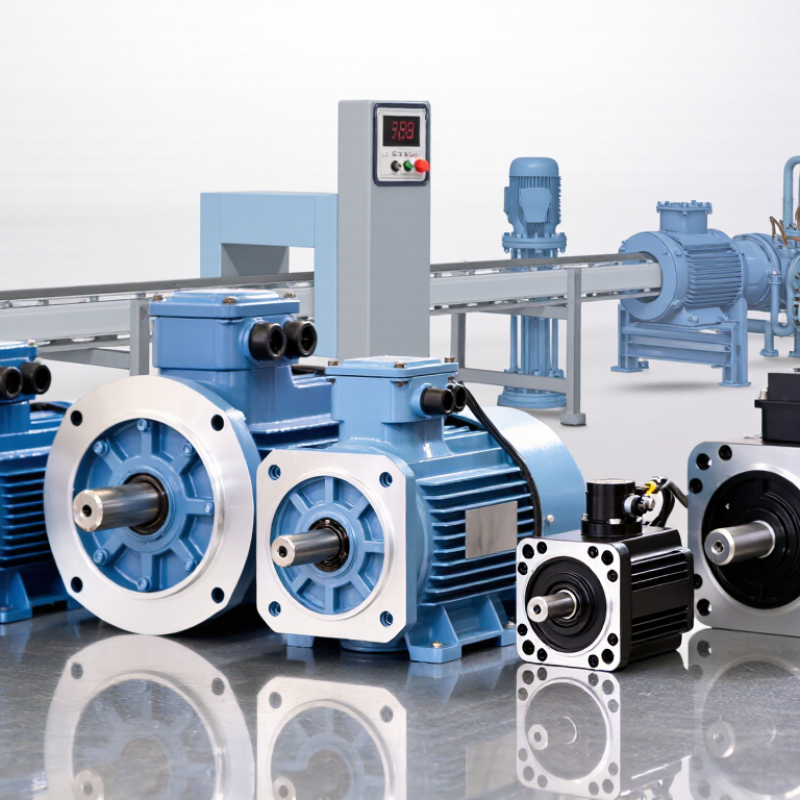
How to Choose a Complete Motor for Your Needs?

Define the Load, Duty Cycle, Starting Torque, and Required Speed

How to Choose a Complete Motor for Your Needs?

Start with the load, not the motor’s nameplate power. Record the machine’s normal and peak load, then note how often it starts and stops. A conveyor carrying steady boxes has different needs from a mixer that begins with a full, heavy drum. The International Energy Agency’s 2011 report on electric motor-driven systems estimated they used about 46% of global electricity. That scale makes correct sizing important: an oversized motor can waste energy at partial load, while an undersized one may overheat or struggle to start.

Define the duty cycle and required speed before comparing models. Continuous operation differs from short, repeated runs; IEC duty classifications can help describe the pattern. Starting torque matters when the load resists movement, especially with high inertia or friction. Check both the motor’s starting capability and the drive system’s limits. For variable-speed applications, confirm the motor can operate safely across the full speed range. The first estimate is rarely perfect; measure actual load if possible.

Tips: Measure it under load. Note start frequency, peak torque, and target speed. Keep a simple log for one shift, including pauses and heavy-load periods. Then compare those observations with the motor’s rated duty and torque data.


Size Power and RPM; IEC 60034-30-1 Covers AC Motors from 0.12 to 1,000 kW

How to Choose a Complete Motor for Your Needs?

Match the motor to the machine’s actual load, not just its nameplate. Check required output power, shaft speed, starting torque, operating hours, and available supply. A pump running steadily needs a different duty profile from a conveyor that starts and stops under load. RPM matters. At 50 Hz, a four-pole induction motor runs near 1,500 rpm synchronously, but its actual speed is lower because of slip. Variable-speed drives also affect motor selection and operating conditions.

IEC 60034-30-1 defines efficiency classes for many line-operated AC motors rated from 0.12 to 1,000 kW. It helps compare motor efficiency, but it does not decide the correct size or speed for your equipment. The International Energy Agency’s 2011 report, Energy-Efficiency Policy Opportunities for Electric Motor-Driven Systems, estimates that these systems use 43–46% of global electricity. Small efficiency differences can matter across long operating hours. Still, an oversized motor may run inefficiently under a light load.

Tips: Record the load’s normal and peak power, required RPM, and daily run time. Confirm the motor’s duty rating and supply details. Ask an engineer to review unusual starts or variable loads. A neat calculation can still miss real operating conditions.

How to Choose a Complete Motor for Your Needs? — Size, Power and RPM; IEC 60034-30-1 Covers AC Motors from 0.12 to 1,000 kW

Use this guide to shortlist a motor by required output power and speed. Match the motor to the driven load, operating conditions, supply, and applicable efficiency requirements before specifying a complete unit.

Rated Output Power Example Applications Typical Load Considerations Speed Selection Key Sizing Checks
0.12–0.37 kW Small fans, light-duty pumps, compact conveyors Check starting torque and whether the load runs continuously or intermittently. Choose pole count and supply frequency to suit the required shaft speed; a variable-frequency drive can provide adjustable speed when appropriate. Confirm available supply, mounting arrangement, enclosure protection, and starting method.
0.55–2.2 kW Workshop equipment, small compressors, process pumps Allow for load peaks and frequent starts; avoid selecting power from motor nameplate size alone. Compare the required operating speed with the motor’s rated speed and any gearbox or drive ratio. Check full-load current, duty cycle, ambient temperature, and overload requirements.
3–7.5 kW General-purpose pumps, fans, mixers, and conveyors For variable-torque loads such as many fans and pumps, assess the full operating range rather than only the maximum point. Direct-on-line speed depends mainly on frequency and pole count; actual induction-motor speed is lower than synchronous speed under load. Verify driven-equipment torque, shaft and coupling requirements, and the required starting torque.
11–30 kW Industrial pumps, larger conveyors, compressors, and machine tools Consider acceleration time, process variation, and the effect of starts on the electrical supply. Use a suitable pole count or a correctly selected variable-speed drive when the process needs a broad speed range. Check installation space, cooling, bearing loads, cable sizing, and protection coordination.
37–90 kW Plant utilities, large fans, heavy-duty conveyors, and process machinery Assess continuous duty, load inertia, starting frequency, and any torque peaks. Confirm that the motor and drive can deliver required torque across the complete speed range. Review supply capacity, starting method, thermal limits, vibration, and maintenance access.
110–315 kW Large industrial pumps, compressors, mills, and production lines Use measured or calculated load data where possible; account for service conditions and operating margin. Coordinate motor speed with the driven machine, gearbox, and any speed-control system. Check foundation, alignment, cooling arrangement, protection, and site electrical requirements.
355–1,000 kW Large process equipment and major industrial drives Engineering review is generally needed for load profile, starting, system efficiency, and reliability. Specify the operating speed and torque requirements at each relevant operating point. Confirm the complete motor-and-drive system design, installation conditions, and applicable standards.
Speed Reference for AC Motors
2 poles Synchronous speed: 3,000 rpm at 50 Hz; 3,600 rpm at 60 Hz. Actual induction-motor shaft speed is typically somewhat lower under load because of slip.
4 poles Synchronous speed: 1,500 rpm at 50 Hz; 1,800 rpm at 60 Hz. Actual induction-motor shaft speed is typically somewhat lower under load because of slip.
6 poles Synchronous speed: 1,000 rpm at 50 Hz; 1,200 rpm at 60 Hz. Actual induction-motor shaft speed is typically somewhat lower under load because of slip.
8 poles Synchronous speed: 750 rpm at 50 Hz; 900 rpm at 60 Hz. Actual induction-motor shaft speed is typically somewhat lower under load because of slip.
IEC 60034-30-1 Efficiency-Class Scope
Rated output range The standard covers specified AC motor types with rated outputs from 0.12 kW to 1,000 kW. It defines efficiency classes, including IE1, IE2, IE3, and IE4, for motors within its scope.

Selection note: Power ranges and application examples are general guidance, not a substitute for load calculations. Confirm the motor’s rated output, speed, torque, voltage, frequency, duty, mounting, enclosure, cooling, and efficiency class against the equipment and site requirements. IEC 60034-30-1 applies only to motor types within the standard’s scope; check the applicable edition and exclusions when specifying a motor.

Choose Motor Type and Starting Method for the Power Supply and Controls

How to Choose a Complete Motor for Your Needs?

Start with the power supply, not the motor catalogue. Check the available voltage, phase, frequency, and circuit capacity at the installation point. A single-phase supply may suit a small pump or workshop fan, while three-phase power commonly supports larger industrial loads. Small details matter. A mismatch can cause poor starting, overheating, or repeated trips.

Next, match the motor type and starting method to the load and controls. An induction motor is a practical choice for many steady-speed applications. Direct-on-line starting is simple, but its high inrush current may strain a limited supply. Star-delta starting can reduce that current, though it also lowers starting torque and requires compatible motor windings. A soft starter can ease acceleration. A variable-frequency drive adds speed control, but check motor insulation, cooling, and control-system compatibility.

Think about what happens during a real start. A loaded conveyor needs more starting torque than a lightly loaded fan. Ask whether the machine starts frequently, must change speed, or needs gentle acceleration. Keep it practical. Confirm overload protection, control voltage, and available enclosure space before ordering. Specifications can look right on paper, yet cable length or a stiff mechanical load may change the result; verify the actual installation conditions.

Match Mounting, IP Protection, and Insulation to the Operating Environment

Choosing a complete motor means matching its mounting, enclosure, and insulation to the place it will run. The U.S. Department of Energy’s Improving Motor and Drive System Performance sourcebook reports that motor-driven systems use about 68% of electricity in U.S. manufacturing. A suitable specification can therefore affect both reliability and energy use. Check the required mounting arrangement, such as foot-mounted or flange-mounted, against the machine’s frame and available space. A mismatch can add adapters, complicate alignment, and increase vibration. Small details matter.

Then assess moisture, dust, washdown, and ambient temperature. IEC 60034-5 defines motor enclosure protection using IP ratings: the first digit addresses solid objects, and the second addresses water. IP55 may suit dusty areas with water jets, but it does not mean a motor is waterproof. Verify the actual exposure and installation conditions. Insulation also needs attention. IEC 60034-1 thermal classes include Class F at 155°C and Class H at 180°C; these are insulation-system limits, not recommended ambient temperatures. Allow for heat from nearby equipment, frequent starts, and poor airflow. I would still check the manufacturer’s permitted temperature rise and derating data, because a rating on its own can be misleading. A little caution helps.

Compare IEC Efficiency Classes IE1–IE4 and Estimate Lifecycle Energy Costs

Choosing a complete motor starts with the actual duty: required shaft power, speed, starting load, and daily operating hours. IEC efficiency classes run from IE1 to IE4, with higher classes generally indicating lower losses under specified test conditions. Not always. A higher class may cost more, and its advantage depends on how long the motor runs and how heavily it is loaded. Check the motor’s rated output, pole count, supply frequency, and efficiency data before comparing options.

Estimate energy cost using input power = shaft output ÷ efficiency, then multiply by annual operating hours and your electricity rate.

For example, a hypothetical 7.5 kW load running 4,000 hours would use about 33,333 kWh at 90% efficiency, versus 31,915 kWh at 94%. That difference is roughly 1,418 kWh per year.

Use the actual efficiency figures for the motors being considered; IE class alone does not provide an exact saving. Include purchase, installation, and expected maintenance costs in the lifecycle comparison. A spreadsheet helps, but it can mislead if the motor spends much of its time lightly loaded. Check real operating patterns, not just the nameplate.

Powder Coat Booths

For those larger-sized parts, or smaller quantity runs, we have 2 independent powder coat booths and ovens. The quality, durability and affordability of today’s powder coating finishes make this the process of choice for world-class companies.

Powder coating advantages over other forms of coating are many. Materials used in the Powder coating process can be metals and non-metals that come in a multitude of thicknesses, textures, colors, etc. Another of Powder coating’s biggest advantages over conventional coatings is its ability to create finishes in many different textures. Powder Coating Booths allow us the ability to apply these advantages to large products.

Wet Paint Line

Tri-State Fabricators runs a full-service conveyor line for painting. Wet painting can provide protection or decoration to many different part styles. From start to finish, every project is easier to undergo random and point-based inspection by our skilled painting team.

Advantages to our Wet Paint Line are these lines start with product prep and ends with a thorough inspection of a high quality finished product. Our ability to complete large and small projects with a superior finish and doing so in a timely and economical fashion. This passes along the savings in production to our customers. When powder coating ins not an option, our Wet Paint Line gets the job done right the first time.

Wet Paint Booths

When the parts get big and heavy we roll-out our custom paint racks and oversize booth. By utilizing our partnerships with all the major paint brands, we can match virtually any color with wet paint.

The advantages of having access to a Wet Paint Booth are many. Large projects of many different shapes can be loaded into the booth. The Wet Paint Booth offers an environment that is much more controlled than a typical parts painting operation.

Not only are they used because of their controlled environment, but they’re are also advantageous when it comes to applying paint to parts that are needed in industries that require specialty coatings such as medical, aerospace, etc.

Military CARC

Our military forces have some very high standards when it comes to the finish of their vehicles and equipment. From the first pre-treatment step to final coat, it takes a great deal of knowledge and experience to protect the men and women of our armed forces. They deserve only the best, and Tri-State Fabricators provides it.

All of our processes are closely monitored by our staff and management teams. Both of which are highly trained in the processes of metal fabrication and finishing. Tri-State Fabricators’ goal is to always fully satisfy each and every customer, including the military. We will always put a 110% into what we do.

Glass-Bead Blasting

Abrasive media blasting is an excellent way to remove old paint, rust, and increase the paint/powder adhesion. Glass beads produce a much smoother and brighter finish than angular abrasives; leaving the part clean yet without any dimensional change. Chemically inert and environmentally friendly, we can recycle our beads approximately 30 times; making them a more preferred method of metal cleaning or surface finishing.

Advantages to Glass Bead Blasting are many. Glass bead blast media is used when a project is needing rough surfaces need to become smooth for applications of coatings such as paint. It is typically used to clean paint and rust from a product surface without deforming the surface it is being used on. Overall, compared to many other blasting media, Glass Bead Blasting is a very economical choice and those savings are always passed on to our customers.

Part Washing

Tri-State Fabricators utilize a zinc phosphate wash to clean and etch the material to ensure the best paint adhesion possible. The unique design of our 3-stage wash system does the work like a 5-stage. From Cleaning and rinsing to conversion coating and post-treatment, Our Part Washing process is a complete service and works throughout the fabrication service and the finishing service.

Along with the previously mentioned benefits, Curing is a vital chemical reaction that leaves the product finish hard and relatively safe from mild abrasion and aggressive corrosion. This process can be done in more than one way; ambient air-dry or in curing ovens at temps that exceed 240°.

Burn-Off Oven

From fixing paint mistakes (someone else’s of course) to simply cleaning our paint line hooks, our burn-off oven is put to good use. After a quick burn-off, a little clean up, and a fresh coat of paint, your parts will look better than new.

Why does our Burn-Off Oven work so well? Because super heating the air around parts turns the materials into ashes. From paint and powder coatings to rubber and machining oils, high temps do the job without degrading the integrity of the part.

Masking

Masking is a vital part of producing high quality products. We have die-cut masking patterns to protect machined surfaces as well as a wide range of plugs and caps to protect threaded holes and bolts. We provide permanent and temporary masking.

Masking allows the selected sections of a product to be protected from a fabrication or finishing service. This can be with both chemicals when etching and tapes, paints when only finishing just a section of the product. Masking is great in aiding the customization process of a project.

Screen Printing

Screen printing is a photographic process that transfers artwork onto a porous nylon screen which allows colored ink to flow through the screen and be deposited on an aluminum or plastic component. We can generally have just about any design created onto a screen for your parts.

Some of the advantages of Screen Printing are, brand recognition for your business displaying on your products, assembly instructions, product warnings/hazards, etc. Tri-State Fabricators produces Screen Printing of the highest quality so you know it’s durable.

Metal Finishing

Metal Finishing is the art of treating the exterior portion of product, often metal but can also be made of other materials, so that the surface is clean and free of any debris. Then the process of applying coats or either paint of powder coat takes place. This coating process improves the quality of the product in both appearance and resistance to wear and corrosion.

Tri-State Fabricators, Inc., understands that a project typically isn’t complete until a high-quality finish has been added to your product. This is why our painting and powder coating teams continuously inspect the products throughout the Metal Finishing process.
