Why Choose 6013 Welding Rod for Your Next Project?
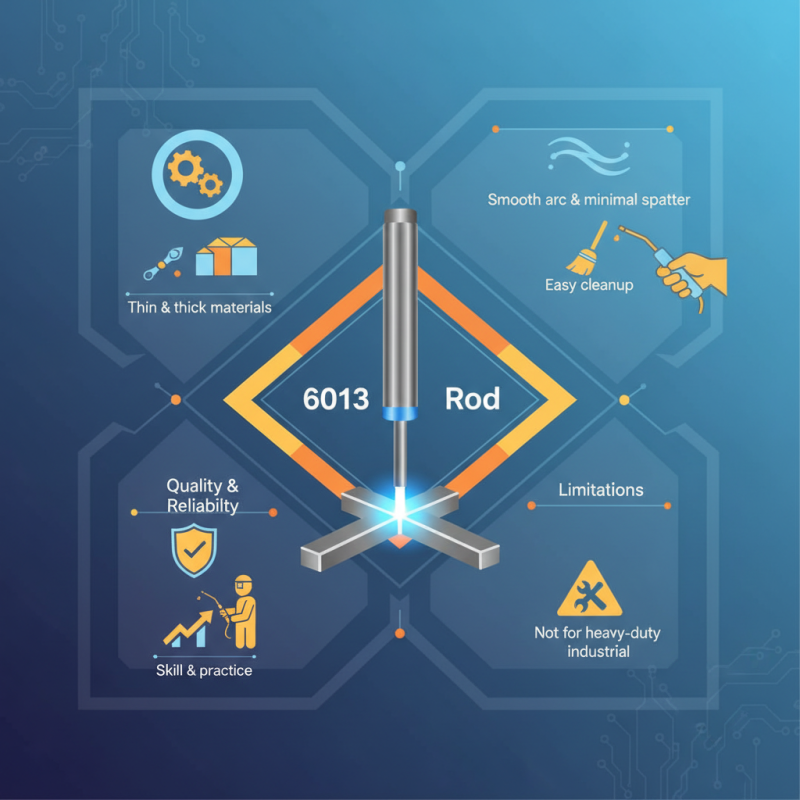
When it comes to welding projects, choosing the right materials is crucial. The **6013 welding rod** stands out as a top choice among professionals and hobbyists alike. This versatile rod is known for its excellent all-position welding capabilities. It works effectively on both thin and thick materials. Whether you're working on a small, intricate project or a large fabrication task, this rod delivers consistent results.
Additionally, the **6013 welding rod** is renowned for its ease of use. It offers a smooth arc and minimal spatter, which simplifies the cleanup process. However, it’s essential to recognize that the rod is not without limitations. For example, it may not perform well on some types of heavy-duty industrial applications. Users must consider their specific needs before making a decision.
Choosing the **6013 welding rod** demonstrates a commitment to quality and reliability. With proper technique and preparation, it can lead to impressive results in your welding projects. As you explore your options, remember that even the best materials require skill and practice to master. Balancing your tools with experience is key to becoming a proficient welder.
Understanding the Composition and Characteristics of 6013 Welding Rods
The 6013 welding rod is popular for various projects due to its unique composition. It contains iron powder, which enhances its arc stability. This rod is versatile, suitable for welding in different positions. Its coating helps in producing a smooth weld bead. Users often praise its ease of use, especially for beginners.
This welding rod works well with mild steel and has moderate penetration. It produces minimal spatter, making cleanup easier. However, not all welders find it effective on thicker materials. Some may struggle to achieve deep penetration with 6013 rods. Knowing their limits is crucial for achieving quality results.
The 6013's mechanical properties contribute to its popularity. It offers good resistance to cracking and is adaptable in varied conditions. Understanding these characteristics empowers welders. Each project is unique, and choosing the right rod can make a significant difference. Reflecting on past experiences can guide future choices.
Advantages of Using 6013 Welding Rods in Various Welding Applications
The 6013 welding rod is highly regarded for its versatility across various applications. This rod provides excellent performance with a smooth arc and minimal splatter. According to industry reports, it is particularly effective for both overhead and vertical welding. This feature makes it popular among professionals and hobbyists alike. The ease of use is a significant advantage, especially for beginners looking to improve their skills.
One of the most impressive aspects is its adaptability to different welding positions. The 6013 rod can be used on mild steel and provides good penetration. Data from the American Welding Society indicates that it performs well in both AC and DC settings. This adaptability translates to reduced downtime and enhanced productivity on job sites. Users often report improved weld aesthetics, which can save time on post-weld grinding.
However, some welders find that not all rods are created equal. The quality and consistency can vary. User feedback highlights the importance of rod selection based on specific project needs. While the 6013 welding rod offers many benefits, it’s crucial to evaluate its fit for a particular application. This reflection can help optimize the results and tackle challenges effectively.
Advantages of Using 6013 Welding Rods in Various Welding Applications
Comparison of 6013 Welding Rods with Other Common Welding Rods
When it comes to welding, choosing the right rod is crucial. The 6013 welding rod stands out because of its versatility and ease of use. It excels in thin metal applications and is known for producing a smooth weld bead. In comparison with other common rods, such as 6010 and 7018, the 6013 offers a bit more forgiveness when it comes to surface preparation. Its coating ensures good arc stability and reduces spatter, making the cleanup process easier.
Data from industry reports indicates that around 40% of welders prefer the 6013 due to its ability to perform well on both AC and DC power sources. Meanwhile, the 6010 welding rod is often favored for its deep penetration but struggles with cleanliness. It's important to note that while 7018 is stronger, it can pose challenges for new welders. The choice fundamentally depends on your specific project needs.
Tip: Always test your welding technique on scrap metal before working on important projects. This helps to identify any issues.
In certain scenarios, using a 6013 rod may not yield the desired strength in high-stress applications. Always evaluate the mechanical properties of the materials you’re working with. Understanding the strengths and limitations of each rod will significantly improve your results.
Tips for Properly Using 6013 Welding Rods in Your Welding Projects
When working with 6013 welding rods, proper technique is essential. Start by ensuring your welding machine settings match the rod specifications. Adjust the voltage and ampere based on the thickness of the materials you’ll be welding. If you’re unsure, test on scrap metal first. This helps you find the best settings for your project.
Clean the workpieces thoroughly before welding. Remove rust, paint, or contaminants to enhance adhesion. A clean surface enables better penetration and a stronger weld. Many beginners overlook this step, which results in poor weld quality. It’s a simple action that yields significant benefits.
Maintain a steady hand while welding. The angle of the rod and the speed at which you move can affect the final look. Practice control to avoid undercuts or overlaps. If adjustments are needed, don't hesitate to stop and assess. Reflecting on your technique can lead to improvement in your next project. Remember, every welder starts somewhere, and learning from mistakes is part of the journey.
Why Choose 6013 Welding Rod for Your Next Project?
| Feature | Details |
| Electrode Composition | Iron powder, titania |
| Applications | General fabrication, structural applications, and repair work |
| Welding Position | All positions |
| Arc Stability | Good arc stability, less spatter |
| Finish Quality | Smooth finish with minimal clean-up |
| Recommended Diameter | 2.5mm, 3.2mm, 4.0mm |
| Heat Input | Moderate heat input for optimal penetration |
| Welding Equipment | Suitable for DC+ welding machines |
Common Mistakes to Avoid When Welding with 6013 Rods
When working with 6013 welding rods, avoiding common mistakes is crucial for achieving quality results. One frequent error is inadequate surface preparation. Contaminants like oil and rust can lead to weak welds. Always clean the surfaces thoroughly before starting your project. This simple step makes a significant difference.
Another mistake is incorrect settings on your welding machine. Each project requires specific amperage settings. Using the wrong settings can cause issues such as poor arc stability or excess spatter. It’s essential to refer to the rod specifications for guidance.
Tips:
Be mindful of the angle and speed while welding. Maintaining a consistent speed helps prevent undercutting. If you notice irregular bead shapes or excessive slag, take a moment to adjust your technique. Recognizing these issues early can save time and materials in the long run.
Don’t overlook post-weld cleaning. Residue from the welding process can create problems later. Dedicated cleaning not only improves appearance but also enhances structural integrity. Reflect on your habits and make adjustments as necessary for better outcomes.





