China Top 10 Ring Main Unit Cabinet Manufacturers
Choosing among the China Top 10 Ring Main Unit Cabinet manufacturers takes more than comparing price or cabinet dimensions. An RMU must fit the site’s voltage level, network design, operating conditions, and maintenance plan. A cabinet that looks suitable in a catalogue may prove awkward beside a crowded transformer bay. Details matter.
Power-distribution author Thomas A. Short provides a useful systems-level perspective. Paraphrased from his distribution-engineering work, rather than offered as a verbatim quotation: “Evaluate equipment within the network it must serve.” That principle helps frame this manufacturer comparison. Buyers should examine rated voltage and current, short-circuit performance, insulation method, switching configuration, enclosure protection, and documented test results. They should also ask how the supplier handles drawings, commissioning support, spare parts, and service requests. These details can vary between product families, even within one manufacturer.
This guide introduces ten Chinese manufacturers and the practical factors that distinguish their offerings. It does not treat the list as a universal ranking; project requirements and independent verification matter. Check technical data against the intended application, and confirm that claims are supported by current documentation. Ask for clear answers. A missed interface detail can delay installation, while weak service planning can complicate maintenance years later. The comparison is a starting point, not a substitute for engineering review. That limitation deserves attention.
What Is a Ring Main Unit Cabinet?
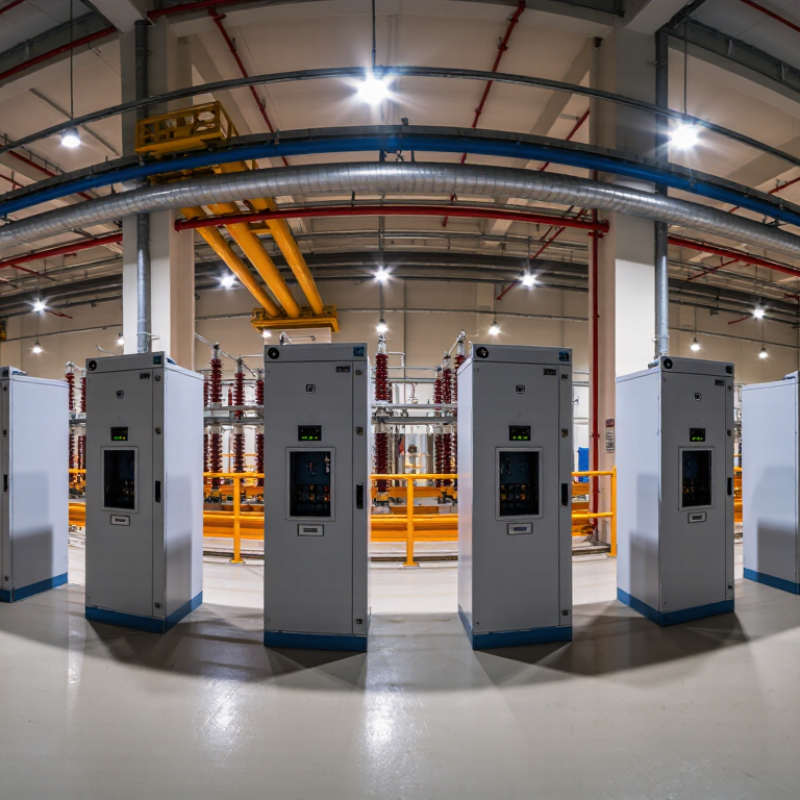
A ring main unit (RMU) cabinet is a compact medium-voltage switchgear assembly used to control and protect distribution circuits. It commonly connects incoming and outgoing cables in a ring network while supplying a transformer through a tee-off circuit. Its metal enclosure houses busbars, switching devices, earthing switches, and cable connection points. Some designs use circuit breakers and relays; others use load-break switches with fuses. Not always closed. The network may operate with one point open, allowing operators to isolate a faulted section.
Insulation options include gas, solid materials, or air, and construction varies by design. Sealed compartments can reduce exposure to dust and moisture, but they still need inspection and careful handling. Before energizing, a technician checks labels, cable terminations, pressure indicators where fitted, and the earthing arrangement. Details matter. Incorrect phase identification or a loose termination can cause heating, trips, or equipment damage. The cabinet itself cannot guarantee uninterrupted service; protection settings and network planning also matter.
In a practical installation, an RMU may sit beside a transformer, with cables entering through the base. Clear access for operation and maintenance is important, especially in a cramped utility room. Specifications should match system voltage, fault level, environmental conditions, and operating procedures. Future access for testing is easy to overlook; a compact layout can make routine work awkward. That deserves a second look.
How China's Ring Main Unit Industry Is Structured
China’s ring main unit industry is structured around three connected layers: component suppliers, cabinet manufacturers, and project integrators. Component makers provide switches, vacuum interrupters, sensors, operating mechanisms, and insulated enclosures. Cabinet manufacturers assemble and test these parts, while integrators configure protection and monitoring for utilities, industrial parks, commercial buildings, and renewable-energy sites. The boundary is not always clean. Some manufacturers also handle engineering and after-sales service.
Demand follows investment in distribution networks, not electricity use alone. The China Electricity Council reported national electricity consumption of about 9.85 trillion kWh in 2024, up 6.8% year on year. This indicates a growing power-system workload, but it is not a direct measure of RMU sales. A closer look helps: buyers also assess fault interruption, insulation type, operating access, and compatibility with remote monitoring. Small details matter, such as whether a technician can read a status indicator in a dim basement. Procurement specifications vary, so supplier comparisons can be less straightforward than headline market figures suggest.
Tips: Ask for test records, rated short-circuit data, and clear maintenance instructions. Check the configuration against the actual network; a feature-rich cabinet is not automatically the right fit.
China’s Ring Main Unit Industry: Common Rated Voltage Classes
Ring main units are used in medium-voltage distribution networks. Common equipment voltage classes include 12 kV, 24 kV, and 36 kV. These are rated-voltage classes, not market-share figures; product availability varies by application and manufacturer.
How to Evaluate Ring Main Unit Cabinet Manufacturers
When evaluating China’s top 10 ring main unit cabinet manufacturers, compare verified performance, not brochure claims. The IEA’s 2023 report, Electricity Grids and Secure Energy Transitions, says annual grid investment needs to rise from about USD 300 billion to over USD 600 billion by 2030. This is a global grid estimate, not an RMU market forecast. Still, it highlights the need for dependable equipment and delivery capacity.
Request type-test reports that match the offered configuration, voltage, and fault ratings. Check the test laboratory’s accreditation and confirm the report covers the actual cabinet design. Review compliance with relevant IEC 62271 requirements, internal-arc performance, ingress protection, and operation across the project’s temperature range. Check the details. Ask to see routine-test records, wiring diagrams, and component traceability. A similar model’s test report may not prove the proposed unit’s performance.
Factory visits can reveal practical details: busbar workmanship, sealing, assembly controls, and how test instruments are calibrated. Ask for commissioning support, spare-part lead times, warranty terms, and references for comparable installations. For gas-insulated designs, clarify gas handling and end-of-life procedures. I would not rank suppliers on price alone; I’d also verify claims through samples and independent documents. Even a strong checklist has limits, and project-specific conditions can change the result.
Profiles of 10 Leading Ring Main Unit Cabinet Manufacturers in China
China’s ring main unit cabinet sector serves a large and changing electricity network. The China Electricity Council reported national electricity consumption of 9.22 trillion kWh in 2023, up 6.7% year on year. The International Energy Agency’s 2023 grids report says annual grid investment needs to exceed USD 600 billion by 2030. That demand makes dependable medium-voltage equipment important.
The ten manufacturer profiles are best read as a capability comparison, not a definitive sales ranking. They cover large electrical-equipment groups, specialist switchgear plants, and export-oriented producers. Their differences show up in practical details: enclosure sealing, busbar design, protection options, and factory testing. Small details matter. A cabinet may look similar on a product sheet, yet differ in service access and component traceability.
For procurement teams, compare rated voltage, short-time withstand current, internal-arc classification, and insulation design against the project specification. Ask for routine-test records and clear maintenance guidance. Some public company materials provide uneven detail, so comparisons can remain imperfect. A careful profile should distinguish verified certifications from manufacturer claims and note where independent test evidence is unavailable. These checks help buyers judge whether a unit suits compact substations, industrial sites, or distribution upgrades.
How to Compare Manufacturers, Products, and Services
When comparing China’s ring main unit cabinet manufacturers, begin with the same operating requirements for every supplier. Check rated voltage, current, short-time withstand capacity, insulation level, and indoor or outdoor use. Ask for current test reports and clear specifications, not just a polished product sheet. Compare the switching arrangement, cable access, interlocking, and protection options against your project drawings. Small layout differences can affect installation time. Looks matter, but they are not enough.
Tips: Request a sample inspection or factory video. Check welds, door alignment, labeling, and finish quality. Confirm what inspection records come with each unit.
Compare service as carefully as hardware. Ask who handles technical questions, drawing approval, delivery updates, commissioning guidance, and spare parts. Get response times and warranty conditions in writing. A low quotation may exclude accessories, testing, or site support, so compare itemized offers. Also verify that the proposed configuration matches local utility requirements and the actual network conditions. One detail is easy to miss: suppliers may use different assumptions for the same rating. Ask them to explain any mismatch before comparing prices. No comparison is perfect, and early specifications can change; record revisions so the final order reflects the approved design.





