


China Top 10 Pharmaceutical Grade Activated Carbon Suppliers

Pharmaceutical Grade Activated Carbon is moving from a commodity purchase toward a controlled pharmaceutical-material decision. Its value depends on pore structure, ash content, moisture, extractables, microbial control, and batch-to-batch consistency. A black powder may look identical across suppliers. Its performance may differ sharply.

Grand View Research’s 2024 activated carbon market analysis identifies water treatment as the largest demand area, while pharmaceutical applications remain more specialized. This distinction matters for buyers comparing China’s leading suppliers. Pharmaceutical production requires documented raw materials, validated processing, traceable testing, and packaging that protects the carbon from moisture and contamination. USP-NF requirements and GMP expectations provide useful quality references, but they do not replace supplier audits or product-specific qualification.

As activated-carbon authority Harry Marsh wrote, “Activated carbon is a carbonaceous material prepared from carbonaceous raw materials by processes that develop its porous structure.” This definition appears in Activated Carbon, written with Francisco Rodríguez-Reinoso. It explains why testing surface area alone can be misleading. Two materials can show similar iodine values, yet behave differently during purification or decolorization.

This China Top 10 Pharmaceutical Grade Activated Carbon Suppliers guide therefore considers more than production volume. It examines certification evidence, analytical capability, pharmaceutical experience, customization, export reliability, and technical support. Supplier rankings are never permanent. That is an important limitation.

Real procurement is less tidy. A supplier may offer excellent adsorption performance but weak documentation. Another may provide complete records but limited technical flexibility. Buyers should verify current certificates, representative samples, change-control procedures, and recent batch data before approval. Reliable decisions begin with evidence, not impressive brochures.
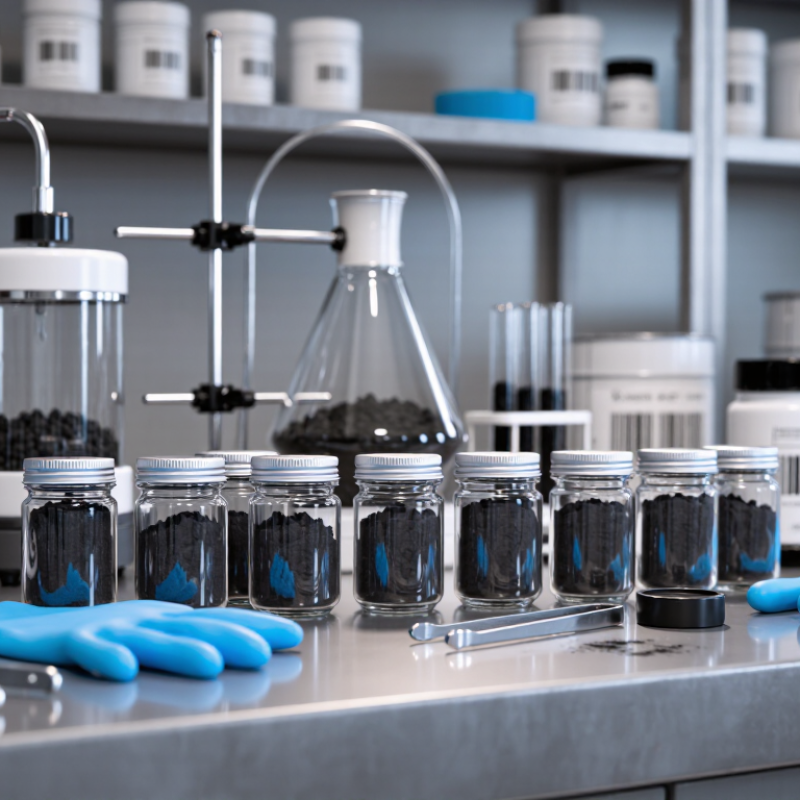
China Top 10 Pharmaceutical Grade Activated Carbon Suppliers

Pharmaceutical-Grade Activated Carbon: Definition and Key Properties

Pharmaceutical-grade activated carbon is a highly purified adsorbent used in controlled manufacturing processes. It is not defined by color or surface area alone. Pharmacopoeial expectations typically emphasize identity, purity, ash content, acid-soluble substances, heavy metals, microbial quality, and extractable impurities. The material should also have consistent particle size and adsorption performance. These controls matter when carbon contacts an active ingredient, intermediate, or process solution.

Performance depends on pore structure. Micropores capture smaller molecules, while larger pores support the removal of color bodies and organic impurities. Moisture content, iodine number, methylene blue adsorption, and pH can help compare lots, but one number never tells the whole story. A high iodine value may look impressive, yet it does not guarantee selective purification. That distinction is easy to miss.

The market is expanding. Grand View Research estimated the global activated carbon market at about USD 4.7 billion in 2023, with continued growth expected through the next decade. This broader market figure includes water treatment and industrial products, not only pharmaceutical grades. Buyers should therefore verify the actual specification sheet, certificate of analysis, residual solvents, bioburden data, and change-control history. In practice, small differences in feedstock and activation can alter filtration time, yield, and product quality. Validation remains essential, even when the carbon meets a recognized pharmacopoeial monograph.


Quality Standards for Pharmaceutical-Grade Activated Carbon in China

For China’s top pharmaceutical-grade activated carbon suppliers, quality begins with documented compliance, not a high iodine number alone. The 2024 Chinese Pharmacopoeia and United States Pharmacopeia–National Formulary emphasize identity, ash, moisture, heavy metals, particle size, and microbial control. Each batch should carry traceable test results, production dates, and validated cleaning records. Purity comes first. Carbon intended for oral or process use must also avoid residual activating chemicals, abnormal odor, and visible foreign particles.

Industry demand is expanding. Grand View Research reported that the global activated carbon market reached approximately USD 4.08 billion in 2023, with pharmaceutical applications requiring tighter controls than many industrial uses. WHO Technical Report Series guidance supports risk-based GMP systems, including supplier qualification, change control, and contamination prevention. In practice, a reliable Chinese supplier should provide full certificates, retain samples, and support independent laboratory verification. Iodine adsorption remains useful, but it cannot prove pharmaceutical suitability. That is an uncomfortable limitation. A carbon can meet one adsorption target and still show excessive ash or microbial risk. Buyers should therefore compare multiple batches, inspect storage conditions, and review validation evidence rather than trusting a single certificate. Supplier rankings also need regular review, because raw materials, furnace conditions, and testing methods can change.

How China’s Top 10 Suppliers Are Evaluated

China Top 10 Pharmaceutical Grade Activated Carbon Suppliers

China’s top ten suppliers should be evaluated through evidence, not catalog claims. Grand View Research estimated the global activated carbon market at about US$4.6 billion in 2023, with continued growth through 2030. This expansion increases supplier choices, but it also increases quality risks. A serious review should examine pharmaceutical-grade production areas, validated cleaning procedures, and traceable raw materials. Coconut shell, wood, and coal-based carbons can show different ash levels and adsorption behavior.

Quality comes first.

A weighted scorecard can compare batch consistency, iodine number, methylene blue value, moisture, ash, heavy metals, microbial limits, and residual solvents. Testing should follow relevant USP-NF, Ph. Eur., or national pharmacopoeial methods. Certificates of analysis must match independent laboratory results, not merely repeat template figures. In practical audits, buyers should inspect retained samples, calibration records, deviation reports, and packaging seals. ISO 9001 certification supports process control, but it does not replace pharmaceutical quality-system evidence. Capacity also matters. A supplier with large output may still struggle with small, tightly controlled batches. Delivery performance, export documentation, technical response time, and change-notification discipline deserve measurable scores.

The ranking remains imperfect. Public data rarely reveals every rejected batch or supply interruption. A cautious buyer should therefore combine factory audits, three-batch testing, and customer-reference checks. Price can inform the decision, but it should carry less weight than purity, consistency, and documented control.

China Top 10 Pharmaceutical Grade Activated Carbon Suppliers - How China’s Top 10 Suppliers Are Evaluated

No. Evaluation Dimension What Is Evaluated Required Evidence or Reference Weight Scoring Basis
1 Pharmaceutical Compliance Ability to manufacture and control activated carbon intended for pharmaceutical use. Applicable GMP documentation, quality manual, manufacturing authorization, and product specification aligned with USP–NF, Ph. Eur., or ChP requirements. 20% 0–5 points
2 Batch-to-Batch Consistency Consistency of adsorption performance, particle size, moisture, ash, and other critical quality attributes. At least three recent batch Certificates of Analysis and documented statistical trend review. 15% 0–5 points
3 Raw Material Traceability Traceability of carbonaceous raw materials, processing aids, packaging materials, and production lots. Supplier qualification records, lot coding, incoming inspection records, and retained-sample procedures. 10% 0–5 points
4 Impurity and Contaminant Control Control of heavy metals, ash-forming minerals, microbiological contamination, and process-related impurities. Validated or qualified test methods, recent laboratory results, risk assessments, and impurity specifications. 15% 0–5 points
5 Laboratory Capability Capability to test physical, chemical, microbiological, and adsorption-related properties. Calibrated instruments, method validation or verification records, analyst training, and laboratory quality controls. 10% 0–5 points
6 Manufacturing Process Control Control of carbonization, activation, washing, drying, milling, sieving, and packaging operations. Process flow diagram, critical process parameter controls, equipment maintenance records, and deviation procedures. 10% 0–5 points
7 Documentation and Change Control Quality of specifications, batch records, change notifications, deviation investigations, and corrective actions. Document-control procedure, change-control log, CAPA records, complaint handling, and recall procedure. 8% 0–5 points
8 Supply Capacity and Lead Time Ability to meet forecasted pharmaceutical demand without compromising quality or delivery reliability. Validated production capacity, historical on-time delivery data, inventory policy, and business-continuity plan. 5% 0–5 points
9 Packaging and Logistics Protection against moisture, contamination, mix-ups, and damage during storage and transportation. Packaging specifications, warehouse controls, transport qualification where applicable, and shipping records. 4% 0–5 points
10 Technical Support and Responsiveness Speed and quality of technical communication, sample support, complaint response, and regulatory assistance. Response-time records, technical data packages, sample approval process, and documented customer complaint handling. 3% 0–5 points
Total Evaluation Weight 100% 100-Point Model

Evaluation method: Each dimension is scored from 0 to 5 based on documented evidence. The weighted score is calculated as (dimension score ÷ 5) × dimension weight. Supplier qualification should also include document review, sample testing, and an on-site or remote quality audit where appropriate.

China’s Top 10 Pharmaceutical-Grade Activated Carbon Suppliers

China’s top 10 pharmaceutical-grade activated carbon suppliers should be assessed through evidence, not advertising. In practical sourcing work, I would examine raw-material origin, activation control, particle-size distribution, ash content, moisture, and adsorption performance. A clear certificate of analysis should identify batch numbers, test methods, specifications, and release dates. Small details matter.

Reliable suppliers usually provide traceable production records and stable packaging for pharmaceutical use. Their facilities should support documented quality systems, controlled environments, validated cleaning procedures, and change-control practices. Buyers should also request information about extractables, leachables, microbial limits, and heavy-metal testing. These records help connect laboratory results with actual manufacturing conditions. A strong audit should include warehouse handling, sampling procedures, and complaint management.

Performance can vary between batches, even when the product name remains unchanged. No supplier is perfect. That is worth remembering. Independent testing can confirm iodine value, methylene blue adsorption, pH, and filtration behavior before large-scale purchasing. I would compare at least three recent batches, not one attractive sample. Delivery reliability also matters, especially when moisture-sensitive material needs sealed inner bags and labeled outer cartons. The best candidates among China’s top 10 pharmaceutical-grade activated carbon suppliers are those that communicate limitations clearly, protect traceability, and improve processes when test results reveal weaknesses.

China’s Top 10 Pharmaceutical-Grade Activated Carbon Suppliers

Reference benchmark for commonly specified iodine numbers by activated-carbon form

Iodine number is a widely used indicator of micropore adsorption capacity in activated carbon. The values shown are representative technical benchmark points commonly published for pharmaceutical-grade powdered, granular, and extruded activated carbon; they are not company-specific rankings or brand data. Final specifications may vary according to the applicable pharmacopeia, application, and batch.

Applications and Selection Criteria for Pharmaceutical Use

China Top 10 Pharmaceutical Grade Activated Carbon Suppliers

Pharmaceutical-grade activated carbon supports decolorization and impurity removal during API and intermediate production. It can reduce colored bodies, trace organic compounds, and unwanted process residues. In liquid processing, particle size affects filtration speed and carbon loss. Small particles matter. A batch that filters slowly can delay production and increase operating costs.

When comparing China’s top ten suppliers, assess more than adsorption capacity. Review raw material origin, pore structure, ash content, moisture, and water-soluble impurities. Iodine number is useful, but it cannot describe every pharmaceutical application. Check extractables, microbial limits, endotoxin data, and heavy-metal results. Each lot should include a clear certificate of analysis, production date, and traceable batch number. GMP-aligned manufacturing and controlled packaging also deserve close attention.

Practical testing remains essential. A supplier may provide strong laboratory results, yet perform differently in a concentrated process solution. Request samples from several lots and test them under actual pH, temperature, contact time, and filtration conditions. In one pilot evaluation, a lower-ash grade produced cleaner filtrate but required longer filtration. That trade-off was easy to overlook. This is where selection becomes less perfect. The best grade is not always the one with the highest adsorption value. Consistent performance, validated cleaning, stable supply, and responsive technical documentation often matter more. Regular supplier audits can reveal storage problems, incomplete records, or changes in raw material quality.

Powder Coat Booths

For those larger-sized parts, or smaller quantity runs, we have 2 independent powder coat booths and ovens. The quality, durability and affordability of today’s powder coating finishes make this the process of choice for world-class companies.

Powder coating advantages over other forms of coating are many. Materials used in the Powder coating process can be metals and non-metals that come in a multitude of thicknesses, textures, colors, etc. Another of Powder coating’s biggest advantages over conventional coatings is its ability to create finishes in many different textures. Powder Coating Booths allow us the ability to apply these advantages to large products.

Wet Paint Line

Tri-State Fabricators runs a full-service conveyor line for painting. Wet painting can provide protection or decoration to many different part styles. From start to finish, every project is easier to undergo random and point-based inspection by our skilled painting team.

Advantages to our Wet Paint Line are these lines start with product prep and ends with a thorough inspection of a high quality finished product. Our ability to complete large and small projects with a superior finish and doing so in a timely and economical fashion. This passes along the savings in production to our customers. When powder coating ins not an option, our Wet Paint Line gets the job done right the first time.

Wet Paint Booths

When the parts get big and heavy we roll-out our custom paint racks and oversize booth. By utilizing our partnerships with all the major paint brands, we can match virtually any color with wet paint.

The advantages of having access to a Wet Paint Booth are many. Large projects of many different shapes can be loaded into the booth. The Wet Paint Booth offers an environment that is much more controlled than a typical parts painting operation.

Not only are they used because of their controlled environment, but they’re are also advantageous when it comes to applying paint to parts that are needed in industries that require specialty coatings such as medical, aerospace, etc.

Military CARC

Our military forces have some very high standards when it comes to the finish of their vehicles and equipment. From the first pre-treatment step to final coat, it takes a great deal of knowledge and experience to protect the men and women of our armed forces. They deserve only the best, and Tri-State Fabricators provides it.

All of our processes are closely monitored by our staff and management teams. Both of which are highly trained in the processes of metal fabrication and finishing. Tri-State Fabricators’ goal is to always fully satisfy each and every customer, including the military. We will always put a 110% into what we do.

Glass-Bead Blasting

Abrasive media blasting is an excellent way to remove old paint, rust, and increase the paint/powder adhesion. Glass beads produce a much smoother and brighter finish than angular abrasives; leaving the part clean yet without any dimensional change. Chemically inert and environmentally friendly, we can recycle our beads approximately 30 times; making them a more preferred method of metal cleaning or surface finishing.

Advantages to Glass Bead Blasting are many. Glass bead blast media is used when a project is needing rough surfaces need to become smooth for applications of coatings such as paint. It is typically used to clean paint and rust from a product surface without deforming the surface it is being used on. Overall, compared to many other blasting media, Glass Bead Blasting is a very economical choice and those savings are always passed on to our customers.

Part Washing

Tri-State Fabricators utilize a zinc phosphate wash to clean and etch the material to ensure the best paint adhesion possible. The unique design of our 3-stage wash system does the work like a 5-stage. From Cleaning and rinsing to conversion coating and post-treatment, Our Part Washing process is a complete service and works throughout the fabrication service and the finishing service.

Along with the previously mentioned benefits, Curing is a vital chemical reaction that leaves the product finish hard and relatively safe from mild abrasion and aggressive corrosion. This process can be done in more than one way; ambient air-dry or in curing ovens at temps that exceed 240°.

Burn-Off Oven

From fixing paint mistakes (someone else’s of course) to simply cleaning our paint line hooks, our burn-off oven is put to good use. After a quick burn-off, a little clean up, and a fresh coat of paint, your parts will look better than new.

Why does our Burn-Off Oven work so well? Because super heating the air around parts turns the materials into ashes. From paint and powder coatings to rubber and machining oils, high temps do the job without degrading the integrity of the part.

Masking

Masking is a vital part of producing high quality products. We have die-cut masking patterns to protect machined surfaces as well as a wide range of plugs and caps to protect threaded holes and bolts. We provide permanent and temporary masking.

Masking allows the selected sections of a product to be protected from a fabrication or finishing service. This can be with both chemicals when etching and tapes, paints when only finishing just a section of the product. Masking is great in aiding the customization process of a project.

Screen Printing

Screen printing is a photographic process that transfers artwork onto a porous nylon screen which allows colored ink to flow through the screen and be deposited on an aluminum or plastic component. We can generally have just about any design created onto a screen for your parts.

Some of the advantages of Screen Printing are, brand recognition for your business displaying on your products, assembly instructions, product warnings/hazards, etc. Tri-State Fabricators produces Screen Printing of the highest quality so you know it’s durable.

Metal Finishing

Metal Finishing is the art of treating the exterior portion of product, often metal but can also be made of other materials, so that the surface is clean and free of any debris. Then the process of applying coats or either paint of powder coat takes place. This coating process improves the quality of the product in both appearance and resistance to wear and corrosion.

Tri-State Fabricators, Inc., understands that a project typically isn’t complete until a high-quality finish has been added to your product. This is why our painting and powder coating teams continuously inspect the products throughout the Metal Finishing process.
