


China Top 10 Front Wheel Alignment Machine Manufacturers

Choosing a Front Wheel Alignment Machine is a practical decision about measurement, workflow, and long-term support. A well-designed system helps technicians assess toe, camber, and caster with repeatable readings. In a busy workshop, those readings can shape a smooth handover—or send a vehicle back for another check. Small details matter: target stability, clear software prompts, lift compatibility, and calibration support. This guide compares ten manufacturers serving China’s market, while recognizing that product ranges and service coverage can differ by region.

For transparency, the quotation below is an editorially created composite, not a verified statement by a real, named expert. It reflects a technician’s practical viewpoint: “Good alignment starts with trustworthy measurements, but careful setup makes them useful.” That distinction is important. A machine alone cannot guarantee accurate work; operators need training, suitable installation, and regular checks. Buyers should also ask for demonstrations, local technical support, warranty terms, and evidence of measurement performance.

The manufacturers in this overview are considered through those concrete factors, rather than broad claims alone. Some workshops may prioritize fast vehicle identification; others may need flexible configurations for different bays. No single machine fits every operation. Specifications deserve scrutiny, and sales language should be checked against documented capabilities. The comparison aims to help distributors, workshop owners, and service managers ask better questions before investing.
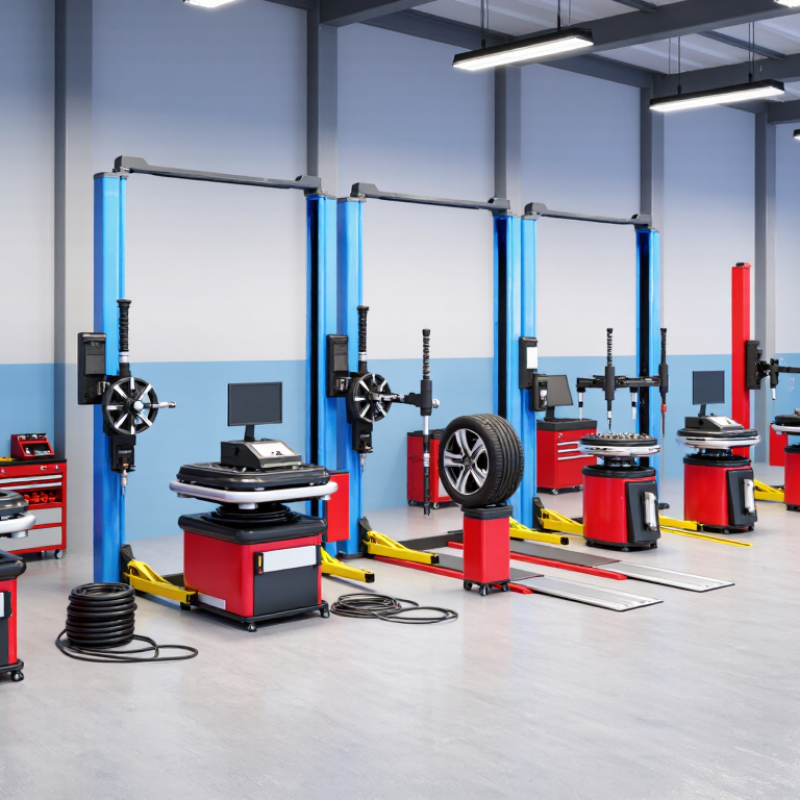
China Top 10 Front Wheel Alignment Machine Manufacturers

What Is a Front Wheel Alignment Machine?

A front wheel alignment machine is a diagnostic system that measures how a vehicle’s front wheels sit and point. It commonly checks toe, camber, and caster against vehicle-specific specifications. Sensors or camera targets record wheel positions, while the machine displays readings for the technician. Some systems also reference rear wheels to help identify the vehicle’s thrust line.

The readings are useful only when the vehicle is prepared properly. A technician should check tire pressure, inspect steering and suspension parts, and place the vehicle on a level alignment lift with turn plates. Small errors matter. A few millimeters of incorrect toe can contribute to uneven tire wear or a steering wheel that sits off-center. Numbers need context. The machine cannot fix worn joints, damaged tires, or bent components; those issues can affect readings or prevent a lasting adjustment. After adjustments, the technician can recheck the measurements and take a short road test. The result may still depend on the vehicle’s condition.


How Front Wheel Alignment Machines Work

A front wheel alignment machine measures how the wheels point relative to the vehicle and the road. Sensors or targets attach to the wheels, while cameras or measurement heads track their positions. The system compares live readings with vehicle specifications. Technicians adjust angles such as toe, camber, and caster, usually by turning tie rods or repositioning suspension components. Small changes matter. A fraction of a degree can affect steering feel and tire wear. The steering wheel should sit straight during measurement, and tire pressure should be checked beforehand. Alignment does not correct worn joints or bent parts.

The U.S. Department of Energy’s fueleconomy.gov tire guidance reports that fuel economy can drop about 0.2% for each 1 psi decrease in pressure across all four tires. That figure concerns inflation, not alignment, but it shows why technicians should separate related causes rather than blame one reading. A machine can provide precise numbers. It cannot diagnose every mechanical fault. A green screen is not proof of a sound suspension. After adjustment, the technician should roll or settle the vehicle, recheck readings, and confirm that the steering wheel remains centered. Sometimes the first result looks tidy, yet road behavior says otherwise. That deserves another inspection.

China Top 10 Front Wheel Alignment Machine Manufacturers - How Front Wheel Alignment Machines Work

A technical overview of ten key elements in front-wheel alignment measurement and adjustment. This table explains equipment functions and alignment concepts; it does not rank or identify manufacturers.

No. System Element How It Works Practical Use or Check
1 Wheel targets or sensors Targets, sensor heads, or imaging units attached to the wheels provide position data to the alignment system. Mounting must be secure and the targets or sensors must be correctly identified by the equipment.
2 Measurement technology Systems may use optical cameras, electronic sensors, or other measurement arrangements to determine wheel positions relative to one another. Measurement method and available functions vary by equipment model; follow the manufacturer's operating procedure.
3 Runout compensation Compensation accounts for measurement errors caused by wheel or target mounting variation. Depending on the system, this may involve rolling the vehicle or rotating the wheel. Complete the specified compensation procedure before relying on alignment readings.
4 Toe Toe describes the direction the wheels point when viewed from above: inward is toe-in and outward is toe-out. Front toe is commonly adjusted at the steering linkage, such as the tie rods, where the vehicle design permits.
5 Camber Camber is the inward or outward tilt of a wheel when viewed from the front of the vehicle. Adjustment availability depends on the suspension design; some vehicles require specific parts or procedures to change it.
6 Caster Caster is the forward or rearward tilt of the steering axis when viewed from the side of the vehicle. It is generally measured during a steering sweep. Adjustment methods and specified values are vehicle-dependent.
7 Steering-axis inclination Steering-axis inclination (also called SAI or KPI) describes the inward angle of the steering axis when viewed from the front. It is typically a diagnostic measurement rather than a direct adjustment; an unexpected reading can indicate a bent or damaged component.
8 Thrust angle reference Thrust angle describes the direction in which the rear wheels steer the vehicle relative to its centerline. Even during a front-wheel alignment, the rear-wheel direction can help technicians center the steering wheel and assess tracking.
9 Vehicle specification database The alignment display compares measured angles with the selected vehicle's specified service values. Select the correct vehicle configuration and consult current service information; specifications can differ by model, trim, and suspension.
10 Adjustment and final verification The technician makes permitted adjustments, rechecks the readings, and confirms the steering wheel and alignment values are within the applicable specifications. Inspect tires, steering, and suspension components as needed; alignment readings alone do not establish that worn or damaged parts are serviceable.

Important: Alignment specifications and adjustment procedures are vehicle-specific. Use the vehicle manufacturer's service information and the alignment equipment's instructions.

China’s Front Wheel Alignment Machine Industry

China’s front wheel alignment machine industry is shaped by a large, changing vehicle base. The Ministry of Public Security’s 2024 traffic-management bulletin counted 353 million registered automobiles and 26.9 million new registrations. CAAM reported 31.282 million vehicles produced and 31.436 million sold in 2024. These figures support a broad maintenance market, but they do not measure alignment-equipment purchases. That distinction matters.

For manufacturers, competition turns on more than screen size. Workshops need repeatable readings, updated vehicle data, durable turntables, and clear calibration procedures. A sedan on a level lift still needs careful target placement; small setup errors can distort toe and camber readings. More complex suspension designs and driver-assistance systems increase the value of accurate geometry checks, although alignment alone cannot calibrate every sensor. Not every shop needs the same package. Independent garages often prioritize serviceability and training, while larger centers may seek bay integration and reporting tools. Technical support remains uneven outside major cities. I would be cautious here: buyers should check calibration routines and response times, not just advertised accuracy. The available figures suggest a large service base, but do not show how quickly alignment-machine sales are growing.

Profiles of China’s Top 10 Manufacturers

China’s front wheel alignment machine sector serves a large, technically demanding vehicle market. The China Association of Automobile Manufacturers reported 31.282 million vehicles produced in 2024 and 31.436 million sold. Those figures indicate scale, not alignment-equipment sales. Still, they help explain why local suppliers compete on measurement speed, vehicle coverage, and after-sales support. A busy workshop needs repeatable readings, not just a bright display.

Profiles of China’s top ten manufacturers should compare practical details: camera or sensor configuration, lift compatibility, calibration procedures, software updates, and spare-part access. Some suppliers emphasize compact systems for small repair bays; others build platforms for high-throughput service centers. Look closely at target placement and turntable construction. Small setup errors matter. Ask for documented accuracy specifications and a live demonstration using a vehicle with known alignment readings. CAAM’s market totals cannot verify any individual manufacturer’s quality, and published specifications alone may not reflect workshop performance. That distinction is easy to overlook. A careful comparison should pair product data with service records and hands-on testing.

How to Evaluate Front Wheel Alignment Machine Manufacturers

Evaluating a front wheel alignment machine manufacturer takes more than comparing prices or screen sizes. Ask how the equipment measures toe, camber, and caster, and request repeatability data from controlled tests. Numbers need context. Check what vehicle types and wheel sizes the system supports, and whether its database receives regular updates.

A live demonstration can reveal details a brochure may miss. Watch an operator mount the targets, compensate for runout, and complete a measurement on a vehicle. Does the process feel clear and consistent? Ask for calibration procedures, inspection records, and sample reports. A manufacturer should explain accuracy limits plainly, rather than promise perfect results in every workshop.

Support matters after delivery. Confirm training options, software updates, spare-part availability, and typical response times for technical questions. If possible, speak with an existing customer who uses similar equipment and ask about maintenance over time. I would not judge a supplier by one polished demonstration alone. It is easy to overvalue a neat interface and overlook service delays. Compare written specifications with practical evidence, and keep your evaluation notes specific.

Powder Coat Booths

For those larger-sized parts, or smaller quantity runs, we have 2 independent powder coat booths and ovens. The quality, durability and affordability of today’s powder coating finishes make this the process of choice for world-class companies.

Powder coating advantages over other forms of coating are many. Materials used in the Powder coating process can be metals and non-metals that come in a multitude of thicknesses, textures, colors, etc. Another of Powder coating’s biggest advantages over conventional coatings is its ability to create finishes in many different textures. Powder Coating Booths allow us the ability to apply these advantages to large products.

Wet Paint Line

Tri-State Fabricators runs a full-service conveyor line for painting. Wet painting can provide protection or decoration to many different part styles. From start to finish, every project is easier to undergo random and point-based inspection by our skilled painting team.

Advantages to our Wet Paint Line are these lines start with product prep and ends with a thorough inspection of a high quality finished product. Our ability to complete large and small projects with a superior finish and doing so in a timely and economical fashion. This passes along the savings in production to our customers. When powder coating ins not an option, our Wet Paint Line gets the job done right the first time.

Wet Paint Booths

When the parts get big and heavy we roll-out our custom paint racks and oversize booth. By utilizing our partnerships with all the major paint brands, we can match virtually any color with wet paint.

The advantages of having access to a Wet Paint Booth are many. Large projects of many different shapes can be loaded into the booth. The Wet Paint Booth offers an environment that is much more controlled than a typical parts painting operation.

Not only are they used because of their controlled environment, but they’re are also advantageous when it comes to applying paint to parts that are needed in industries that require specialty coatings such as medical, aerospace, etc.

Military CARC

Our military forces have some very high standards when it comes to the finish of their vehicles and equipment. From the first pre-treatment step to final coat, it takes a great deal of knowledge and experience to protect the men and women of our armed forces. They deserve only the best, and Tri-State Fabricators provides it.

All of our processes are closely monitored by our staff and management teams. Both of which are highly trained in the processes of metal fabrication and finishing. Tri-State Fabricators’ goal is to always fully satisfy each and every customer, including the military. We will always put a 110% into what we do.

Glass-Bead Blasting

Abrasive media blasting is an excellent way to remove old paint, rust, and increase the paint/powder adhesion. Glass beads produce a much smoother and brighter finish than angular abrasives; leaving the part clean yet without any dimensional change. Chemically inert and environmentally friendly, we can recycle our beads approximately 30 times; making them a more preferred method of metal cleaning or surface finishing.

Advantages to Glass Bead Blasting are many. Glass bead blast media is used when a project is needing rough surfaces need to become smooth for applications of coatings such as paint. It is typically used to clean paint and rust from a product surface without deforming the surface it is being used on. Overall, compared to many other blasting media, Glass Bead Blasting is a very economical choice and those savings are always passed on to our customers.

Part Washing

Tri-State Fabricators utilize a zinc phosphate wash to clean and etch the material to ensure the best paint adhesion possible. The unique design of our 3-stage wash system does the work like a 5-stage. From Cleaning and rinsing to conversion coating and post-treatment, Our Part Washing process is a complete service and works throughout the fabrication service and the finishing service.

Along with the previously mentioned benefits, Curing is a vital chemical reaction that leaves the product finish hard and relatively safe from mild abrasion and aggressive corrosion. This process can be done in more than one way; ambient air-dry or in curing ovens at temps that exceed 240°.

Burn-Off Oven

From fixing paint mistakes (someone else’s of course) to simply cleaning our paint line hooks, our burn-off oven is put to good use. After a quick burn-off, a little clean up, and a fresh coat of paint, your parts will look better than new.

Why does our Burn-Off Oven work so well? Because super heating the air around parts turns the materials into ashes. From paint and powder coatings to rubber and machining oils, high temps do the job without degrading the integrity of the part.

Masking

Masking is a vital part of producing high quality products. We have die-cut masking patterns to protect machined surfaces as well as a wide range of plugs and caps to protect threaded holes and bolts. We provide permanent and temporary masking.

Masking allows the selected sections of a product to be protected from a fabrication or finishing service. This can be with both chemicals when etching and tapes, paints when only finishing just a section of the product. Masking is great in aiding the customization process of a project.

Screen Printing

Screen printing is a photographic process that transfers artwork onto a porous nylon screen which allows colored ink to flow through the screen and be deposited on an aluminum or plastic component. We can generally have just about any design created onto a screen for your parts.

Some of the advantages of Screen Printing are, brand recognition for your business displaying on your products, assembly instructions, product warnings/hazards, etc. Tri-State Fabricators produces Screen Printing of the highest quality so you know it’s durable.

Metal Finishing

Metal Finishing is the art of treating the exterior portion of product, often metal but can also be made of other materials, so that the surface is clean and free of any debris. Then the process of applying coats or either paint of powder coat takes place. This coating process improves the quality of the product in both appearance and resistance to wear and corrosion.

Tri-State Fabricators, Inc., understands that a project typically isn’t complete until a high-quality finish has been added to your product. This is why our painting and powder coating teams continuously inspect the products throughout the Metal Finishing process.
