


China’s thermal-break aluminum window prices can differ sharply, even when two product photos look almost identical. The gap often comes from profile depth, thermal-barrier design, glass build-up, hardware, finish, and order quantity. A narrow frame with standard double glazing is not comparable to a reinforced system with laminated glass, upgraded seals, and custom powder coating. Small details matter.
Building scientist Dr. Joseph Lstiburek is known for emphasizing whole-building performance. A practical summary of that principle is: “Judge the window as part of the wall assembly, not by its frame alone.” This is a paraphrase, not a verified verbatim quotation. It matters when comparing Thermal Break Aluminum System Windows, because the frame’s thermal break is only one part of the finished opening. Glass, spacers, seals, installation, and local climate all affect comfort and performance.
This guide examines what shapes the China price, which specifications deserve close attention, and how to compare supplier quotations fairly. Ask whether prices include glass, hardware, packaging, and export delivery. Check the stated dimensions and performance data, too. A low quotation may omit an important component; a higher one may include it. Not every comparison is clean. A careful review of drawings and line-item costs can reveal the difference before production begins.
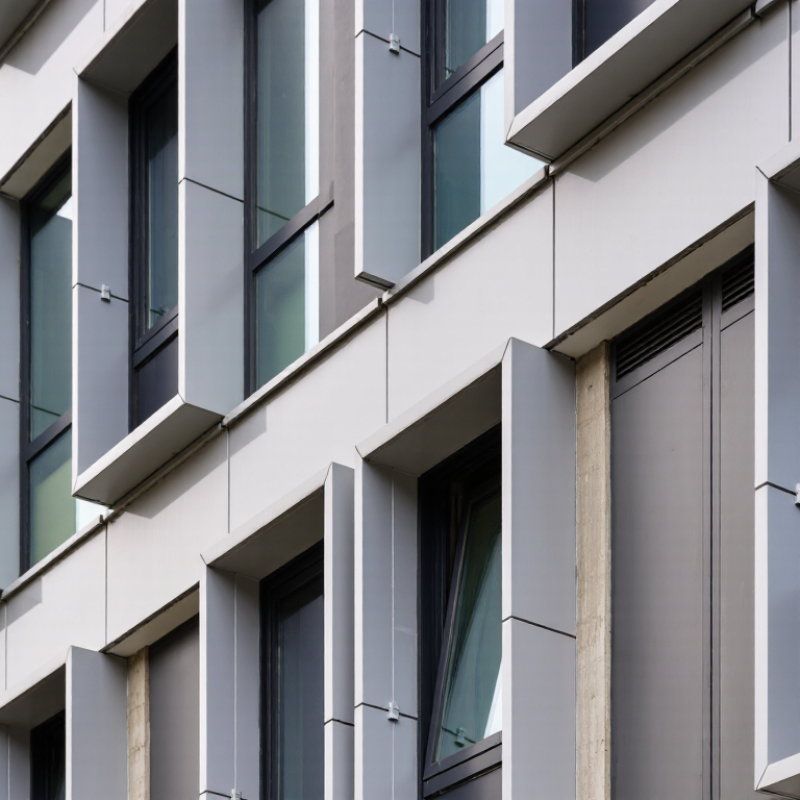
Thermal break aluminum system windows use two aluminum sections separated by an insulating strip, commonly made from polyamide. The strip interrupts the direct path that carries heat through metal. The frame still has aluminum’s strength and slim profile, but its interior surface is less exposed to outdoor temperatures. On a cold morning, that can mean a warmer-feeling frame and less risk of condensation than with a basic, unbroken aluminum frame.
A thermal break is not a complete energy solution. Glass type, frame design, seals, and installation all affect performance. For example, a well-insulated frame can still leak air if the sash does not close evenly. Ask for tested whole-window performance figures, not just a claim about the frame. Check the glass specification and installation details, too. The label can sound more decisive than it is; actual comfort depends on the full window and the building around it.
Tips: Compare whole-window thermal ratings, inspect corner joints and weather seals, and confirm that the installer can seal the frame opening properly. Feel the sample frame if possible. Small details matter.

Thermal break aluminum windows are made through a sequence of controlled steps, though equipment and inspection practices vary between Chinese factories. Aluminum billets are heated and pressed through shaped dies to form profiles. After cooling, the profiles are cut to length and machined for drainage slots, locks, and hardware.
The thermal barrier is usually a polyamide strip. Knurled aluminum edges grip the strip as rollers join the inner and outer profile sections. This connection needs consistent pressure. Too little can weaken the assembly; poor alignment may affect later fitting. Not every profile uses the same strip shape or reinforcement, so buyers should check drawings and material specifications.
Next, technicians assemble frames, crimp the corners, and fit gaskets and glazing. Glass thickness, coating, and spacer choice can change both performance and cost. Details matter. Quality checks may include measuring dimensions, inspecting corner joints, and testing sample windows for air or water leakage. Ask how often tests are performed and whether reports match the quoted configuration. A polished sample can hide production variation, and I would not treat appearance alone as proof of performance. Clear specifications make price comparisons more useful.
Thermal-break aluminum window prices in China depend on more than frame weight. The main cost drivers are profile depth, thermal-break width, alloy thickness, glass build-up, hardware, and fabrication accuracy. A slim frame with double glazing usually costs less than a large opening with laminated, low-emissivity glass. Small details matter. Custom colors, unusual shapes, and tight delivery schedules can also raise the quote.
Performance affects value, not just the purchase price. The U.S. Department of Energy’s Energy Saver guidance estimates that windows account for about 25–30% of residential heating and cooling energy use. Compare whole-window U-factor and solar heat gain coefficient, not glass claims alone. These ratings help show how much heat passes through and how much sunlight enters. Installation quality matters, too; even a well-built unit can underperform if its perimeter is poorly sealed. That adds up.
For comparable quotations, provide the same opening sizes, glass specification, finish, hardware, and delivery terms. Ask whether prices include installation, screens, taxes, and site measurements. I would not treat the lowest quote as proof of poor quality, but unexplained differences deserve scrutiny. A price without a defined specification is only a rough estimate. The awkward part is that buyers sometimes compare unlike products and call the difference a discount.
For China-made thermal break aluminum windows, a useful planning range is about US$120–220 per square meter for standard configurations. This typically assumes conventional profile sizes, double glazing, and basic hardware. Mid-range systems with thicker profiles, wider thermal barriers, Low-E glass, or improved hardware may fall around US$220–400 per square meter. Higher-specification units, including triple glazing, large panels, customized finishes, or upgraded security fittings, can reach US$400–700 or more. These are indicative supply prices, not guaranteed quotations. The glass matters.
Compare quotes using the same window dimensions and opening style. A fixed pane usually costs less than a tilt-and-turn unit, while large sliding doors need stronger frames and can raise costs. Ask whether the quoted price includes insect screens, reinforced corners, packaging, and testing documents. Small details add up. Freight, taxes, installation, and site measurements may be excluded, so confirm each item in writing. A low price can be reasonable, but it deserves a closer specification check. Even careful estimates miss something; unusual sizes and local requirements can change the final figure.
A low price for thermal break aluminum system windows can hide important differences. Compare quotes against the same window schedule, including opening sizes, frame depth, glass thickness, and opening style. Ask whether the price includes insulated glass, screens, hardware, surface finish, packaging, and delivery. Small details matter. A sliding window with basic rollers is not equal to one with upgraded hardware, even if both have similar dimensions. Check the stated thermal performance and ask how it was tested. If the quote gives no clear specification, request one before comparing totals.
Supplier selection also depends on how clearly the company explains its product and process. Request profile drawings, glass build-up details, sample corners, and written warranty terms. Ask who checks dimensions and how damaged units are handled. Compare production lead time and payment milestones, not just the final figure. A factory visit or live video walkthrough can help confirm equipment and quality checks. Still, no document can remove every risk. A detailed quote may overlook site conditions, so confirm installation tolerances with your project team. A slightly awkward conversation now is better than a costly surprise later.
Indicative comparison for made-to-order windows supplied from China. Prices below are broad planning ranges in USD per square meter, typically quoted EXW or FOB. They are not live offers; final pricing depends on dimensions, opening style, glass specification, finish, hardware, order quantity, packaging, and shipping terms.
| Quotation level | Indicative price (USD/m²) | Typical system and glass | Common inclusions | Best suited for |
|---|---|---|---|---|
| Entry-level | $100–$180 | Thermal-break aluminum profiles, commonly around 1.4–1.6 mm nominal wall thickness; basic double glazing such as 5+12A+5 mm, subject to local code and design. | Standard powder-coated finish, basic seals and hardware; screens and upgraded glass may be extra. | Budget-conscious projects in moderate climates where project specifications permit a basic configuration. |
| Mid-range | $180–$300 | Heavier or wider thermal-break profiles, often around 1.6–2.0 mm nominal wall thickness; options may include insulated double glazing, Low-E coating, or argon fill. | More configuration choices, improved sealing, and upgraded hardware options; verify whether installation accessories are included. | Residential projects seeking a balance between cost, thermal performance, and durability. |
| Higher-specification | $300–$500+ | Project-engineered systems with larger or reinforced profiles, low-U-value glazing options, laminated or tempered safety glass, and configurations designed for specific wind loads. | Special finishes, higher-grade hardware, design documentation, testing, or project-specific engineering may be included or separately priced. | High-rise, coastal, cold-climate, large-opening, or specification-led projects requiring verified performance. |
| Item to compare | What buyers should confirm | Why it affects value |
|---|---|---|
| Price basis and scope | Confirm currency, measurement method, minimum order, EXW/FOB/CIF/DDP term, packaging, export fees, and whether screens, trims, and installation materials are included. | A low unit price can exclude significant logistics or accessory costs. |
| Aluminum profile | Request section drawings, alloy and temper details, measured wall thickness, thermal-break material and width, and reinforcement details where applicable. | Profile dimensions and construction affect strength, thermal performance, and compatibility with the project design. |
| Glass specification | Compare each pane's thickness and treatment, cavity width, Low-E coating position, gas fill, spacer type, and any safety-glass requirements. | Glass often makes up a substantial share of window cost and strongly influences energy, acoustic, and safety performance. |
| Performance evidence | Ask for test reports for the quoted configuration, covering relevant air leakage, water penetration, wind-load resistance, and thermal performance requirements for the destination market. | Performance depends on the complete tested assembly, not only the profile or glass in isolation. |
| Finish and hardware | Specify finish type and color, corrosion exposure, handle and lock configuration, hinge type, and hardware load rating; request samples where appearance matters. | Finish durability and hardware quality affect maintenance, operation, and suitability for the building environment. |
| Manufacturing and delivery | Confirm production lead time, inspection arrangements, packing method, shipping dimensions, replacement-part policy, and the process for reporting damage or defects. | Clear delivery and after-sales terms reduce schedule risk and unexpected costs. |
| Supplier verification | Check business documentation, relevant export experience, factory capability, sample quality, references where available, and willingness to provide drawings and written specifications. | Documented capability and consistent communication help buyers evaluate whether a supplier can deliver the specified product. |
Note: These ranges are broad budgeting references, not a substitute for project quotations. Compare suppliers using the same window schedule, opening types, dimensions, glass build-up, finish, performance requirements, and delivery term.


For those larger-sized parts, or smaller quantity runs, we have 2 independent powder coat booths and ovens. The quality, durability and affordability of today’s powder coating finishes make this the process of choice for world-class companies.
Powder coating advantages over other forms of coating are many. Materials used in the Powder coating process can be metals and non-metals that come in a multitude of thicknesses, textures, colors, etc. Another of Powder coating’s biggest advantages over conventional coatings is its ability to create finishes in many different textures. Powder Coating Booths allow us the ability to apply these advantages to large products.
Tri-State Fabricators runs a full-service conveyor line for painting. Wet painting can provide protection or decoration to many different part styles. From start to finish, every project is easier to undergo random and point-based inspection by our skilled painting team.
Advantages to our Wet Paint Line are these lines start with product prep and ends with a thorough inspection of a high quality finished product. Our ability to complete large and small projects with a superior finish and doing so in a timely and economical fashion. This passes along the savings in production to our customers. When powder coating ins not an option, our Wet Paint Line gets the job done right the first time.
When the parts get big and heavy we roll-out our custom paint racks and oversize booth. By utilizing our partnerships with all the major paint brands, we can match virtually any color with wet paint.
The advantages of having access to a Wet Paint Booth are many. Large projects of many different shapes can be loaded into the booth. The Wet Paint Booth offers an environment that is much more controlled than a typical parts painting operation.
Not only are they used because of their controlled environment, but they’re are also advantageous when it comes to applying paint to parts that are needed in industries that require specialty coatings such as medical, aerospace, etc.
Our military forces have some very high standards when it comes to the finish of their vehicles and equipment. From the first pre-treatment step to final coat, it takes a great deal of knowledge and experience to protect the men and women of our armed forces. They deserve only the best, and Tri-State Fabricators provides it.
All of our processes are closely monitored by our staff and management teams. Both of which are highly trained in the processes of metal fabrication and finishing. Tri-State Fabricators’ goal is to always fully satisfy each and every customer, including the military. We will always put a 110% into what we do.
Abrasive media blasting is an excellent way to remove old paint, rust, and increase the paint/powder adhesion. Glass beads produce a much smoother and brighter finish than angular abrasives; leaving the part clean yet without any dimensional change. Chemically inert and environmentally friendly, we can recycle our beads approximately 30 times; making them a more preferred method of metal cleaning or surface finishing.
Advantages to Glass Bead Blasting are many. Glass bead blast media is used when a project is needing rough surfaces need to become smooth for applications of coatings such as paint. It is typically used to clean paint and rust from a product surface without deforming the surface it is being used on. Overall, compared to many other blasting media, Glass Bead Blasting is a very economical choice and those savings are always passed on to our customers.
Tri-State Fabricators utilize a zinc phosphate wash to clean and etch the material to ensure the best paint adhesion possible. The unique design of our 3-stage wash system does the work like a 5-stage. From Cleaning and rinsing to conversion coating and post-treatment, Our Part Washing process is a complete service and works throughout the fabrication service and the finishing service.
Along with the previously mentioned benefits, Curing is a vital chemical reaction that leaves the product finish hard and relatively safe from mild abrasion and aggressive corrosion. This process can be done in more than one way; ambient air-dry or in curing ovens at temps that exceed 240°.
From fixing paint mistakes (someone else’s of course) to simply cleaning our paint line hooks, our burn-off oven is put to good use. After a quick burn-off, a little clean up, and a fresh coat of paint, your parts will look better than new.
Why does our Burn-Off Oven work so well? Because super heating the air around parts turns the materials into ashes. From paint and powder coatings to rubber and machining oils, high temps do the job without degrading the integrity of the part.
Masking is a vital part of producing high quality products. We have die-cut masking patterns to protect machined surfaces as well as a wide range of plugs and caps to protect threaded holes and bolts. We provide permanent and temporary masking.
Masking allows the selected sections of a product to be protected from a fabrication or finishing service. This can be with both chemicals when etching and tapes, paints when only finishing just a section of the product. Masking is great in aiding the customization process of a project.
Screen printing is a photographic process that transfers artwork onto a porous nylon screen which allows colored ink to flow through the screen and be deposited on an aluminum or plastic component. We can generally have just about any design created onto a screen for your parts.
Some of the advantages of Screen Printing are, brand recognition for your business displaying on your products, assembly instructions, product warnings/hazards, etc. Tri-State Fabricators produces Screen Printing of the highest quality so you know it’s durable.
Metal Finishing is the art of treating the exterior portion of product, often metal but can also be made of other materials, so that the surface is clean and free of any debris. Then the process of applying coats or either paint of powder coat takes place. This coating process improves the quality of the product in both appearance and resistance to wear and corrosion.
Tri-State Fabricators, Inc., understands that a project typically isn’t complete until a high-quality finish has been added to your product. This is why our painting and powder coating teams continuously inspect the products throughout the Metal Finishing process.

