


China Best Stainless Wire Grates Supplier for Global Buyers

For global buyers, selecting Stainless Wire Grates is not just a matter of comparing prices. The right grate must suit its load, opening size, wire diameter, finish, and cleaning routine. A stainless-steel fabrication specialist’s practical reminder is: “Check the welds, dimensions, and finish before comparing the quote.” This is an illustrative expert-style quotation, not a statement attributed to a verified individual.

Look closely at the details. A grate for a food-processing line may need smooth, easy-to-clean surfaces, while an industrial platform may require different load and support specifications. Ask suppliers for material documentation, dimensional drawings, sample photos, and clear inspection criteria. Check how they control wire spacing and weld consistency; small variations can affect fit during installation. Ask how the finish is specified, too. “Stainless steel” alone does not tell you everything.

Details matter.

China offers a broad manufacturing base, but a supplier’s location is not proof of quality. Compare production experience, communication, inspection procedures, and the ability to meet your drawings. Confirm packaging and delivery expectations before placing an order. A polished sample is useful, yet it cannot answer every question about repeat production. That uncertainty deserves attention. This guide explores how global buyers can assess Chinese Stainless Wire Grates suppliers with practical questions, careful documentation, and realistic expectations.
China Best Stainless Wire Grates Supplier for Global Buyers

What Stainless Wire Grates Are and How They Work

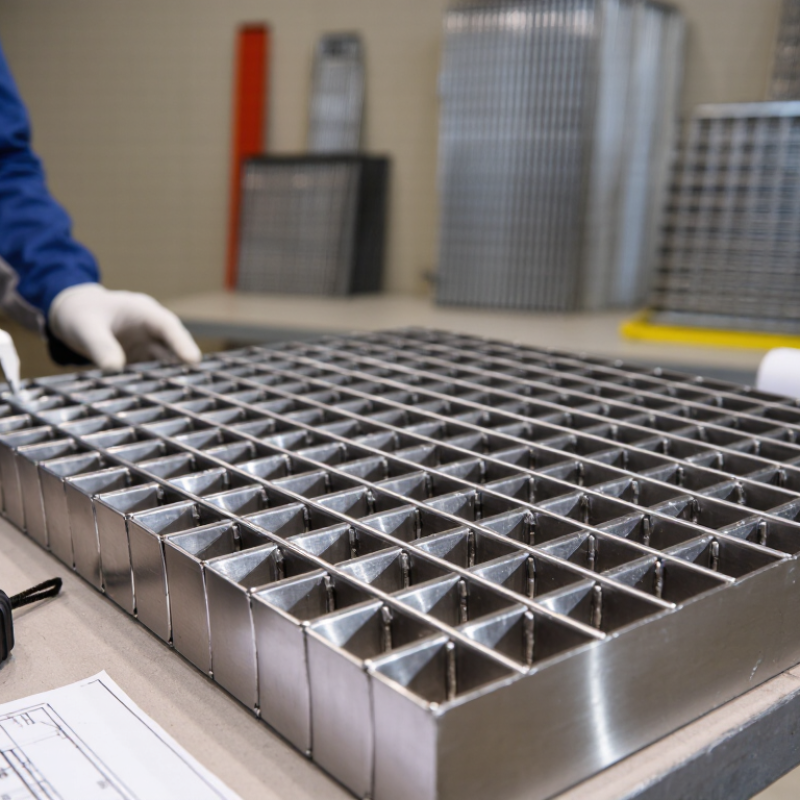
Stainless wire grates are open-grid panels made from joined or woven stainless steel wires. Their structure supports items while leaving spaces for air, water, and light to pass through. Welded intersections help keep the grid stable, while the wire diameter and spacing affect strength and use. Under a load, the wires share weight across the panel and transfer it to the supporting frame. No mystery there.

Grates can be used for shelving, ventilation, drainage, or equipment platforms. The right design depends on the load, span, environment, and how easily the surface needs cleaning. Grade selection matters too: damp indoor areas and salty coastal air can call for different corrosion resistance. A shiny finish alone does not tell you how a grate will perform.

Tips: Check the stated load capacity, wire spacing, weld quality, and edge finish before ordering. Ask how the capacity was tested; do not judge strength by appearance alone. Small gaps matter. In practice, a very open grid may drain well but feel less comfortable underfoot. That trade-off is easy to miss on a product drawing.

China Best Stainless Wire Grates Supplier for Global Buyers - What Stainless Wire Grates Are and How They Work

Topic Key information How it works or why it matters
What stainless wire grates are Open-grid panels made from stainless steel wires or rods joined by welding, weaving, or other fabrication methods. The open structure provides a supporting surface while allowing air, water, light, or debris to pass through.
Common stainless steel grades Type 304 is widely used for general indoor and outdoor applications. Type 316 contains molybdenum and is often selected for greater resistance to chlorides and many corrosive environments. Grade selection should reflect the specific chemicals, salts, temperature, cleaning practices, and exposure conditions. No grade is suitable for every environment.
Typical construction A grate may use load-bearing wires or bars, cross wires, a perimeter frame, and attachment points. Wire diameter, spacing, panel dimensions, and edge treatment vary by design. The load-bearing elements transfer applied loads to the supporting frame or structure; cross members help maintain the grid and distribute loads.
How the open grid functions Openings between wires create a permeable surface rather than a solid sheet. Airflow and drainage can pass through the openings, while the wire framework supports objects within the limits of its design and installation.
Load capacity Capacity depends on wire or bar size, grid spacing, span, support conditions, material properties, and how the load is applied. A load rating should be established for the specific grate design and installation. Do not infer safe capacity from appearance alone.
Common applications Examples include drainage covers, equipment guards, shelving, baskets, ventilation panels, walkways, and food-service or processing equipment. The suitable design depends on whether the main need is load support, drainage, airflow, visibility, containment, or cleanability.
Surface finish and cleaning Finishes can include an as-fabricated surface or a specified polished finish. Smooth, accessible surfaces are generally easier to inspect and clean. Cleaning requirements and exposure to food residues, chemicals, or abrasive methods should be considered when specifying the finish and maintenance routine.
Corrosion considerations Stainless steel forms a chromium-rich passive surface film, but contamination, deposits, unsuitable chemicals, or severe conditions can still cause corrosion. Appropriate grade selection, fabrication practices, cleaning, and exposure control help preserve service life; performance depends on the environment.
Important specification details Specify stainless steel grade, panel dimensions, wire or bar diameter, opening size, edge/frame details, finish, tolerances, supports, and expected loads. Clear specifications help ensure the grate fits its opening and performs as intended in its operating environment.
Inspection and maintenance Check for loose connections, deformation, damaged welds, blocked openings, surface contamination, and signs of corrosion. Regular inspection helps identify installation or service issues early. Maintenance frequency should match the application and environment.

Stainless Steel Grades, Mesh Types, and Key Specifications

China Best Stainless Wire Grates Supplier for Global Buyers

Stainless steel grade, mesh pattern, and wire size determine how a grate performs in service. Grade 304 suits many indoor and general-purpose applications. For salt spray, chlorides, or frequent washdowns, grade 316 is often a better candidate because it contains molybdenum. Neither grade is immune to every environment. Check the actual exposure before choosing.

Mesh choice affects drainage, strength, and cleaning. Welded mesh holds a regular grid; woven mesh can offer finer openings, while heavier wire may support higher loads. Specify wire diameter, aperture size, grate dimensions, finish, and allowable load. Also request test methods and tolerances. A product’s appearance alone cannot confirm load capacity. The World Stainless Association reported global stainless steel melt-shop production of 58.4 million tonnes in 2023 in its Stainless Steel in Figures 2024 report. That figure signals a broad material supply base, not a guarantee of any supplier’s quality.

Tips: Ask for grade documentation and a drawing showing wire diameter and clear opening. Match the grate to its real span and load; small measurement errors can matter. Details matter. One often-overlooked point is maintenance: trapped debris can undermine drainage, even when the mesh specification looks right.

How Stainless Wire Grates Are Manufactured and Quality-Tested

China Best Stainless Wire Grates Supplier for Global Buyers

How Stainless Wire Grates Are Manufactured and Quality-Tested

Manufacturing begins with stainless steel wire selected for the grate’s intended load, environment, and opening size. The wire is cut, straightened, and formed into a grid using controlled spacing. At each crossing, welding creates a fixed joint. Operators check alignment during production because small shifts can affect fit and load distribution.

After welding, the grate may be cleaned and finished to remove residue and smooth rough edges. Surface appearance matters, but it does not prove strength. Each batch should be checked for dimensions, flatness, weld consistency, and visible defects. A simple gauge can reveal uneven openings. A level table helps spot rocking corners.

Then comes load testing. Samples are placed under measured pressure, while inspectors watch for bending, loose joints, or permanent deformation. Results should be recorded with the batch details, not kept as vague assurances. Testing methods need to match the product’s intended use. No single check catches everything; occasional flaws can escape a rushed inspection. Clear records and careful sampling help buyers assess consistency before installation.

Common Applications Across Industrial and Commercial Sectors

Stainless wire grates serve practical roles in food processing, commercial kitchens, warehouses, and manufacturing plants. In food areas, open mesh supports airflow around cooling products and helps water drain from washdown zones. Staff can inspect beneath the surface without lifting a solid panel. Details matter.

In warehouses, grates can form shelving, equipment platforms, or walkway panels where visibility and drainage are useful. Workshops may use them as machine guards or protective covers, but openings must suit the equipment and the items being stored. In ventilation systems, wire panels can protect air inlets while allowing steady airflow. Their performance depends on the mesh design and installation, not simply the stainless steel label.

Material selection deserves care. Damp cleaning, salt exposure, heat, and cleaning chemicals can affect service life, so buyers should confirm the environment and required load before choosing a grade or wire thickness. A grate that is easy to clean may still have openings too wide for small parts. It is worth checking edge finishing, support spacing, and maintenance access too. A low-cost specification can create extra work later; even a well-made grate needs periodic inspection.

How Global Buyers Can Evaluate Chinese Suppliers

When evaluating a Chinese stainless wire grates supplier, start with the product details, not the catalogue photos. Specify wire diameter, mesh spacing, overall dimensions, edge finish, and expected load. Ask which stainless steel grade is offered and request material test documents linked to the production batch. Paperwork helps, but it should match the actual goods.

Inspect a sample under clear lighting. Look for uneven welds, sharp burrs, warped corners, and inconsistent spacing. Ask how the supplier checks dimensions and weld strength, and whether inspection records can be shared. A sample is useful. It is not a guarantee. For larger orders, agree on a written inspection plan and acceptance limits before production begins. If possible, use an independent inspection service.

Communication is part of supplier evaluation. Send a drawing with tolerances, packaging requirements, and the delivery schedule, then see whether the response addresses each point. Ask about production capacity, typical lead times, and how defects are handled. A factory visit or live video walkthrough can reveal equipment and workflow, though neither replaces product testing. Be cautious when answers remain vague. I have found that small details, such as protective separators between grates, can matter during shipping. I would still verify this for each order.

Powder Coat Booths

For those larger-sized parts, or smaller quantity runs, we have 2 independent powder coat booths and ovens. The quality, durability and affordability of today’s powder coating finishes make this the process of choice for world-class companies.

Powder coating advantages over other forms of coating are many. Materials used in the Powder coating process can be metals and non-metals that come in a multitude of thicknesses, textures, colors, etc. Another of Powder coating’s biggest advantages over conventional coatings is its ability to create finishes in many different textures. Powder Coating Booths allow us the ability to apply these advantages to large products.

Wet Paint Line

Tri-State Fabricators runs a full-service conveyor line for painting. Wet painting can provide protection or decoration to many different part styles. From start to finish, every project is easier to undergo random and point-based inspection by our skilled painting team.

Advantages to our Wet Paint Line are these lines start with product prep and ends with a thorough inspection of a high quality finished product. Our ability to complete large and small projects with a superior finish and doing so in a timely and economical fashion. This passes along the savings in production to our customers. When powder coating ins not an option, our Wet Paint Line gets the job done right the first time.

Wet Paint Booths

When the parts get big and heavy we roll-out our custom paint racks and oversize booth. By utilizing our partnerships with all the major paint brands, we can match virtually any color with wet paint.

The advantages of having access to a Wet Paint Booth are many. Large projects of many different shapes can be loaded into the booth. The Wet Paint Booth offers an environment that is much more controlled than a typical parts painting operation.

Not only are they used because of their controlled environment, but they’re are also advantageous when it comes to applying paint to parts that are needed in industries that require specialty coatings such as medical, aerospace, etc.

Military CARC

Our military forces have some very high standards when it comes to the finish of their vehicles and equipment. From the first pre-treatment step to final coat, it takes a great deal of knowledge and experience to protect the men and women of our armed forces. They deserve only the best, and Tri-State Fabricators provides it.

All of our processes are closely monitored by our staff and management teams. Both of which are highly trained in the processes of metal fabrication and finishing. Tri-State Fabricators’ goal is to always fully satisfy each and every customer, including the military. We will always put a 110% into what we do.

Glass-Bead Blasting

Abrasive media blasting is an excellent way to remove old paint, rust, and increase the paint/powder adhesion. Glass beads produce a much smoother and brighter finish than angular abrasives; leaving the part clean yet without any dimensional change. Chemically inert and environmentally friendly, we can recycle our beads approximately 30 times; making them a more preferred method of metal cleaning or surface finishing.

Advantages to Glass Bead Blasting are many. Glass bead blast media is used when a project is needing rough surfaces need to become smooth for applications of coatings such as paint. It is typically used to clean paint and rust from a product surface without deforming the surface it is being used on. Overall, compared to many other blasting media, Glass Bead Blasting is a very economical choice and those savings are always passed on to our customers.

Part Washing

Tri-State Fabricators utilize a zinc phosphate wash to clean and etch the material to ensure the best paint adhesion possible. The unique design of our 3-stage wash system does the work like a 5-stage. From Cleaning and rinsing to conversion coating and post-treatment, Our Part Washing process is a complete service and works throughout the fabrication service and the finishing service.

Along with the previously mentioned benefits, Curing is a vital chemical reaction that leaves the product finish hard and relatively safe from mild abrasion and aggressive corrosion. This process can be done in more than one way; ambient air-dry or in curing ovens at temps that exceed 240°.

Burn-Off Oven

From fixing paint mistakes (someone else’s of course) to simply cleaning our paint line hooks, our burn-off oven is put to good use. After a quick burn-off, a little clean up, and a fresh coat of paint, your parts will look better than new.

Why does our Burn-Off Oven work so well? Because super heating the air around parts turns the materials into ashes. From paint and powder coatings to rubber and machining oils, high temps do the job without degrading the integrity of the part.

Masking

Masking is a vital part of producing high quality products. We have die-cut masking patterns to protect machined surfaces as well as a wide range of plugs and caps to protect threaded holes and bolts. We provide permanent and temporary masking.

Masking allows the selected sections of a product to be protected from a fabrication or finishing service. This can be with both chemicals when etching and tapes, paints when only finishing just a section of the product. Masking is great in aiding the customization process of a project.

Screen Printing

Screen printing is a photographic process that transfers artwork onto a porous nylon screen which allows colored ink to flow through the screen and be deposited on an aluminum or plastic component. We can generally have just about any design created onto a screen for your parts.

Some of the advantages of Screen Printing are, brand recognition for your business displaying on your products, assembly instructions, product warnings/hazards, etc. Tri-State Fabricators produces Screen Printing of the highest quality so you know it’s durable.

Metal Finishing

Metal Finishing is the art of treating the exterior portion of product, often metal but can also be made of other materials, so that the surface is clean and free of any debris. Then the process of applying coats or either paint of powder coat takes place. This coating process improves the quality of the product in both appearance and resistance to wear and corrosion.

Tri-State Fabricators, Inc., understands that a project typically isn’t complete until a high-quality finish has been added to your product. This is why our painting and powder coating teams continuously inspect the products throughout the Metal Finishing process.


