


China has become a major sourcing base for Welded Stainless Steel Pipe, serving construction, food processing, chemical, water, and energy projects. Yet factory scale alone does not prove consistent quality. A reliable manufacturer must control the full chain, from coil selection and forming to welding, heat treatment, testing, and packing.
John C. Lippold, a respected welding-metallurgy authority, has emphasized this practical principle: “Welding is not merely joining; it changes material structure and performance.” That warning matters when comparing Chinese suppliers. A strong producer should explain its welding method, grade control, dimensional tolerances, and inspection records without vague promises. Buyers should look for traceable mill certificates, PMI testing, hydrostatic or ultrasonic inspection, and clear compliance with applicable ASTM, ASME, EN, or GB requirements.
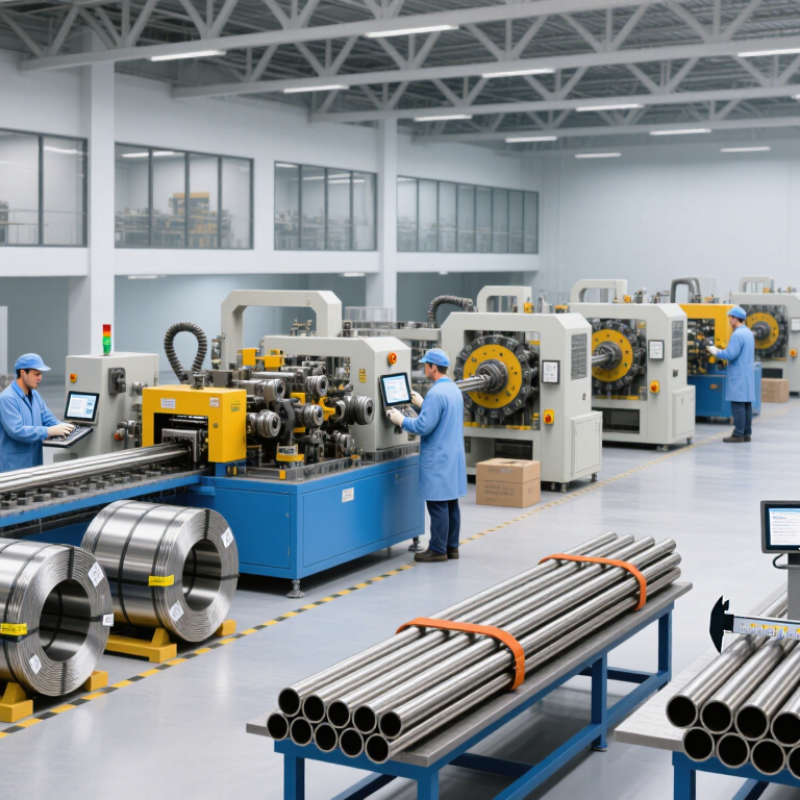
The best manufacturers also show their process openly. Imagine walking through a clean workshop: stainless coils are marked, weld seams are monitored, pipes are measured with calibrated tools, and each bundle carries a traceable label. This evidence is more useful than a polished website. Production experience matters, but it can become a blind spot. Some factories repeat familiar orders and overlook new service conditions, especially chloride exposure or high-temperature operation.
This guide examines China’s leading Welded Stainless Steel Pipe manufacturers through capability, certification, export experience, product range, and customer support. No ranking is perfect. Supplier performance can vary by project, batch, and inspection discipline. Careful technical review remains essential.
What Defines a Top Welded Stainless Steel Pipe Manufacturer in China?
A dependable manufacturer demonstrates control at every production stage, not just a polished product catalog. Ask how incoming stainless steel is identified and traceable to its material records. Consistent chemistry, wall thickness, and surface condition matter, especially when pipes must fit existing equipment. Details matter. A clear explanation of welding parameters, seam inspection, and dimensional checks can reveal more than broad quality claims. Request sample inspection reports and confirm that testing matches your drawings and service requirements. Pressure testing or non-destructive examination may be appropriate, depending on the specification.
Tips: Compare written tolerances, inspection methods, and delivery records—not price alone. Ask to see how rejected pipes are documented and corrected. A factory visit can help, but it is not proof by itself. Check a sample’s seam, ends, and finish under good lighting; small inconsistencies deserve a question, not an assumption.
Communication is another useful measure. Strong suppliers clarify grade, diameter, schedule, length, finish, packaging, and inspection expectations before production begins. They should explain limitations plainly and provide records that connect the finished pipe to its stated material and checks. No supplier is perfect, and one sample cannot predict every batch. Verify the details that matter for your application, then keep agreed acceptance criteria in writing.
| China Top Welded Stainless Steel Pipe Manufacturers? - What Defines a Top Welded Stainless Steel Pipe Manufacturer in China? | |||
|---|---|---|---|
| Evaluation Dimension | What Strong Capability Looks Like | Useful Evidence to Request | Why It Matters |
| Applicable product standards | Can manufacture and inspect products to the standards specified for the order, such as ASTM A312/A312M for austenitic stainless steel pipe or EN 10217-7 for welded stainless steel tubes for pressure purposes. | Standard and grade stated on the quotation, purchase order, inspection plan, and material test certificate. | Requirements differ by standard, product form, application, and order; a clear specification helps prevent mismatched supply. |
| Material and grade control | Can process specified grades such as 304/304L and 316/316L, with material identification maintained through production. | Mill test certificates, heat or lot numbers, positive material identification records where required, and documented segregation of grades. | Grade mix-ups can affect corrosion resistance, service suitability, and compliance with the purchase specification. |
| Welding process and procedure control | Uses a welding process suitable for the product and application, with controlled procedures, qualified personnel where required, and monitored production parameters. | Welding procedure documentation, welder or operator qualification records where applicable, and production inspection records. | Consistent weld preparation and execution support dependable seam quality and repeatable production. |
| Dimensional accuracy | Checks outside diameter, wall thickness, length, ovality, straightness, and end condition against the applicable standard and agreed order requirements. | Inspection reports showing measured values, inspection equipment calibration status, and the relevant acceptance criteria. | Dimensions and tolerances vary by specification and size, so results should be assessed against the actual contract requirements. |
| Inspection and testing | Applies the tests required by the governing product standard and purchase order. Depending on the specification, these may include chemical analysis, mechanical tests, hydrostatic testing, or nondestructive examination. | Test reports linked to the supplied heat, lot, or pipe identification, plus a clearly defined inspection and test plan. | Testing requirements are application- and standard-dependent; traceable results make conformity easier to verify. |
| Surface finish and post-weld treatment | Can supply the specified finish and manage weld cleaning or other agreed post-weld treatment appropriate to the product and end use. | Finish description or agreed roughness requirement, sample inspection records, and documented cleaning or treatment details when specified. | Finish requirements depend on the application; a defined specification avoids subjective acceptance decisions. |
| Quality management and corrective action | Maintains documented controls for production, nonconforming product, corrective action, and ongoing process review. ISO 9001 certification can indicate a quality management system, but does not by itself certify every product. | Current certificate scope and validity, audit information where available, and examples of inspection and corrective-action records. | A functioning system supports consistent controls; product conformity still needs to be verified against the order. |
| Traceability and documentation | Can link finished pipes to relevant material and inspection records and provide the documentation agreed for the shipment. | Sample material test certificate, packing list, inspection reports, product markings, and a documented traceability example. | Complete records help buyers confirm product identity and satisfy receiving, project, or regulatory checks. |
| Order planning and delivery control | Confirms production scope, inspection stages, packaging, and delivery schedule against the order, and communicates changes promptly. | Order-specific production schedule, shipment plan, packaging details, and a clear process for handling schedule changes. | Reliable delivery depends on order planning and communication as well as manufacturing capability. |
Note: Product standards, testing, tolerances, finish, and documentation should be confirmed in the purchase specification. The criteria above are an evaluation framework, not a ranking of individual manufacturers.

China’s leading welded stainless steel pipe manufacturers begin with careful coil selection. The mill checks the grade, thickness, surface condition, and material certificates before production. A small mismatch can affect forming or corrosion resistance later. Details matter.
The coil is slit into narrower strips, then passed through forming rolls that gradually shape it into a tube. Operators align the edges and weld the seam using a process suited to the material and pipe dimensions, often with shielding gas to protect the weld area. Heat and speed need close control. Too much heat can distort thin walls; too little may leave an incomplete joint. The seam is inspected and, where required, tested using suitable nondestructive methods.
After welding, sizing rolls bring the pipe closer to its specified diameter and roundness. Some products receive heat treatment, followed by pickling or passivation to restore a clean surface; the exact steps depend on grade and intended service. Final checks may include dimensional measurement, visual inspection, and pressure testing when specified. Buyers should confirm the applicable product standard and inspection records, not rely on a polished finish alone. A bright surface can still hide a weak seam.
When comparing China’s welded stainless steel pipe manufacturers, standards should guide the first review. ASTM A312 is common for pressure and high-temperature service, while EN 10217-7 may suit European project requirements. Confirm the exact edition, test scope, and acceptance criteria. A quotation that only says “stainless steel pipe” is incomplete.
Material selection depends on the working environment. Grade 304L handles many general applications, but 316L offers stronger resistance to chloride exposure. Duplex grades may improve strength, though welding requires tighter control. Ask for heat numbers, chemical analysis, and positive material identification records. Traceability matters.
Quality control should follow the pipe’s actual use. Check weld alignment, wall thickness, ovality, surface finish, and end preparation. Hydrostatic testing may be required, while ultrasonic, radiographic, or eddy-current inspection can reveal weld defects. Review calibration records, inspection reports, and packing photos before shipment. I have seen polished surfaces hide poor internal welding. Appearance is not proof. Records matter.
An ISO-certified system helps, but it does not replace independent verification. Request sample reports and compare them with the purchase specification. Small differences in tolerance can affect installation. One weakness remains: documents may look complete while process discipline varies between production batches. A pre-shipment inspection can expose that gap, especially when checking random pipe lengths and marking durability.
Minimum mechanical-property benchmarks for commonly specified stainless steel pipe materials
The chart compares minimum tensile strength, yield strength, and elongation requirements commonly referenced for ASTM A312 TP304/TP316/TP321/TP347 austenitic stainless steel pipe and ASTM A790 UNS S32205 duplex stainless steel pipe. Actual requirements should be confirmed against the applicable standard edition, pipe size, wall thickness, heat treatment, welding procedure, and inspection plan.
Chinese welded stainless steel pipe manufacturers support many demanding projects, from clean water systems to industrial processing lines. Their pipes commonly serve municipal water treatment, building plumbing, fire protection, and HVAC circulation. In these systems, engineers often specify stainless steel for corrosion resistance and easier maintenance. Wall thickness, outside diameter, and connection type must match actual pressure conditions.
Food, beverage, pharmaceutical, and dairy facilities require smoother internal surfaces. Weld quality matters because rough areas can retain residue. Manufacturers may provide polished finishes, orbital-weld compatibility, and documented surface treatment. Chemical plants use welded pipe for acids, solvents, gases, and cooling media. The correct grade depends on temperature, concentration, and exposure time. A familiar grade is not always the safest choice.
Construction and architectural projects also use welded stainless pipe for handrails, structural frames, façades, and drainage. Marine facilities may require stronger corrosion control near saltwater. Reliable suppliers should show material certificates, heat numbers, dimensional reports, and inspection records. Hydrostatic testing and non-destructive testing can reveal defects that visual checks miss. A low price can look attractive. It can also hide weaker tolerances or incomplete documentation. Field experience suggests that early sample testing prevents expensive installation changes. However, supplier claims still need independent verification.
China Top Welded Stainless Steel Pipe Manufacturers?
Choosing the right Chinese manufacturer requires more than comparing price lists. Start with your project’s grade, outside diameter, wall thickness, weld method, and required surface finish. A capable supplier should explain whether TIG, laser, or another process suits your application. Ask for production records, not only attractive product photos.
Request recent material test certificates, heat numbers, weld inspection reports, and dimensional records. Confirm testing methods, such as hydrostatic testing, PMI, ultrasonic inspection, or visual examination. Certificates should match the actual batch delivered. Check whether the factory follows relevant ASTM, ASME, EN, or project-specific requirements. ISO certification helps, but it does not prove every pipe is suitable.
Visit the facility when possible, or arrange a live video audit. Observe coil storage, edge preparation, welding control, annealing, polishing, and packing. Samples matter. Order a small trial batch and measure ovality, length, surface condition, and weld appearance before approving larger quantities. Ask how complaints are handled and who accepts responsibility for nonconforming goods.
Look beyond price. Extremely low quotations may hide thinner walls, mixed grades, weak traceability, or inconsistent finishing. A polished factory tour can still mislead. My own checklist would include delivery capacity, export packaging, inspection access, payment protection, and clear technical drawings. No checklist is perfect. Keep written records of every change, because a verbal promise may disappear when production becomes busy.


For those larger-sized parts, or smaller quantity runs, we have 2 independent powder coat booths and ovens. The quality, durability and affordability of today’s powder coating finishes make this the process of choice for world-class companies.
Powder coating advantages over other forms of coating are many. Materials used in the Powder coating process can be metals and non-metals that come in a multitude of thicknesses, textures, colors, etc. Another of Powder coating’s biggest advantages over conventional coatings is its ability to create finishes in many different textures. Powder Coating Booths allow us the ability to apply these advantages to large products.
Tri-State Fabricators runs a full-service conveyor line for painting. Wet painting can provide protection or decoration to many different part styles. From start to finish, every project is easier to undergo random and point-based inspection by our skilled painting team.
Advantages to our Wet Paint Line are these lines start with product prep and ends with a thorough inspection of a high quality finished product. Our ability to complete large and small projects with a superior finish and doing so in a timely and economical fashion. This passes along the savings in production to our customers. When powder coating ins not an option, our Wet Paint Line gets the job done right the first time.
When the parts get big and heavy we roll-out our custom paint racks and oversize booth. By utilizing our partnerships with all the major paint brands, we can match virtually any color with wet paint.
The advantages of having access to a Wet Paint Booth are many. Large projects of many different shapes can be loaded into the booth. The Wet Paint Booth offers an environment that is much more controlled than a typical parts painting operation.
Not only are they used because of their controlled environment, but they’re are also advantageous when it comes to applying paint to parts that are needed in industries that require specialty coatings such as medical, aerospace, etc.
Our military forces have some very high standards when it comes to the finish of their vehicles and equipment. From the first pre-treatment step to final coat, it takes a great deal of knowledge and experience to protect the men and women of our armed forces. They deserve only the best, and Tri-State Fabricators provides it.
All of our processes are closely monitored by our staff and management teams. Both of which are highly trained in the processes of metal fabrication and finishing. Tri-State Fabricators’ goal is to always fully satisfy each and every customer, including the military. We will always put a 110% into what we do.
Abrasive media blasting is an excellent way to remove old paint, rust, and increase the paint/powder adhesion. Glass beads produce a much smoother and brighter finish than angular abrasives; leaving the part clean yet without any dimensional change. Chemically inert and environmentally friendly, we can recycle our beads approximately 30 times; making them a more preferred method of metal cleaning or surface finishing.
Advantages to Glass Bead Blasting are many. Glass bead blast media is used when a project is needing rough surfaces need to become smooth for applications of coatings such as paint. It is typically used to clean paint and rust from a product surface without deforming the surface it is being used on. Overall, compared to many other blasting media, Glass Bead Blasting is a very economical choice and those savings are always passed on to our customers.
Tri-State Fabricators utilize a zinc phosphate wash to clean and etch the material to ensure the best paint adhesion possible. The unique design of our 3-stage wash system does the work like a 5-stage. From Cleaning and rinsing to conversion coating and post-treatment, Our Part Washing process is a complete service and works throughout the fabrication service and the finishing service.
Along with the previously mentioned benefits, Curing is a vital chemical reaction that leaves the product finish hard and relatively safe from mild abrasion and aggressive corrosion. This process can be done in more than one way; ambient air-dry or in curing ovens at temps that exceed 240°.
From fixing paint mistakes (someone else’s of course) to simply cleaning our paint line hooks, our burn-off oven is put to good use. After a quick burn-off, a little clean up, and a fresh coat of paint, your parts will look better than new.
Why does our Burn-Off Oven work so well? Because super heating the air around parts turns the materials into ashes. From paint and powder coatings to rubber and machining oils, high temps do the job without degrading the integrity of the part.
Masking is a vital part of producing high quality products. We have die-cut masking patterns to protect machined surfaces as well as a wide range of plugs and caps to protect threaded holes and bolts. We provide permanent and temporary masking.
Masking allows the selected sections of a product to be protected from a fabrication or finishing service. This can be with both chemicals when etching and tapes, paints when only finishing just a section of the product. Masking is great in aiding the customization process of a project.
Screen printing is a photographic process that transfers artwork onto a porous nylon screen which allows colored ink to flow through the screen and be deposited on an aluminum or plastic component. We can generally have just about any design created onto a screen for your parts.
Some of the advantages of Screen Printing are, brand recognition for your business displaying on your products, assembly instructions, product warnings/hazards, etc. Tri-State Fabricators produces Screen Printing of the highest quality so you know it’s durable.
Metal Finishing is the art of treating the exterior portion of product, often metal but can also be made of other materials, so that the surface is clean and free of any debris. Then the process of applying coats or either paint of powder coat takes place. This coating process improves the quality of the product in both appearance and resistance to wear and corrosion.
Tri-State Fabricators, Inc., understands that a project typically isn’t complete until a high-quality finish has been added to your product. This is why our painting and powder coating teams continuously inspect the products throughout the Metal Finishing process.

