Choosing the right Wear Plate supplier can determine whether a mining chute lasts months or several years. For global buyers, price is only one part of the decision. Hardness, impact toughness, chemical composition, plate thickness, welding behavior, and delivery reliability deserve equal attention.
Professor Ian Hutchings, a leading tribology scholar, describes wear as “the progressive loss of substance from operating surfaces caused by relative motion.” His definition explains why a simple hardness ranking cannot tell the whole story. Abrasive stone, falling ore, sliding coal, and wet slurry create different failure patterns. A plate that performs well inside a quarry may disappoint in a cement plant.
This guide reviews China’s top ten Wear Plate manufacturers for international purchasing teams. It considers manufacturing capacity, quality control, certifications, technical support, customization, export experience, and product consistency. Samples, mill certificates, and welding guidance matter more than polished catalog language. Look closely at production details: plate straightness, surface condition, cut-edge quality, and traceable heat numbers.
Some comparisons remain imperfect. Public information can change, and supplier performance may vary between batches. Buyers should verify current test reports and inspect critical orders independently. That extra step may feel slow. It can prevent costly shutdowns later.
The manufacturers listed here are not ranked by marketing claims alone. Their practical value depends on application, service conditions, and communication after purchase. A reliable supplier should discuss failure risks honestly, even when the answer is not the cheapest option.
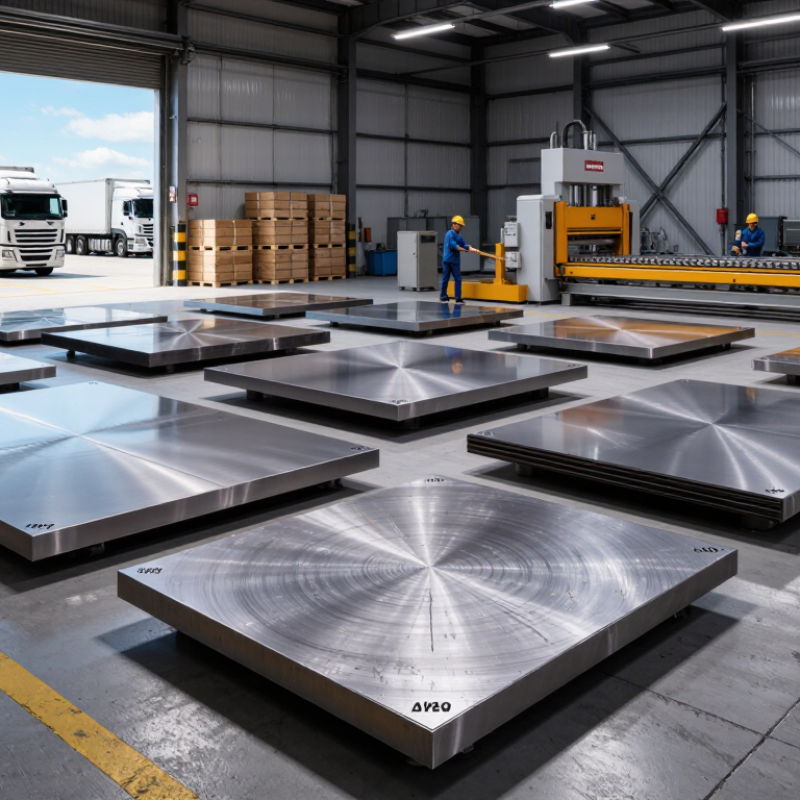
China’s wear plate sector sits inside the world’s largest steelmaking base. The World Steel Association reported 1,019 million tonnes of Chinese crude steel production in 2023. That represented roughly 54% of global output. This scale supports stable access to alloying materials, rolling capacity, and heat-treatment facilities.
Export activity also strengthens China’s global market role. China Customs recorded approximately 90.3 million tonnes of exported steel products in 2023. Industry research from Grand View Research identifies construction, mining, and energy as major demand fields for wear-resistant steel. However, market estimates vary by definition and region. Buyers should treat forecasts carefully.
Manufacturers commonly provide quenched and tempered plates for dump bodies, crushers, feeders, and excavator parts. Practical selection depends on hardness, impact toughness, thickness tolerance, and welding guidance. A plate marked 450 HBW may still perform differently after cutting or poor heat control. That detail is easy to miss.
For global buyers, factory audits should examine test certificates, furnace records, surface repairs, and ultrasonic inspection procedures. EN 10025, ASTM specifications, and project-specific requirements may not align perfectly. Translation can create another risk. Experienced purchasing teams compare original mill data with independent inspection results before shipment. China offers strong production depth, but quality consistency still requires evidence, not assumptions.
Evaluating China’s top wear plate manufacturers requires more than comparing prices. China produced about 1,005 million tonnes of crude steel in 2024, according to World Steel Association data. That scale creates strong manufacturing capacity, but capacity is not consistent quality. Buyers should check plate chemistry, hardness, tensile strength, impact testing, and thickness tolerance. Request original mill test certificates, heat numbers, and production dates. These details connect the delivered plate to its actual batch.
A reliable supplier should provide traceability from raw slab to finished plate. Ask whether testing follows recognized standards, such as EN, ASTM, or national specifications. Independent laboratory verification is useful for critical mining, construction, and recycling equipment. ISO 9001 certification can support process control, but it cannot replace product testing. A polished website is not proof. I would not treat one audit as final. Factory visits, sample orders, and third-party inspections reveal more than sales claims. Small details matter.
Tips: Compare three recent test reports, not one. Check hardness at several points across the plate. Confirm whether the stated tolerance covers length, width, and thickness. Review packaging photographs before shipment. Also ask how rejected plates are handled. That answer may expose the real quality culture. Reports from World Steel Association and ISO should support your research, but practical verification remains essential. Mistakes still happen, even with certified suppliers.
International buyers often compare China’s top ten wear plate manufacturers by more than price. They examine hardness, chemical composition, impact resistance, and plate thickness. Reliable suppliers provide mill certificates, inspection records, and clear heat-number traceability. These details help buyers verify each batch before shipment. Practical sourcing experience also shows the value of testing samples under real working conditions. A quarry liner and a conveyor chute may need different wear solutions.
Manufacturing capability matters. Look for controlled heat treatment, consistent rolling, and accurate cutting services. Ask whether the factory can support custom dimensions and repeat orders. Welding guidance is also important for installation teams.
A strong supplier explains preheating, consumables, and repair limits in practical terms. Some suppliers communicate well at the beginning, then respond slowly after payment. That risk deserves attention. No checklist is perfect, and specifications can still be misunderstood.
Tips: Request a recent inspection report, sample identification, and production photos. Compare hardness results from several points on one plate. Check packaging, edge protection, and moisture control before dispatch. Ask for a small trial order when the application is unfamiliar. Keep written records of every tolerance and test requirement. A low quotation may hide higher cutting, transport, or replacement costs. International buyers should also confirm applicable standards, import documents, and after-sales responsibilities before choosing among Chinese manufacturers.
China Top 10 Wear Plate Manufacturers for Global Buyers
Key Products, Industries, and Performance Differences
Global buyers comparing China’s top ten wear plate manufacturers should examine product purpose, not catalog size. Common options include quenched and tempered abrasion-resistant plates, high-manganese steel, chromium carbide overlay plates, and customized composite panels. Each type serves a different wear pattern.
Quenched plates suit dump bodies, crushers, loaders, and mining chutes exposed to sliding abrasion. Their hardness often ranges from 400 to 600 HBW, while toughness supports impact-heavy work. Overlay plates use a welded hardfacing layer for severe mineral abrasion. They can last longer in conveyor transfer points, but their weld seams require careful inspection. High-manganese steel performs differently under repeated impact. It hardens during service, although it may disappoint in low-impact sliding conditions.
Industrial buyers should request mill test certificates, hardness maps, chemical analysis, and ultrasonic inspection records. Thickness tolerance matters when plates are cut for buckets or truck liners. Welding procedures also affect performance, especially near the heat-affected zone. In practical procurement, I would compare sample plates under similar load, not rely on hardness alone. Abrasion tells only part.
Some published service-life claims seem optimistic. Real results change with moisture, particle size, impact angle, and maintenance quality. A plate lasting twelve months in dry iron ore may fail much sooner in wet, sharp aggregate. Buyers should confirm cutting limits, bending radius, packaging protection, and after-sales inspection support before approving a large order. Fit matters more.
Purchasing wear plate requires more than comparing prices. Global crude steel output reached about 1.89 billion tonnes in 2023, according to World Steel Association data. This scale creates many suppliers, but capacity does not guarantee stable quality. Buyers should request mill certificates, heat numbers, chemical composition, hardness results, and thickness tolerances. Ask whether each document matches the shipped plate. A missing heat number is a serious warning.
Quality control should include sampling before loading. Independent inspectors can verify surface cracks, dimensions, hardness, and ultrasonic results. ISO’s 2022 survey recorded more than 1.2 million ISO 9001 certificates worldwide, yet certification alone cannot prove wear performance. Test methods and acceptance limits must appear in the purchase contract. A useful specification includes abrasion testing, impact requirements, edge condition, and repair rules. Perfect paperwork is rare. That deserves attention.
Tips:
Compare three suppliers using the same technical sheet. Request recent test reports, not only templates. Confirm packing for sea transport, including waterproof wrapping and timber supports. Check the HS code, commercial invoice, certificate of origin, and bill of lading before shipment. The World Bank’s 2023 Logistics Performance Index shows major differences in customs efficiency and shipment reliability across markets. Therefore, confirm export experience for your destination port. Also clarify Incoterms, inspection responsibility, delivery tolerance, and the process for damaged plates. A cheap quote can become expensive after port delays, re-testing, or rejected material.



For those larger-sized parts, or smaller quantity runs, we have 2 independent powder coat booths and ovens. The quality, durability and affordability of today’s powder coating finishes make this the process of choice for world-class companies.
Powder coating advantages over other forms of coating are many. Materials used in the Powder coating process can be metals and non-metals that come in a multitude of thicknesses, textures, colors, etc. Another of Powder coating’s biggest advantages over conventional coatings is its ability to create finishes in many different textures. Powder Coating Booths allow us the ability to apply these advantages to large products.
Tri-State Fabricators runs a full-service conveyor line for painting. Wet painting can provide protection or decoration to many different part styles. From start to finish, every project is easier to undergo random and point-based inspection by our skilled painting team.
Advantages to our Wet Paint Line are these lines start with product prep and ends with a thorough inspection of a high quality finished product. Our ability to complete large and small projects with a superior finish and doing so in a timely and economical fashion. This passes along the savings in production to our customers. When powder coating ins not an option, our Wet Paint Line gets the job done right the first time.
When the parts get big and heavy we roll-out our custom paint racks and oversize booth. By utilizing our partnerships with all the major paint brands, we can match virtually any color with wet paint.
The advantages of having access to a Wet Paint Booth are many. Large projects of many different shapes can be loaded into the booth. The Wet Paint Booth offers an environment that is much more controlled than a typical parts painting operation.
Not only are they used because of their controlled environment, but they’re are also advantageous when it comes to applying paint to parts that are needed in industries that require specialty coatings such as medical, aerospace, etc.
Our military forces have some very high standards when it comes to the finish of their vehicles and equipment. From the first pre-treatment step to final coat, it takes a great deal of knowledge and experience to protect the men and women of our armed forces. They deserve only the best, and Tri-State Fabricators provides it.
All of our processes are closely monitored by our staff and management teams. Both of which are highly trained in the processes of metal fabrication and finishing. Tri-State Fabricators’ goal is to always fully satisfy each and every customer, including the military. We will always put a 110% into what we do.
Abrasive media blasting is an excellent way to remove old paint, rust, and increase the paint/powder adhesion. Glass beads produce a much smoother and brighter finish than angular abrasives; leaving the part clean yet without any dimensional change. Chemically inert and environmentally friendly, we can recycle our beads approximately 30 times; making them a more preferred method of metal cleaning or surface finishing.
Advantages to Glass Bead Blasting are many. Glass bead blast media is used when a project is needing rough surfaces need to become smooth for applications of coatings such as paint. It is typically used to clean paint and rust from a product surface without deforming the surface it is being used on. Overall, compared to many other blasting media, Glass Bead Blasting is a very economical choice and those savings are always passed on to our customers.
Tri-State Fabricators utilize a zinc phosphate wash to clean and etch the material to ensure the best paint adhesion possible. The unique design of our 3-stage wash system does the work like a 5-stage. From Cleaning and rinsing to conversion coating and post-treatment, Our Part Washing process is a complete service and works throughout the fabrication service and the finishing service.
Along with the previously mentioned benefits, Curing is a vital chemical reaction that leaves the product finish hard and relatively safe from mild abrasion and aggressive corrosion. This process can be done in more than one way; ambient air-dry or in curing ovens at temps that exceed 240°.
From fixing paint mistakes (someone else’s of course) to simply cleaning our paint line hooks, our burn-off oven is put to good use. After a quick burn-off, a little clean up, and a fresh coat of paint, your parts will look better than new.
Why does our Burn-Off Oven work so well? Because super heating the air around parts turns the materials into ashes. From paint and powder coatings to rubber and machining oils, high temps do the job without degrading the integrity of the part.
Masking is a vital part of producing high quality products. We have die-cut masking patterns to protect machined surfaces as well as a wide range of plugs and caps to protect threaded holes and bolts. We provide permanent and temporary masking.
Masking allows the selected sections of a product to be protected from a fabrication or finishing service. This can be with both chemicals when etching and tapes, paints when only finishing just a section of the product. Masking is great in aiding the customization process of a project.
Screen printing is a photographic process that transfers artwork onto a porous nylon screen which allows colored ink to flow through the screen and be deposited on an aluminum or plastic component. We can generally have just about any design created onto a screen for your parts.
Some of the advantages of Screen Printing are, brand recognition for your business displaying on your products, assembly instructions, product warnings/hazards, etc. Tri-State Fabricators produces Screen Printing of the highest quality so you know it’s durable.
Metal Finishing is the art of treating the exterior portion of product, often metal but can also be made of other materials, so that the surface is clean and free of any debris. Then the process of applying coats or either paint of powder coat takes place. This coating process improves the quality of the product in both appearance and resistance to wear and corrosion.
Tri-State Fabricators, Inc., understands that a project typically isn’t complete until a high-quality finish has been added to your product. This is why our painting and powder coating teams continuously inspect the products throughout the Metal Finishing process.


