Top Three Phase Solid State Relay Manufacturers in China
Three Phase Solid State Relay (SSR) products are widely used where frequent switching, quiet operation, and reduced mechanical wear matter. In industrial control panels, they may regulate heaters, manage phase-based loads, or support automated production equipment. Yet a relay’s appearance tells little about its real suitability. Ratings, installation conditions, and load behavior deserve closer attention.
This guide introduces three Chinese manufacturers and the factors that help buyers compare them. It considers product range, published technical information, customization options, quality-control practices, and responsiveness to engineering questions. Details matter. For each model, check rated voltage and current, switching mode, control input, insulation specifications, and recommended heat-sink conditions. A relay handling a resistive heater may not suit a motor or another inductive load. Ambient temperature and panel airflow can also affect operating margins.
Manufacturer claims should be checked against datasheets, sample testing, and clear communication about intended use. Look for consistent specifications and practical installation guidance, not just a low quoted price. No shortlist is perfect. Factory capabilities and product offerings can change, while a suitable choice depends on the application, not reputation alone. This comparison is a starting point, rather than a substitute for technical review. By asking specific questions and checking the details, buyers can identify a Three Phase Solid State Relay supplier that better fits their equipment, operating conditions, and support needs.
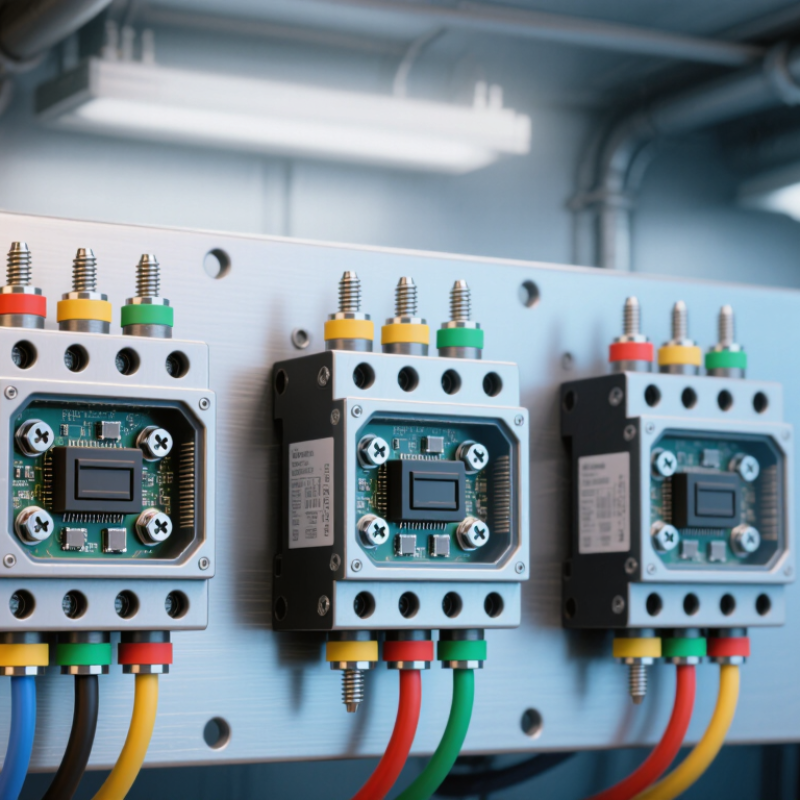
Three-Phase Solid State Relays: Definition and Operating Principles
A three-phase solid state relay (SSR) switches three AC lines electronically, without moving contacts. A low-voltage control signal activates isolated semiconductor circuits, commonly using back-to-back thyristors or triacs. When the load voltage crosses zero, a zero-crossing relay turns on; random-fire types can switch at other points in the AC cycle. That distinction matters for heaters and phase-controlled loads. IEC 60947-4-3 covers semiconductor controllers and contactors for non-motor loads, including three-phase applications. It is a useful reference when checking ratings and operating conditions.
A 2024 Fortune Business Insights market report estimated the global solid state relay market at USD 1.32 billion in 2023, with growth projected to USD 2.11 billion by 2032. Market growth does not guarantee suitability for a particular installation. Check the load current, voltage, switching mode, and ambient temperature against the relay’s specifications. During operation, semiconductor losses create heat, so a properly sized heat sink and clear airflow matter. In practice, “off” is not perfectly open: SSRs can pass small leakage currents. That detail is easy to miss. For three-phase equipment, verify all three poles and consider what happens if one phase fails; the relay alone cannot prevent every motor or process fault.
Key Criteria for Evaluating Chinese Three-Phase SSR Manufacturers
Choosing a Chinese three-phase solid state relay manufacturer starts with matching the device to the actual load. Compare rated voltage and current, but also ask how ratings change with ambient temperature and cooling conditions. A relay tested at room temperature may need substantial derating inside a warm control cabinet. Numbers need context.
Request test data for switching performance, leakage current, dielectric strength, and insulation resistance. For motor or inductive loads, confirm the relay’s surge capability and recommended external fuse. Ask how the manufacturer checks thermal behavior across all three phases. A clear test report should state the test conditions, equipment, and acceptance limits. Vague claims are not enough.
Production consistency matters. Check whether incoming components, assembly steps, and final inspections are documented and traceable by batch. Request samples and test them under your operating conditions, including expected load changes and cabinet temperatures. Also review the datasheet, wiring diagram, and technical support response for specific, consistent answers. Small details count. A limitation is easy to miss: published ratings may assume a particular heat sink or mounting method. Confirm these details before comparing prices, and record any unanswered questions rather than treating them as settled.
Three-Phase SSR Manufacturer Evaluation: A 220 V, 50 Hz Reference Waveform
The chart shows an ideal balanced three-phase reference: 220 V RMS phase-to-neutral, 50 Hz, with phases separated by 120° and a peak voltage of approximately 311 V. It is a nominal electrical reference, not manufacturer test data. When evaluating a three-phase SSR manufacturer, check rated operating voltage and current, load compatibility, heat-sink requirements, isolation and dielectric ratings, surge protection, certifications, and warranty terms.
Manufacturer One: Company Profile and Product Range
Manufacturer One is an anonymized profile of a Chinese solid-state relay supplier serving industrial control applications. Its likely product range includes single-phase and three-phase AC relays, DC-output models, zero-cross switching options, and heat sinks. These products suit heaters, packaging lines, and temperature-control cabinets, where repeated switching can wear mechanical contacts. Three-phase units are especially relevant to factory equipment, but current ratings depend on cooling and ambient temperature.
Demand for factory automation provides useful context. The International Federation of Robotics reported 276,288 industrial robots installed in China in 2023, representing 51% of global installations in its World Robotics 2024 report. That figure does not measure relay sales, but it signals the scale of China’s automation base. A buyer should check whether relay specifications state load type, surge limits, leakage current, and thermal derating. Small details matter.
A catalogue alone proves little. Request test records and confirm whether stated current ratings assume a specified heat sink. IEC 62314 offers a relevant reference for solid-state relay requirements, though it does not replace application testing. Manufacturer One’s profile is strongest when it pairs clear product choices with traceable test data. Some catalogues remain vague here; that deserves scrutiny.
Manufacturer Two: Company Profile and Product Range
The second manufacturer in this comparison focuses on three-phase solid state relays for industrial switching. Its profile is defined less by a single model than by a range of configurations for different loads and control systems. Typical options include panel-mounted relays, heat-sink assemblies, and models with different input-control voltages. Exact availability varies by supplier, so buyers should confirm the current product catalogue.
In practical use, relay selection depends on more than the current rating printed on a label. Engineers should check load type, switching frequency, ambient temperature, and heat dissipation. A relay controlling a motor may need different consideration from one switching a resistive heater. Heat matters. A compact unit mounted in a crowded cabinet can run hotter than expected, especially without adequate airflow.
A useful product range also provides clear datasheets, wiring diagrams, and guidance on compatible heat sinks. These details help maintenance teams replace parts without guesswork. Still, catalogue figures do not tell the whole story; installation conditions can change performance. Compare rated values with the actual application, and ask for test information when the duty cycle is demanding. A wider range is helpful, but it can also make selection less straightforward.
Manufacturer Three: Company Profile and Product Range
Manufacturer Three’s profile is best judged by its engineering scope and production controls, rather than broad claims about scale. As a China-based solid-state relay manufacturer, it may serve machine builders, control-panel makers, and equipment integrators. A credible profile should explain design support, inspection procedures, and how the company maintains consistent specifications across repeat orders. These details matter when relays switch heaters or other loads inside compact cabinets. Small differences count.
Tips: Check the datasheet before selection. Confirm load type, current, voltage, and heat-sink needs. Ratings can change with temperature.
A practical product range may include AC-output and DC-output relays, with different control-input options and mounting styles. Some models use zero-cross switching; others suit applications needing immediate switching. Compare these features with the actual load and switching cycle. Ask for test conditions behind stated ratings, too. A brochure alone is not enough. Thermal limits are easy to overlook, and that deserves a second look.





