


Choosing a reliable China Pan Tilt Video Platform supplier requires more than comparing product prices. Buyers need to examine engineering depth, optical performance, manufacturing consistency, and after-sales support. A platform may look impressive in a showroom, yet perform differently under rain, dust, vibration, or weak network conditions.
Fredrik Nilsson, Vice President of the Americas at Axis Communications, has observed: “PTZ cameras are ideal for covering large areas, but they cannot see everything at once.” This practical warning remains important. A Pan Tilt Video Platform must balance viewing range, tracking accuracy, payload capacity, control response, and installation limitations. Suppliers should explain these trade-offs clearly, rather than promise unlimited coverage.
This guide introduces leading Chinese suppliers through a practical evaluation lens. It considers product design, camera integration, motion control, software compatibility, customization, testing, certifications, and global service capability. Factory experience matters. So does the supplier’s ability to provide drawings, sample testing, firmware updates, spare parts, and clear documentation.
Details reveal quality. Look for smooth movement at low speed. Check whether the platform holds position during wind or vibration. Ask how the supplier handles calibration failures and delayed components. Request real operating references when possible.
No supplier is perfect. Even strong manufacturers may have gaps in documentation, communication, or regional support. This guide therefore avoids treating rankings as permanent facts. It encourages buyers to verify specifications, test samples, and assess long-term cooperation before signing a contract. A careful decision today can prevent expensive redesigns tomorrow.
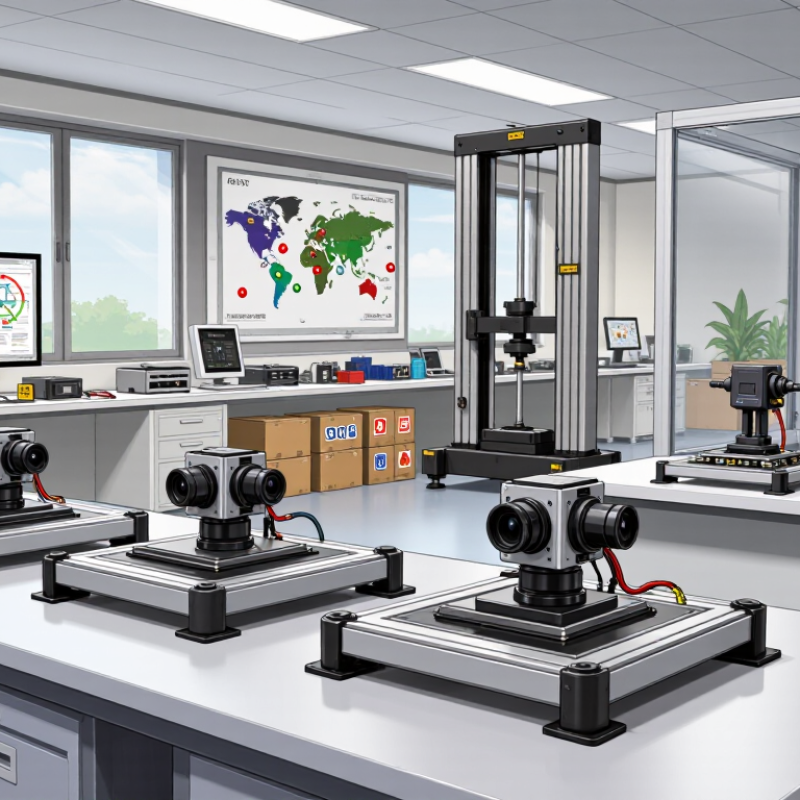
A pan-tilt video platform is a camera system that moves horizontally and vertically to observe a wider area. “Pan” means side-to-side movement, while “tilt” means upward or downward movement. The platform usually combines a camera, motorized joints, mounting hardware, control software, and a video connection. Together, these parts let an operator adjust the viewing angle without physically moving the equipment.
In practical installations, the system may sit on a tripod, vehicle, wall mount, or temporary observation structure. Operators can guide movement through a controller, web interface, or automated tracking function. Smooth motion matters. Sudden turns can make footage difficult to follow and may cause missed details. A reliable platform should offer stable positioning, accurate control, clear video, and suitable protection against dust or weather. It should also support secure access and dependable data handling.
Not every pan-tilt platform is equally capable. A wide movement range does not guarantee useful coverage. Poor calibration can leave blind spots, even when the camera appears advanced. This is easy to overlook. From field experience, installation height, lighting, vibration, and network delay often affect performance more than advertised specifications. Buyers should test real movement, image stability, control response, and maintenance access before choosing a system. The best choice depends on the site, viewing distance, operating conditions, and the level of human supervision required.

Key Types and Features of Pan-Tilt Video Platforms
Pan-tilt video platforms usually fall into three groups: indoor PTZ units, outdoor speed domes, and thermal or ruggedized systems. Indoor models suit warehouses, schools, and control rooms. Outdoor platforms need weather sealing, stable mounting, and strong night performance. Thermal systems help identify heat signatures in darkness, smoke, or difficult weather. They should not replace visible-light cameras in every scene.
According to MarketsandMarkets’ 2024 Video Surveillance Market report, the global market may grow from about 53.7 billion dollars in 2024 to 83.3 billion dollars by 2029. This growth raises expectations for responsive movement and reliable analytics. Important features include 360-degree rotation, wide tilt ranges, optical zoom, preset tours, and automatic subject tracking. ONVIF interoperability can simplify integration with existing management software. However, compatibility claims still need testing. A label is not proof.
Tips: Test the platform at the real mounting height. A camera that tracks smoothly on a desk may hesitate on a vibrating pole. Check low-light detail, focus recovery, control delay, and storage bandwidth. For outdoor sites, review the IP rating and operating temperature. Calculate network capacity before installation. Many projects overlook this practical cost.
In field evaluations, I would compare tracking accuracy at different speeds, not only in ideal daylight. A platform may perform well in demonstrations but lose a person behind a pillar. That weakness matters. Local maintenance access, firmware support, and replacement time also influence supplier reliability. These details often receive less attention than zoom numbers, though they shape daily performance.
How to Evaluate Chinese Pan-Tilt Platform Suppliers
Evaluating Chinese pan-tilt platform suppliers requires more than comparing catalog prices. Start with the intended camera weight, center of gravity, rotation range, speed, and positioning accuracy. Ask for measured data, not only marketing descriptions. A platform carrying a heavy thermal camera may need stronger torque and smoother braking. Small mechanical errors can become obvious in long-distance imaging.
Request sample units and inspect them under realistic conditions. Check gear backlash, cable routing, connector sealing, vibration, and noise during repeated movement. Ask how accuracy is tested after continuous operation. Useful evidence includes inspection records, calibration methods, material specifications, and traceable production batches. A factory visit can reveal assembly discipline, storage conditions, and whether testing is performed consistently. It also exposes gaps that documents may hide.
Supplier reliability depends on communication and process control. Confirm response times, spare-part availability, firmware procedures, packaging protection, and technical support after delivery. Discuss quality standards and certifications that apply to your destination market. Avoid accepting vague promises. One overlooked detail can delay an entire installation. No supplier is flawless. Even a capable factory may struggle with a custom interface, unusual payload, or sudden design change. A pilot order helps expose these weaknesses before volume purchasing. Keep written acceptance criteria, including allowable play, operating temperature, waterproofing, and service life. Price matters, but predictable performance matters more.
| Evaluation Dimension | Relevant Technical or Commercial Data | Recommended Acceptance Criteria | Documents or Tests to Request | Suggested Weight |
|---|---|---|---|---|
| Pan-Tilt Motion Range | Horizontal rotation range, vertical tilt range, preset positions, manual and automatic speed control. | The platform should meet the project coverage plan, support repeatable preset recall, and operate smoothly without visible backlash. | Mechanical drawings, motion-range specification, preset-repeatability demonstration, and a video or live test. | 12% |
| Camera and Lens Compatibility | Supported camera dimensions, payload, mounting pattern, lens size, cable routing, and center-of-gravity limits. | The supplier must confirm compatibility with the selected camera and lens without exceeding the rated payload or creating excessive vibration. | Payload chart, mounting interface drawing, camera-fit checklist, and a fully assembled sample inspection. | 12% |
| Video and Network Interface | Network interface type, video transport method, control interface, bandwidth requirements, and integration with existing video-management systems. | For IP systems, the supplier should clearly document supported protocols and provide stable streaming and control during continuous operation. | Interface specification, protocol list, network topology, interoperability test, and cybersecurity configuration guide. | 13% |
| Control Protocol Support | Support for common IP, serial, and contact-control methods; command latency; preset, patrol, zoom, focus, and auxiliary-function commands. | Commands should be documented, responsive, and compatible with the buyer’s controller or software platform. | Command protocol manual, API documentation, sample control software, and integration test report. | 10% |
| Power and Electrical Safety | Input voltage, power consumption, connector type, surge protection, grounding, and optional Power over Ethernet requirements. | Power requirements must match the installation. Any Power over Ethernet option should identify the applicable IEEE power class and maximum consumption. | Electrical schematic, rated-power data, safety test reports, connector drawings, and power-loss recovery test. | 9% |
| Environmental Protection | Ingress-protection rating, operating temperature, humidity tolerance, corrosion resistance, wind load, and outdoor sealing design. | The declared environmental rating should match the site conditions and be supported by recognized laboratory test evidence rather than a catalog claim alone. | IP test report, temperature and humidity test data, corrosion documentation, material specification, and outdoor sample evaluation. | 12% |
| Image Stability and Vibration | Mechanical rigidity, vibration behavior during movement, image shake, settling time, and repeatability after stopping. | The image should settle quickly after a movement command and remain stable at the required focal length and installation height. | Vibration test video, stabilization specification, mounting analysis, and acceptance test at minimum and maximum zoom. | 9% |
| Manufacturing Quality | Quality-management system, incoming inspection, process controls, final inspection, traceability, and production consistency. | The supplier should maintain documented quality procedures and provide serial-number or batch-level traceability for finished units. | Quality certificate, inspection plan, sample inspection records, corrective-action procedure, and factory audit access. | 10% |
| Customization Capability | Mechanical redesign, connector changes, firmware customization, private labeling, mounting adaptation, and special environmental requirements. | Customization scope, engineering charges, minimum order quantity, sample approval process, and ownership of drawings should be defined in writing. | Engineering-change procedure, customization quotation, prototype schedule, drawings, and approved sample. | 7% |
| Reliability and Service Life | Continuous operating capability, motor and gear durability, serviceable parts, firmware-maintenance policy, and failure-rate monitoring. | Reliability claims should be supported by documented endurance testing and a practical repair or replacement process. | Endurance-test report, warranty terms, spare-parts list, repair instructions, and escalation contacts. | 8% |
| Commercial and Export Readiness | Minimum order quantity, sample lead time, production lead time, payment terms, packaging, export documents, and after-sales response. | The supplier should provide a transparent quotation, realistic delivery schedule, export documentation, and written warranty and support commitments. | Formal quotation, pro forma invoice, packaging specification, warranty statement, delivery schedule, and reference project evidence without undisclosed claims. | 8% |
Selecting a pan-tilt video platform supplier requires evidence, not polished presentations. The 2024 MarketsandMarkets report valued the global video surveillance market at approximately USD 53.7 billion. It projects about USD 83.3 billion by 2029. This growth attracts capable manufacturers and superficial entrants. Request ISO 9001 records, factory audit results, and corrective-action histories. Ask how failures are traced from the lens module to final shipment.
Mechanical performance needs measurable proof. Request pan and tilt accuracy, preset repeatability, movement speed, and duty-cycle results. IEC 62676 offers useful guidance for video surveillance system performance. For outdoor platforms, verify IP66 ingress protection and IK10 impact resistance through independent test reports. Thermal testing should include cold starts, summer heat, and continuous operation. In field inspections, cable strain relief often reveals more than housing appearance. A clean datasheet can still hide weak sealing. Require sample testing.
Cybersecurity and interoperability deserve equal weight. The 2024 Data Breach Investigations Report found that human involvement appeared in 68% of breaches. Suppliers should provide signed firmware, encrypted communication, access controls, and a vulnerability response process. Confirm compatibility with ONVIF profiles and documented software interfaces. Also examine warranty response times, spare-part availability, and calibration procedures. These details affect total ownership cost. Supplier claims may be accurate, but independent verification remains necessary.
Pan-tilt video platforms support security monitoring, traffic control, industrial inspection, ports, campuses, and live production. A platform with 360-degree rotation can reduce blind spots around a warehouse entrance. Optical zoom matters when operators must read distant signs, not only observe movement. MarketsandMarkets projects the global video surveillance market to grow from USD 83.3 billion in 2024 to USD 116.5 billion by 2029. This growth increases demand for flexible PTZ systems, but market definitions vary.
Customization should match the site, not the catalog. Buyers may request thermal or visible-light sensors, low-light performance, infrared range, weather protection, and ONVIF compatibility. For coastal installations, salt-resistant housing deserves attention. For factories, vibration control and low-latency transmission may matter more than extreme zoom. Ask suppliers for sample footage, rotation-life test results, ingress protection reports, and cybersecurity documentation. Grand View Research estimates the video surveillance market could reach USD 105.6 billion by 2030. Forecasts differ, so avoid using one figure as a purchasing guarantee.
Tips: Compare total cost, not camera price alone. Include lenses, mounts, software, shipping, installation, and replacement parts. Test a complete unit in realistic lighting. A specification sheet can look impressive. It cannot show every failure. Check firmware support, warranty terms, spare-part availability, and delivery consistency. Some customization sounds useful but may slow production or complicate maintenance. That trade-off needs written confirmation.


For those larger-sized parts, or smaller quantity runs, we have 2 independent powder coat booths and ovens. The quality, durability and affordability of today’s powder coating finishes make this the process of choice for world-class companies.
Powder coating advantages over other forms of coating are many. Materials used in the Powder coating process can be metals and non-metals that come in a multitude of thicknesses, textures, colors, etc. Another of Powder coating’s biggest advantages over conventional coatings is its ability to create finishes in many different textures. Powder Coating Booths allow us the ability to apply these advantages to large products.
Tri-State Fabricators runs a full-service conveyor line for painting. Wet painting can provide protection or decoration to many different part styles. From start to finish, every project is easier to undergo random and point-based inspection by our skilled painting team.
Advantages to our Wet Paint Line are these lines start with product prep and ends with a thorough inspection of a high quality finished product. Our ability to complete large and small projects with a superior finish and doing so in a timely and economical fashion. This passes along the savings in production to our customers. When powder coating ins not an option, our Wet Paint Line gets the job done right the first time.
When the parts get big and heavy we roll-out our custom paint racks and oversize booth. By utilizing our partnerships with all the major paint brands, we can match virtually any color with wet paint.
The advantages of having access to a Wet Paint Booth are many. Large projects of many different shapes can be loaded into the booth. The Wet Paint Booth offers an environment that is much more controlled than a typical parts painting operation.
Not only are they used because of their controlled environment, but they’re are also advantageous when it comes to applying paint to parts that are needed in industries that require specialty coatings such as medical, aerospace, etc.
Our military forces have some very high standards when it comes to the finish of their vehicles and equipment. From the first pre-treatment step to final coat, it takes a great deal of knowledge and experience to protect the men and women of our armed forces. They deserve only the best, and Tri-State Fabricators provides it.
All of our processes are closely monitored by our staff and management teams. Both of which are highly trained in the processes of metal fabrication and finishing. Tri-State Fabricators’ goal is to always fully satisfy each and every customer, including the military. We will always put a 110% into what we do.
Abrasive media blasting is an excellent way to remove old paint, rust, and increase the paint/powder adhesion. Glass beads produce a much smoother and brighter finish than angular abrasives; leaving the part clean yet without any dimensional change. Chemically inert and environmentally friendly, we can recycle our beads approximately 30 times; making them a more preferred method of metal cleaning or surface finishing.
Advantages to Glass Bead Blasting are many. Glass bead blast media is used when a project is needing rough surfaces need to become smooth for applications of coatings such as paint. It is typically used to clean paint and rust from a product surface without deforming the surface it is being used on. Overall, compared to many other blasting media, Glass Bead Blasting is a very economical choice and those savings are always passed on to our customers.
Tri-State Fabricators utilize a zinc phosphate wash to clean and etch the material to ensure the best paint adhesion possible. The unique design of our 3-stage wash system does the work like a 5-stage. From Cleaning and rinsing to conversion coating and post-treatment, Our Part Washing process is a complete service and works throughout the fabrication service and the finishing service.
Along with the previously mentioned benefits, Curing is a vital chemical reaction that leaves the product finish hard and relatively safe from mild abrasion and aggressive corrosion. This process can be done in more than one way; ambient air-dry or in curing ovens at temps that exceed 240°.
From fixing paint mistakes (someone else’s of course) to simply cleaning our paint line hooks, our burn-off oven is put to good use. After a quick burn-off, a little clean up, and a fresh coat of paint, your parts will look better than new.
Why does our Burn-Off Oven work so well? Because super heating the air around parts turns the materials into ashes. From paint and powder coatings to rubber and machining oils, high temps do the job without degrading the integrity of the part.
Masking is a vital part of producing high quality products. We have die-cut masking patterns to protect machined surfaces as well as a wide range of plugs and caps to protect threaded holes and bolts. We provide permanent and temporary masking.
Masking allows the selected sections of a product to be protected from a fabrication or finishing service. This can be with both chemicals when etching and tapes, paints when only finishing just a section of the product. Masking is great in aiding the customization process of a project.
Screen printing is a photographic process that transfers artwork onto a porous nylon screen which allows colored ink to flow through the screen and be deposited on an aluminum or plastic component. We can generally have just about any design created onto a screen for your parts.
Some of the advantages of Screen Printing are, brand recognition for your business displaying on your products, assembly instructions, product warnings/hazards, etc. Tri-State Fabricators produces Screen Printing of the highest quality so you know it’s durable.
Metal Finishing is the art of treating the exterior portion of product, often metal but can also be made of other materials, so that the surface is clean and free of any debris. Then the process of applying coats or either paint of powder coat takes place. This coating process improves the quality of the product in both appearance and resistance to wear and corrosion.
Tri-State Fabricators, Inc., understands that a project typically isn’t complete until a high-quality finish has been added to your product. This is why our painting and powder coating teams continuously inspect the products throughout the Metal Finishing process.

