


Top Lift Stage Manufacturers in China for Global Buyers

A Lift Stage is more than a moving platform. It is a piece of stage machinery that must handle loads, travel smoothly, and fit the venue’s operating routine. Live Nation’s 2024 annual report says the company promoted more than 50,000 concerts and served 151 million fans that year. Those figures describe one major operator, not the entire live-events market, but they show the scale at which reliable production equipment matters. A lift that hesitates, racks unevenly, or lacks clear service records can disrupt a carefully timed changeover. Details matter.

For global buyers, comparing Chinese manufacturers means looking beyond price and catalog photographs. Review rated capacity, platform dimensions, travel speed, control options, safety interlocks, installation support, and access to replacement parts. Ask for drawings, test records, and references for projects with similar use conditions. ESTA’s ANSI E1.42 standard addresses the design, installation, and use of orchestra pit lifts; buyers can use it as a technical reference where relevant, while confirming the requirements for their own project. A low quotation may be attractive. It may also leave important assumptions unstated. Manufacturer claims deserve verification, and even a strong supplier may not suit every venue. This guide examines leading Lift Stage manufacturers in China through product capability, engineering support, documented quality, and export experience, helping buyers ask better questions before requesting a final proposal.
Top Lift Stage Manufacturers in China for Global Buyers

What Lift Stages Are and How They Work

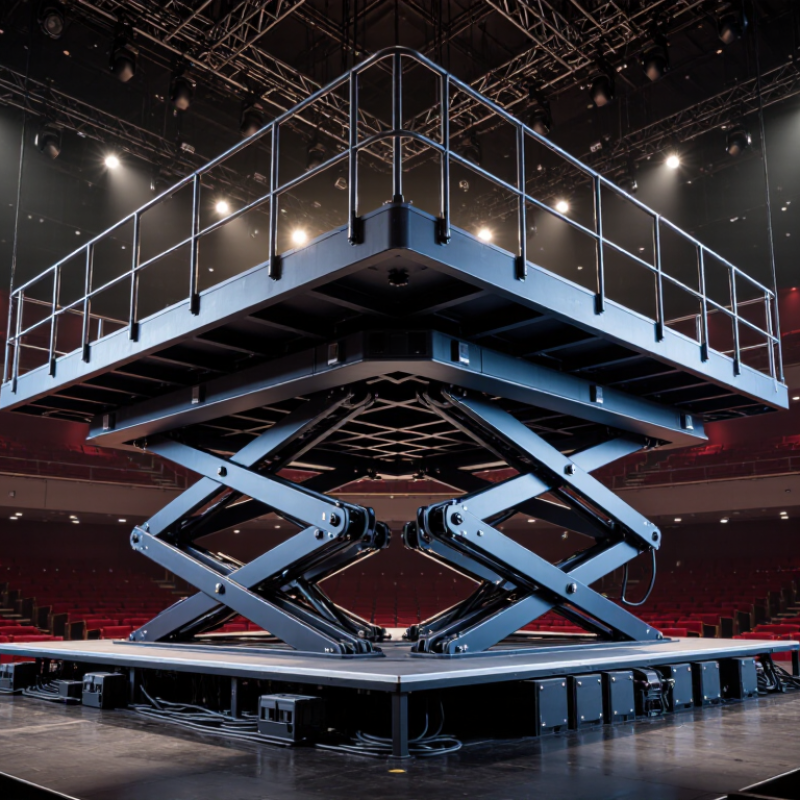
A lift stage is a platform built into a theater floor that moves scenery, performers, or equipment between levels. Most systems use a scissor mechanism, hydraulic cylinders, or electric screw drives. The mechanism raises the platform; guides help keep it level. A control system sets travel limits and may stop movement if a safety edge detects an obstruction. Quiet motion matters. A small jerk can shift a prop or unsettle a performer. Design details vary, so buyers should check rated load, travel distance, speed, platform dimensions, and whether the stage must stop precisely at floor level.

Under the deck, the frame transfers loads into the building structure. Guards, emergency stops, and maintenance access are practical necessities, not decorative extras. The UK Health and Safety Executive’s 2023/24 workplace statistics recorded 138 worker fatalities and an estimated 604,000 non-fatal workplace injuries. These figures cover all industries, not lift stages specifically, but they underline why moving equipment needs controlled operation and inspection. ESTA’s ANSI E1.6-1 standard addresses powered hoist systems used in entertainment settings; it is useful context, though a lift stage may involve additional machinery and site-specific engineering. One detail is easy to miss: uneven loading can affect motion, even when the total weight remains within the stated capacity.


Top Lift Stage Manufacturers in China for Global Buyers: What Lift Stages Are and How They Work

A lift stage is a mechanism that raises a platform or load. In a scissor lift, crossed arms open and close as a hydraulic cylinder applies force. The chart shows the ideal vertical rise of one scissor stage as its arms open, assuming each arm is 1.0 m long.

For this idealized geometry, vertical rise is calculated as arm length × sin(arm angle). Actual lift height varies with the design, including pivot locations, platform and base dimensions, and operating limits. More scissor stages can increase total lift height.

Main Types of Lift Stages Produced in China

Chinese lift-stage catalogs commonly feature hydraulic scissor platforms, telescopic stages, screw-driven lifts, and modular units. Hydraulic scissors raise a broad deck vertically, making them suitable for concert platforms and school halls. Telescopic designs create different heights across one stage. Screw-driven systems can offer controlled movement, while modular units help crews configure temporary layouts. Details vary by supplier. That matters.

The Grand View Research 2024 material handling equipment report valued that broader global market at USD 237.4 billion in 2023, with projected growth through 2030. It does not isolate stage lifts, so buyers should not treat it as a stage-lift forecast. When comparing Chinese-made systems, check rated load, travel height, platform dimensions, drive type, and emergency lowering provisions. Ask for load-test records and drawings showing pit depth and moving clearances. A catalog photo can hide a tight service space. I would also confirm how the controls behave during a power interruption; this detail is easy to overlook.

How to Assess Chinese Lift Stage Manufacturers

When assessing Chinese lift stage manufacturers, start with the equipment’s actual job. Define platform size, travel height, rated load, operating speed, and daily duty cycle. A stage used for frequent scenery changes needs different checks from one used for occasional presentations. Write down your requirements before requesting quotations. Small details matter.

Ask for drawings, wiring diagrams, maintenance schedules, and test records for the proposed configuration. Confirm that the records match the motors, controls, and safety devices in your quotation. Request a live demonstration or an independent inspection, if practical. Watch the platform travel under load, stop at each level, and respond to an emergency stop. A polished brochure proves little. Clear evidence matters more.

Review the factory’s production and service process, not just its showroom. Ask who handles commissioning, what spare parts are commonly stocked, and how technical questions are resolved across time zones. Check whether the quoted lead time includes testing, packing, and export preparation. Speak with previous buyers when available, but treat references as one input, not proof. I would also compare two or three suppliers using the same checklist; honestly, a low price can be hard to judge when specifications differ. Record unanswered questions and resolve them before placing an order.

Top Lift Stage Manufacturers in China for Global Buyers - How to Assess Chinese Lift Stage Manufacturers

Assessment dimension What to assess Evidence to request Buyer verification Why it matters
Application and design fit Stage type, travel, platform size, installation conditions, and intended use. Dimensioned drawings, operating description, and a written statement of design assumptions. Compare the proposed layout with the venue, pit, access route, and project specification. A product must suit the actual installation, not just match a headline capacity.
Rated load and load conditions Rated load, load distribution, operating conditions, and any stated limitations. Technical specification identifying rated load and the conditions under which it applies. Ask how uneven or off-center loading is addressed and whether project-specific calculations are available. Capacity figures are meaningful only when their test and operating conditions are clear.
Motion and control Travel speed, stopping accuracy, control modes, and coordination with other stage equipment. Control-system description, operating sequence, and documented test results where available. Confirm requirements for operator controls, interlocks, emergency stops, and integration signals. Predictable motion and clear control interfaces support safe, repeatable operation.
Safety provisions Risk controls, guarding, access protection, emergency procedures, and maintenance safety. Risk assessment, safety-system description, operating instructions, and maintenance procedures. Have the proposed equipment and documentation reviewed against the regulations applicable at the installation site. Safety obligations depend on the equipment, application, and destination-market rules.
Materials and fabrication quality Structural materials, weld quality controls, finish, and corrosion protection suited to the environment. Material specifications, inspection records, and relevant fabrication or coating procedures. Review sample records and inspect comparable production work or finished equipment where practical. Documented materials and inspection practices help establish consistency and suitability.
Testing and inspection Factory checks, functional testing, acceptance criteria, and traceability of results. Inspection and test plan, completed test reports, and a proposed factory acceptance test procedure. Agree in writing on test scope, pass criteria, witness arrangements, and treatment of nonconformities. Pre-agreed acceptance criteria reduce ambiguity before shipment and installation.
Quality management Document control, inspection responsibilities, corrective actions, and production consistency. Current quality-system certificates, their scope, and sample inspection or corrective-action records. Verify certificate validity and scope with the issuing certification body where applicable. A certificate should be checked for scope and validity rather than treated as proof of product compliance.
Customization and engineering support Ability to handle project interfaces, requested changes, and design revisions. Engineering workflow, revision-controlled drawings, interface schedule, and change-approval process. Clarify who approves design changes and how they affect cost, schedule, testing, and documentation. Clear change control helps prevent mismatches between approved designs and delivered equipment.
Export documentation and logistics Packing, shipping dimensions, export paperwork, delivery terms, and installation responsibilities. Packing plan, shipment dimensions and weight, document list, and a clearly defined delivery-term proposal. Confirm destination-country import requirements, unloading needs, and responsibility for transport and insurance. Logistics and import obligations vary by destination and should be agreed before production is complete.
Installation and commissioning Site preparation, installation sequence, commissioning checks, and required local resources. Installation manual, foundation or interface requirements, commissioning checklist, and training plan. Define whether the supplier provides on-site support and who is responsible for site readiness and acceptance. Installation responsibilities can affect the project schedule and final system performance.
Spare parts and after-sales service Recommended spares, service channels, warranty terms, and support availability. Spare-parts list, warranty conditions, service response process, and parts identification information. Check parts lead times, local service arrangements, and the exclusions and duration stated in the warranty. Support arrangements influence maintenance planning and potential equipment downtime.
Commercial clarity Scope, exclusions, payment milestones, delivery schedule, warranty, and change-order terms. Itemized quotation, delivery schedule, contract terms, and a responsibility matrix. Match the quotation and contract against the approved specification and project schedule. A low quoted price is difficult to compare unless scope and exclusions are explicit.

Note: Requirements and acceptance criteria should be confirmed for the specific lift stage, installation, and destination market. Request project-specific documents rather than relying on general claims.

Leading Lift Stage Manufacturers in China and Their Capabilities

China-based lift stage manufacturers serve theaters, touring productions, exhibition halls, and rental companies. Their capabilities often span structural design, steel fabrication, hydraulic or screw-driven lifting systems, control integration, and surface finishing. Some factories handle custom dimensions and coordinated platforms; others focus on repeatable standard models. Ask which work is performed in-house. Details matter.

For global buyers, evaluate rated load, lifting height, travel speed, platform size, duty cycle, and noise under load. Request drawings, wiring diagrams, inspection records, and a documented factory test using a representative load. Confirm how emergency stops, limit switches, and manual lowering work. A smooth demonstration is useful, but it does not replace a clear maintenance plan. A brochure may omit awkward constraints, so ask about floor pits, power supply, shipping dimensions, and installation support before comparing quotes. These questions reveal practical engineering depth, not just sales claims.

Tips: Send a drawing and operating scenario, not only a target price. Ask for measured test results and spare-parts lead times. Compare complete configurations, because controls and safety devices can change the final cost. Leave room for revision; specifications often evolve once the venue is measured.

Export, Certification, and Purchasing Considerations for Global Buyers

For global buyers, selecting a lift stage manufacturer involves more than comparing platform size and price. Confirm the rated load, lifting height, travel speed, duty cycle, and operating environment in writing. Ask how the supplier tests each unit and whether test records match the exact model offered. Details matter. A polished brochure is not proof of safe, consistent performance.

Before ordering, check which certificates and technical documents apply to the equipment and your destination market. Request copies, verify their scope and validity, and ask whether electrical components meet local voltage and frequency needs. Export arrangements should specify packaging, shipping terms, customs paperwork, installation support, and responsibility for transit damage. Confirm the warranty period, spare-parts availability, and response times. A factory inspection can reveal useful details, though it cannot replace clear contract terms. I would still leave room for questions; specifications can look complete while omitting a practical detail, such as access for maintenance.

Tips: Share drawings, venue conditions, and expected use before requesting a quote. Ask for a parts list and a sample inspection checklist. Keep every approved specification in the purchase agreement.

Powder Coat Booths

For those larger-sized parts, or smaller quantity runs, we have 2 independent powder coat booths and ovens. The quality, durability and affordability of today’s powder coating finishes make this the process of choice for world-class companies.

Powder coating advantages over other forms of coating are many. Materials used in the Powder coating process can be metals and non-metals that come in a multitude of thicknesses, textures, colors, etc. Another of Powder coating’s biggest advantages over conventional coatings is its ability to create finishes in many different textures. Powder Coating Booths allow us the ability to apply these advantages to large products.

Wet Paint Line

Tri-State Fabricators runs a full-service conveyor line for painting. Wet painting can provide protection or decoration to many different part styles. From start to finish, every project is easier to undergo random and point-based inspection by our skilled painting team.

Advantages to our Wet Paint Line are these lines start with product prep and ends with a thorough inspection of a high quality finished product. Our ability to complete large and small projects with a superior finish and doing so in a timely and economical fashion. This passes along the savings in production to our customers. When powder coating ins not an option, our Wet Paint Line gets the job done right the first time.

Wet Paint Booths

When the parts get big and heavy we roll-out our custom paint racks and oversize booth. By utilizing our partnerships with all the major paint brands, we can match virtually any color with wet paint.

The advantages of having access to a Wet Paint Booth are many. Large projects of many different shapes can be loaded into the booth. The Wet Paint Booth offers an environment that is much more controlled than a typical parts painting operation.

Not only are they used because of their controlled environment, but they’re are also advantageous when it comes to applying paint to parts that are needed in industries that require specialty coatings such as medical, aerospace, etc.

Military CARC

Our military forces have some very high standards when it comes to the finish of their vehicles and equipment. From the first pre-treatment step to final coat, it takes a great deal of knowledge and experience to protect the men and women of our armed forces. They deserve only the best, and Tri-State Fabricators provides it.

All of our processes are closely monitored by our staff and management teams. Both of which are highly trained in the processes of metal fabrication and finishing. Tri-State Fabricators’ goal is to always fully satisfy each and every customer, including the military. We will always put a 110% into what we do.

Glass-Bead Blasting

Abrasive media blasting is an excellent way to remove old paint, rust, and increase the paint/powder adhesion. Glass beads produce a much smoother and brighter finish than angular abrasives; leaving the part clean yet without any dimensional change. Chemically inert and environmentally friendly, we can recycle our beads approximately 30 times; making them a more preferred method of metal cleaning or surface finishing.

Advantages to Glass Bead Blasting are many. Glass bead blast media is used when a project is needing rough surfaces need to become smooth for applications of coatings such as paint. It is typically used to clean paint and rust from a product surface without deforming the surface it is being used on. Overall, compared to many other blasting media, Glass Bead Blasting is a very economical choice and those savings are always passed on to our customers.

Part Washing

Tri-State Fabricators utilize a zinc phosphate wash to clean and etch the material to ensure the best paint adhesion possible. The unique design of our 3-stage wash system does the work like a 5-stage. From Cleaning and rinsing to conversion coating and post-treatment, Our Part Washing process is a complete service and works throughout the fabrication service and the finishing service.

Along with the previously mentioned benefits, Curing is a vital chemical reaction that leaves the product finish hard and relatively safe from mild abrasion and aggressive corrosion. This process can be done in more than one way; ambient air-dry or in curing ovens at temps that exceed 240°.

Burn-Off Oven

From fixing paint mistakes (someone else’s of course) to simply cleaning our paint line hooks, our burn-off oven is put to good use. After a quick burn-off, a little clean up, and a fresh coat of paint, your parts will look better than new.

Why does our Burn-Off Oven work so well? Because super heating the air around parts turns the materials into ashes. From paint and powder coatings to rubber and machining oils, high temps do the job without degrading the integrity of the part.

Masking

Masking is a vital part of producing high quality products. We have die-cut masking patterns to protect machined surfaces as well as a wide range of plugs and caps to protect threaded holes and bolts. We provide permanent and temporary masking.

Masking allows the selected sections of a product to be protected from a fabrication or finishing service. This can be with both chemicals when etching and tapes, paints when only finishing just a section of the product. Masking is great in aiding the customization process of a project.

Screen Printing

Screen printing is a photographic process that transfers artwork onto a porous nylon screen which allows colored ink to flow through the screen and be deposited on an aluminum or plastic component. We can generally have just about any design created onto a screen for your parts.

Some of the advantages of Screen Printing are, brand recognition for your business displaying on your products, assembly instructions, product warnings/hazards, etc. Tri-State Fabricators produces Screen Printing of the highest quality so you know it’s durable.

Metal Finishing

Metal Finishing is the art of treating the exterior portion of product, often metal but can also be made of other materials, so that the surface is clean and free of any debris. Then the process of applying coats or either paint of powder coat takes place. This coating process improves the quality of the product in both appearance and resistance to wear and corrosion.

Tri-State Fabricators, Inc., understands that a project typically isn’t complete until a high-quality finish has been added to your product. This is why our painting and powder coating teams continuously inspect the products throughout the Metal Finishing process.
