What Are China’s Top HVLS Motors for Global Buyers?

China has become a major sourcing base for high-volume low-speed fans, yet motor quality varies widely. Global buyers need more than attractive quotations. They must examine efficiency, torque stability, heat management, controller compatibility, and after-sales support. This article introduces China’s top Hvls Motors for international purchasing decisions, focusing on evidence rather than promotional claims.

A reliable evaluation begins with the operating environment. A warehouse in Dubai may require different protection from a livestock facility in Northern Europe. Dust, humidity, voltage fluctuations, and long daily running hours can expose weak designs quickly. Buyers should review motor efficiency data, insulation grades, bearing quality, IP ratings, noise levels, and tested service life. Factory audits also matter. Check winding lines, balancing equipment, load-testing stations, and traceability records. Small details can reveal large differences.

Certifications deserve careful reading. A logo alone does not prove consistent production. Request valid reports, product samples, wiring diagrams, and clear warranty terms. Ask whether the controller, motor, and fan blade were tested as one system. That point is often missed. Some suppliers provide impressive laboratory figures, but field performance may depend on installation and maintenance. No manufacturer is perfect. Buyers should compare measurable evidence, identify remaining risks, and negotiate practical support before placing an order. The strongest Chinese Hvls Motors suppliers combine engineering experience, responsive communication, stable production, and transparent documentation. This guide helps readers assess those qualities with greater confidence, while recognizing that the lowest price rarely represents the lowest total cost.
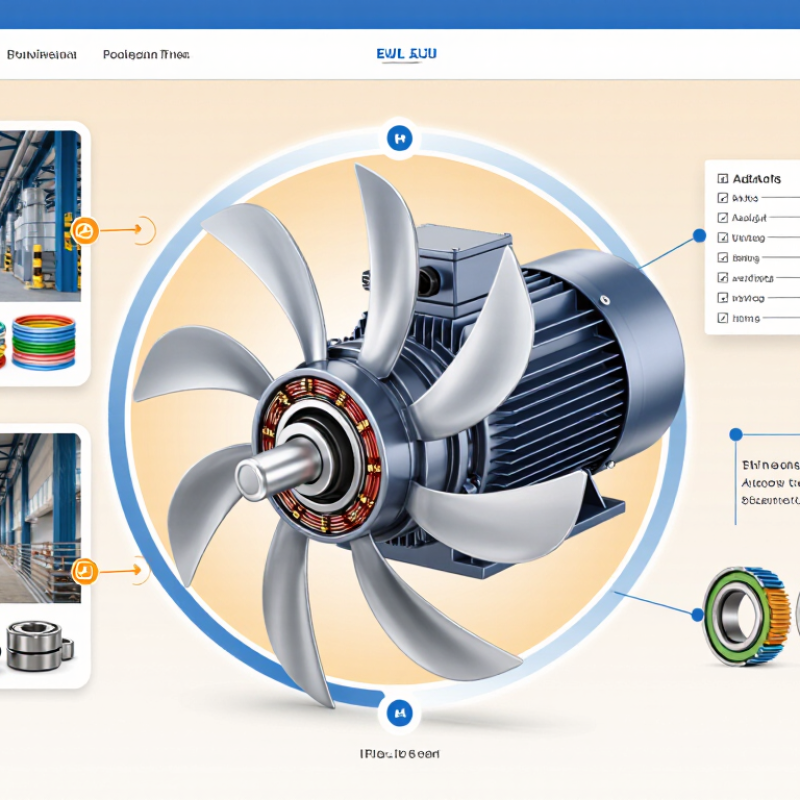
What Are China’s Top HVLS Motors for Global Buyers?

HVLS Motor Basics: 20–24 ft Fans, 50–60 Hz, and 3-Phase Power

HVLS motor selection starts with the fan diameter. A 20–24 ft fan moves a large air volume at low speed. Its motor needs steady torque, not merely a high peak rating. In warehouse assessments, I check the motor’s rated load, thermal protection, and duty cycle. Airflow changes with blade pitch, ceiling height, and obstructions. A larger fan can perform poorly when installed too low.

Frequency matters across global markets. At 50 Hz, motor speed may differ from operation at 60 Hz. This affects airflow, power draw, and control settings. Buyers should confirm voltage, frequency, and phase before comparing quotations. Three-phase power usually supports smoother torque and lower current. However, poor phase balance can create heat and shorten motor life. Do not assume every three-phase supply is suitable.

The drive system should match the motor’s frequency range and protection requirements. Ask for operating curves, noise data, insulation class, ingress protection, and overload limits. These details are more useful than a large efficiency claim. Maintenance teams also need clear access to bearings, terminals, and cooling paths. I have seen technically strong fans underperform because installation was rushed. That is an uncomfortable lesson. Environmental conditions matter too. Dust, humidity, and high temperatures can change service intervals. A careful buyer leaves room for these variables, even when the specification sheet looks complete.

How China’s Top HVLS Motors Meet IEC 60034 and IE3/IE4 Efficiency Classes

What Are China’s Top HVLS Motors for Global Buyers?

China’s leading HVLS motor suppliers increasingly design products around IEC 60034 requirements. IEC 60034-30-1 defines IE efficiency classes for line-operated AC motors, including IE3 and IE4. These classes are not marketing decorations. They require measured efficiency under defined operating conditions.

The IEA’s Energy Efficiency 2023 report states that electric motor systems consume roughly half of global electricity. That figure explains why small efficiency gains matter in large warehouses, airports, and factories. For HVLS fans, buyers should request rated output, speed, torque, duty cycle, and complete motor-fan efficiency data. A motor may achieve IE4 in laboratory conditions, yet the assembled fan can perform differently. The label is not enough.

Tips: Ask for IEC-based test reports, calibration details, and the declared testing laboratory. Check whether IE3 or IE4 applies at the actual voltage, frequency, and load. Also inspect thermal protection, insulation class, bearing life, and controller compatibility. Small details matter. The European Commission’s Ecodesign studies consistently identify motor systems as major energy-saving opportunities, but savings depend on correct sizing and controls. A practical warning: some quotations highlight peak efficiency while hiding partial-load performance. This is where many selections go wrong. Test the complete assembly.

Motor Selection by Torque, RPM, IP55 Protection, and Continuous-Duty S1 Rating

For global HVLS buyers, motor selection should begin with torque, not marketing claims. Large airfoils need strong starting torque, especially in warehouses with high ceilings and slow acceleration. A motor with stable torque at low RPM can move air quietly without excessive electrical stress. Typical HVLS operation may use low speeds, but the motor must still respond smoothly when speed changes. I have seen installations fail because designers checked rated power only. That shortcut looked efficient, but the fans struggled during startup.

RPM should match the blade diameter, airflow target, and building use. Higher RPM is not always better. It can increase noise, vibration, and energy consumption. IP55 protection helps shield the motor from dust and low-pressure water jets. However, IP55 is not waterproof. Drainage, cleaning methods, and humidity still deserve attention. For factories, logistics centers, and agricultural spaces, an S1 continuous-duty rating supports long operating periods at a constant load. The surrounding temperature matters too. Specifications can appear suitable until heat reduces service life.

Tips: Request torque curves, not only rated wattage. Confirm the working RPM range and starting performance. Check IP55 testing details and installation limits. Ask whether the S1 rating applies to the complete operating condition. I would also review seasonal temperature changes. This step is easy to overlook. Always allow a practical safety margin, but avoid oversizing blindly. Bigger is not automatically safer.

Comparing PMSM and Induction Motors for 2–10 kW HVLS Fan Systems

What Are China’s Top HVLS Motors for Global Buyers?

Comparing PMSM and Induction Motors for 2–10 kW HVLS Fan Systems

For 2–10 kW HVLS fans, motor selection affects airflow, noise, heat, and lifetime cost. PMSM motors usually deliver higher efficiency, especially during long operation at reduced speed. Their permanent-magnet rotor avoids slip, so less energy becomes heat inside the motor. This can reduce cooling demands in warehouses, workshops, and livestock buildings. PMSM systems also offer precise speed control and compact construction. However, they require a compatible controller and more careful commissioning. The higher purchase price may not suit every project.

Induction motors remain practical for buyers who value rugged construction and familiar maintenance procedures. They tolerate demanding environments and are widely understood by technicians. Yet, efficiency can fall during partial-load operation, which matters when a fan runs slowly overnight. Heat buildup may also increase in poorly ventilated spaces. The real choice depends on duty hours, electricity prices, control quality, and service access. A simple efficiency label is not enough. Field measurements sometimes challenge the original calculation.

Tips: Check the motor’s efficiency across the actual speed range, not only at rated power. Request temperature-rise data, controller compatibility, bearing details, and protection ratings. For a 2–10 kW fan, compare annual energy use with the full purchase and maintenance cost. Leave space for inspection. Even efficient equipment can disappoint when installation is rushed or airflow is restricted.

Global Buyer Checklist: CE, UL, RoHS, Voltage, Warranty, and Testing Data

What Are China’s Top HVLS Motors for Global Buyers?

Global buyers should judge HVLS motors by evidence, not attractive catalogs. A reliable motor should include clear CE documentation for European markets and UL-related compliance for North American projects. RoHS declarations should identify restricted substances and match the supplied motor model. Check the voltage carefully. Common options include 220–240V, 380–415V, and 480V systems. Frequency also matters, especially for 50Hz and 60Hz facilities. A mismatch may cause overheating, poor speed control, or early failure. Warranty terms should state coverage, duration, spare parts, and response time. Vague promises are a warning.

Tips: Request the test report before placing an order. Review motor efficiency, insulation class, noise, temperature rise, and protection rating. Ask whether testing covers the finished motor or only a similar sample. This detail is often missed. Also request serial-number traceability and installation guidance. They make troubleshooting faster.

In practical factory checks, buyers should compare rated power with actual airflow requirements. A larger motor is not automatically better. Ask for vibration data at several speeds, not only a best-case reading. Load testing, endurance testing, and electrical safety records add useful confidence. Still, documents can contain errors. One overlooked voltage line can delay installation for weeks. A careful buyer should verify certificates with the issuing body and confirm that the warranty applies in the destination country. Supplier communication matters too. Slow, unclear answers may become a service problem later.


Powder Coat Booths

For those larger-sized parts, or smaller quantity runs, we have 2 independent powder coat booths and ovens. The quality, durability and affordability of today’s powder coating finishes make this the process of choice for world-class companies.

Powder coating advantages over other forms of coating are many. Materials used in the Powder coating process can be metals and non-metals that come in a multitude of thicknesses, textures, colors, etc. Another of Powder coating’s biggest advantages over conventional coatings is its ability to create finishes in many different textures. Powder Coating Booths allow us the ability to apply these advantages to large products.

Wet Paint Line

Tri-State Fabricators runs a full-service conveyor line for painting. Wet painting can provide protection or decoration to many different part styles. From start to finish, every project is easier to undergo random and point-based inspection by our skilled painting team.

Advantages to our Wet Paint Line are these lines start with product prep and ends with a thorough inspection of a high quality finished product. Our ability to complete large and small projects with a superior finish and doing so in a timely and economical fashion. This passes along the savings in production to our customers. When powder coating ins not an option, our Wet Paint Line gets the job done right the first time.

Wet Paint Booths

When the parts get big and heavy we roll-out our custom paint racks and oversize booth. By utilizing our partnerships with all the major paint brands, we can match virtually any color with wet paint.

The advantages of having access to a Wet Paint Booth are many. Large projects of many different shapes can be loaded into the booth. The Wet Paint Booth offers an environment that is much more controlled than a typical parts painting operation.

Not only are they used because of their controlled environment, but they’re are also advantageous when it comes to applying paint to parts that are needed in industries that require specialty coatings such as medical, aerospace, etc.

Military CARC

Our military forces have some very high standards when it comes to the finish of their vehicles and equipment. From the first pre-treatment step to final coat, it takes a great deal of knowledge and experience to protect the men and women of our armed forces. They deserve only the best, and Tri-State Fabricators provides it.

All of our processes are closely monitored by our staff and management teams. Both of which are highly trained in the processes of metal fabrication and finishing. Tri-State Fabricators’ goal is to always fully satisfy each and every customer, including the military. We will always put a 110% into what we do.

Glass-Bead Blasting

Abrasive media blasting is an excellent way to remove old paint, rust, and increase the paint/powder adhesion. Glass beads produce a much smoother and brighter finish than angular abrasives; leaving the part clean yet without any dimensional change. Chemically inert and environmentally friendly, we can recycle our beads approximately 30 times; making them a more preferred method of metal cleaning or surface finishing.

Advantages to Glass Bead Blasting are many. Glass bead blast media is used when a project is needing rough surfaces need to become smooth for applications of coatings such as paint. It is typically used to clean paint and rust from a product surface without deforming the surface it is being used on. Overall, compared to many other blasting media, Glass Bead Blasting is a very economical choice and those savings are always passed on to our customers.

Part Washing

Tri-State Fabricators utilize a zinc phosphate wash to clean and etch the material to ensure the best paint adhesion possible. The unique design of our 3-stage wash system does the work like a 5-stage. From Cleaning and rinsing to conversion coating and post-treatment, Our Part Washing process is a complete service and works throughout the fabrication service and the finishing service.

Along with the previously mentioned benefits, Curing is a vital chemical reaction that leaves the product finish hard and relatively safe from mild abrasion and aggressive corrosion. This process can be done in more than one way; ambient air-dry or in curing ovens at temps that exceed 240°.

Burn-Off Oven

From fixing paint mistakes (someone else’s of course) to simply cleaning our paint line hooks, our burn-off oven is put to good use. After a quick burn-off, a little clean up, and a fresh coat of paint, your parts will look better than new.

Why does our Burn-Off Oven work so well? Because super heating the air around parts turns the materials into ashes. From paint and powder coatings to rubber and machining oils, high temps do the job without degrading the integrity of the part.

Masking

Masking is a vital part of producing high quality products. We have die-cut masking patterns to protect machined surfaces as well as a wide range of plugs and caps to protect threaded holes and bolts. We provide permanent and temporary masking.

Masking allows the selected sections of a product to be protected from a fabrication or finishing service. This can be with both chemicals when etching and tapes, paints when only finishing just a section of the product. Masking is great in aiding the customization process of a project.

Screen Printing

Screen printing is a photographic process that transfers artwork onto a porous nylon screen which allows colored ink to flow through the screen and be deposited on an aluminum or plastic component. We can generally have just about any design created onto a screen for your parts.

Some of the advantages of Screen Printing are, brand recognition for your business displaying on your products, assembly instructions, product warnings/hazards, etc. Tri-State Fabricators produces Screen Printing of the highest quality so you know it’s durable.

Metal Finishing

Metal Finishing is the art of treating the exterior portion of product, often metal but can also be made of other materials, so that the surface is clean and free of any debris. Then the process of applying coats or either paint of powder coat takes place. This coating process improves the quality of the product in both appearance and resistance to wear and corrosion.

Tri-State Fabricators, Inc., understands that a project typically isn’t complete until a high-quality finish has been added to your product. This is why our painting and powder coating teams continuously inspect the products throughout the Metal Finishing process.



