China Top 10 Earth Rammer Manufacturers for Global Buyers
Choosing the right Earth Rammer can directly affect compaction quality, project speed, and long-term operating costs. For global buyers, China has become a major sourcing center for construction equipment, supported by broad manufacturing capacity and competitive pricing.
This guide, “China Top 10 Earth Rammer Manufacturers for Global Buyers,” examines suppliers from a practical purchasing perspective. It considers product design, factory experience, quality control, export capability, spare parts, and after-sales support. A reliable manufacturer should explain vibration frequency, impact force, machine weight, engine options, and suitable soil conditions clearly. Buyers should also review test records, applicable certifications, warranty terms, and maintenance instructions before placing an order.
Small details matter. A balanced handle can reduce operator fatigue during a long shift. A protected throttle, strong base plate, and accessible belt cover can simplify daily maintenance. Some models suit narrow trenches, while others perform better on wider soil surfaces. Fuel-powered units may support remote projects, but electric versions can be useful where power access is stable.
No ranking is flawless. Supplier information can change, and published specifications may require independent verification. Factory photographs are helpful, but they cannot replace inspections or sample testing. Global buyers should compare several quotations and request performance evidence under realistic working conditions. This introduction prepares readers to evaluate ten Chinese manufacturers with greater confidence, practical awareness, and reasonable caution.
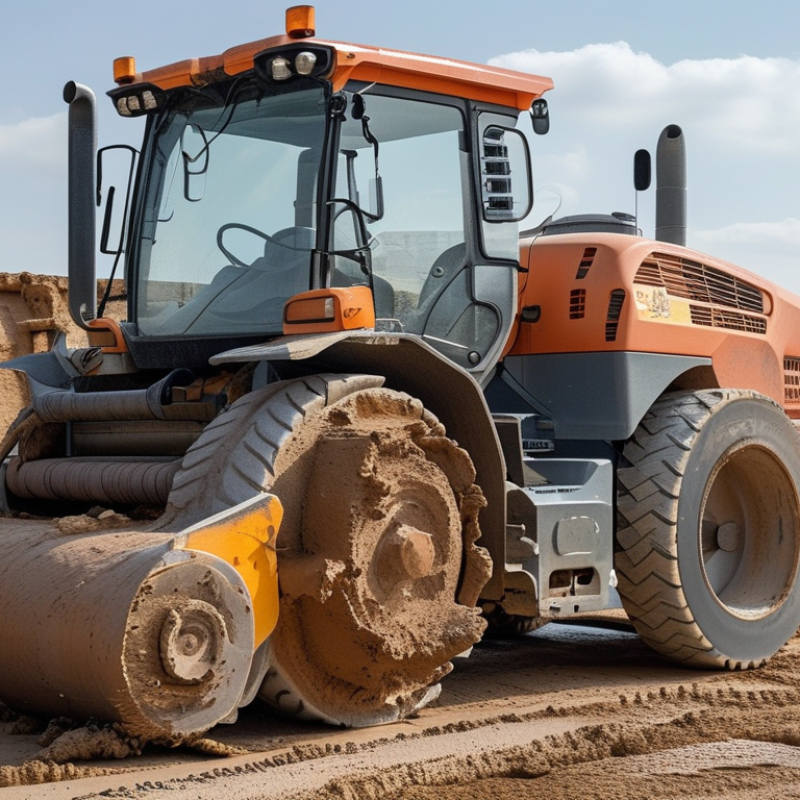
Earth Rammers Explained: 2–4 kN Impact Force and 600–700 BPM
Earth rammers are compact machines for narrow trenches, utility repairs, and cohesive soil. Their typical 2–4 kN impact force delivers concentrated energy below the shoe. The 600–700 BPM range creates rapid, repeated impacts. That rhythm helps close air pockets in clay, silt, and mixed backfill.
Research and Markets’ 2024 construction equipment outlook identifies compaction equipment as a continuing infrastructure demand segment. Grand View Research also reports steady growth in global construction equipment spending through 2030. These figures support buyer confidence, but they do not replace field testing. A higher BPM rating is not automatically better. Soil moisture, lift thickness, shoe width, and operator control change the result.
In practice, a 600 BPM rammer feels controlled on a narrow trench. Near 700 BPM, vibration becomes more aggressive. Real ground is rarely polite. Buyers should request measured impact force, operating mass, fuel or battery endurance, and noise data. European and international safety guidance also emphasizes guarding, vibration exposure, and maintenance access. A useful test uses 150–200 millimeter lifts and checks density after each pass. Four passes may work on damp clay, yet fail on dry, hard fill. That assumption is convenient, but incomplete. Clearance, spare parts, and local technician training often matter as much as headline specifications.
China’s Top 10 Earth Rammer Manufacturers by Product and Export Capability
China’s top ten earth rammer manufacturers are best assessed by product depth and export capability, not factory size alone. A practical ranking should examine rammer weight, impact force, engine options, spare-parts access, and documented overseas shipments. Light models suit trench repairs and landscaping. Heavy models perform better on granular soil and narrow foundations.
Industry data supports this demand. MarketsandMarkets projects the global construction equipment market to grow from about USD 191 billion in 2023 to nearly USD 230 billion by 2028. UN Comtrade export records under HS 8467 also show China as a major supplier of handheld, motorised tools, although earth rammers are not always separated clearly. That classification gap matters. It can distort direct manufacturer comparisons.
The strongest ten manufacturers generally offer 60–90 kilogram rammers, impact rates near 650–700 blows per minute, and engines adapted to local fuel standards. Export-ready suppliers usually provide English manuals, wooden-case packing, CE-related technical files, and regional service contacts. Some also supply vibration-damping handles and replaceable bellows. Useful details. But catalogue claims need testing. Buyers should request noise readings, compaction results, warranty terms, and recent shipment evidence. One weakness remains: public export data rarely identifies the actual rammer model. Therefore, this top-ten view should be treated as a procurement shortlist, not an unquestionable league table.
China Top 10 Earth Rammer Manufacturers for Global Buyers - China’s Top 10 Earth Rammer Manufacturers by Product and Export Capability
| Rank | Anonymous Manufacturer Profile | Primary Product Focus | Typical Operating Weight | Typical Impact Force | Working Width | Engine Category | Export Capability | Common Buyer Applications | International Supply Indicators |
| 01 | Profile A | Professional petrol tamping rammers | 60–75 kg | 10–15 kN | 230–280 mm | 3–4 hp petrol | High | Trenches, road repairs, foundations and utility work | OEM packaging, multilingual manuals and regular container loading |
| 02 | Profile B | Compact construction-site rammers | 55–70 kg | 9–14 kN | 230–260 mm | 2.5–4 hp petrol | High | Small contractors, landscaping and confined spaces | Private-label support, spare-parts kits and export cartons |
| 03 | Profile C | Heavy-duty soil and asphalt rammers | 70–85 kg | 12–18 kN | 250–300 mm | 4–5.5 hp petrol | High | Road bases, granular soil and repair projects | Model customization, batch inspection and export documentation |
| 04 | Profile D | Low-emission petrol rammer series | 60–75 kg | 10–16 kN | 230–280 mm | 3–4 hp petrol | Medium–High | Urban construction, indoor work and rental fleets | Emission-oriented specifications and CE-oriented documentation |
| 05 | Profile E | Value-focused contractor equipment | 55–75 kg | 9–15 kN | 230–280 mm | 2.5–4 hp petrol | Medium–High | General building work and infrastructure maintenance | Competitive MOQ, mixed-container orders and basic after-sales parts |
| 06 | Profile F | High-frequency compact rammers | 58–72 kg | 10–15 kN | 230–270 mm | 3–4 hp petrol | Medium–High | Fast compaction of soil, sand and backfill | Standardized product specifications and palletized shipment options |
| 07 | Profile G | OEM and private-label rammer systems | 60–80 kg | 10–17 kN | 230–300 mm | 3–5.5 hp petrol | Medium–High | Distributor programs and rental-equipment portfolios | Logo-free production, customized labels and packaging coordination |
| 08 | Profile H | Portable rammers for emerging markets | 55–70 kg | 9–14 kN | 230–260 mm | 2.5–4 hp petrol | Medium | Small roadwork, agricultural construction and repairs | Simple operation, cost-sensitive configurations and consolidated freight |
| 09 | Profile I | Multi-configuration compaction equipment | 60–85 kg | 10–18 kN | 230–300 mm | 3–5.5 hp petrol | Medium | Mixed soil conditions and varied contractor requirements | Several plate and engine configurations with pre-shipment inspection |
| 10 | Profile J | Entry-level earth rammers | 50–65 kg | 8–13 kN | 210–260 mm | 2.5–3.5 hp petrol | Medium | Light-duty construction and occasional site use | Low MOQ options, standard export packing and essential replacement parts |
Note: Manufacturer names and brands are intentionally omitted. Product specifications are representative market-range values for Chinese earth rammers; buyers should verify the exact model, engine, certifications, warranty terms and export records directly before purchase.
Buyer Criteria: 25–30 m/min Travel Speed and ASTM D698 Compaction Testing
China Top 10 Earth Rammer Manufacturers for Global Buyers
For global buyers, a 25–30 m/min travel speed is a practical screening range. It equals roughly 0.42–0.50 m/s on site. However, speed alone can mislead. A rammer moving quickly may deliver uneven impacts on clay, trench backfill, or damp granular soil. Buyers should request measured speed under load, not only an empty-machine specification.
ASTM D698 defines standard Proctor compaction energy at 12,400 ft-lbf/ft³, or about 600 kN·m/m³. The method uses three soil layers and 25 blows per layer in a standard mold. This detail matters when comparing test results with field performance. The FHWA Soils and Foundations Reference Manual also emphasizes moisture control, lift thickness, and density verification during earthwork. A suitable rammer should maintain stable impact force while traveling within the requested 25–30 m/min range.
Ask for test records, vibration data, fuel use, and cold-start performance. Field checks should compare dry density against the ASTM D698 maximum dry density. A 90–95% target is common in many earthwork specifications, but project requirements differ. Some suppliers provide impressive numbers. Their testing may use ideal soil and a flat surface. That is not enough. Request a witnessed trial with representative soil, realistic lift thickness, and repeated passes. Small details often expose large differences.
Global Purchasing Guide: CE Compliance, Warranty, Parts, and MOQ Terms
China Top 10 Earth Rammer Manufacturers for Global Buyers
When comparing China’s leading earth rammer manufacturers, CE compliance deserves more than a logo check. Ask for the EU Declaration of Conformity, risk assessment, test reports, and technical documentation. Confirm that documents match the exact model, engine, voltage, and production year. A certificate alone is not enough. Request clear photos of the nameplate, guarding, emergency controls, and electrical components before payment.
Warranty terms should state coverage, duration, exclusions, and claim procedures. A practical offer may include twelve months or a defined operating-hour limit. Check who pays freight for defective parts. Ask whether the warranty covers the rammer plate, clutch, belt, engine, and vibration system separately. Parts support often decides whether a machine stays productive. Request a spare-parts list, exploded diagrams, prices, and delivery times. Keep common items locally.
MOQ terms can vary by model, color, engine, and packaging. Some suppliers accept one sample unit, while custom orders may require several machines. Clarify whether a sample price differs from the production price. Confirm packaging dimensions and loading quantities. Small details matter.
A factory audit is useful, but it is not perfect. Video inspections can miss inconsistent assembly or weak inventory control. Ask for serial-number photos and a live starting test. Compare noise, vibration, fuel use, and forward travel on firm soil. Written evidence, technical questions, and a small trial order usually reveal more than polished sales language.





