China Top 10 Drip Hose Manufacturers for Global Buyers?
China Top 10 Drip Hose Manufacturers for Global Buyers?
Drip Hose has become a practical tool for reducing water waste in commercial farming, nurseries, and greenhouse production. FAO AQUASTAT reports that agriculture accounts for roughly 70% of global freshwater withdrawals. This figure makes irrigation efficiency more than a purchasing preference. It becomes an operating concern.
Market evidence also supports stronger demand. MarketsandMarkets’ Micro Irrigation Systems Market report projects continued growth through 2028, driven by water scarcity, protected agriculture, and technology adoption. However, market size does not prove product quality. A hose may look reliable on a showroom roll, then fail under uneven pressure, ultraviolet exposure, or repeated filtration problems. That matters in a dry field.
This guide examines ten China-based Drip Hose manufacturers for international buyers. The evaluation considers manufacturing experience, material consistency, emitter spacing, wall thickness, pressure performance, customization, export documentation, and after-sales responsiveness. ISO 9261 is also relevant, because it provides testing requirements for agricultural irrigation emitters and emitting pipe. Buyers should still request samples and test them under actual operating conditions. A datasheet is useful. It is not the whole story.
Some rankings remain imperfect. Supplier capabilities change, factory audits may be limited, and public information can be inconsistent. Therefore, this list should support due diligence rather than replace it. Buyers should compare resin grades, production records, quality-control reports, packaging details, and delivery performance before signing a contract. Small details often decide field results. A leaking connection can waste more than water.
What Is a Drip Hose and Why Does It Matter for Global Buyers?
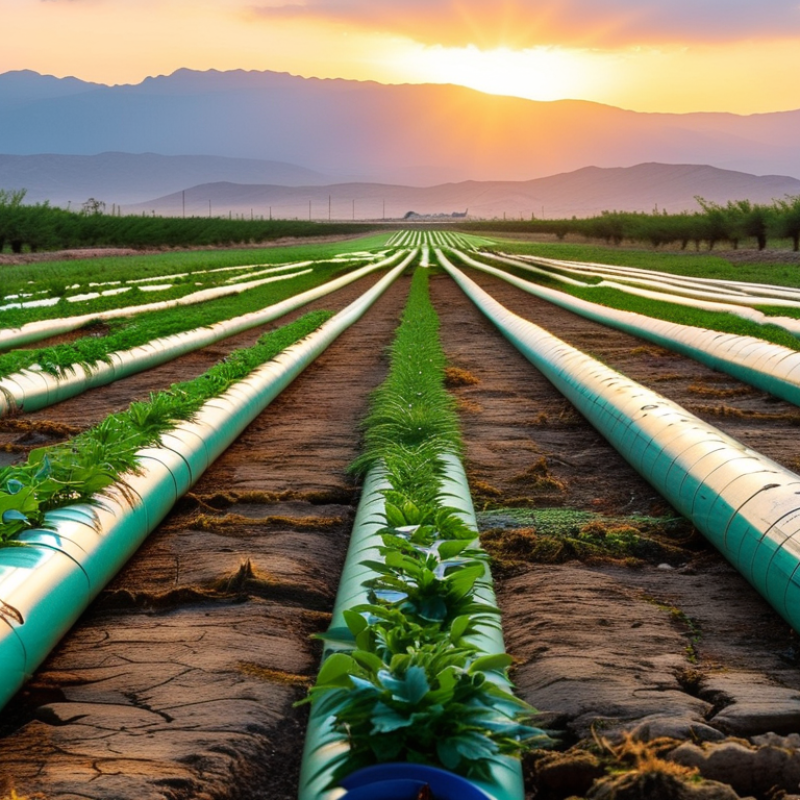
A drip hose is a flexible irrigation tube with built-in outlets. These outlets release water slowly near plant roots. Unlike surface flooding, drip delivery limits evaporation and keeps leaves mostly dry. For global buyers, this difference affects water use, crop health, and labor costs. A hose can serve greenhouse beds, orchard rows, or small landscape plots. The result depends on accurate flow, not attractive packaging. Some products promise uniform watering but perform poorly at the far end. That deserves careful testing.
Experienced buyers check wall thickness, emitter spacing, flow rate, pressure range, and UV resistance. They should request samples and test them with local water before placing large orders. Water quality matters too. Sediment can clog narrow outlets quickly. Hard water may create deposits inside the hose. Material selection also matters in hot climates, where sunlight can make weak plastic brittle. Fittings must match regional pipe sizes and installation habits. A simple adapter problem can delay an entire project. Reliable suppliers should provide production records, inspection data, and clear storage guidance. Certification helps, but it does not replace practical testing. I would also compare results after repeated use, because a new hose can hide weaknesses. Small pressure changes may produce uneven wetting, especially on long rows. Global buyers need evidence from real operating conditions, not only a specification sheet.
China Top 10 Drip Hose Manufacturers for Global Buyers? - What Is a Drip Hose and Why Does It Matter for Global Buyers?
A drip hose is a polyethylene irrigation tube with regularly spaced outlets or integrated emitters that deliver water directly to the crop root zone. The comparison below uses anonymous supplier profiles and practical technical criteria commonly used by international buyers.
| Rank | Anonymous Supplier Profile | Typical Product Focus | Common Nominal Diameter | Typical Wall Thickness | Common Emitter Spacing | Typical Flow Rate | Recommended Filtration | Best-Fit Applications | Key Export-Buyer Checks | Indicative Buyer Suitability |
| 1 | Profile A | Pressure-compensating drip hose | 16 mm | 0.20–0.40 mm | 20, 30, 40, 50 cm | 1.0–2.2 L/h per outlet | 120 mesh or finer | Greenhouses, orchards and uneven terrain | Verify pressure-compensation range, outlet uniformity and laboratory test data. | ★★★★★ |
| 2 | Profile B | Thin-wall seasonal drip tape | 16 mm | 0.12–0.25 mm | 10, 15, 20, 30 cm | 0.6–1.5 L/h per outlet | 120 mesh or finer | Vegetables, row crops and short production cycles | Check roll length, seam strength, flatness and resistance to installation damage. | ★★★★☆ |
| 3 | Profile C | Heavy-wall reusable dripline | 16–20 mm | 0.50–1.20 mm | 30, 40, 50, 60 cm | 1.0–3.8 L/h per outlet | 120 mesh or finer | Permanent orchards, vineyards and nurseries | Review UV resistance, tensile strength, recovery after pressure cycles and warranty terms. | ★★★★★ |
| 4 | Profile D | Non-pressure-compensating dripline | 16 mm | 0.20–0.60 mm | 20, 30, 40 cm | 0.8–2.0 L/h per outlet | 120 mesh or finer | Level fields and short irrigation laterals | Confirm recommended operating pressure and allowable lateral length. | ★★★★☆ |
| 5 | Profile E | Anti-siphon and anti-drain dripline | 16 mm | 0.30–0.80 mm | 20, 30, 40, 50 cm | 1.0–2.2 L/h per outlet | 120 mesh or finer | Greenhouses and pulse-irrigation systems | Test valve closing behavior, pressure range and prevention of soil particle entry. | ★★★★☆ |
| 6 | Profile F | Flat drip tape for mechanized laying | 16–22 mm | 0.15–0.30 mm | 10, 15, 20, 30 cm | 0.6–1.4 L/h per outlet | 120 mesh or finer | Large-scale vegetable and field-crop production | Check winding consistency, insertion-machine compatibility and recovery rate after deployment. | ★★★★☆ |
| 7 | Profile G | Low-flow drip hose | 12–16 mm | 0.20–0.50 mm | 15, 20, 30 cm | 0.3–1.0 L/h per outlet | 120 mesh or finer | Water-scarce regions, containers and nursery beds | Evaluate clogging resistance, minimum flushing velocity and performance at low pressure. | ★★★★☆ |
| 8 | Profile H | Fertigation-compatible dripline | 16–20 mm | 0.30–0.80 mm | 20, 30, 40, 50 cm | 1.0–2.5 L/h per outlet | 120 mesh or finer | Commercial farms using soluble fertilizers | Confirm chemical compatibility, flushing requirements and resistance to acidic or saline solutions. | ★★★★★ |
| 9 | Profile I | Long-lateral orchard dripline | 16–25 mm | 0.50–1.20 mm | 40, 50, 60, 100 cm | 1.6–4.0 L/h per outlet | 100–120 mesh | Orchards, vineyards and landscape irrigation | Request flow-variation data, recommended lateral length and connection-size compatibility. | ★★★★★ |
| 10 | Profile J | Custom OEM drip hose | 12–25 mm | 0.15–1.20 mm | Custom, commonly 10–100 cm | 0.3–4.0 L/h per outlet | Project-specific; commonly 120 mesh | Private-label distribution and engineered irrigation projects | Assess tooling capability, sample approval, batch traceability, packaging and export documentation. | ★★★★☆ |
How to Evaluate China’s Top Drip Hose Manufacturers
Evaluating China’s top drip hose manufacturers requires more than comparing catalog prices. Start with the hose’s working details: polyethylene grade, wall thickness, emitter spacing, flow rate, and pressure range. Ask for test data, not only product descriptions. A reliable manufacturer should explain how raw materials are checked and how production tolerances are controlled. Request samples from the same production line used for your order. Small differences can affect irrigation uniformity across a long field.
Factory experience also matters. Review production capacity, tooling condition, quality inspection records, and export experience for similar climates. During a factory audit, inspect storage areas, labeling systems, and leak-testing equipment. Ask how rejected hoses are isolated. Vague answers deserve caution. Certifications can support credibility, but they should match the actual product and destination market. Paperwork alone is not proof.
I would also test samples under real conditions. Run water through several rolls, measure flow at different pressures, and expose sections to sunlight if outdoor use is expected. Check connector fit after repeated installation. Cheap samples may perform well briefly, then fail at the seam. This is easy to miss. Pricing should include packaging, replacement support, lead time, and spare tooling costs. I once focused too heavily on unit price; the later freight and replacement expenses changed the calculation. A written quality agreement can prevent that mistake, although it cannot replace regular inspection.
China’s Top 10 Drip Hose Manufacturers by Product Strengths
China’s top 10 drip hose manufacturers stand out through different product strengths, not identical factory claims. Some specialize in thin-wall hoses for seasonal vegetable fields. Others produce thick-wall lines for orchards and multi-year installations.
Several manufacturers focus on precise emitter spacing, supporting uniform water delivery across long rows. Their production lines commonly use automated extrusion, laser measurement, and pressure testing. Some offer pressure-compensating emitters for uneven terrain. Others prioritize anti-clogging flow paths, useful where irrigation water contains fine particles. This detail matters. A smooth internal channel can reduce maintenance visits.
Product flexibility is another clear advantage. Many factories adjust hose diameters, wall thicknesses, outlet spacing, and coil lengths for overseas projects. Some develop reinforced hoses for mechanized laying and retrieval. Others provide compact packaging for container efficiency. Experienced buyers should request samples, burst-pressure data, flow-rate curves, and aging results before placing large orders. Certificates help, but test methods must match the project’s actual conditions.
The strongest manufacturers usually support tooling changes and stable batch control. Yet no supplier excels in every category. A low quotation may reflect thinner material or limited quality inspection. I would compare three production batches, not one attractive sample. Field performance can still differ after months of sunlight, fertilizer exposure, and pressure changes. That uncomfortable gap deserves more attention.
Key Factors for Comparing Quality, Pricing, and Export Services
China Top 10 Drip Hose Manufacturers for Global Buyers?
Comparing drip hose suppliers requires more than reading catalog specifications. In factory evaluations, I check wall thickness, emitter spacing, flow uniformity, and pressure tolerance. A sample should run for several hours, not merely look clean on a table. Ask for material data, production records, and test results from recent batches. Recycled content may reduce costs, but it can also affect flexibility and service life. This detail deserves careful questioning.
Pricing should be compared by usable output, not by coil price alone. Include tooling, packaging, inland transport, inspection, and replacement rates. A low quotation can become expensive after leakage appears in the field. Request tiered prices for different quantities and confirm minimum order requirements. Payment terms matter too. Sometimes, I focus too heavily on unit cost. That is a mistake. Stable quality may protect the farm budget better than a small discount.
Export service often separates a convenient supplier from a difficult one. Check production lead times, carton strength, loading plans, and document accuracy. The supplier should explain trade terms clearly and provide responsive updates during manufacturing. Before shipment, use an independent inspection when the order is large. Clear claims procedures are essential, even if nobody expects a problem. Communication can still fail across time zones. Written specifications, approved samples, and dated photos reduce that risk. Ask whether technical guidance is available after delivery, especially for installation and filtration requirements.
How Global Buyers Can Select and Verify the Right Supplier
China Top 10 Drip Hose Manufacturers for Global Buyers?
Selecting a drip hose supplier requires more than comparing catalog prices. The FAO reports that agriculture uses about 70% of global freshwater withdrawals. This pressure makes reliable water delivery increasingly important. Ask each shortlisted manufacturer for ISO 9261 test results, production photos, and recent batch records. The standard covers important performance factors, including emitter flow and pressure resistance. A polished brochure is not proof.
Request samples from different production batches. Measure wall thickness at several points, then test flow at low, medium, and high pressure. Check whether the hose bends easily without flattening. Also inspect filter compatibility, connector fit, UV resistance, and packaging strength. The World Bank identifies irrigation efficiency as a key factor in managing agricultural water demand. However, supplier claims still need independent verification. A laboratory report should show test dates, methods, and sample identification. Vague certificates deserve careful questioning.
Factory audits should review raw-material storage, extrusion controls, mold maintenance, and final inspection records. Ask for traceability from resin batch to shipping carton. Payment terms should not replace technical evidence. One common sourcing mistake is accepting a low first quotation without calculating replacement costs. Another is testing only one sample. That approach feels efficient, but it can hide production variation. Compare at least three qualified suppliers, document every result, and keep communication records. Supplier selection becomes clearer when performance is measured consistently.
China Top 10 Drip Hose Manufacturers: Supplier Verification Priorities
The chart presents a practical procurement weighting model for global buyers. Quality consistency, product compliance, production capability, and export reliability should be verified before comparing quotations. These percentages represent screening priorities, not ratings for any individual company or brand.





