


Top China Dashboard Instrument Manufacturers for Buyers

Selecting a Dashboard Instrument manufacturer in China calls for more than comparing unit prices. Buyers need to examine display readability, sensor compatibility, operating-temperature range, connector quality, and expected service life. Ask suppliers for product specifications, test records, and representative samples. A crisp screen in a showroom means little if glare obscures readings in midday sunlight.

Design expert Don Norman wrote, “Attractive things work better.” His observation offers a useful reminder: a dashboard must feel clear and intuitive, not merely look modern. For buyers, that means checking font size, warning-light visibility, night dimming, and how quickly information can be understood. Details matter. Request demonstrations under different lighting conditions, and ask how the instrument communicates with the vehicle’s electronic systems. Confirm which functions are standard and which require customization.

This guide introduces leading Chinese manufacturers and practical ways to compare them. It considers product range, engineering support, customization, production consistency, and communication during sampling. Buyers should also ask about inspection procedures and how suppliers handle defects or design changes. A polished sample can still conceal uneven production quality; that is an uncomfortable point, but worth checking. No shortlist replaces technical validation. Use the recommendations as a starting point, then match each supplier’s capabilities to your vehicle, target market, and project requirements.
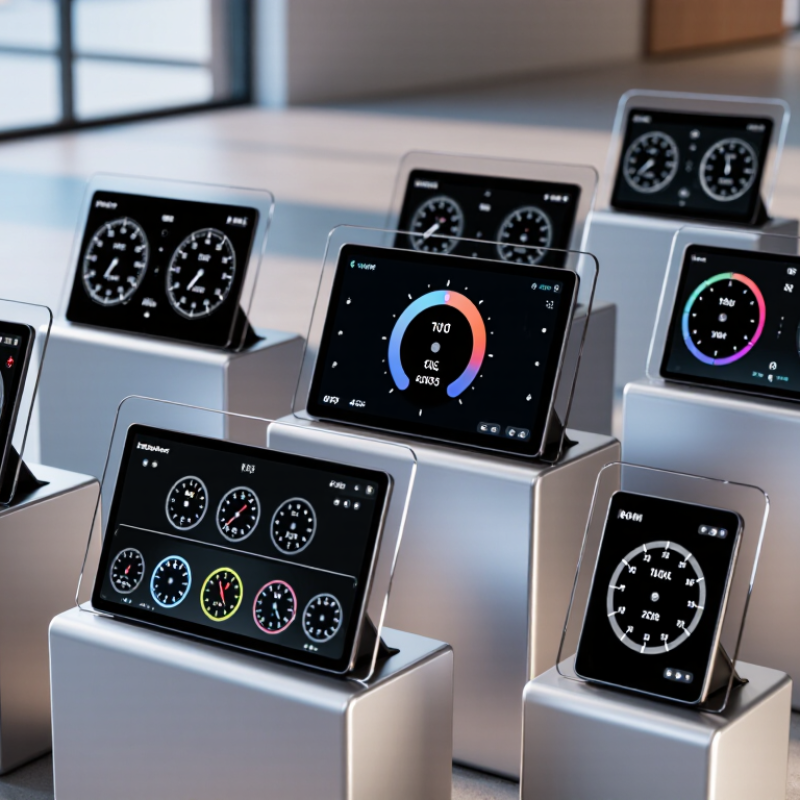
Top China Dashboard Instrument Manufacturers for Buyers

What Dashboard Instruments Include and How They Are Used

Dashboard instruments are the driver’s information point, combining physical gauges, indicator lamps, and digital screens. Common readings include vehicle speed, engine speed, fuel level, and coolant temperature. Some dashboards also show battery status, tire pressure, trip distance, or navigation prompts. The exact layout varies by vehicle, so buyers should check which readings are essential for their intended use.

These instruments turn sensor data into information a driver can act on. A rising temperature reading may signal a cooling problem, while a low-fuel warning helps prompt a refueling stop. Warning lights communicate issues that may need attention, but they do not always explain the cause. Check the vehicle manual before treating a symbol as a diagnosis. Small detail, big difference.

For routine driving, clear markings, stable illumination, and readable numbers matter more than decorative graphics. In bright sunlight, low contrast can make a screen difficult to read; at night, excessive brightness can distract. Digital displays can combine several functions, while analog gauges offer a quick visual sweep. Neither is automatically better. A display may appear precise yet still depend on sensor accuracy, and drivers can overlook information when too much appears at once. That trade-off deserves a closer look.


Top China Dashboard Instrument Manufacturers for Buyers — What Dashboard Instruments Include and How They Are Used

Dashboard instruments help drivers monitor vehicle speed, engine revolutions, coolant temperature, fuel level, and oil pressure. The chart shows example upper scale values in each instrument’s native unit. These scales are illustrative, vary by vehicle, and should not be compared directly across different units.

Key Criteria for Evaluating Chinese Dashboard Instrument Manufacturers

Choosing a Chinese dashboard instrument manufacturer requires more than comparing unit prices. Check whether its engineering team understands your vehicle’s voltage range, sensor inputs, display requirements, and installation space. Request drawings, interface specifications, and sample units before approving a production run. A clear revision process matters when dimensions or firmware change.

Assess quality controls with specific questions. How are readings checked across operating temperatures? Are vibration and moisture tests documented? Can each unit be traced to its production batch? Ask for relevant test records and quality procedures, not just general assurances. Communication is another useful indicator: technical questions should receive precise, consistent answers. A polished factory visit can help, but it cannot replace ongoing performance data. Buyers sometimes focus too heavily on price; that shortcut may hide costly rework. Details matter.

Tips: Send a written requirement list and compare responses line by line. Test samples in the intended dashboard, including in bright sunlight and during startup. Keep a record of unresolved issues. No checklist catches everything, and I would revisit assumptions after the first trial installation.

Leading China-Based Dashboard Instrument Manufacturers

China-based dashboard instrument manufacturers serve a broad automotive supply chain. The China Association of Automobile Manufacturers reported 30.16 million vehicles produced in 2023 in its annual industry statistics. This scale can support local access to tooling, display assembly, test facilities, and component suppliers. It does not guarantee consistent quality. Buyers still need to assess each manufacturer’s process and evidence.

Check sample units for sunlight readability, vibration resistance, temperature cycling, and stable communication with the vehicle network. Ask for documented inspection records and clear software-update procedures. A crisp demo is not enough. Also review production traceability and how defects are handled after delivery. This is easy to overlook, even for experienced purchasing teams.

Tips: Request a pilot batch and test it in the intended cabin environment. Compare the display at noon glare and in dim evening light. Confirm connector details, interface requirements, and change-control practices in writing. A small gap in documentation can become a large integration problem.

Top China Dashboard Instrument Manufacturers for Buyers - Leading China-Based Dashboard Instrument Manufacturers

Buyer-focused comparison of common dashboard-instrument capabilities and verification points. Technical details vary by product and supplier; confirm them against the specific model and project requirements.

Buyer Evaluation Dimension Common Options or Reference What Buyers Should Verify
Instrument format Analog, digital, or hybrid cluster Vehicle layout, required gauges, warning indicators, and available dashboard space
Display technology LCD or TFT-LCD are common instrument-display options Screen size, resolution, brightness, viewing angle, operating-temperature range, and sunlight readability
Vehicle communication CAN, CAN FD, or LIN, depending on vehicle architecture Supported protocol, message definitions, bus speed, diagnostic functions, and integration test responsibility
Sensor inputs May include analog, pulse, or digital inputs, depending on the design Input count, electrical characteristics, signal conditioning, connector pinout, and calibration method
Power compatibility Designed for the vehicle’s electrical system, commonly 12 V or 24 V applications Specified operating and transient voltage limits, reverse-polarity protection, and current consumption
Environmental validation ISO 16750 provides environmental-condition and testing frameworks for road-vehicle electrical and electronic equipment Applicable test sections, temperature and vibration profiles, test reports, and project-specific acceptance criteria
Electromagnetic compatibility CISPR 25 and ISO 11452 are commonly referenced in automotive component EMC work Required emissions and immunity tests, test setup, limits, and reports for the intended vehicle market
Enclosure protection Ingress-protection ratings are defined by IEC 60529 Required rating for the installation location and whether the rating applies to the complete assembly
Functional safety ISO 26262 addresses functional safety for road-vehicle electrical and electronic systems Whether the instrument functions are safety-related and what safety evidence or development processes the project requires
Customization and integration Possible project-specific graphics, dial scales, warning icons, connectors, and communication configuration Design ownership, software-change process, sample approval, tooling costs, and engineering-change control
Quality and production controls IATF 16949 is a quality-management-system standard for the automotive industry Current certificate scope and validity, traceability, inspection plans, change notification, and defect-response process
Commercial evaluation Compare quotations using the same specification, order quantity, and delivery terms Prototype and tooling charges, minimum order quantity, lead time, warranty terms, spare-parts support, and Incoterms

How to Compare Suppliers, Products, and Customization Options

When comparing China-based dashboard instrument manufacturers, start with the instrument’s job, not the catalog. A speed display, coolant gauge, and multifunction cluster have different accuracy, response, and readability needs. Ask for datasheets showing measurement range, tolerance, operating temperature, vibration resistance, and ingress protection. Check how readings behave during startup and under changing voltage. Small details matter.

Request samples made with the proposed components and firmware, then test them in realistic lighting. Read the display in direct sun and at night. Check connector fit, warning-light visibility, and whether labels match your interface. For custom designs, clarify screen size, units, dial layout, language options, communication protocols, and firmware change control. Ask who owns tooling files and how revisions are recorded. A polished sample is not proof of stable production.

Compare suppliers using evidence, not only quoted prices. Review inspection plans, calibration records, component traceability, defect handling, and production capacity. Ask for the minimum order quantity, sample lead time, tooling charges, and repeat-order schedule in writing. Request a clear contact for engineering changes. Sometimes a supplier answers quickly but vaguely; that deserves a follow-up, not an assumption. Leave room for an imperfect prototype cycle. Real installations can reveal glare, cable strain, or confusing alarms that drawings miss.

Steps for Verifying a Manufacturer Before Placing an Order

Before ordering dashboard instruments, verify that a manufacturer can match your actual specifications, not just offer a broad catalog. Send a clear drawing with dial size, mounting depth, connector type, operating voltage, and required accuracy. Ask for a sample built to those details. Then compare its markings, fit, and readings with your requirements. Details matter.

Request recent production photos and a short video of the instrument being tested on a bench. Ask how readings are checked, what tolerances are recorded, and whether inspection results can be shared with your order. A polished certificate alone may not show how a specific batch was handled. Ask for evidence. Check the sample under realistic conditions, including vibration or temperature changes if those apply to your equipment.

Confirm the quoted lead time, packaging method, and process for handling defects in writing. Speak with a technical contact, not only a sales representative, and note how clearly they answer practical questions. If possible, contact a previous buyer with permission. One overlooked connector can delay installation, even when the gauge itself looks excellent. I would not treat a smooth first conversation as proof of reliable production; consistency needs checking, and a small sample may not reveal every issue.

Powder Coat Booths

For those larger-sized parts, or smaller quantity runs, we have 2 independent powder coat booths and ovens. The quality, durability and affordability of today’s powder coating finishes make this the process of choice for world-class companies.

Powder coating advantages over other forms of coating are many. Materials used in the Powder coating process can be metals and non-metals that come in a multitude of thicknesses, textures, colors, etc. Another of Powder coating’s biggest advantages over conventional coatings is its ability to create finishes in many different textures. Powder Coating Booths allow us the ability to apply these advantages to large products.

Wet Paint Line

Tri-State Fabricators runs a full-service conveyor line for painting. Wet painting can provide protection or decoration to many different part styles. From start to finish, every project is easier to undergo random and point-based inspection by our skilled painting team.

Advantages to our Wet Paint Line are these lines start with product prep and ends with a thorough inspection of a high quality finished product. Our ability to complete large and small projects with a superior finish and doing so in a timely and economical fashion. This passes along the savings in production to our customers. When powder coating ins not an option, our Wet Paint Line gets the job done right the first time.

Wet Paint Booths

When the parts get big and heavy we roll-out our custom paint racks and oversize booth. By utilizing our partnerships with all the major paint brands, we can match virtually any color with wet paint.

The advantages of having access to a Wet Paint Booth are many. Large projects of many different shapes can be loaded into the booth. The Wet Paint Booth offers an environment that is much more controlled than a typical parts painting operation.

Not only are they used because of their controlled environment, but they’re are also advantageous when it comes to applying paint to parts that are needed in industries that require specialty coatings such as medical, aerospace, etc.

Military CARC

Our military forces have some very high standards when it comes to the finish of their vehicles and equipment. From the first pre-treatment step to final coat, it takes a great deal of knowledge and experience to protect the men and women of our armed forces. They deserve only the best, and Tri-State Fabricators provides it.

All of our processes are closely monitored by our staff and management teams. Both of which are highly trained in the processes of metal fabrication and finishing. Tri-State Fabricators’ goal is to always fully satisfy each and every customer, including the military. We will always put a 110% into what we do.

Glass-Bead Blasting

Abrasive media blasting is an excellent way to remove old paint, rust, and increase the paint/powder adhesion. Glass beads produce a much smoother and brighter finish than angular abrasives; leaving the part clean yet without any dimensional change. Chemically inert and environmentally friendly, we can recycle our beads approximately 30 times; making them a more preferred method of metal cleaning or surface finishing.

Advantages to Glass Bead Blasting are many. Glass bead blast media is used when a project is needing rough surfaces need to become smooth for applications of coatings such as paint. It is typically used to clean paint and rust from a product surface without deforming the surface it is being used on. Overall, compared to many other blasting media, Glass Bead Blasting is a very economical choice and those savings are always passed on to our customers.

Part Washing

Tri-State Fabricators utilize a zinc phosphate wash to clean and etch the material to ensure the best paint adhesion possible. The unique design of our 3-stage wash system does the work like a 5-stage. From Cleaning and rinsing to conversion coating and post-treatment, Our Part Washing process is a complete service and works throughout the fabrication service and the finishing service.

Along with the previously mentioned benefits, Curing is a vital chemical reaction that leaves the product finish hard and relatively safe from mild abrasion and aggressive corrosion. This process can be done in more than one way; ambient air-dry or in curing ovens at temps that exceed 240°.

Burn-Off Oven

From fixing paint mistakes (someone else’s of course) to simply cleaning our paint line hooks, our burn-off oven is put to good use. After a quick burn-off, a little clean up, and a fresh coat of paint, your parts will look better than new.

Why does our Burn-Off Oven work so well? Because super heating the air around parts turns the materials into ashes. From paint and powder coatings to rubber and machining oils, high temps do the job without degrading the integrity of the part.

Masking

Masking is a vital part of producing high quality products. We have die-cut masking patterns to protect machined surfaces as well as a wide range of plugs and caps to protect threaded holes and bolts. We provide permanent and temporary masking.

Masking allows the selected sections of a product to be protected from a fabrication or finishing service. This can be with both chemicals when etching and tapes, paints when only finishing just a section of the product. Masking is great in aiding the customization process of a project.

Screen Printing

Screen printing is a photographic process that transfers artwork onto a porous nylon screen which allows colored ink to flow through the screen and be deposited on an aluminum or plastic component. We can generally have just about any design created onto a screen for your parts.

Some of the advantages of Screen Printing are, brand recognition for your business displaying on your products, assembly instructions, product warnings/hazards, etc. Tri-State Fabricators produces Screen Printing of the highest quality so you know it’s durable.

Metal Finishing

Metal Finishing is the art of treating the exterior portion of product, often metal but can also be made of other materials, so that the surface is clean and free of any debris. Then the process of applying coats or either paint of powder coat takes place. This coating process improves the quality of the product in both appearance and resistance to wear and corrosion.

Tri-State Fabricators, Inc., understands that a project typically isn’t complete until a high-quality finish has been added to your product. This is why our painting and powder coating teams continuously inspect the products throughout the Metal Finishing process.
