


China Top Cast Iron Butterfly Valve Manufacturers?

China has become an important sourcing base for industrial valves, but choosing a supplier takes more than comparing prices. A Cast Iron Butterfly Valve may look simple on a catalog page. Its performance depends on material quality, machining, sealing design, and consistent inspection. Small details matter. A rough disc edge or uneven coating can affect installation and service life.

This guide introduces manufacturers in China and the practical questions buyers should ask. It considers product range, manufacturing capability, quality documentation, customization, and export support. Buyers should confirm whether a supplier can provide relevant test reports, material details, dimensional drawings, and clear answers about operating conditions. Ask about pressure ratings, media compatibility, temperature limits, and connection standards before requesting a quotation. A polished website is useful, but it is not proof of factory capability.

There is no universal “best” manufacturer for every project. A supplier suited to water distribution may not fit a demanding process application. That distinction is easy to miss. Lead times, communication, spare-part availability, and after-sales response also deserve attention. Where possible, review samples or arrange an independent inspection before placing a large order. This article offers a starting point, not a substitute for technical review. Compare evidence carefully, verify claims directly, and match each Cast Iron Butterfly Valve to the actual system rather than relying on a broad product label. One overlooked specification can become an expensive lesson.
China Top Cast Iron Butterfly Valve Manufacturers?

What Are Cast Iron Butterfly Valves and How Do They Work?

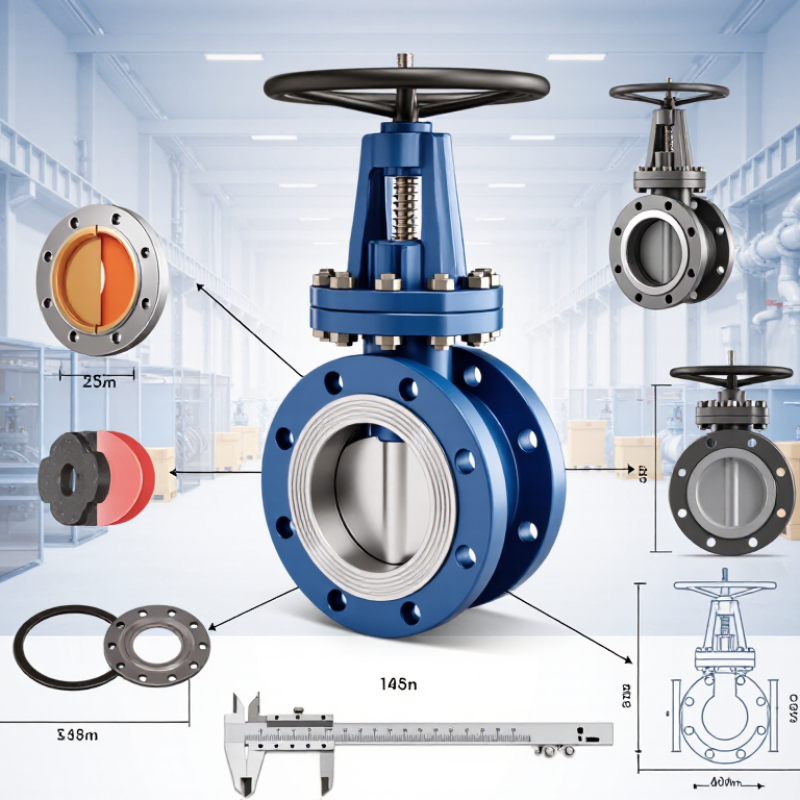
A cast iron butterfly valve controls flow with a circular disc mounted on a rotating shaft. Turning the disc about 90 degrees moves it from open to closed. At full opening, the disc remains in the flow path; at partial opening, it restricts flow and may create turbulence and pressure loss. Simple mechanism. The body is commonly paired with a resilient seat, but seat material affects fluid and temperature compatibility. Cast iron is often used in water and building-services systems, yet it is not suitable for every fluid or operating condition.

The U.S. Department of Energy’s Improving Pumping System Performance: A Sourcebook for Industry reports that pumping systems account for nearly 20% of global electricity demand, and 25–50% of energy use in some industrial plant operations.

This does not mean a butterfly valve alone determines energy consumption. Poorly chosen throttling can add resistance, so valve sizing should be considered alongside pump control and system design. Check pressure, temperature, media compatibility, connection dimensions, and shutoff requirements before selection. These details are easy to rush—and worth checking twice.


Where Are Cast Iron Butterfly Valves Commonly Used?

Cast iron butterfly valves are commonly installed in water systems where operators need dependable shutoff and straightforward flow control. They appear in municipal distribution networks, building service rooms, irrigation lines, and water-treatment facilities. In a pump room, a compact quarter-turn handle can isolate a branch without taking apart long pipe runs. That saves space. Many HVAC systems also use them on chilled-water and condenser-water lines, especially near pumps and large equipment. Access matters here.

At wastewater plants, they may serve process-water or non-aggressive drainage lines, depending on the valve’s materials and operating conditions. Cast iron bodies suit many larger, fixed installations, but they are not right for every fluid. Corrosion changes things. Operators should check pressure and temperature ratings, disc and seat materials, and whether solids can collect near the disc. A valve that works well on clean water may wear faster in abrasive slurry or corrosive service.

Routine inspection of seals and actuator travel can help identify leakage or restricted movement early. A practical detail is often overlooked: the valve must remain accessible after nearby pipes and equipment are installed. Without that clearance, even a suitable valve can become difficult to inspect or maintain.

China Top Cast Iron Butterfly Valve Manufacturers? - Where Are Cast Iron Butterfly Valves Commonly Used?

Industry or System Common Application Typical Media Why a Butterfly Valve Is Used Selection Considerations
Municipal water distribution Isolation in water mains, pumping stations, and treatment-plant pipework Treated water and raw water, subject to the valve’s material specification Compact face-to-face dimensions and quarter-turn operation suit large-diameter pipelines. Check pressure rating, lining and disc materials, connection type, and applicable water-service standards.
Wastewater and sewage treatment Flow isolation on treatment-process lines and plant utility systems Wastewater or treated effluent, depending on the system and valve construction The lightweight, space-efficient design can be practical for larger pipe sizes. Assess corrosion, solids, abrasion, sealing requirements, and whether the selected design is suitable for the actual wastewater.
Building HVAC and chilled-water systems Isolation and, where the valve is designed for it, flow regulation in hydronic pipework Chilled water, cooling water, or hot-water circulation within rated limits A short installation length and simple actuation help conserve space in mechanical rooms and risers. Confirm temperature and pressure limits, seat compatibility, actuator requirements, and whether throttling is permitted.
Irrigation and agricultural water Isolation at distribution lines, pumping equipment, and water-control points Fresh water or irrigation water, subject to water quality and valve materials Quarter-turn operation allows relatively quick opening and closing in many pipeline layouts. Consider suspended solids, outdoor exposure, coating, operating frequency, and the required end connection.
Industrial utility-water systems Isolation in non-critical utility-water and general service lines Cooling or service water when compatible with the body, disc, seat, and coating The design is commonly available in sizes suited to larger, lower-pressure utility pipelines. Verify the full operating envelope and chemical compatibility; cast iron is not suitable for every fluid or duty.
Fire-protection piping Isolation in systems where the specific valve is approved for the intended fire-protection service Water in fire-protection networks A quarter-turn valve can provide compact isolation where permitted by the system design. Use only a valve with the approvals, supervision features, and installation suitability required by local codes and project specifications.

Purchasing note: “Cast iron” describes the body material, not a universal performance rating. Confirm the exact material grade, pressure and temperature limits, face-to-face dimensions, test requirements, coating, seat and disc materials, and relevant standards for the intended service. Do not assume suitability for high-pressure, high-temperature, corrosive, abrasive, or critical applications without verifying the valve’s documented specifications.

How Are Cast Iron Butterfly Valves Made and Tested in China?

In China, cast iron butterfly valves are typically made through a sequence of casting, machining, assembly, and inspection. The body is poured into a prepared mold, then cooled and cleaned. Casting quality matters. Foundry teams check for visible defects, though small internal flaws may require additional testing.

After the body is machined, workers fit the disc, stem, seat, and sealing components. The disc must turn smoothly without scraping the body. Clearances are small. A technician may use gauges to check stem alignment and measure key dimensions against the production drawing. Material records and process controls help trace each batch, but actual procedures vary by factory and valve design.

Testing checks whether the finished valve performs as intended. A pressure test can reveal leakage through the body or around the closed disc; operators record pressure and hold time. Some factories also test operation across repeated opening and closing cycles. Watch the details. A test report is useful, but buyers should confirm the test standard, sample basis, and acceptance criteria rather than relying on a certificate alone. Seat wear, coating thickness, and assembly variation can still affect service life, so inspection findings deserve careful review.

How Cast Iron Butterfly Valves Are Tested

Reference hydrostatic test pressures under API 598, expressed as multiples of the valve’s applicable pressure rating.

API 598 specifies a shell test at 1.5 times the applicable pressure rating and a high-pressure closure test at 1.1 times. Actual test requirements depend on valve design, rating, and the applicable standard edition and purchase specification.

Which Chinese Manufacturers Produce Cast Iron Butterfly Valves?

Which Chinese Manufacturers Produce Cast Iron Butterfly Valves?

Chinese producers include foundries with in-house machining and valve specialists that source castings before finishing and assembling them. The World Foundry Organization’s 2022 census reported 107.1 million tonnes of castings worldwide, including about 51.8 million tonnes from China. This indicates a substantial casting base, but it does not measure butterfly-valve output.

Buyers should check whether a supplier controls casting, machining, assembly, and pressure testing, or outsources key steps.

Look for documented material grades, dimensional inspection records, and pressure-test procedures. For industrial butterfly valves, EN 593 covers metallic butterfly valves, while ISO 5211 addresses actuator attachment interfaces. Ask for drawings and test records for the specific size and pressure class; a general certificate alone may not confirm the delivered valve’s performance.

A glossy catalog is not proof. Supplier claims deserve verification.

Tips: Request a sample inspection report and confirm the body material, disc finish, seat compound, and face-to-face dimensions. Clarify whether testing is performed on every unit or by sampling. Small details matter. The foundry census describes the wider casting industry, not valve quality, so treat it as context rather than a supplier rating.

How Can Buyers Evaluate a Chinese Valve Manufacturer?

Choosing a Chinese cast iron butterfly valve manufacturer should begin with the valve’s duty, not its catalog claims. Share the medium, pressure, temperature, line size, and expected operating cycles. Ask whether the body, disc, stem, and seat suit those conditions. Request material certificates and details about coating thickness and corrosion protection. Useful evidence includes dimensional inspection records and pressure-test reports. Check that each finished valve can be traced to its inspection batch. A polished brochure is not proof. Ask to review the actual test procedure.

During an audit, examine machining, assembly cleanliness, and how rejected parts are recorded. A tidy showroom matters less than consistent production controls. Ask who performs final testing and how failures are handled. Compare the drawings with your piping dimensions, flange standard, actuator interface, and installation space. Confirm lead time, spare-seat availability, packaging, and after-sales support in writing. Request a sample or small trial order when practical. Then inspect it yourself. Technical answers should be specific, and design changes should be documented. No checklist catches everything. Revisit service-life assumptions; field conditions can be rougher than the stated specification.

Powder Coat Booths

For those larger-sized parts, or smaller quantity runs, we have 2 independent powder coat booths and ovens. The quality, durability and affordability of today’s powder coating finishes make this the process of choice for world-class companies.

Powder coating advantages over other forms of coating are many. Materials used in the Powder coating process can be metals and non-metals that come in a multitude of thicknesses, textures, colors, etc. Another of Powder coating’s biggest advantages over conventional coatings is its ability to create finishes in many different textures. Powder Coating Booths allow us the ability to apply these advantages to large products.

Wet Paint Line

Tri-State Fabricators runs a full-service conveyor line for painting. Wet painting can provide protection or decoration to many different part styles. From start to finish, every project is easier to undergo random and point-based inspection by our skilled painting team.

Advantages to our Wet Paint Line are these lines start with product prep and ends with a thorough inspection of a high quality finished product. Our ability to complete large and small projects with a superior finish and doing so in a timely and economical fashion. This passes along the savings in production to our customers. When powder coating ins not an option, our Wet Paint Line gets the job done right the first time.

Wet Paint Booths

When the parts get big and heavy we roll-out our custom paint racks and oversize booth. By utilizing our partnerships with all the major paint brands, we can match virtually any color with wet paint.

The advantages of having access to a Wet Paint Booth are many. Large projects of many different shapes can be loaded into the booth. The Wet Paint Booth offers an environment that is much more controlled than a typical parts painting operation.

Not only are they used because of their controlled environment, but they’re are also advantageous when it comes to applying paint to parts that are needed in industries that require specialty coatings such as medical, aerospace, etc.

Military CARC

Our military forces have some very high standards when it comes to the finish of their vehicles and equipment. From the first pre-treatment step to final coat, it takes a great deal of knowledge and experience to protect the men and women of our armed forces. They deserve only the best, and Tri-State Fabricators provides it.

All of our processes are closely monitored by our staff and management teams. Both of which are highly trained in the processes of metal fabrication and finishing. Tri-State Fabricators’ goal is to always fully satisfy each and every customer, including the military. We will always put a 110% into what we do.

Glass-Bead Blasting

Abrasive media blasting is an excellent way to remove old paint, rust, and increase the paint/powder adhesion. Glass beads produce a much smoother and brighter finish than angular abrasives; leaving the part clean yet without any dimensional change. Chemically inert and environmentally friendly, we can recycle our beads approximately 30 times; making them a more preferred method of metal cleaning or surface finishing.

Advantages to Glass Bead Blasting are many. Glass bead blast media is used when a project is needing rough surfaces need to become smooth for applications of coatings such as paint. It is typically used to clean paint and rust from a product surface without deforming the surface it is being used on. Overall, compared to many other blasting media, Glass Bead Blasting is a very economical choice and those savings are always passed on to our customers.

Part Washing

Tri-State Fabricators utilize a zinc phosphate wash to clean and etch the material to ensure the best paint adhesion possible. The unique design of our 3-stage wash system does the work like a 5-stage. From Cleaning and rinsing to conversion coating and post-treatment, Our Part Washing process is a complete service and works throughout the fabrication service and the finishing service.

Along with the previously mentioned benefits, Curing is a vital chemical reaction that leaves the product finish hard and relatively safe from mild abrasion and aggressive corrosion. This process can be done in more than one way; ambient air-dry or in curing ovens at temps that exceed 240°.

Burn-Off Oven

From fixing paint mistakes (someone else’s of course) to simply cleaning our paint line hooks, our burn-off oven is put to good use. After a quick burn-off, a little clean up, and a fresh coat of paint, your parts will look better than new.

Why does our Burn-Off Oven work so well? Because super heating the air around parts turns the materials into ashes. From paint and powder coatings to rubber and machining oils, high temps do the job without degrading the integrity of the part.

Masking

Masking is a vital part of producing high quality products. We have die-cut masking patterns to protect machined surfaces as well as a wide range of plugs and caps to protect threaded holes and bolts. We provide permanent and temporary masking.

Masking allows the selected sections of a product to be protected from a fabrication or finishing service. This can be with both chemicals when etching and tapes, paints when only finishing just a section of the product. Masking is great in aiding the customization process of a project.

Screen Printing

Screen printing is a photographic process that transfers artwork onto a porous nylon screen which allows colored ink to flow through the screen and be deposited on an aluminum or plastic component. We can generally have just about any design created onto a screen for your parts.

Some of the advantages of Screen Printing are, brand recognition for your business displaying on your products, assembly instructions, product warnings/hazards, etc. Tri-State Fabricators produces Screen Printing of the highest quality so you know it’s durable.

Metal Finishing

Metal Finishing is the art of treating the exterior portion of product, often metal but can also be made of other materials, so that the surface is clean and free of any debris. Then the process of applying coats or either paint of powder coat takes place. This coating process improves the quality of the product in both appearance and resistance to wear and corrosion.

Tri-State Fabricators, Inc., understands that a project typically isn’t complete until a high-quality finish has been added to your product. This is why our painting and powder coating teams continuously inspect the products throughout the Metal Finishing process.
