China Top 10 VFD 5 5kW Manufacturers Which One Is Best?
China’s Vfd 5.5kw market is expanding as factories seek lower energy use, smoother starting, and tighter speed control. The U.S. Department of Energy reports that motor-driven systems consume about 70% of industrial electricity. The International Energy Agency also identifies electric motor systems as major global electricity users. These figures explain why a small 5.5kW drive can matter on a production line.
Bimal K. Bose, a respected power-electronics scholar, wrote, “Power electronics is the technology of the future.” His observation remains relevant today. A modern Vfd 5.5kw can reduce mechanical shock, stabilize conveyor speed, and support process automation. Yet efficiency claims need careful checking. A low purchase price does not guarantee lower operating costs.
This guide compares China’s top 10 manufacturers through practical criteria. These include efficiency, overload capacity, harmonic performance, cooling design, certifications, software, warranty support, and field experience. Relevant standards include IEC 61800-5-1 and IEC 61800-3. Buyers should also examine installation conditions. Dust, cabinet temperature, cable length, and braking duty can change performance significantly. A drive tested in a clean showroom may behave differently beside a hot motor cabinet.
Market reports often estimate strong growth for variable-frequency drives, but their figures differ by research method and region. That uncertainty deserves attention. Therefore, this comparison does not treat brand popularity as proof. It focuses on documented specifications, application suitability, supplier reliability, and total ownership cost. Which manufacturer is best? The answer depends on the machine, not merely the label.
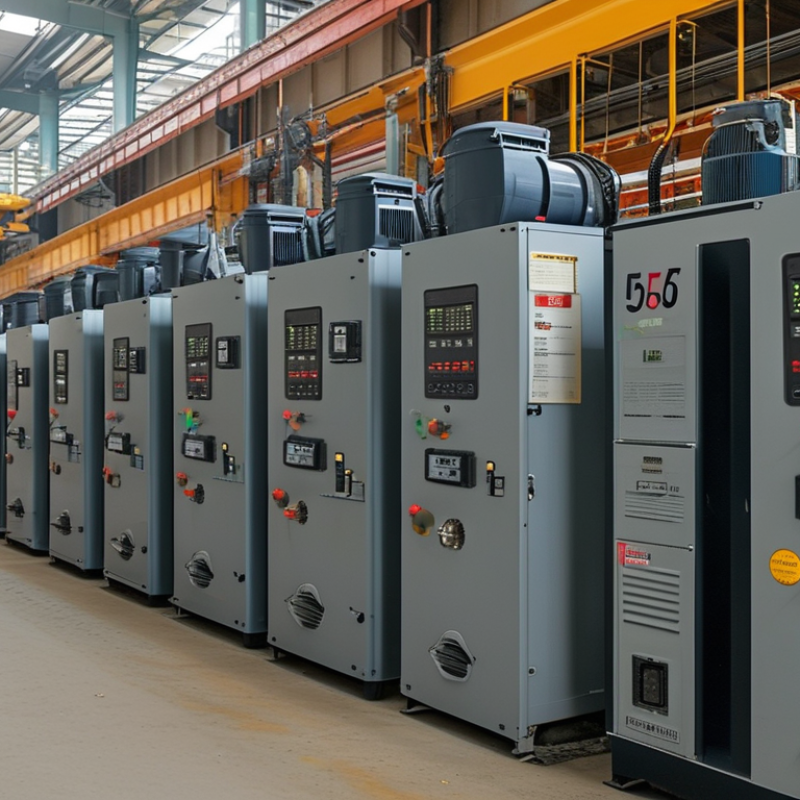
What Is a 5.5kW VFD and Why Is It Used in China?
A 5.5kW VFD is an electronic drive that controls a motor’s speed, torque, and starting current. It changes fixed-frequency AC power into adjustable voltage and frequency. In many Chinese industrial systems, the common supply is three-phase, 380V, and 50Hz. However, actual site conditions must be checked.
The 5.5kW rating suits many pumps, fans, conveyors, mixers, and small machine tools. A pump may start smoothly instead of causing a sharp current surge. A fan can slow during low demand, reducing wasted electricity. During field commissioning, technicians usually check motor current, acceleration time, braking needs, and control signals. Small details matter. A motor’s nameplate current is often more useful than its stated kilowatt value.
China uses these drives widely because factories need flexible automation, compact control cabinets, and practical energy management. A reliable selection should consider overload capacity, cooling method, enclosure protection, EMC performance, altitude, and local maintenance support. Dusty workshops may require better protection than clean production rooms. Long motor cables can also create electrical stress.
A low purchase price is not always a low operating cost. I have seen suitable power ratings fail because ventilation was ignored. That experience is easy to repeat. Engineers should also confirm whether the drive supports local communication systems and emergency-stop arrangements. Specifications can look complete while leaving one important operating condition unclear.
How to Evaluate China’s Leading 5.5kW VFD Manufacturers
Evaluating China’s leading 5.5kW VFD manufacturers requires more than comparing catalog prices. The IEA estimates that motor-driven systems consume about half of global electricity. Therefore, a small efficiency difference can affect a factory’s yearly energy bill. Request verified efficiency curves, not general claims. Check whether the drive delivers 5.5kW continuously at the required input voltage, frequency, and ambient temperature.
Site experience also matters. Test the VFD with a real motor, conveyor load, or pump before large-scale purchasing. Record acceleration time, current stability, stopping behavior, and fault recovery. A suitable unit should provide controlled overload performance, clear alarm codes, and stable operation during voltage fluctuations. IEC 61800-5-2 and IEC 61800-3 are useful references for safety and electromagnetic compatibility. Look for accredited laboratory reports and traceable test conditions.
Do not ignore after-sales support. The 2024 IEA Energy Efficiency report highlights the growing importance of efficient equipment and system-level management. Ask about firmware updates, spare boards, training, and response times. Review five years of total cost, including filters, cooling fans, downtime, and engineering labor. Cheap is not always economical. I have seen technically impressive samples fail during dusty installation because enclosure protection was poorly matched. That mistake is easy to repeat. Independent verification remains essential.
Key Features and Applications of Top 5.5kW VFD Brands
For a 5.5kW VFD, practical performance matters more than a polished catalog. Leading manufacturers typically provide sensorless vector control, adjustable acceleration, and overload protection. These functions help a conveyor start smoothly under a loaded belt. A clear keypad and readable fault codes reduce troubleshooting time. Built-in PID control suits pumps, fans, and pressure systems. It works well. Yet, no drive fits every machine.
In commissioning work, I have seen stable torque depend heavily on correct motor data. A strong 5.5kW unit can perform smoothly at low speed, but tuning still matters. Poor settings may cause hunting, noise, or unnecessary trips. For hoists and rapid deceleration, a braking resistor may be necessary.
Dust-prone factories benefit from coated boards and suitable enclosure protection. Installation quality is often overlooked.
Reliable suppliers usually offer Modbus communication, parameter backup, and detailed manuals. These features support PLC integration and faster replacement during maintenance. Energy savings are most visible on variable-torque loads, especially centrifugal pumps and ventilation fans. For extruders, mixers, and machine tools, torque control deserves closer inspection. Independent certification and local technical support strengthen purchasing confidence. Still, published efficiency figures may not match an old motor or poor wiring. Measure the application. A careful comparison should include installation cost, service access, and long-term reliability.
China’s Top 10 5.5kW VFD Manufacturers Compared
China’s Top 10 5.5kW VFD Manufacturers Compared requires more than checking catalog prices. A 5.5kW drive typically serves pumps, fans, conveyors, and small machine tools. Its real value appears during starting, braking, and unstable load changes. The International Energy Agency reports that electric motor systems consume about 53% of global electricity. Better speed control can therefore reduce waste, especially in variable-torque applications. This figure gives the comparison practical importance.
The ten manufacturers should be examined through output stability, overload capacity, harmonic control, cooling design, and service response. A reliable 5.5kW VFD should support common industrial communication protocols and provide clear fault records. The U.S. Department of Energy identifies motor-driven systems as a major industrial energy-use area, so efficiency data deserves verification. Some suppliers publish impressive efficiency claims, but testing conditions may differ. That weakness is easy to overlook. A fair comparison should check IEC 61800 compliance, warranty terms, replacement access, and performance at low speed. Price alone is a poor ranking tool.
Tip: Ask for a 30-minute load test. Watch current fluctuation, cabinet temperature, and restart behavior. Request test reports, not screenshots. Also compare local technical support. A cheaper unit may become expensive after one failed production shift. Field experience still matters, although it is rarely measured well.
China Top 10 VFD 5.5kW Manufacturers Compared: Which One Is Best? | Position | Anonymous Manufacturer | Rated Power | Typical Output Current | Input Voltage | Overload Capacity | Control Modes | Protection Rating | Communication | STO Function | Best Suited For | Overall Fit |
| 1 | Manufacturer A | 5.5 kW | 13 A | 3-phase, 380–480 V AC | 150% for 60 seconds | V/F, sensorless vector | IP20 | RS-485 / Modbus RTU | Available on selected models | General-purpose machinery and pumps | Best overall balance |
| 2 | Manufacturer B | 5.5 kW | 12 A | 3-phase, 380–480 V AC | 150% for 60 seconds | V/F, sensorless vector, closed-loop option | IP20 | RS-485 / Modbus RTU | Yes | Conveyors and speed-sensitive loads | Best for precise control |
| 3 | Manufacturer C | 5.5 kW | 13 A | 3-phase, 380–480 V AC | 150% for 60 seconds | V/F, sensorless vector | IP20; external enclosure required | RS-485 / Modbus RTU | Available on selected models | Fans, pumps and HVAC systems | Best for HVAC |
| 4 | Manufacturer D | 5.5 kW | 12.5 A | 3-phase, 380–480 V AC | 150% for 60 seconds | V/F, sensorless vector | IP20 | RS-485; optional Ethernet gateway | Yes | OEM machines and automated production lines | Best for integration |
| 5 | Manufacturer E | 5.5 kW | 13 A | 3-phase, 380–480 V AC | 150% for 60 seconds | V/F, sensorless vector | IP20 | RS-485 / Modbus RTU | No standard STO | Cost-sensitive industrial applications | Best value option |
| 6 | Manufacturer F | 5.5 kW | 12 A | 3-phase, 380–480 V AC | 180% for 3 seconds | V/F, sensorless vector, torque control | IP20 | RS-485 / Modbus RTU | Yes | High-starting-torque machinery | Best for heavy loads |
| 7 | Manufacturer G | 5.5 kW | 13 A | 3-phase, 380–480 V AC | 150% for 60 seconds | V/F, sensorless vector | IP20; IP55 cabinet versions available | RS-485 / Modbus RTU | Available on selected models | Dusty or demanding workshop environments | Best enclosure flexibility |
| 8 | Manufacturer H | 5.5 kW | 12.5 A | 3-phase, 380–480 V AC | 150% for 60 seconds | V/F, sensorless vector | IP20 | RS-485 / Modbus RTU | Yes | Water pumps and pressure-control systems | Best for pump control |
| 9 | Manufacturer I | 5.5 kW | 13 A | 3-phase, 380–480 V AC | 150% for 60 seconds | V/F, sensorless vector | IP20 | RS-485 / Modbus RTU | No standard STO | Basic fans, conveyors and mixers | Best for simple applications |
| 10 | Manufacturer J | 5.5 kW | 12 A | 3-phase, 380–480 V AC | 150% for 60 seconds | V/F, sensorless vector | IP20 | RS-485; optional fieldbus modules | Available on selected models | Standard machinery and retrofit projects | Best for retrofit use |
| Technical values represent commonly specified 5.5 kW-class, three-phase VFD configurations. Actual current ratings, overload performance, safety functions, enclosure options and communication modules may vary by voltage class and product series; confirm the latest datasheet before purchase. |
Which 5.5kW VFD Manufacturer Is Best for Your Needs?
Choosing the best 5.5kW VFD manufacturer depends on your motor, load profile, and service conditions. A reliable supplier should provide tested products, clear manuals, and responsive technical support.
The International Energy Agency reports that electric motor systems consume about 53% of global electricity. In industry, motor systems represent roughly 72% of electricity demand. These figures make VFD quality more than a purchasing detail. It affects operating cost, heat, and production stability.
For pumps and fans, check sensorless vector control, automatic energy optimization, and smooth low-speed operation. For conveyors, mixers, or compressors, confirm overload capacity, braking performance, and starting torque. A 5.5kW rating alone is not enough. The same motor may need different inverter capacity under heavy starting loads.
Ask manufacturers for IEC 61800-9-2 efficiency information, EMC test results, and protection ratings. Verify performance at your actual voltage, frequency, and ambient temperature. A credible supplier should explain derating above 40°C and at high altitude. That detail is often missed.
Field commissioning also reveals practical differences. Clear terminals, removable fans, fault history, and local parameter backup can reduce downtime. One uncomfortable truth remains: the cheapest unit may become expensive after one failed production shift. Yet a premium specification can also be wasteful when the application is simple. Compare five-year energy use, warranty response, spare-part access, and installer skill before choosing. The “best” manufacturer is the one that fits your site, not merely the one with the longest feature list.
References: International Energy Agency, Energy Efficiency 2023; IEC 61800-9-2, Adjustable Speed Electrical Power Drive Systems.
China Top 10 VFD 5.5kW Manufacturers: Which 5.5kW VFD Manufacturer Is Best for Your Needs?
This chart presents commonly used engineering benchmarks for a 5.5kW, 400V-class VFD. A suitable model should normally support a 5.5kW motor, approximately 7.5HP, 50/60Hz input, adjustable output frequency up to around 400Hz, heavy-duty overload capacity near 150% for short periods, and efficiency of approximately 95% or higher. The best manufacturer depends on the required overload rating, cooling method, enclosure protection, control accuracy, certifications, service capability, and application environment.





