


China Top 10 Thermal Expansion Vessel Suppliers

China’s thermal equipment sector has become an important sourcing base for heating, cooling, and domestic hot-water components. The Thermal Expansion Vessel is small, but its role is not minor. It absorbs pressure changes when water expands during heating. Without suitable sizing, valves may discharge repeatedly, pumps may suffer, and system life can shorten.

The International Energy Agency reported that global heat-pump sales nearly doubled in 2021. Its analysis also highlights the growing need for efficient, reliable heating equipment. UNEP’s 2023 Global Status Report for Buildings and Construction states that buildings consume about 30% of global energy and create roughly 26% of energy-related emissions. These figures strengthen demand for better hydronic-system control. They also make vessel quality more significant than its modest physical size.

This guide reviews ten Chinese suppliers using practical purchasing criteria. These include diaphragm materials, steel quality, welding consistency, pressure testing, corrosion protection, production capacity, and export experience. Relevant technical references may include EN 13831, EN 12828, PED requirements, and applicable ASME practices, depending on the destination market. Certification alone is not enough. Factory audits, batch records, warranty terms, and sample testing can reveal important differences.

The ranking is not an official global certification. It is a structured market comparison. Some supplier information changes quickly, and public data is not always complete. That limitation deserves attention. Buyers should verify current certificates, working pressures, connection sizes, and temperature ratings before placing orders. A reliable supplier should explain those details clearly, not hide behind attractive brochures. Good evidence matters.
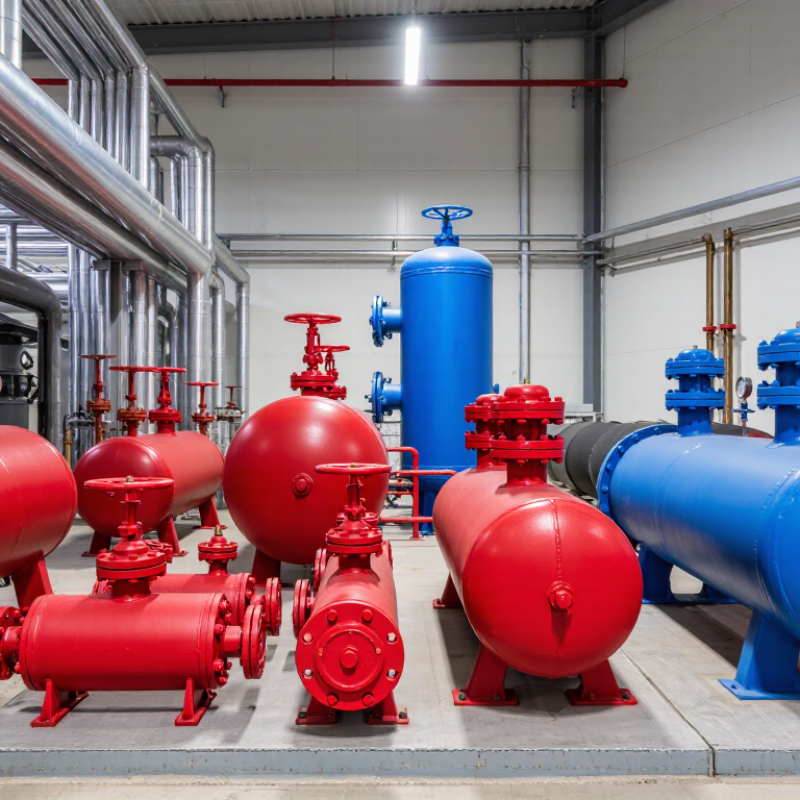
China Top 10 Thermal Expansion Vessel Suppliers

What Is a Thermal Expansion Vessel?

A thermal expansion vessel is a pressure-control component used in closed heating and hot-water systems. When water heats, it expands and needs somewhere to move. The vessel provides that space. Inside, a flexible diaphragm or bladder separates system water from compressed air or nitrogen. As pressure rises, the gas chamber compresses and absorbs the extra water volume.

This simple action protects pipes, valves, pumps, and heat exchangers from repeated pressure spikes. A correctly selected vessel depends on system volume, operating temperature, maximum pressure, and the vessel’s pre-charge setting. A larger vessel is not automatically better. Incorrect sizing can still cause unstable pressure and frequent safety-valve discharge. That detail is often underestimated.

Installation quality matters as much as capacity. The connection should remain accessible, and the vessel must suit the system’s temperature and pressure range. Technicians should check the pre-charge with the water side depressurized, following applicable technical requirements. During field inspections, a flat diaphragm, corrosion, or waterlogged vessel may explain pressure changes that seem mysterious. It is not always the vessel’s fault. A failed safety valve, trapped air, or incorrect filling pressure can create similar symptoms.

Regular inspection gives the clearest evidence of condition. Record pressure readings, unusual noise, leakage, and changes in heating performance. Small differences can become expensive failures. Supplier comparisons should therefore consider tested materials, documented specifications, service support, and clear installation guidance, rather than price alone.

China Top 10 Thermal Expansion Vessel Suppliers - What Is a Thermal Expansion Vessel?

A thermal expansion vessel is a closed pressure vessel containing a gas cushion and a flexible diaphragm or bladder. It absorbs the volume increase of heated water, helping stabilize system pressure and reduce pressure fluctuations in heating, cooling, solar thermal and domestic hot-water systems.

Comparative Reference Table for Ten Anonymous Chinese Supplier Profiles
No. Supplier Profile Common Application Focus Typical Capacity Range Typical Working Pressure Typical Temperature Range Typical Diaphragm / Bladder Material Common Compliance References
01 Anonymous Supplier Profile 01 Residential heating and hydronic systems 2–500 L 3–10 bar −10 to 100°C EPDM or butyl rubber EN 13831; GB/T 150; ISO 9001 manufacturing systems
02 Anonymous Supplier Profile 02 Domestic hot-water and sanitary-water systems 5–300 L 6–10 bar 5–99°C Food-grade butyl or EPDM PED 2014/68/EU; EN 13831; WRAS-type material requirements where applicable
03 Anonymous Supplier Profile 03 Solar thermal water-heating systems 8–500 L 6–10 bar −20 to 130°C High-temperature EPDM or specialized butyl EN 13831; PED 2014/68/EU; applicable solar-thermal specifications
04 Anonymous Supplier Profile 04 Commercial HVAC chilled-water systems 8–2,000 L 6–16 bar −10 to 70°C Butyl bladder or EPDM diaphragm EN 13831; ASME Section VIII, Division 1; PED where required
05 Anonymous Supplier Profile 05 Booster pump and water-pressure systems 8–1,000 L 8–25 bar 5–70°C Butyl or EPDM, depending on water quality PED 2014/68/EU; ASME Section VIII; applicable potable-water requirements
06 Anonymous Supplier Profile 06 Industrial process heating and cooling 50–5,000 L 10–25 bar −20 to 100°C EPDM, butyl or application-specific elastomer GB/T 150; ASME Section VIII; PED 2014/68/EU when exported
07 Anonymous Supplier Profile 07 Fire-fighting and water-supply equipment 24–2,000 L 10–25 bar 5–70°C Heavy-duty butyl or EPDM bladder ASME Section VIII; CE/PED where applicable; local fire-system requirements
08 Anonymous Supplier Profile 08 OEM and private-label vessel production 2–1,000 L 3–16 bar −10 to 100°C Custom EPDM, butyl or replaceable bladder EN 13831; PED 2014/68/EU; customer-specific inspection plans
09 Anonymous Supplier Profile 09 Compact residential and light-commercial systems 2–100 L 3–10 bar −10 to 100°C EPDM diaphragm or fixed butyl bladder EN 13831; GB/T 150; ISO 9001 quality systems
10 Anonymous Supplier Profile 10 Export-oriented customized pressure vessels 10–5,000 L 6–25 bar −20 to 130°C Application-specific EPDM, butyl or high-temperature elastomer PED 2014/68/EU; ASME Section VIII; EN 13831; GB/T 150
Selection note: Actual capacity, pre-charge pressure, maximum operating pressure, temperature rating and certification depend on the system design. The vessel should be sized using the system fluid volume, temperature range, static pressure and safety-valve setting. Always confirm the final specification with the manufacturer and applicable local regulations.

How Thermal Expansion Vessels Work in Heating Systems

Thermal expansion vessels stabilize pressure in sealed heating systems.

When water heats, it expands and needs somewhere to go. The vessel provides that space. Inside, a flexible diaphragm separates system water from compressed air or nitrogen. As water volume increases, the diaphragm moves and compresses the gas. Pressure rises more gently.

In field inspections, a vessel with incorrect pre-charge often causes noisy pipes or frequent safety-valve discharge.

Small details matter. Installers should check the vessel before filling the circuit. The pre-charge must match the system design, elevation, and operating temperature. Sizing also depends on total water volume, not only boiler output. A vessel that is too small may create unstable pressure during cold starts.

The heating circuit should connect to the vessel at a low-pressure point, usually near the circulation pump suction. This arrangement supports steadier readings. A pressure gauge, safety valve, and automatic air vent still remain necessary.

The vessel does not replace them. Annual maintenance should include checking pre-charge pressure, diaphragm condition, corrosion, and leakage around the connection.

A common mistake is treating a new vessel as maintenance-free. It is not. Water quality, glycol concentration, and repeated temperature cycles can shorten its useful life.

Calculations are essential, yet site conditions sometimes expose assumptions that looked reasonable on paper.

Key Features of China’s Leading Vessel Suppliers

China Top 10 Thermal Expansion Vessel Suppliers

China’s leading thermal expansion vessel suppliers combine pressure engineering with practical production experience. They commonly offer vessels for heating, cooling, solar, and water systems. Strong suppliers explain diaphragm materials, shell thickness, connection sizes, and working temperature limits clearly. Their engineers should provide pressure calculations rather than relying on general catalog values. Factory inspection records, welding controls, and leak testing also reveal manufacturing discipline. Certification matters, but traceable testing data matters more.

Reliable suppliers support customization without weakening safety margins. They may adjust volume, flange design, coating, or gas pre-charge settings for specific installations. Consistent batch control is essential. A sample that performs well cannot represent every shipment. Ask about material certificates, inspection frequency, and replacement diaphragm availability. After-sales guidance should include installation position, pre-charge checks, and maintenance intervals. Some suppliers communicate well before payment, then respond slowly later. This risk deserves attention.

Tips: Request a complete technical datasheet and a recent test report. Compare usable expansion volume, not only tank capacity. Check whether the vessel suits glycol mixtures, potable water, or closed-loop heating. Visit the factory when practical, or arrange a live production audit. Leave room for doubt. A polished quotation is not proof of long-term reliability. Verify details with an independent engineer before approving large orders.

China’s Top 10 Thermal Expansion Vessel Suppliers

China’s Top 10 Thermal Expansion Vessel Suppliers are increasingly judged by engineering evidence, not catalog size. A reliable supplier should provide vessel volume calculations, diaphragm material data, weld inspection records, and traceable pressure tests. EN 13831 remains a useful reference for sealed expansion vessels in heating and cooling systems. However, compliance wording alone is not enough. Buyers should verify test methods, batch records, and after-sales response.

The market matters because building systems are under pressure to reduce energy waste. The International Energy Agency reported in Energy Efficiency 2023 that buildings consume about 30% of global final energy and produce roughly 26% of energy-related emissions. Properly selected expansion vessels help stabilize pressure, protect pumps, and reduce repeated system failures. China’s Top 10 Thermal Expansion Vessel Suppliers should therefore demonstrate stable pre-charge control, corrosion-resistant shells, and flexible customization for residential, commercial, and industrial projects.

Details reveal quality. A practical audit may include checking weld seams under bright light, comparing pressure readings before and after storage, and reviewing diaphragm replacement procedures. Some suppliers still provide incomplete cycle-life data. That weakness deserves attention. Price can mislead. A cheaper vessel may require earlier replacement when water temperature, pressure fluctuation, or installation space changes. Supplier rankings should also consider export documentation, production consistency, and technical communication. The evaluation remains imperfect because published performance data is not always comparable across factories.

How to Select the Right Chinese Supplier for Your Project

Selecting among China’s top 10 thermal expansion vessel suppliers requires more than comparing prices. The 2024 MarketsandMarkets HVAC Systems report values the global market at about USD 177 billion, with continued growth ahead. That expansion increases demand for reliable hydronic components. Check whether each supplier calculates vessel volume using system temperature, fluid type, static height, and safety limits. A supplier should provide pressure-test records, material certificates, welding procedures, and traceable serial numbers.

Look beyond factory photographs. Request recent inspection samples. Verify diaphragm material, flange thickness, pre-charge accuracy, and corrosion protection. EN 13831 offers useful guidance for sealed heating systems, while the ASHRAE Handbook supports practical system-sizing decisions.

ISO 9001 certification helps, but it does not prove every vessel is consistent. Ask for batch-level records and independent test results. Small details matter.

Communication also affects project risk. Confirm drawing approval, change-control procedures, packaging protection, and replacement-part availability. Delivery data should include production capacity, not just an attractive lead time. A low quotation may hide thinner steel or weaker inspection. That mistake becomes expensive later. No checklist is perfect. I would score suppliers against documented evidence, then inspect a pre-shipment sample. Use the same technical questions for all ten companies, and record their answers. This makes the final choice more defensible and less dependent on persuasive sales language.

Powder Coat Booths

For those larger-sized parts, or smaller quantity runs, we have 2 independent powder coat booths and ovens. The quality, durability and affordability of today’s powder coating finishes make this the process of choice for world-class companies.

Powder coating advantages over other forms of coating are many. Materials used in the Powder coating process can be metals and non-metals that come in a multitude of thicknesses, textures, colors, etc. Another of Powder coating’s biggest advantages over conventional coatings is its ability to create finishes in many different textures. Powder Coating Booths allow us the ability to apply these advantages to large products.

Wet Paint Line

Tri-State Fabricators runs a full-service conveyor line for painting. Wet painting can provide protection or decoration to many different part styles. From start to finish, every project is easier to undergo random and point-based inspection by our skilled painting team.

Advantages to our Wet Paint Line are these lines start with product prep and ends with a thorough inspection of a high quality finished product. Our ability to complete large and small projects with a superior finish and doing so in a timely and economical fashion. This passes along the savings in production to our customers. When powder coating ins not an option, our Wet Paint Line gets the job done right the first time.

Wet Paint Booths

When the parts get big and heavy we roll-out our custom paint racks and oversize booth. By utilizing our partnerships with all the major paint brands, we can match virtually any color with wet paint.

The advantages of having access to a Wet Paint Booth are many. Large projects of many different shapes can be loaded into the booth. The Wet Paint Booth offers an environment that is much more controlled than a typical parts painting operation.

Not only are they used because of their controlled environment, but they’re are also advantageous when it comes to applying paint to parts that are needed in industries that require specialty coatings such as medical, aerospace, etc.

Military CARC

Our military forces have some very high standards when it comes to the finish of their vehicles and equipment. From the first pre-treatment step to final coat, it takes a great deal of knowledge and experience to protect the men and women of our armed forces. They deserve only the best, and Tri-State Fabricators provides it.

All of our processes are closely monitored by our staff and management teams. Both of which are highly trained in the processes of metal fabrication and finishing. Tri-State Fabricators’ goal is to always fully satisfy each and every customer, including the military. We will always put a 110% into what we do.

Glass-Bead Blasting

Abrasive media blasting is an excellent way to remove old paint, rust, and increase the paint/powder adhesion. Glass beads produce a much smoother and brighter finish than angular abrasives; leaving the part clean yet without any dimensional change. Chemically inert and environmentally friendly, we can recycle our beads approximately 30 times; making them a more preferred method of metal cleaning or surface finishing.

Advantages to Glass Bead Blasting are many. Glass bead blast media is used when a project is needing rough surfaces need to become smooth for applications of coatings such as paint. It is typically used to clean paint and rust from a product surface without deforming the surface it is being used on. Overall, compared to many other blasting media, Glass Bead Blasting is a very economical choice and those savings are always passed on to our customers.

Part Washing

Tri-State Fabricators utilize a zinc phosphate wash to clean and etch the material to ensure the best paint adhesion possible. The unique design of our 3-stage wash system does the work like a 5-stage. From Cleaning and rinsing to conversion coating and post-treatment, Our Part Washing process is a complete service and works throughout the fabrication service and the finishing service.

Along with the previously mentioned benefits, Curing is a vital chemical reaction that leaves the product finish hard and relatively safe from mild abrasion and aggressive corrosion. This process can be done in more than one way; ambient air-dry or in curing ovens at temps that exceed 240°.

Burn-Off Oven

From fixing paint mistakes (someone else’s of course) to simply cleaning our paint line hooks, our burn-off oven is put to good use. After a quick burn-off, a little clean up, and a fresh coat of paint, your parts will look better than new.

Why does our Burn-Off Oven work so well? Because super heating the air around parts turns the materials into ashes. From paint and powder coatings to rubber and machining oils, high temps do the job without degrading the integrity of the part.

Masking

Masking is a vital part of producing high quality products. We have die-cut masking patterns to protect machined surfaces as well as a wide range of plugs and caps to protect threaded holes and bolts. We provide permanent and temporary masking.

Masking allows the selected sections of a product to be protected from a fabrication or finishing service. This can be with both chemicals when etching and tapes, paints when only finishing just a section of the product. Masking is great in aiding the customization process of a project.

Screen Printing

Screen printing is a photographic process that transfers artwork onto a porous nylon screen which allows colored ink to flow through the screen and be deposited on an aluminum or plastic component. We can generally have just about any design created onto a screen for your parts.

Some of the advantages of Screen Printing are, brand recognition for your business displaying on your products, assembly instructions, product warnings/hazards, etc. Tri-State Fabricators produces Screen Printing of the highest quality so you know it’s durable.

Metal Finishing

Metal Finishing is the art of treating the exterior portion of product, often metal but can also be made of other materials, so that the surface is clean and free of any debris. Then the process of applying coats or either paint of powder coat takes place. This coating process improves the quality of the product in both appearance and resistance to wear and corrosion.

Tri-State Fabricators, Inc., understands that a project typically isn’t complete until a high-quality finish has been added to your product. This is why our painting and powder coating teams continuously inspect the products throughout the Metal Finishing process.


