


China’s stationery hardware sector combines high-volume production with increasingly precise engineering. A capable Stationery Hardware Manufacturer may produce binder rings, clip mechanisms, eyelets, fasteners, and metal corners under one roof. Its factory floor often tells the real story: progressive stamping presses, separated plating lines, sample boards, and cartons marked for different markets.
This guide examines China’s top ten manufacturers in 2026 through practical criteria. These include material consistency, tooling capability, dimensional accuracy, surface treatment, production capacity, inspection procedures, and export experience. A polished catalogue is not enough. Buyers should request samples, review tolerances, and inspect how each supplier handles scratches, weak springs, sharp edges, and inconsistent plating. Small defects become expensive when packed in thousands.
Shigeo Shingo, a respected manufacturing-quality expert, wrote, “The most dangerous kind of waste is the waste we do not recognize.” His warning fits stationery hardware closely. A slightly misaligned ring can damage paper. A loose rivet can weaken an entire folder. A delayed sample can also disrupt a seasonal launch.
No ranking is flawless. Supplier performance may change with materials, machinery, staffing, and order volume. Therefore, this overview should support—not replace—direct factory verification. The selected companies are considered through a balanced view of manufacturing expertise, quality control, product range, customization, communication, and responsible business practices. The strongest partners are not always the largest. Sometimes, the better choice is the factory that answers technical questions clearly and corrects a small problem before it becomes a large one.
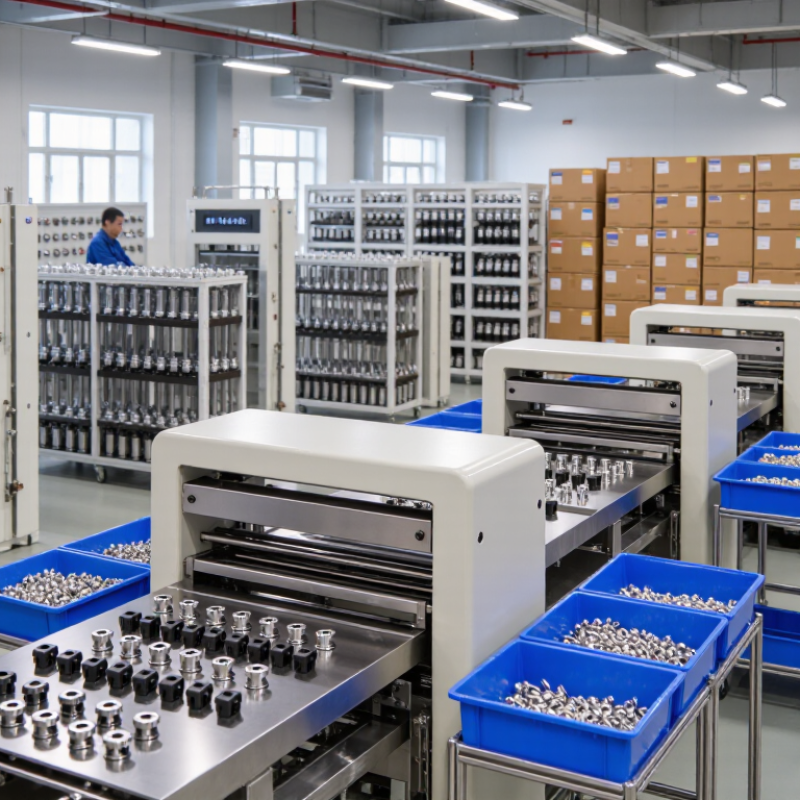
China’s stationery hardware industry in 2026 is moving beyond low-cost volume. Manufacturers now compete through tighter tolerances, faster sampling, and material traceability. Common products include binder mechanisms, paper clips, eyelets, metal rulers, and pencil sharpener parts. Many factories combine stamping, injection molding, polishing, and assembly under one roof. This shortens production cycles. It also makes quality responsibility easier to track. Demand is growing for recycled steel, aluminum, and lower-plastic packaging. Yet progress is uneven. Some suppliers present modern equipment but still rely heavily on manual inspection. That gap deserves attention.
Professional buyers usually assess tooling records, incoming-material checks, salt-spray results, and batch traceability. For school and office products, small defects matter. A sharp edge, loose spring, or uneven coating can cause returns. Reliable manufacturers provide pre-production samples, inspection reports, and clear tolerance limits. Export teams also need to understand destination safety, labeling, chemical, and packaging rules. These requirements vary by market and should be verified with current authorities. Factory experience helps, but paperwork alone is not proof. On-site observation remains valuable, especially during peak season.
Tips: Ask for three production samples, not one. Check spring force, surface finish, dimensions, and packaging strength. Request recent test records and confirm the tested material matches the shipped material. Visit the production line when possible. My own caution is simple: low prices can hide tooling wear, unstable coatings, or missed inspections. A supplier may be capable, but not every order receives equal attention.

Ranking China’s top stationery hardware manufacturers in 2026 requires more than comparing product prices. Our evaluation focuses on factory capability, material consistency, production experience, and documented quality procedures. Samples reveal more.
We examine metal thickness, surface finish, spring tension, cutting accuracy, and assembly strength. These details matter in clips, binders, rulers, pencil sharpeners, and other daily-use stationery hardware. We also review incoming material records, process inspections, final sampling, and defect handling. A manufacturer with clear traceability earns stronger credibility. Factory audits and production-line observations provide practical evidence beyond catalog claims.
Reliability also depends on delivery performance, communication, tooling support, and customization control. We compare realistic lead times, minimum order policies, packaging protection, and responses to sample changes. Certifications can support evaluation, but certificates alone cannot prove stable output. Independent testing, customer references, and repeated sample orders deserve greater weight. Sustainability is considered through recyclable packaging, efficient production, and responsible material sourcing.
The ranking remains an informed assessment, not a permanent verdict. Some manufacturers disclose limited data, making direct comparisons imperfect. Data can be incomplete. We therefore record evidence sources and separate verified results from supplier statements. A lower-ranked factory may still suit a buyer seeking small batches or specialized hardware. Actual performance should be checked through current samples, written specifications, and controlled pre-shipment inspections.
China’s top 10 stationery hardware manufacturers in 2026 reflect the country’s diverse production strengths. They commonly produce binder rings, metal clips, pencil sharpeners, rulers, fasteners, and desk accessories. Their capabilities often cover tooling, stamping, polishing, coating, assembly, and export packaging.
A reliable manufacturer should provide clear material specifications and traceable inspection records. Stainless steel, zinc alloy, and coated iron each suit different stationery uses. Buyers should check thickness, corrosion resistance, edge smoothness, and opening cycles. Small defects matter. A sharp clip edge can damage paper and affect user safety.
From practical sourcing experience, factory evaluation needs more than attractive samples. Review production equipment, quality-control staff, packaging tests, and delivery records. Ask for pre-production samples before confirming large orders. Independent testing can verify dimensions and surface performance. Some suppliers communicate well but lack stable process control. That weakness deserves attention. Regular audits, written specifications, and careful sample approval can reduce avoidable quality problems. Manufacturing capacity also changes over time, so old certifications should not replace current evidence.
This anonymized benchmark compares the top ten manufacturers by a composite capability index covering product range, OEM/ODM readiness, production scale, quality systems, export experience, and delivery capability. The index is for market comparison and does not disclose company or brand names.
China’s leading ten stationery hardware manufacturers in 2026 show strength through focused product lines and disciplined production. Their key products include metal rulers, scissors, staplers, paper clips, binder mechanisms, pencil sharpeners, and desk organizers. Grand View Research valued the global stationery products market at about USD 90.6 billion in 2023. This demand rewards factories with flexible tooling, stable steel sourcing, and reliable surface finishing.
Several manufacturers operate automated stamping, injection molding, polishing, and assembly lines under one roof. This reduces handling time and improves dimensional consistency. Some plants use camera inspection for clip tension and stapler alignment. Others maintain laboratories for corrosion, fatigue, and drop testing. China’s large manufacturing base also supports rapid mold changes for customized school and office products. The China National Light Industry Council continues to identify intelligent production and quality upgrades as important industry directions.
The strongest suppliers combine high-volume output with low-defect control. They can produce thousands of identical components per hour. That sounds impressive, but speed alone proves little. Buyers still need batch records, material certificates, and independent testing. ASTM and ISO-based procedures are common reference points for evaluating durability and safety. A weakness remains visible: smaller factories may depend on manual final inspection, creating uneven packaging or plating. In my assessment, manufacturing strength should mean repeatable performance, not merely large capacity. Supplier audits should examine tooling maintenance, worker training, traceability, and wastewater controls before any long-term order.
Anonymized market comparison of representative Chinese stationery hardware manufacturing profiles
| Rank | Anonymous Manufacturer Profile | Key Products | Manufacturing Strengths | Common Materials and Processes | Typical Supply Capabilities |
|---|---|---|---|---|---|
| 01 | Profile A Metal Filing Hardware Specialist | Lever-arch mechanisms Ring mechanisms File clips Paper fasteners | High-volume progressive stamping, stable forming accuracy, automated riveting, and consistent spring-force control for office filing products. | Cold-rolled steel, stainless steel, zinc-plated components, nickel or chrome finishes, progressive stamping, bending, and riveting. | OEM and ODM production; tooling development; custom hole patterns, finishes, dimensions, and packaging for export orders. |
| 02 | Profile B Binder Mechanism Manufacturer | 2-ring mechanisms 3-ring mechanisms 4-ring mechanisms D-ring mechanisms | Specialized ring alignment, smooth opening and closing performance, fatigue-resistant springs, and controlled assembly tolerances. | Steel strip, wire, brass-plated parts, painted or plated surfaces, wire forming, stamping, spot welding, and assembly. | Small and large ring formats; private-label supply; color and finish customization; compatibility with international binder formats. |
| 03 | Profile C Clip and Fastener Producer | Bulldog clips Binder clips Foldback clips Drawing pins | Efficient wire forming, reliable clamping force, burr reduction, automated spring assembly, and high consistency across standard sizes. | Spring steel, stainless steel, carbon steel, polypropylene handles, electroplating, powder coating, and injection molding. | Standard catalog production; custom handle colors; logo-ready components supplied separately; retail and institutional packaging. |
| 04 | Profile D Pen Component and Hardware Specialist | Pen clips Refill tubes Tip components Metal pen hardware | Precision small-part machining, controlled surface finishing, dimensional inspection, and coordinated assembly of multi-component writing instruments. | Brass, aluminum, stainless steel, engineering plastics, CNC turning, stamping, polishing, plating, and injection molding. | Component-only or finished-assembly supply; design-for-manufacturing support; sampling and pilot-run services. |
| 05 | Profile E Desk Organizer Hardware Manufacturer | Document trays Pen holders Magazine racks Desktop organizers | Integrated wire forming and sheet-metal fabrication, modular product design, weld quality control, and efficient surface finishing. | Steel wire, sheet steel, aluminum, ABS, PP, welding, bending, laser cutting, electrostatic powder coating, and plating. | Flat-pack and assembled products; custom dimensions; mixed-material designs; contract manufacturing for office-supply distributors. |
| 06 | Profile F School and Craft Hardware Producer | Scissors hardware Rulers Stapler components Craft tools | High-speed stamping, edge treatment, assembly-line balancing, child-use safety considerations, and broad SKU management. | Carbon steel, stainless steel, ABS, PP, TPR, stamping, grinding, heat treatment, injection molding, and ultrasonic welding. | Seasonal program support; school-supply assortments; custom colors and packaging; bulk supply for educational channels. |
| 07 | Profile G Stapling and Punching Hardware Specialist | Stapler mechanisms Staple removers Paper punches Hole-punch components | Load-bearing mechanism design, spring and blade calibration, functional testing, and durable plastic-metal component integration. | Hardened steel, stainless steel, aluminum, ABS, nylon, springs, stamping, heat treatment, grinding, and injection molding. | Manual and desktop formats; customized operating force; replacement components; product testing and assembly services. |
| 08 | Profile H Presentation and Display Hardware Manufacturer | Poster rails Document clamps Display hooks Photo hardware | Long-length extrusion, profile consistency, clean edge finishing, corrosion-resistant treatment, and flexible project customization. | Aluminum, stainless steel, zinc alloy, ABS, silicone, extrusion, die casting, CNC machining, anodizing, and powder coating. | Custom lengths and mounting systems; project-based production; retail-display and office-presentation applications. |
| 09 | Profile I Premium Metal Stationery Manufacturer | Metal notebooks Desk accessories Paperweights Gift stationery hardware | Decorative metal finishing, precision engraving, multi-step polishing, tight cosmetic inspection, and small-batch product development. | Aluminum, brass, stainless steel, zinc alloy, leatherette, CNC machining, laser engraving, brushing, polishing, and plating. | Premium OEM and ODM work; gift-set integration; customized textures, colors, engraving, and presentation packaging. |
| 10 | Profile J Integrated Stationery Hardware Exporter | Filing accessories Clips and fasteners Desk accessories School hardware | Multi-category sourcing and manufacturing coordination, flexible order consolidation, packaging management, and export documentation support. | Steel, aluminum, zinc alloy, ABS, PP, paperboard, stamping, injection molding, plating, powder coating, and final assembly. | Mixed-container orders; private-label programs; product bundling; supplier audits; inspection and export logistics coordination. |
How to Choose a Reliable Chinese Stationery Hardware Manufacturer
China’s stationery hardware sector serves schools, offices, retailers, and industrial buyers worldwide. Grand View Research estimates the global stationery products market will grow steadily through 2030. This growth increases supplier choices, but also increases quality risks. A reliable manufacturer should show stable production records, clear material specifications, and documented inspection procedures.
Ask for ISO 9001 certification, recent audit reports, and batch-level traceability. The ISO Survey 2023 recorded more than 1.26 million ISO 9001 certificates globally. Certification matters, but it does not replace factory verification. Check stamping accuracy, coating adhesion, spring tension, and edge safety through independent samples. A polished sample can still hide inconsistent mass production. No checklist is perfect.
Tips: Request three production samples from different batches. Compare dimensions with digital calipers. Confirm tolerance ranges in writing. Review defect rates, packaging tests, and corrective-action records. Video tours help, but an on-site audit offers stronger evidence. Also examine tooling ownership, maintenance schedules, and backup capacity. A cheaper quotation may reflect thinner materials, weaker plating, or incomplete inspection. Buyers should test realistic conditions, including repeated opening, pressure, moisture, and transport vibration. Good communication is useful, but measurable evidence is better.


For those larger-sized parts, or smaller quantity runs, we have 2 independent powder coat booths and ovens. The quality, durability and affordability of today’s powder coating finishes make this the process of choice for world-class companies.
Powder coating advantages over other forms of coating are many. Materials used in the Powder coating process can be metals and non-metals that come in a multitude of thicknesses, textures, colors, etc. Another of Powder coating’s biggest advantages over conventional coatings is its ability to create finishes in many different textures. Powder Coating Booths allow us the ability to apply these advantages to large products.
Tri-State Fabricators runs a full-service conveyor line for painting. Wet painting can provide protection or decoration to many different part styles. From start to finish, every project is easier to undergo random and point-based inspection by our skilled painting team.
Advantages to our Wet Paint Line are these lines start with product prep and ends with a thorough inspection of a high quality finished product. Our ability to complete large and small projects with a superior finish and doing so in a timely and economical fashion. This passes along the savings in production to our customers. When powder coating ins not an option, our Wet Paint Line gets the job done right the first time.
When the parts get big and heavy we roll-out our custom paint racks and oversize booth. By utilizing our partnerships with all the major paint brands, we can match virtually any color with wet paint.
The advantages of having access to a Wet Paint Booth are many. Large projects of many different shapes can be loaded into the booth. The Wet Paint Booth offers an environment that is much more controlled than a typical parts painting operation.
Not only are they used because of their controlled environment, but they’re are also advantageous when it comes to applying paint to parts that are needed in industries that require specialty coatings such as medical, aerospace, etc.
Our military forces have some very high standards when it comes to the finish of their vehicles and equipment. From the first pre-treatment step to final coat, it takes a great deal of knowledge and experience to protect the men and women of our armed forces. They deserve only the best, and Tri-State Fabricators provides it.
All of our processes are closely monitored by our staff and management teams. Both of which are highly trained in the processes of metal fabrication and finishing. Tri-State Fabricators’ goal is to always fully satisfy each and every customer, including the military. We will always put a 110% into what we do.
Abrasive media blasting is an excellent way to remove old paint, rust, and increase the paint/powder adhesion. Glass beads produce a much smoother and brighter finish than angular abrasives; leaving the part clean yet without any dimensional change. Chemically inert and environmentally friendly, we can recycle our beads approximately 30 times; making them a more preferred method of metal cleaning or surface finishing.
Advantages to Glass Bead Blasting are many. Glass bead blast media is used when a project is needing rough surfaces need to become smooth for applications of coatings such as paint. It is typically used to clean paint and rust from a product surface without deforming the surface it is being used on. Overall, compared to many other blasting media, Glass Bead Blasting is a very economical choice and those savings are always passed on to our customers.
Tri-State Fabricators utilize a zinc phosphate wash to clean and etch the material to ensure the best paint adhesion possible. The unique design of our 3-stage wash system does the work like a 5-stage. From Cleaning and rinsing to conversion coating and post-treatment, Our Part Washing process is a complete service and works throughout the fabrication service and the finishing service.
Along with the previously mentioned benefits, Curing is a vital chemical reaction that leaves the product finish hard and relatively safe from mild abrasion and aggressive corrosion. This process can be done in more than one way; ambient air-dry or in curing ovens at temps that exceed 240°.
From fixing paint mistakes (someone else’s of course) to simply cleaning our paint line hooks, our burn-off oven is put to good use. After a quick burn-off, a little clean up, and a fresh coat of paint, your parts will look better than new.
Why does our Burn-Off Oven work so well? Because super heating the air around parts turns the materials into ashes. From paint and powder coatings to rubber and machining oils, high temps do the job without degrading the integrity of the part.
Masking is a vital part of producing high quality products. We have die-cut masking patterns to protect machined surfaces as well as a wide range of plugs and caps to protect threaded holes and bolts. We provide permanent and temporary masking.
Masking allows the selected sections of a product to be protected from a fabrication or finishing service. This can be with both chemicals when etching and tapes, paints when only finishing just a section of the product. Masking is great in aiding the customization process of a project.
Screen printing is a photographic process that transfers artwork onto a porous nylon screen which allows colored ink to flow through the screen and be deposited on an aluminum or plastic component. We can generally have just about any design created onto a screen for your parts.
Some of the advantages of Screen Printing are, brand recognition for your business displaying on your products, assembly instructions, product warnings/hazards, etc. Tri-State Fabricators produces Screen Printing of the highest quality so you know it’s durable.
Metal Finishing is the art of treating the exterior portion of product, often metal but can also be made of other materials, so that the surface is clean and free of any debris. Then the process of applying coats or either paint of powder coat takes place. This coating process improves the quality of the product in both appearance and resistance to wear and corrosion.
Tri-State Fabricators, Inc., understands that a project typically isn’t complete until a high-quality finish has been added to your product. This is why our painting and powder coating teams continuously inspect the products throughout the Metal Finishing process.

