


Real-time location systems are moving from pilot projects into daily operations. Hospitals track infusion pumps, factories monitor work-in-progress, and warehouses locate pallets within crowded aisles. Rtls Tags provide the physical link between these workflows and location data. Their value depends on more than signal range. Battery life, update frequency, tag size, network compatibility, and software integration can change the total cost of ownership.
Market research supports this expanding demand. MarketsandMarkets reported that the global RTLS market could grow from approximately USD 4.9 billion in 2023 to USD 10.3 billion by 2028. Its analysis identifies healthcare, manufacturing, logistics, and transportation as major application sectors. Grand View Research also describes strong growth, driven by asset visibility, labor efficiency, and process automation. These figures indicate opportunity, but they do not guarantee equal product quality across suppliers.
This guide examines China’s top 10 RTLS tag manufacturers for global buyers. It considers manufacturing experience, positioning technologies, communication protocols, battery performance, customization, certifications, and after-sales support. A suitable tag may use UWB for precise indoor positioning, BLE for economical tracking, or RFID for simpler identification tasks. The choice is rarely universal. Real facilities include metal shelving, signal interference, temperature changes, and difficult mounting surfaces. Supplier claims should therefore be checked against test records, sample performance, and deployment references. Some published market estimates also differ because researchers define RTLS differently. That limitation deserves attention. A reliable purchasing decision requires both technical evidence and practical site validation.
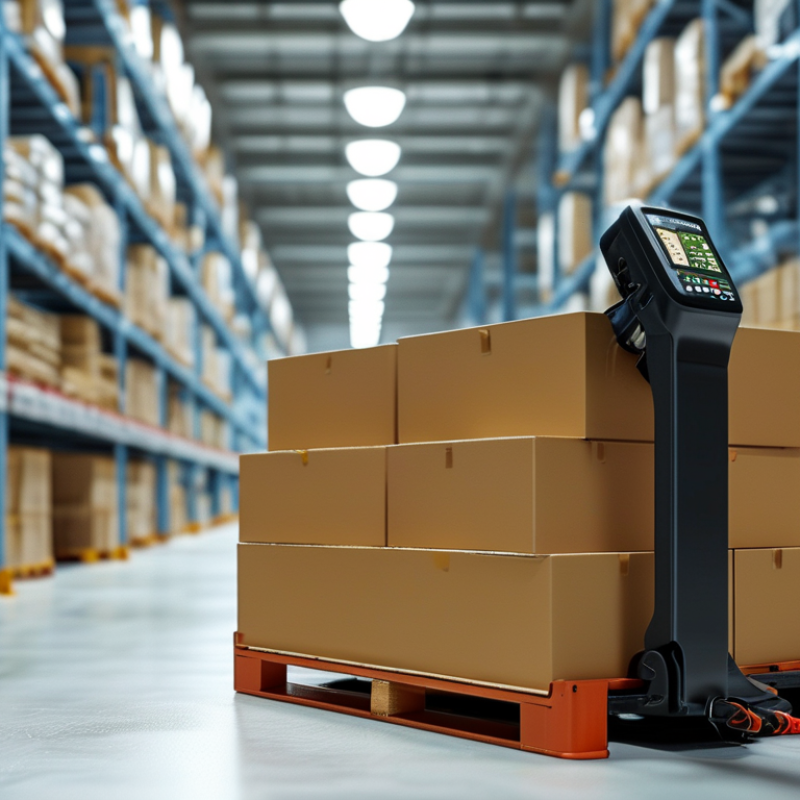
China Top 10 RTLS Tag Manufacturers for Global Buyers
What RTLS Tags Are and Why Global Buyers Need Them
RTLS tags are small wireless devices that identify and locate people, equipment, or materials indoors. They may use Bluetooth Low Energy, ultra-wideband, Wi-Fi, or RFID signals. A tag can transmit an identity, position estimate, motion event, or temperature reading. In a warehouse, it may sit on a pallet and update its location near loading bays. In a hospital, it can help staff find mobile equipment before a busy shift begins. The details decide.
Global buyers need RTLS tags because operational conditions vary widely across countries and facilities. A practical buyer checks signal performance, battery life, mounting methods, enclosure strength, and software compatibility. A cold-storage site may require a sealed tag with stable performance at low temperatures. A factory may need impact resistance and reliable tracking around metal shelves. These requirements are easy to underestimate.
Experience also shows that location accuracy depends on the whole system, not the tag alone. Anchors, gateways, network design, calibration, and site layout can change results. A tag may perform well in a test room but behave differently beside machinery or dense inventory. That gap matters. Buyers should request sample testing, documented specifications, security controls, and regional radio compliance before placing large orders. They should also examine battery replacement procedures and data access rights. Lower unit cost is attractive, but weak integration can create hidden labor and maintenance expenses. A careful evaluation leaves room for revision, because the first deployment rarely reveals every practical problem.

Choosing among China’s top 10 RTLS tag manufacturers requires more than comparing unit prices. Start with verified production experience, engineering depth, and documented project results. Ask whether the manufacturer has supplied tags for warehouses, hospitals, factories, or other demanding environments. Request sample units, test reports, and a clear explanation of positioning accuracy.
Protocol compatibility matters. Confirm support for technologies such as BLE, UWB, Wi-Fi, or RFID, depending on your infrastructure. Test tag performance near metal racks, moving equipment, cold rooms, and dense storage areas. Battery life should be measured under actual transmission intervals, not ideal laboratory settings. Check enclosure strength, charging design, waterproof ratings, and operating temperature. Small details matter.
Review quality controls before signing a purchase agreement. A reliable manufacturer should explain component inspection, firmware testing, calibration, and final traceability. Ask about production capacity, minimum order quantities, lead times, spare parts, and technical support after delivery. Certifications should be verifiable and relevant to your market. Security also deserves direct questions, including device authentication and update procedures.
Factory visits, video audits, and independent testing can reveal gaps that brochures hide. No supplier is perfect. We have seen impressive prototypes fail after weeks of continuous use. That should encourage careful pilot testing, not quick rejection. A practical evaluation combines engineering evidence, communication quality, and repeatable manufacturing performance. Price still matters, but it should not outrank reliability.
China’s top 10 RTLS tag manufacturers serve factories, hospitals, warehouses, and construction sites. Their products commonly use UWB, BLE, or active RFID technologies. However, the best choice depends on accuracy, battery life, network design, and software compatibility.
A practical comparison should examine positioning accuracy in real buildings, not only laboratory claims. Some tags achieve sub-meter accuracy, while others prioritize lower cost and longer battery life. Check enclosure strength, charging methods, firmware updates, and API support. Certifications and documented test results also reveal manufacturing discipline. Field experience matters. A tag may perform well in an open warehouse but struggle near metal racks or dense machinery.
No ranking is perfect.
Tips: Request samples from several suppliers and test them during normal operations. Measure location errors near walls, forklifts, elevators, and cold storage doors. Ask for battery results under your actual reporting interval. Review warranty terms, replacement procedures, and technical response times. A polished demonstration can hide installation problems. Weaker documentation may signal future integration delays, though not always. Compare total ownership cost, including anchors, gateways, software, maintenance, and calibration. Reliable suppliers should explain limitations clearly, rather than promise universal accuracy.
When global buyers compare China’s top RTLS tag manufacturers, technology fit matters more than catalog size. BLE tags suit cost-sensitive asset tracking across warehouses, hospitals, and campuses. UWB tags provide stronger location precision for forklifts, tools, and staff safety zones. RFID works well at doorways, shelves, and fixed checkpoints. Wi-Fi tags can use existing networks, but battery life may suffer.
A practical evaluation starts with the operating environment. Measure metal interference, wall density, temperature changes, and expected positioning accuracy. A cold-storage site may need sealed housings and low-temperature batteries. A busy factory may need motion sensors, panic buttons, or long-range gateways. Tag weight also matters. A small tag is easier to attach, yet its battery may require more frequent replacement.
Field experience shows that installation quality often decides system performance. Antenna placement, gateway spacing, and calibration deserve careful testing. The first deployment rarely performs perfectly. That is normal. Buyers should request sample units, test firmware stability, and verify API compatibility before a large order. Ask for battery test data under real transmission intervals, not only laboratory figures. Some specifications look impressive on paper. That assumption can fail in a crowded facility. Clear documentation, traceable quality control, and responsive technical support remain essential for reliable international deployment.
| Rank | RTLS Tag Technology | Primary Positioning Method | Typical Frequency or Signal | Typical Location Accuracy | Typical Battery Profile | Useful Tag Functions | Best-Fit Use Cases | Strongest Industry Fit | Main Advantages | Key Limitations |
|---|---|---|---|---|---|---|---|---|---|---|
| 1 | Ultra-Wideband Two-Way Ranging Tag | Time-of-flight measurement between the tag and fixed anchors | Ultra-wideband radio, commonly in the 3.1–10.6 GHz regulatory range | Typically 10–30 cm in a well-designed indoor deployment | Usually several months to multiple years, depending on update rate and motion detection | Motion sensing SOS button Buzzer Temperature | Tool tracking, worker safety, collision avoidance, high-value asset tracking, precise zone monitoring | Manufacturing, logistics, mining, construction, hospitals | High accuracy, low multipath sensitivity compared with narrowband systems, supports real-time coordinates | Requires dedicated anchors, careful survey work, higher infrastructure cost, and local spectrum compliance |
| 2 | Ultra-Wideband Time-Difference-of-Arrival Tag | Location calculated from the difference in signal arrival time at synchronized anchors | Ultra-wideband impulse radio | Typically 20–50 cm; performance depends strongly on anchor synchronization and geometry | Commonly one to several years with periodic beaconing | Motion sensing Identification Panic button | Large-site asset visibility, forklift tracking, yard operations, personnel location | Warehousing, automotive plants, ports, large industrial campuses | Can support many tags and broad coverage with relatively low tag-side computation | Needs synchronized anchors, network planning, and line-of-sight-aware installation |
| 3 | Bluetooth Low Energy Angle-of-Arrival Tag | Direction finding using antenna arrays installed in locators | Bluetooth Low Energy in the 2.4 GHz ISM band | Typically 0.5–3 m indoors, depending on antenna layout and environmental reflection | Often one to five years; longer life is possible with low advertising intervals | Motion sensing Temperature Button LED | Room-level asset tracking, equipment finding, staff badges, cold-chain monitoring | Healthcare, retail, hospitality, light manufacturing | Uses a widely available low-power ecosystem and can reuse Bluetooth connectivity | Accuracy is affected by metal, people, multipath, antenna calibration, and locator placement |
| 4 | Bluetooth Low Energy RSSI Tag | Estimated position from received signal strength measured by gateways or beacons | Bluetooth Low Energy in the 2.4 GHz ISM band | Typically 3–10 m indoors; often more suitable for zone or room-level visibility | Approximately one to ten years, depending on transmission interval and battery size | Temperature Humidity Motion Button | Inventory location, room occupancy, returnable transport items, basic personnel presence | Warehousing, offices, hospitals, retail, education | Low tag cost, low power consumption, flexible gateway options, simple deployment model | RSSI fluctuates with walls, people, shelving, and radio interference; not ideal for precise coordinates |
| 5 | Wi-Fi Round-Trip-Time Tag | Distance estimated from the round-trip time of signals exchanged with compatible access points | Wi-Fi positioning, commonly using 5 GHz or 6 GHz capable infrastructure | Typically 1–3 m when compatible access points are correctly placed | Usually weeks to months for continuously connected tags; longer with event-based operation | Two-way data Motion sensing Temperature | Connected carts, mobile equipment, staff devices, indoor navigation, facility monitoring | Hospitals, campuses, warehouses, commercial buildings | May reduce the need for a separate location-anchor network where suitable Wi-Fi infrastructure already exists | Requires compatible infrastructure, careful access-point placement, and more energy than beacon-only tags |
| 6 | Wi-Fi RSSI Location Tag | Position estimated from signal strength observed across multiple Wi-Fi access points | Wi-Fi, commonly in the 2.4 GHz and 5 GHz bands | Typically 5–15 m indoors, depending on calibration and access-point density | Usually several months to several years, depending on scan frequency and radio configuration | Telemetry Temperature Accelerometer | Vehicle tracking inside facilities, equipment status, room-level asset monitoring | Manufacturing, logistics, healthcare, enterprise facilities | Can use existing Wi-Fi networks and support direct data communication | Higher power consumption than many BLE tags; accuracy varies substantially by site and calibration |
| 7 | Active RFID Long-Range Tag | Battery-powered radio tag detected by fixed readers and location zones | Commonly sub-GHz or 2.4 GHz, depending on regional design and system architecture | Typically 3–30 m for zone-level tracking; ranging accuracy depends on reader design | Commonly one to seven years, with replaceable or sealed batteries available | Motion sensing Temperature Tamper alert Buzzer | Container tracking, yard management, equipment monitoring, emergency mustering | Industrial plants, transport, logistics, mining, energy | Longer range than passive RFID and suitable for battery-assisted telemetry | Reader infrastructure and battery replacement planning are required; regional radio rules differ |
| 8 | Passive UHF RFID Tag | Backscatter response from a reader; location is inferred from portal, shelf, or antenna detection | Ultra-high-frequency RFID, commonly within regional bands around 860–960 MHz | Usually detection-zone or portal-level rather than continuous coordinates | No battery; powered by the reader field | Unique ID Memory Tamper-evident options | Item-level inventory, receiving and shipping portals, laundry, library and document tracking | Retail, apparel, healthcare, logistics, manufacturing | Very low tag cost, small form factors, no battery maintenance, strong item-level identification | Requires reader proximity, orientation affects read performance, and it is not normally continuous RTLS |
| 9 | Ultrasound RTLS Tag | Time-of-flight measurement of ultrasonic pulses received by ceiling or wall sensors | Airborne ultrasound, often paired with a low-power radio control channel | Typically 10–30 cm in controlled indoor environments | Often several months to several years, depending on pulse rate and acoustic design | Call button Motion sensing Temperature | Room-level equipment tracking, patient or staff location, workflow and process monitoring | Hospitals, laboratories, cleanrooms, controlled facilities | High room-level precision and limited RF interference in suitable environments | Sound absorption, airflow, obstructions, ambient noise, and room geometry can affect performance |
| 10 | GNSS-LTE Outdoor Tracking Tag | Satellite positioning combined with cellular or low-power wide-area data transmission | GNSS signals with cellular, LTE-M, NB-IoT, or other wide-area connectivity | Typically 2–10 m outdoors under open-sky conditions | Usually days to months for frequent reporting; longer with scheduled or movement-triggered updates | Geofencing Temperature Motion SOS | Fleet and trailer tracking, outdoor containers, construction equipment, cold-chain shipments | Transport, logistics, agriculture, construction, utilities | Wide-area coverage and direct outdoor location without local indoor anchors | Weak or unavailable indoors, dependent on network coverage, and generally consumes more power than passive tags |
Selecting the right RTLS tag begins with the work environment, not the catalog. A cold warehouse, hospital ward, and outdoor yard require different tag designs. Check operating temperature, ingress protection, battery life, attachment methods, and signal range. A tag that performs well on a shelf may fail on a metal cart.
Global buyers should request test samples before placing a large order. Mount them on real assets, then measure location accuracy, update speed, battery consumption, and connection stability. Ask each manufacturer for technical datasheets, compliance documents, firmware policies, and production quality records. Clear documentation matters when equipment crosses multiple markets.
Compare ten shortlisted manufacturers using the same checklist and test conditions. Confirm whether the tags support your chosen positioning infrastructure and software interfaces. Ask about minimum order quantities, sample fees, lead times, spare batteries, warranty handling, and after-sales response. Some suppliers quote attractive unit prices but exclude chargers, configuration tools, or customs-related costs. That difference can change the project budget quickly.
Do not trust a perfect demonstration. RF interference, reflective metal surfaces, and crowded networks can reduce accuracy. We have seen pilot results change after moving tags from an open room into a busy warehouse. Allow time for calibration and user feedback. A slightly larger tag may offer better battery life, yet workers may reject it if it catches on clothing. Practical acceptance is easy to overlook.


For those larger-sized parts, or smaller quantity runs, we have 2 independent powder coat booths and ovens. The quality, durability and affordability of today’s powder coating finishes make this the process of choice for world-class companies.
Powder coating advantages over other forms of coating are many. Materials used in the Powder coating process can be metals and non-metals that come in a multitude of thicknesses, textures, colors, etc. Another of Powder coating’s biggest advantages over conventional coatings is its ability to create finishes in many different textures. Powder Coating Booths allow us the ability to apply these advantages to large products.
Tri-State Fabricators runs a full-service conveyor line for painting. Wet painting can provide protection or decoration to many different part styles. From start to finish, every project is easier to undergo random and point-based inspection by our skilled painting team.
Advantages to our Wet Paint Line are these lines start with product prep and ends with a thorough inspection of a high quality finished product. Our ability to complete large and small projects with a superior finish and doing so in a timely and economical fashion. This passes along the savings in production to our customers. When powder coating ins not an option, our Wet Paint Line gets the job done right the first time.
When the parts get big and heavy we roll-out our custom paint racks and oversize booth. By utilizing our partnerships with all the major paint brands, we can match virtually any color with wet paint.
The advantages of having access to a Wet Paint Booth are many. Large projects of many different shapes can be loaded into the booth. The Wet Paint Booth offers an environment that is much more controlled than a typical parts painting operation.
Not only are they used because of their controlled environment, but they’re are also advantageous when it comes to applying paint to parts that are needed in industries that require specialty coatings such as medical, aerospace, etc.
Our military forces have some very high standards when it comes to the finish of their vehicles and equipment. From the first pre-treatment step to final coat, it takes a great deal of knowledge and experience to protect the men and women of our armed forces. They deserve only the best, and Tri-State Fabricators provides it.
All of our processes are closely monitored by our staff and management teams. Both of which are highly trained in the processes of metal fabrication and finishing. Tri-State Fabricators’ goal is to always fully satisfy each and every customer, including the military. We will always put a 110% into what we do.
Abrasive media blasting is an excellent way to remove old paint, rust, and increase the paint/powder adhesion. Glass beads produce a much smoother and brighter finish than angular abrasives; leaving the part clean yet without any dimensional change. Chemically inert and environmentally friendly, we can recycle our beads approximately 30 times; making them a more preferred method of metal cleaning or surface finishing.
Advantages to Glass Bead Blasting are many. Glass bead blast media is used when a project is needing rough surfaces need to become smooth for applications of coatings such as paint. It is typically used to clean paint and rust from a product surface without deforming the surface it is being used on. Overall, compared to many other blasting media, Glass Bead Blasting is a very economical choice and those savings are always passed on to our customers.
Tri-State Fabricators utilize a zinc phosphate wash to clean and etch the material to ensure the best paint adhesion possible. The unique design of our 3-stage wash system does the work like a 5-stage. From Cleaning and rinsing to conversion coating and post-treatment, Our Part Washing process is a complete service and works throughout the fabrication service and the finishing service.
Along with the previously mentioned benefits, Curing is a vital chemical reaction that leaves the product finish hard and relatively safe from mild abrasion and aggressive corrosion. This process can be done in more than one way; ambient air-dry or in curing ovens at temps that exceed 240°.
From fixing paint mistakes (someone else’s of course) to simply cleaning our paint line hooks, our burn-off oven is put to good use. After a quick burn-off, a little clean up, and a fresh coat of paint, your parts will look better than new.
Why does our Burn-Off Oven work so well? Because super heating the air around parts turns the materials into ashes. From paint and powder coatings to rubber and machining oils, high temps do the job without degrading the integrity of the part.
Masking is a vital part of producing high quality products. We have die-cut masking patterns to protect machined surfaces as well as a wide range of plugs and caps to protect threaded holes and bolts. We provide permanent and temporary masking.
Masking allows the selected sections of a product to be protected from a fabrication or finishing service. This can be with both chemicals when etching and tapes, paints when only finishing just a section of the product. Masking is great in aiding the customization process of a project.
Screen printing is a photographic process that transfers artwork onto a porous nylon screen which allows colored ink to flow through the screen and be deposited on an aluminum or plastic component. We can generally have just about any design created onto a screen for your parts.
Some of the advantages of Screen Printing are, brand recognition for your business displaying on your products, assembly instructions, product warnings/hazards, etc. Tri-State Fabricators produces Screen Printing of the highest quality so you know it’s durable.
Metal Finishing is the art of treating the exterior portion of product, often metal but can also be made of other materials, so that the surface is clean and free of any debris. Then the process of applying coats or either paint of powder coat takes place. This coating process improves the quality of the product in both appearance and resistance to wear and corrosion.
Tri-State Fabricators, Inc., understands that a project typically isn’t complete until a high-quality finish has been added to your product. This is why our painting and powder coating teams continuously inspect the products throughout the Metal Finishing process.

