


Choosing a reliable Home Car Washer supplier in China requires more than comparing online prices. Global buyers must examine product performance, factory capability, quality control, and after-sales support. A polished product page is not enough.
This guide introduces ten notable Chinese manufacturers serving international markets. The selection considers practical factors, including water pressure, flow rate, motor design, battery life, noise control, and hose durability. It also reviews private-label services, export experience, production capacity, and communication efficiency. These details matter when a washer must clean muddy tires, dusty body panels, or narrow garage corners.
Real purchasing decisions often begin with small observations. Does the trigger feel firm? Is the battery easy to replace? Can the inlet filter be cleaned without tools? Does the supplier provide clear manuals and spare parts? These questions reveal more than promotional photographs.
The manufacturers discussed here may serve different buyer groups. Some focus on cordless models for household users. Others produce compact electric units, foam systems, or higher-pressure equipment for professional detailing. Buyers should verify current specifications directly, because models and certifications can change.
No ranking is perfect. Market visibility does not always prove consistent quality. A factory may offer strong pricing but limited technical support. Another may cost more while reducing warranty risks. Careful sampling, documented inspections, and transparent negotiations remain essential. This article aims to provide a practical starting point, not a substitute for independent verification. The best supplier is the one that matches your market, budget, compliance needs, and long-term service expectations.
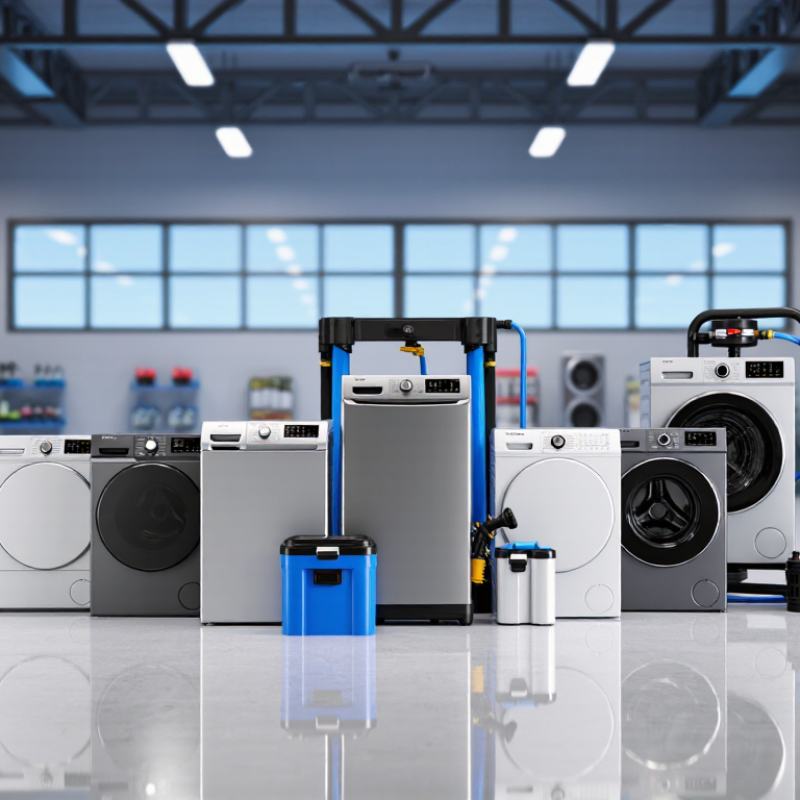
China’s home car washer market serves apartment owners, small detailing shops, and private garages worldwide. Demand is rising for compact machines that clean muddy panels, wheels, and driveways without excessive water use. Many manufacturers offer electric models with adjustable pressure, quick-connect fittings, and lightweight storage designs. However, specifications can be inconsistent.
Look beyond maximum pressure.
A practical unit should provide stable working pressure, suitable water flow, and a motor rated for repeated household use. Check noise levels near 75 decibels, hose length, connector quality, and protection against overheating. Short hoses become frustrating beside larger vehicles. A longer hose helps, but it can reduce handling comfort. Higher pressure is not always better. It may damage delicate paint, trim, or motorcycle surfaces when used carelessly.
For buyers comparing the top 10 Chinese manufacturers, request test reports, production photos, and clear quality-control records. Verify electrical certifications required in the destination market, along with warranty terms and spare-parts availability. Ask whether each shipment receives leakage, insulation, pressure, and aging tests. I would also inspect sample packaging because cracked fittings often appear after long-distance transport. Some suppliers communicate well before payment, then respond slowly after delivery. That risk deserves attention. A dependable manufacturer explains pump materials, motor protection, replacement procedures, and realistic service limits without hiding weak points. Seasonal demand can affect lead times, so confirm capacity before placing a large order.

Selecting China’s top home car washer manufacturers requires more than counting export volume. The process starts with verifiable factory evidence, including production records, quality controls, and after-sales capability. ISO’s Survey 2023 recorded over 1.2 million ISO 9001 certificates worldwide. Certification helps, but it does not prove every machine performs well. Auditors should compare test reports, incoming-material checks, motor durability, leakage protection, and spare-parts availability.
Performance must match real household conditions. The U.S. EPA WaterSense guidance states that washing a car at home can consume up to 100 gallons of water, while efficient commercial facilities may use about 40 gallons or less per vehicle. Therefore, selection teams should measure water flow, working pressure, foam consistency, and nozzle efficiency under repeatable conditions. IEC 60335-2-79 should guide safety checks for high-pressure cleaners, especially insulation, overheating, hose strength, and accidental start protection.
Small details matter. A machine should start smoothly on a cold morning, fit inside a compact garage, and remain stable on wet concrete. Factory visits should include random sample testing, not only demonstrations prepared for buyers. A polished audit can still miss weak packaging or delayed technical support. That is where many rankings become subjective. Buyer feedback, shipment records, independent laboratory results, and transparent warranty terms should be reviewed together before placing a manufacturer among the global top ten.
China’s home car washer sector includes manufacturers with different strengths, production scales, and export experience. One Zhejiang producer focuses on compact cordless washers for apartment users. Its lightweight handle and 20-liter water tank suit small driveways. A second factory develops high-pressure electric models with adjustable spray nozzles and reinforced pumps. Its testing records deserve close review.
A third manufacturer specializes in OEM production for overseas distributors. It offers flexible colors, packaging, and voltage options. A fourth concentrates on lithium battery systems, using removable packs for outdoor cleaning. Battery life may vary in cold weather. A fifth supplier makes hose reels, foam bottles, and replacement fittings. This practical range can simplify after-sales support.
A sixth factory is known for molded plastic housings and impact-resistant cases. A seventh builds quieter motors for residential neighborhoods. Sound measurements should be checked under real operating pressure, not only in brochures. An eighth produces complete cleaning kits for family vehicles, bicycles, and patios. A ninth adds digital controls, although extra electronics can increase repair difficulty. The tenth focuses on quality consistency through incoming-material checks, pump testing, and final inspection.
For global buyers, factory visits, sample orders, and independent testing remain valuable. Certificates can support credibility, but they do not replace performance checks. I would compare water flow, working pressure, charging time, leak resistance, and spare-part availability. Some published specifications look impressive yet omit nozzle restrictions or battery degradation. That detail is easy to miss. Supplier profiles also change as factories add new equipment, alter subcontractors, or enter unfamiliar markets.
For global buyers, comparing China’s top ten home car washer manufacturers requires more than checking pressure ratings. A practical review examines pump output, motor design, hose length, noise, and water efficiency. Compact models commonly provide 100–150 bar pressure, enough for family vehicles and light outdoor cleaning. Adjustable spray guns help users switch from a wide rinse to a concentrated jet. However, maximum pressure can look better on paper than in daily use.
Motor technology separates many products. Universal motors are often lighter and less expensive, while induction motors usually run more quietly and support longer operating cycles. Some newer units use brushless systems, which may reduce maintenance and vibration. Thermal protection, automatic stop functions, and leakage prevention also deserve close attention. Small details matter, such as a stable wheel base and a hose that does not twist after five minutes.
ISO-based production control can indicate discipline, but a certificate alone proves little. I have seen attractive samples fail during repeated hose testing. That is worth remembering. A careful evaluation should test several units, measure real noise levels, inspect connector strength, and compare performance after extended use. Some manufacturers still need better documentation and more honest claims.
Global sourcing begins with a clear product specification, not a supplier ranking. Define pressure, flow rate, power supply, hose length, noise limits, and target markets. Request samples from several leading Chinese manufacturers and test them on dusty panels, narrow wheels, and uneven surfaces. Record cleaning time, water use, motor temperature, and leakage after repeated cycles. One attractive sample proves little.
Certification must match the destination country. For European sales, check applicable CE documentation, electrical safety reports, EMC results, and restricted-substance compliance. Other markets may require different plugs, voltage ratings, labeling, or conformity documents. Ask for test reports linked to the exact model number. Generic certificates create avoidable risk. Confirm the factory can provide user manuals, warnings, serial-number records, and traceable component details.
Import planning needs equal attention. Confirm the HS code with a qualified customs broker, then review duties, inspection rules, and local product registration. Agree on Incoterms, minimum order quantity, lead time, spare parts, and packaging strength before payment. A pre-shipment inspection should check cartons, accessories, labels, and random operating tests. Include commercial invoices, packing lists, shipping documents, and certificates of origin where required. Factory audits help, but no audit is perfect. I would still keep written inspection criteria and allow time for one corrective production run.


For those larger-sized parts, or smaller quantity runs, we have 2 independent powder coat booths and ovens. The quality, durability and affordability of today’s powder coating finishes make this the process of choice for world-class companies.
Powder coating advantages over other forms of coating are many. Materials used in the Powder coating process can be metals and non-metals that come in a multitude of thicknesses, textures, colors, etc. Another of Powder coating’s biggest advantages over conventional coatings is its ability to create finishes in many different textures. Powder Coating Booths allow us the ability to apply these advantages to large products.
Tri-State Fabricators runs a full-service conveyor line for painting. Wet painting can provide protection or decoration to many different part styles. From start to finish, every project is easier to undergo random and point-based inspection by our skilled painting team.
Advantages to our Wet Paint Line are these lines start with product prep and ends with a thorough inspection of a high quality finished product. Our ability to complete large and small projects with a superior finish and doing so in a timely and economical fashion. This passes along the savings in production to our customers. When powder coating ins not an option, our Wet Paint Line gets the job done right the first time.
When the parts get big and heavy we roll-out our custom paint racks and oversize booth. By utilizing our partnerships with all the major paint brands, we can match virtually any color with wet paint.
The advantages of having access to a Wet Paint Booth are many. Large projects of many different shapes can be loaded into the booth. The Wet Paint Booth offers an environment that is much more controlled than a typical parts painting operation.
Not only are they used because of their controlled environment, but they’re are also advantageous when it comes to applying paint to parts that are needed in industries that require specialty coatings such as medical, aerospace, etc.
Our military forces have some very high standards when it comes to the finish of their vehicles and equipment. From the first pre-treatment step to final coat, it takes a great deal of knowledge and experience to protect the men and women of our armed forces. They deserve only the best, and Tri-State Fabricators provides it.
All of our processes are closely monitored by our staff and management teams. Both of which are highly trained in the processes of metal fabrication and finishing. Tri-State Fabricators’ goal is to always fully satisfy each and every customer, including the military. We will always put a 110% into what we do.
Abrasive media blasting is an excellent way to remove old paint, rust, and increase the paint/powder adhesion. Glass beads produce a much smoother and brighter finish than angular abrasives; leaving the part clean yet without any dimensional change. Chemically inert and environmentally friendly, we can recycle our beads approximately 30 times; making them a more preferred method of metal cleaning or surface finishing.
Advantages to Glass Bead Blasting are many. Glass bead blast media is used when a project is needing rough surfaces need to become smooth for applications of coatings such as paint. It is typically used to clean paint and rust from a product surface without deforming the surface it is being used on. Overall, compared to many other blasting media, Glass Bead Blasting is a very economical choice and those savings are always passed on to our customers.
Tri-State Fabricators utilize a zinc phosphate wash to clean and etch the material to ensure the best paint adhesion possible. The unique design of our 3-stage wash system does the work like a 5-stage. From Cleaning and rinsing to conversion coating and post-treatment, Our Part Washing process is a complete service and works throughout the fabrication service and the finishing service.
Along with the previously mentioned benefits, Curing is a vital chemical reaction that leaves the product finish hard and relatively safe from mild abrasion and aggressive corrosion. This process can be done in more than one way; ambient air-dry or in curing ovens at temps that exceed 240°.
From fixing paint mistakes (someone else’s of course) to simply cleaning our paint line hooks, our burn-off oven is put to good use. After a quick burn-off, a little clean up, and a fresh coat of paint, your parts will look better than new.
Why does our Burn-Off Oven work so well? Because super heating the air around parts turns the materials into ashes. From paint and powder coatings to rubber and machining oils, high temps do the job without degrading the integrity of the part.
Masking is a vital part of producing high quality products. We have die-cut masking patterns to protect machined surfaces as well as a wide range of plugs and caps to protect threaded holes and bolts. We provide permanent and temporary masking.
Masking allows the selected sections of a product to be protected from a fabrication or finishing service. This can be with both chemicals when etching and tapes, paints when only finishing just a section of the product. Masking is great in aiding the customization process of a project.
Screen printing is a photographic process that transfers artwork onto a porous nylon screen which allows colored ink to flow through the screen and be deposited on an aluminum or plastic component. We can generally have just about any design created onto a screen for your parts.
Some of the advantages of Screen Printing are, brand recognition for your business displaying on your products, assembly instructions, product warnings/hazards, etc. Tri-State Fabricators produces Screen Printing of the highest quality so you know it’s durable.
Metal Finishing is the art of treating the exterior portion of product, often metal but can also be made of other materials, so that the surface is clean and free of any debris. Then the process of applying coats or either paint of powder coat takes place. This coating process improves the quality of the product in both appearance and resistance to wear and corrosion.
Tri-State Fabricators, Inc., understands that a project typically isn’t complete until a high-quality finish has been added to your product. This is why our painting and powder coating teams continuously inspect the products throughout the Metal Finishing process.

