


China Top 10 Electrical Substation Manufacturers?

China’s electrical equipment industry supports projects ranging from compact urban substations to large 500 kV transmission networks. This guide examines ten leading Electrical Substation manufacturers serving domestic and international markets. It considers engineering capability, manufacturing capacity, product reliability, project experience, and after-sales support.

A strong manufacturer should provide more than switchgear and transformers. It should understand protection systems, busbar layouts, grounding design, automation, and site conditions. Practical experience matters when equipment faces dust, humidity, extreme temperatures, or limited installation space. The review will also consider GIS and AIS solutions, modular substations, intelligent monitoring, and integration with renewable energy projects.

Evidence remains important.

Company reputation alone is insufficient. Public project records, technical documentation, testing practices, certifications, and customer feedback provide stronger signals. However, rankings can change as markets, technologies, and export performance develop. Some manufacturers may excel in ultra-high-voltage systems, while others offer better value for medium-voltage distribution projects. That difference matters.

Readers should compare rated voltage, short-circuit capacity, insulation levels, protection functions, delivery schedules, and local service coverage. They should also verify compliance with applicable IEC, GB, or project-specific standards before purchasing. This introduction does not treat every manufacturer as equally suitable. Instead, it creates a practical starting point for deeper evaluation. Procurement teams should request recent references, factory inspection options, test reports, and clear warranty terms. In some cases, publicly available information is incomplete. That limitation deserves attention. Final decisions should rely on verified technical evidence, lifecycle cost, and the manufacturer’s ability to support the substation after commissioning.
China Top 10 Electrical Substation Manufacturers?

What Is an Electrical Substation and Why Does China Lead Manufacturing?

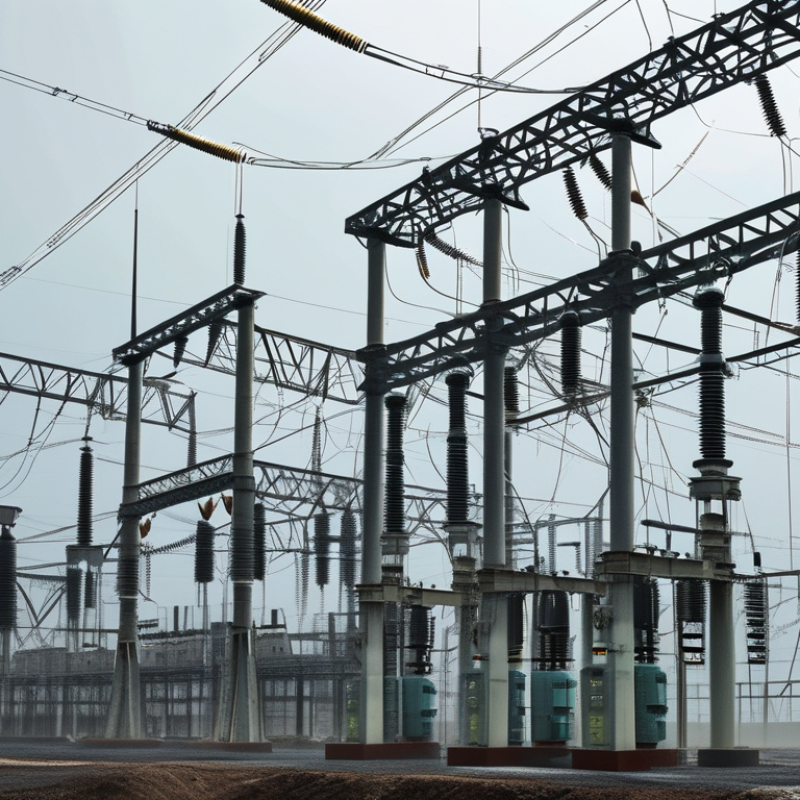
An electrical substation is a controlled point where electricity changes voltage and direction. It receives power from generating stations or transmission lines. Then, transformers raise or reduce voltage for safer delivery. Switchgear, circuit breakers, and protection relays manage faults and isolate damaged equipment. Control systems monitor current, temperature, and unusual noise. Small errors matter.

China leads substation manufacturing through scale, engineering depth, and a broad industrial supply chain. Its factories produce transformers, enclosures, conductors, insulators, and monitoring devices within a connected manufacturing ecosystem. This reduces sourcing delays and supports competitive pricing. A large domestic power network also gives engineers practical project experience. They test equipment under demanding loads, harsh weather, and complex grid conditions. Factory acceptance tests commonly examine insulation, heat performance, wiring, and mechanical strength. These details build reliability before equipment reaches a construction site.

The picture is not perfect. Quality can vary between factories, even when product specifications look similar. Buyers should review test records, certification, material traceability, and after-sales support. Installation conditions also change performance. Dust, humidity, salt air, and poor ventilation can shorten service life. China’s manufacturing strength is real, but selecting equipment only by price remains risky. Careful engineers still need to question delivery promises, maintenance access, and spare-part availability. A substation may appear quiet and simple, yet its protection logic can be highly specialized. One overlooked setting can interrupt an entire industrial area.


Key Types of Electrical Substations Produced by Chinese Manufacturers

China’s electrical substation manufacturers produce several types for utilities, factories, renewable projects, and transport systems. Air-insulated substations remain common because their equipment is accessible and easier to inspect. They suit large outdoor sites with adequate clearance and stable environmental conditions.

Gas-insulated substations offer a compact alternative. Their enclosed switchgear needs less land, which helps in dense cities and industrial parks. However, maintenance requires trained technicians, accurate gas monitoring, and strict installation procedures. This type is not automatically better. Local climate, budget, safety distance, and service access still influence the decision.

Prefabricated substations combine transformers, switchgear, protection systems, and control equipment inside a prepared enclosure. Chinese manufacturers also supply pole-mounted units, underground substations, and renewable-energy collector substations. These solutions can shorten installation time and support solar or wind projects with changing power flows. In practice, factory testing is valuable, but transport damage and site wiring can still create problems. Engineers should review load forecasts, short-circuit levels, cooling performance, and emergency access before approval. Small omissions matter. A neat enclosure cannot correct poor grounding or unsuitable protection settings.

Selection Criteria for Evaluating China’s Top Substation Manufacturers

Choosing among China’s top ten electrical substation manufacturers requires more than comparing price lists. Start with verified project experience. Review substations with similar voltage levels, climate conditions, and load profiles. Ask for site references and commissioning records. A factory serving coastal facilities may not understand high-altitude operation. That difference matters.

Technical capability should be checked through evidence, not promises. Examine design calculations, protection coordination, short-circuit studies, and thermal performance data. Confirm compliance with applicable IEC, GB, and utility requirements. Inspect transformer, switchgear, relay, and control-panel testing procedures. Factory acceptance tests should include witnessed measurements and traceable instruments. Review quality systems, material certificates, welding controls, and serial-number tracking. Small gaps can become expensive outages.

Reliability also depends on service after delivery. Evaluate spare-parts availability, remote support, engineer response times, and local installation partners. Study warranty terms carefully, especially exclusions and replacement duties. Compare total lifecycle cost, not only the purchase price. A lower bid may conceal training, freight, or testing costs. No scorecard is perfect. Record assumptions and revisit them after technical clarification. Some manufacturers communicate well but provide weak documentation; others offer strong engineering but slower responses. Balanced judgment comes from audits, references, and direct technical questions.

China’s Leading Electrical Substation Manufacturers and Their Strengths

China’s leading electrical substation manufacturers compete through engineering depth, production scale, and disciplined quality control. Their strongest capability is integrated design, from incoming high-voltage power to protected distribution. Many operate dedicated testing halls, where technicians check insulation, temperature rise, protection logic, and mechanical strength. Factory-built switchgear and transformers can shorten site work. That matters when projects face tight outages, harsh weather, or limited space. Not every supplier performs equally, however; project records need careful verification.

The strongest manufacturers support customized substations for factories, renewable-energy parks, rail systems, and urban buildings. They adapt voltage levels, enclosure types, cooling methods, and monitoring systems to local conditions. Digital protection relays can record faults within milliseconds. Remote monitoring also helps maintenance teams identify abnormal heat or partial discharge earlier. Experienced engineers usually provide drawings, factory acceptance tests, commissioning support, and training. These services reveal practical maturity. A polished catalog alone does not.

Reliable suppliers normally align products with applicable Chinese and international standards, while maintaining traceable materials and documented inspections. Buyers should review short-circuit ratings, delivery history, spare-part access, and after-sales response times. Ask for references from similar climates and load profiles. Site visits can expose details that brochures hide. Even respected manufacturers may miss a communication interface or underestimate future load growth. Careful review remains necessary. The best partnership combines robust equipment, clear evidence, and honest technical discussion.

China’s Leading Electrical Substation Manufacturers and Their Strengths

Representative nominal AC voltage classes supported across China’s power-system infrastructure

Leading substation manufacturers typically serve multiple voltage segments, from distribution networks to ultra-high-voltage transmission projects. The voltage classes shown are representative levels used in China’s electrical power system and are presented as an industry capability overview rather than a company ranking.

Industry Standards, Technologies, and Export Capabilities in China

China Top 10 Electrical Substation Manufacturers?

A reliable top-ten list should measure more than factory size or export volume. Buyers should examine compliance with IEC standards, applicable Chinese GB standards, and regional grid codes. Strong manufacturers provide verified type-test reports, traceable component records, and clear quality-control procedures. Their substations may include GIS, AIS, power transformers, protection systems, and digital monitoring platforms. Modern projects increasingly require automation, remote diagnostics, and stable renewable-energy integration. These technologies reduce outage risks, but they also demand skilled commissioning teams and secure communication networks.

Export capability involves more than shipping equipment overseas. Experienced suppliers understand local certification, climate conditions, seismic requirements, customs documents, and installation practices. They should offer factory acceptance testing, bilingual drawings, spare-parts planning, and responsive field support. Independent inspections can strengthen confidence before delivery. Still, published rankings are imperfect. Project references may be selective, and technical performance can vary between production sites. A careful comparison should review recent contracts, warranty terms, testing scope, and after-sales response times.

Tips: Request a complete compliance matrix. Confirm test standards with the local utility. Inspect sample wiring and enclosure seals. Ask how failures are recorded and corrected. Do not judge capability from brochures alone. A factory visit may reveal practical strengths, but one visit cannot prove long-term reliability.

China Top 10 Electrical Substation Manufacturers? - Industry Standards, Technologies, and Export Capabilities in China

Rank Anonymous Manufacturer Profile Primary Product Scope Typical Voltage Range Transformer Capability Applicable Industry Standards Key Technologies Quality and Compliance Export Capability Typical Application Sectors Overall Capability
1 Profile A
Large integrated power-equipment manufacturer
Complete turnkey substations, power transformers, GIS, AIS, protection and control systems 6 kV–1,100 kV AC; selected HVDC project capability Up to 1,000 MVA class for large grid projects IEC 62271 IEC 60076 IEC 61850 GB/T 11022 Digital substations, GIS, UHV equipment, online monitoring, condition-based maintenance ISO 9001; project-specific type tests; factory acceptance testing; utility qualification programs Asia, Middle East, Africa, Europe and Latin America; strong EPC coordination capability National grids, renewable-energy corridors, industrial transmission networks ★★★★★
2 Profile B
High-voltage transmission specialist
High-voltage transformers, GIS, AIS, shunt reactors and substation packages 35 kV–800 kV AC; selected converter-station applications Up to approximately 750 MVA class IEC 60076 IEC 62271-203 IEC 61850 GB/T 6451 Low-loss transformer design, SF₆ GIS, digital protection, remote operation ISO 9001; ISO 14001; routine and type testing; grid-code documentation support Middle East, Southeast Asia, Africa and Central Asia Transmission utilities, oil and gas, mining, large industrial consumers ★★★★★
3 Profile C
Renewable-energy substation integrator
Collector substations, step-up substations, containerized substations and grid-connection systems 10 kV–330 kV AC Up to approximately 300 MVA per transformer unit IEC 62271 IEC 60076 IEC 61439 IEC 61850 Wind and solar integration, STATCOM interface, energy management, compact skid-mounted systems ISO 9001; renewable-project FAT and SAT procedures; utility interconnection documentation Southeast Asia, Australia, the Middle East, Africa and Latin America Solar farms, wind farms, battery-storage projects and hybrid power plants ★★★★★
4 Profile D
Medium- and high-voltage distribution specialist
Distribution substations, ring-main units, compact substations, switchgear and transformers 6 kV–220 kV AC Up to approximately 160 MVA per transformer unit IEC 62271 IEC 60076 IEC 61439 GB/T 3906 Vacuum circuit breakers, dry-type transformers, prefabricated substations, low-maintenance designs ISO 9001; CE documentation for applicable markets; routine dielectric and temperature-rise tests Asia, Africa, the Middle East and selected European markets Urban distribution, commercial buildings, factories, transport and public infrastructure ★★★★☆
5 Profile E
Industrial power-distribution manufacturer
Medium-voltage switchgear, industrial substations, motor-control systems and transformer packages 3.3 kV–110 kV AC Up to approximately 100 MVA per transformer unit IEC 62271-200 IEC 60076 IEC 61439 GB/T 3906 Arc-resistant switchgear, intelligent metering, PLC-based control, modular protection panels ISO 9001; short-circuit verification; internal arc classification where specified Asia, Africa, Eastern Europe and Latin America Steel, cement, chemicals, data centers, manufacturing and water treatment ★★★★☆
6 Profile F
Compact and prefabricated substation producer
Box-type substations, e-houses, skid-mounted substations and modular switchgear 6 kV–35 kV AC; selected systems up to 110 kV Up to approximately 63 MVA per transformer unit IEC 62271 IEC 60076 IEC 61439 GB/T 17467 Factory-assembled modules, outdoor enclosures, thermal management, rapid installation ISO 9001; enclosure protection testing; routine factory tests and site commissioning support Strong export suitability for Africa, Southeast Asia and remote industrial locations Construction, mining, temporary power, renewable projects and rural electrification ★★★★☆
7 Profile G
Smart-grid and automation-oriented manufacturer
Automated substations, protection systems, RTUs, SCADA panels and medium-voltage switchgear 10 kV–220 kV AC Up to approximately 180 MVA per transformer unit IEC 61850 IEC 62271 IEC 60255 GB/T 14285 IEC 61850 process bus, bay-level automation, digital relays, remote monitoring and cybersecurity measures ISO 9001; relay testing; interoperability testing; cybersecurity requirements defined by project scope Asia, the Middle East, Africa and selected overseas utility projects Smart grids, utility automation, industrial campuses and distributed energy systems ★★★★☆
8 Profile H
Transformer-focused substation supplier
Oil-immersed transformers, dry-type transformers, substations and related switchgear 6 kV–220 kV AC Up to approximately 500 MVA class, depending on design and cooling method IEC 60076 IEC 62271 IEC 60354 GB/T 1094 Amorphous-core distribution transformers, low-loss designs, on-load tap changers and oil diagnostics ISO 9001; routine, type and special tests; material traceability and transformer-loss verification Asia, Africa, the Middle East and Latin America Distribution utilities, industrial plants, commercial facilities and renewable generation ★★★★☆
9 Profile I
Regional EPC and turnkey substation contractor
Engineering, procurement, construction, testing and commissioning of AIS and GIS substations 35 kV–220 kV AC Up to approximately 250 MVA per transformer unit IEC 62271 IEC 60076 IEC 61850 IEEE C37 Turnkey project management, protection coordination, relay integration and remote-control systems ISO 9001; project FAT and SAT; commissioning records; local authority and utility compliance support Central Asia, Southeast Asia, Africa and the Middle East Industrial parks, public utilities, infrastructure and cross-border EPC projects ★★★☆☆
10 Profile J
Specialized substation equipment exporter
Medium-voltage panels, RMUs, distribution transformers, protection panels and accessories 3.3 kV–110 kV AC Up to approximately 63 MVA per transformer unit IEC 62271 IEC 60076 IEC 61439 GB/T 3906 Vacuum switching, compact RMUs, corrosion-resistant enclosures, modular protection and metering ISO 9001; routine testing; export documentation; applicable CE and regional conformity files Primarily Africa, Southeast Asia, the Middle East and Latin America Commercial buildings, utilities, factories, agriculture and small renewable projects ★★★☆☆
Note: This anonymized comparison uses representative Chinese supplier capability ranges and commonly applied IEC, GB/T and IEEE standards. Actual ratings, certifications, export approvals and project experience should be verified through manufacturer datasheets, type-test reports, factory audits and contract-specific technical documents.

Powder Coat Booths

For those larger-sized parts, or smaller quantity runs, we have 2 independent powder coat booths and ovens. The quality, durability and affordability of today’s powder coating finishes make this the process of choice for world-class companies.

Powder coating advantages over other forms of coating are many. Materials used in the Powder coating process can be metals and non-metals that come in a multitude of thicknesses, textures, colors, etc. Another of Powder coating’s biggest advantages over conventional coatings is its ability to create finishes in many different textures. Powder Coating Booths allow us the ability to apply these advantages to large products.

Wet Paint Line

Tri-State Fabricators runs a full-service conveyor line for painting. Wet painting can provide protection or decoration to many different part styles. From start to finish, every project is easier to undergo random and point-based inspection by our skilled painting team.

Advantages to our Wet Paint Line are these lines start with product prep and ends with a thorough inspection of a high quality finished product. Our ability to complete large and small projects with a superior finish and doing so in a timely and economical fashion. This passes along the savings in production to our customers. When powder coating ins not an option, our Wet Paint Line gets the job done right the first time.

Wet Paint Booths

When the parts get big and heavy we roll-out our custom paint racks and oversize booth. By utilizing our partnerships with all the major paint brands, we can match virtually any color with wet paint.

The advantages of having access to a Wet Paint Booth are many. Large projects of many different shapes can be loaded into the booth. The Wet Paint Booth offers an environment that is much more controlled than a typical parts painting operation.

Not only are they used because of their controlled environment, but they’re are also advantageous when it comes to applying paint to parts that are needed in industries that require specialty coatings such as medical, aerospace, etc.

Military CARC

Our military forces have some very high standards when it comes to the finish of their vehicles and equipment. From the first pre-treatment step to final coat, it takes a great deal of knowledge and experience to protect the men and women of our armed forces. They deserve only the best, and Tri-State Fabricators provides it.

All of our processes are closely monitored by our staff and management teams. Both of which are highly trained in the processes of metal fabrication and finishing. Tri-State Fabricators’ goal is to always fully satisfy each and every customer, including the military. We will always put a 110% into what we do.

Glass-Bead Blasting

Abrasive media blasting is an excellent way to remove old paint, rust, and increase the paint/powder adhesion. Glass beads produce a much smoother and brighter finish than angular abrasives; leaving the part clean yet without any dimensional change. Chemically inert and environmentally friendly, we can recycle our beads approximately 30 times; making them a more preferred method of metal cleaning or surface finishing.

Advantages to Glass Bead Blasting are many. Glass bead blast media is used when a project is needing rough surfaces need to become smooth for applications of coatings such as paint. It is typically used to clean paint and rust from a product surface without deforming the surface it is being used on. Overall, compared to many other blasting media, Glass Bead Blasting is a very economical choice and those savings are always passed on to our customers.

Part Washing

Tri-State Fabricators utilize a zinc phosphate wash to clean and etch the material to ensure the best paint adhesion possible. The unique design of our 3-stage wash system does the work like a 5-stage. From Cleaning and rinsing to conversion coating and post-treatment, Our Part Washing process is a complete service and works throughout the fabrication service and the finishing service.

Along with the previously mentioned benefits, Curing is a vital chemical reaction that leaves the product finish hard and relatively safe from mild abrasion and aggressive corrosion. This process can be done in more than one way; ambient air-dry or in curing ovens at temps that exceed 240°.

Burn-Off Oven

From fixing paint mistakes (someone else’s of course) to simply cleaning our paint line hooks, our burn-off oven is put to good use. After a quick burn-off, a little clean up, and a fresh coat of paint, your parts will look better than new.

Why does our Burn-Off Oven work so well? Because super heating the air around parts turns the materials into ashes. From paint and powder coatings to rubber and machining oils, high temps do the job without degrading the integrity of the part.

Masking

Masking is a vital part of producing high quality products. We have die-cut masking patterns to protect machined surfaces as well as a wide range of plugs and caps to protect threaded holes and bolts. We provide permanent and temporary masking.

Masking allows the selected sections of a product to be protected from a fabrication or finishing service. This can be with both chemicals when etching and tapes, paints when only finishing just a section of the product. Masking is great in aiding the customization process of a project.

Screen Printing

Screen printing is a photographic process that transfers artwork onto a porous nylon screen which allows colored ink to flow through the screen and be deposited on an aluminum or plastic component. We can generally have just about any design created onto a screen for your parts.

Some of the advantages of Screen Printing are, brand recognition for your business displaying on your products, assembly instructions, product warnings/hazards, etc. Tri-State Fabricators produces Screen Printing of the highest quality so you know it’s durable.

Metal Finishing

Metal Finishing is the art of treating the exterior portion of product, often metal but can also be made of other materials, so that the surface is clean and free of any debris. Then the process of applying coats or either paint of powder coat takes place. This coating process improves the quality of the product in both appearance and resistance to wear and corrosion.

Tri-State Fabricators, Inc., understands that a project typically isn’t complete until a high-quality finish has been added to your product. This is why our painting and powder coating teams continuously inspect the products throughout the Metal Finishing process.
