


China’s electric commercial-vehicle market includes established truck makers and newer specialists, but their products can differ substantially. This guide examines ten manufacturers associated with Electric Flatbed trucks and highlights what buyers should compare before requesting a quotation. A shortlist is a starting point, not a purchasing decision.
Useful comparisons go beyond headline range or advertised payload. Check the rated load, platform dimensions, battery capacity, charging options, and suitability for the intended route. A truck carrying building supplies across a worksite may need different specifications from one moving goods around a warehouse. Small details matter.
Look closely at service coverage, parts availability, warranty terms, and model-specific documentation. Ask manufacturers for current specifications and clarify whether stated performance reflects a particular configuration. Numbers can shift with battery size, tires, load, and operating conditions. That deserves attention.
The manufacturers discussed may serve different budgets, applications, and export markets. Not every company will fit every fleet. Some details may also be difficult to verify from public information, so buyers should confirm them directly and compare written offers. A careful review can reveal trade-offs that a polished product page may leave out. No ranking is perfect. The goal here is to provide a practical overview, explain the factors behind a sound comparison, and help readers ask better questions before choosing an Electric Flatbed truck.
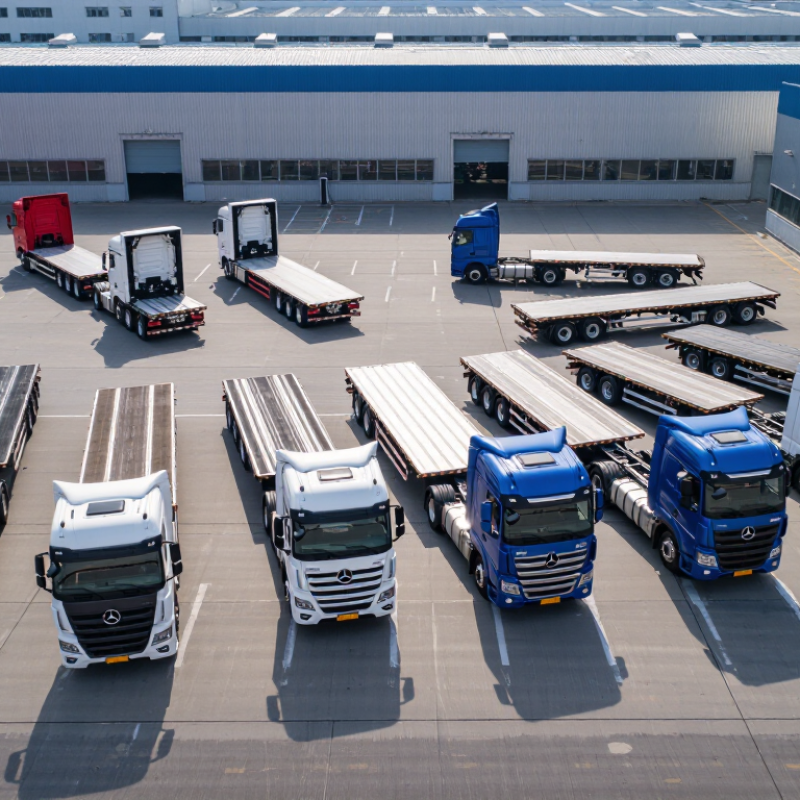
Electric flatbed trucks are battery-powered vehicles with an open, level cargo deck. The deck can carry items that are awkward to fit inside a van, such as pallets, pipes, building supplies, or maintenance equipment. Tie-down points help secure loads, while removable sides can make loading easier. The exact payload depends on the vehicle’s design, so operators should check the rated capacity before planning a job.
These trucks are used for deliveries, facility maintenance, and moving materials between nearby work sites. In city operations, quieter driving can be useful during early shifts or in busy neighborhoods. At a warehouse, a flatbed may move several palletized loads between buildings without repeated handling.
That matters.
Still, range changes with cargo weight, weather, terrain, and stop-and-go driving. Charging access also affects whether a truck can complete a full shift. Not every route fits.
A sensible assessment includes the real load, daily distance, charging time, and available space for turning or loading. Electric power does not remove the need for careful planning, and its environmental benefit depends partly on how the electricity is produced.
Operators should review performance after deployment; assumptions made before purchase may not match everyday work.

Selecting leading electric flatbed truck manufacturers takes more than comparing advertised range or price. A fair review should define the vehicle class, payload, and intended work cycle before comparing suppliers. Product specifications, production capabilities, quality documentation, and after-sales coverage all matter. Missing details should be marked as unverified, not treated as proof of quality. Numbers need context. A claimed driving range means little without information about load, route, temperature, and test conditions.
The comparison should also consider battery and motor options, chassis construction, braking systems, charging compatibility, and replacement-part access. Evidence of consistent production is more useful than a polished demonstration. Service response and parts availability matter when a truck works daily. Customer references can support a claim, but they cannot replace technical checks. A manufacturer may suit one payload class and be less suitable for another. No ranking is universal. Some public records may be incomplete, which limits confidence and deserves honest mention.
Tips: Request a configuration-specific specification sheet, payload figures, battery warranty terms, and a written service plan. Ask for a loaded route test where possible. Compare under identical conditions. Follow up on data gaps instead of guessing.
China’s electric flatbed-truck market includes large commercial-vehicle groups and smaller specialists. However, there is no single, independently verified top-ten ranking that fits every buyer. A useful shortlist should compare manufacturers by vehicle class, payload, battery options, production capacity, and after-sales support—not marketing claims alone.
The ten kinds of manufacturers worth assessing include established commercial-truck makers, electric-chassis specialists, light-duty delivery-vehicle producers, heavy-duty vehicle groups, municipal-vehicle builders, battery-swapping platform developers, custom flatbed integrators, regional fleet suppliers, export-oriented manufacturers, and engineering-led small-volume producers. These are categories, not a ranked list of named companies. Ask each candidate for a load-rated specification, battery warranty terms, charging details, and service coverage where the truck will operate.
Look closely at real operating conditions. A flatbed carrying steel coils needs different payload margins from one delivering boxed goods across town. Request a demonstration with a representative load, then check braking, turning clearance, ramp angle, and energy use on the intended route. Also verify the vehicle’s approval for the target market. Numbers on a brochure can be neat; field results are messier. That matters. A careful comparison may take longer, but it helps separate a suitable manufacturer from a promising sales pitch.
Comparing electric flatbed truck makers in China starts with the job, not the brochure. A compact model may suit factory lanes and short urban deliveries, while a heavier chassis can carry denser loads across longer shifts. Check rated payload, deck dimensions, turning radius, and axle configuration together. A larger battery alone does not guarantee better working range; cargo weight, speed, gradients, and stop frequency all matter.
Tips: Ask for the same duty-cycle test across shortlisted models. Request usable battery capacity, charging time, gradeability, and warranty terms in writing. Confirm whether payload figures include the body and installed equipment. Small detail. It can change the comparison.
Capabilities also differ in practical equipment. Compare cab visibility, tie-down points, deck height, brake systems, and access to service parts. For fleet use, telematics and battery diagnostics can reduce downtime, but only if local technicians can support them. Published specifications are a starting point, not a promise. Some data sheets omit test conditions, making a clear top-ten ranking less certain. A site trial with the intended load often reveals more than a polished chart. Even then, one route is not the whole story.
A range-focused snapshot of ten representative electric flatbed configurations. Values are indicative, not a manufacturer ranking; actual range varies with battery pack, payload, road conditions, and test cycle.
Use published model datasheets to verify each vehicle’s rated range and payload before making a direct comparison. Advertised range figures may use different test conditions.
Choosing a Chinese electric flatbed truck manufacturer is less about a low quote and more about matching the vehicle to daily work. Start with the actual payload, not the maximum figure on a brochure. A truck carrying steel coils on a flat route faces different demands from one hauling building materials up steep roads. Ask for the rated axle loads, deck dimensions, gradeability, and braking details. Small details matter.
Compare battery capacity and usable driving range under load. A range figure measured on an empty truck may not reflect a full workday. Request test conditions, charging requirements, and battery warranty terms in writing. Check whether the chassis, tires, and suspension suit your roads and climate. Brochures can overpromise. Verify the numbers.
Factory assessment should include more than a showroom visit. Review quality-control records, welding and corrosion protection, and inspection reports for completed vehicles. Ask how replacement parts are stocked and how service requests are handled in your region. Clarify delivery timelines, customization limits, and what the warranty excludes. A polished sample truck is useful, but it cannot prove consistent production. Leave room for uncertainty: independent checks and a clearly documented specification can prevent costly surprises later.


For those larger-sized parts, or smaller quantity runs, we have 2 independent powder coat booths and ovens. The quality, durability and affordability of today’s powder coating finishes make this the process of choice for world-class companies.
Powder coating advantages over other forms of coating are many. Materials used in the Powder coating process can be metals and non-metals that come in a multitude of thicknesses, textures, colors, etc. Another of Powder coating’s biggest advantages over conventional coatings is its ability to create finishes in many different textures. Powder Coating Booths allow us the ability to apply these advantages to large products.
Tri-State Fabricators runs a full-service conveyor line for painting. Wet painting can provide protection or decoration to many different part styles. From start to finish, every project is easier to undergo random and point-based inspection by our skilled painting team.
Advantages to our Wet Paint Line are these lines start with product prep and ends with a thorough inspection of a high quality finished product. Our ability to complete large and small projects with a superior finish and doing so in a timely and economical fashion. This passes along the savings in production to our customers. When powder coating ins not an option, our Wet Paint Line gets the job done right the first time.
When the parts get big and heavy we roll-out our custom paint racks and oversize booth. By utilizing our partnerships with all the major paint brands, we can match virtually any color with wet paint.
The advantages of having access to a Wet Paint Booth are many. Large projects of many different shapes can be loaded into the booth. The Wet Paint Booth offers an environment that is much more controlled than a typical parts painting operation.
Not only are they used because of their controlled environment, but they’re are also advantageous when it comes to applying paint to parts that are needed in industries that require specialty coatings such as medical, aerospace, etc.
Our military forces have some very high standards when it comes to the finish of their vehicles and equipment. From the first pre-treatment step to final coat, it takes a great deal of knowledge and experience to protect the men and women of our armed forces. They deserve only the best, and Tri-State Fabricators provides it.
All of our processes are closely monitored by our staff and management teams. Both of which are highly trained in the processes of metal fabrication and finishing. Tri-State Fabricators’ goal is to always fully satisfy each and every customer, including the military. We will always put a 110% into what we do.
Abrasive media blasting is an excellent way to remove old paint, rust, and increase the paint/powder adhesion. Glass beads produce a much smoother and brighter finish than angular abrasives; leaving the part clean yet without any dimensional change. Chemically inert and environmentally friendly, we can recycle our beads approximately 30 times; making them a more preferred method of metal cleaning or surface finishing.
Advantages to Glass Bead Blasting are many. Glass bead blast media is used when a project is needing rough surfaces need to become smooth for applications of coatings such as paint. It is typically used to clean paint and rust from a product surface without deforming the surface it is being used on. Overall, compared to many other blasting media, Glass Bead Blasting is a very economical choice and those savings are always passed on to our customers.
Tri-State Fabricators utilize a zinc phosphate wash to clean and etch the material to ensure the best paint adhesion possible. The unique design of our 3-stage wash system does the work like a 5-stage. From Cleaning and rinsing to conversion coating and post-treatment, Our Part Washing process is a complete service and works throughout the fabrication service and the finishing service.
Along with the previously mentioned benefits, Curing is a vital chemical reaction that leaves the product finish hard and relatively safe from mild abrasion and aggressive corrosion. This process can be done in more than one way; ambient air-dry or in curing ovens at temps that exceed 240°.
From fixing paint mistakes (someone else’s of course) to simply cleaning our paint line hooks, our burn-off oven is put to good use. After a quick burn-off, a little clean up, and a fresh coat of paint, your parts will look better than new.
Why does our Burn-Off Oven work so well? Because super heating the air around parts turns the materials into ashes. From paint and powder coatings to rubber and machining oils, high temps do the job without degrading the integrity of the part.
Masking is a vital part of producing high quality products. We have die-cut masking patterns to protect machined surfaces as well as a wide range of plugs and caps to protect threaded holes and bolts. We provide permanent and temporary masking.
Masking allows the selected sections of a product to be protected from a fabrication or finishing service. This can be with both chemicals when etching and tapes, paints when only finishing just a section of the product. Masking is great in aiding the customization process of a project.
Screen printing is a photographic process that transfers artwork onto a porous nylon screen which allows colored ink to flow through the screen and be deposited on an aluminum or plastic component. We can generally have just about any design created onto a screen for your parts.
Some of the advantages of Screen Printing are, brand recognition for your business displaying on your products, assembly instructions, product warnings/hazards, etc. Tri-State Fabricators produces Screen Printing of the highest quality so you know it’s durable.
Metal Finishing is the art of treating the exterior portion of product, often metal but can also be made of other materials, so that the surface is clean and free of any debris. Then the process of applying coats or either paint of powder coat takes place. This coating process improves the quality of the product in both appearance and resistance to wear and corrosion.
Tri-State Fabricators, Inc., understands that a project typically isn’t complete until a high-quality finish has been added to your product. This is why our painting and powder coating teams continuously inspect the products throughout the Metal Finishing process.

