


Top 10 Conveyor Roller Manufacturers in China

China has become a major manufacturing base for material-handling equipment, including conveyor rollers. Its factories serve mining, logistics, warehousing, ports, food processing, and parcel distribution. The demand is visible on production floors. Steel rollers turn beneath loaded belts, while seals protect bearings from dust, moisture, and temperature changes.

Industry reports confirm the market’s steady expansion. Grand View Research valued the global conveyor systems market at about USD 11.9 billion in 2022. It also forecast growth from 2023 to 2030. Fortune Business Insights estimated the market at USD 10.07 billion in 2022. Its forecast reached USD 14.41 billion by 2029. These figures differ because their definitions and regional coverage differ. That difference deserves attention.

This guide examines the Top 10 Conveyor Roller Manufacturers in China through practical and technical criteria. These include roller runout, bearing quality, shaft strength, sealing performance, surface finish, customization, testing, delivery capability, and after-sales support. The phrase “Conveyors Roller” is often used in overseas searches, although “conveyor roller” is more natural technical English. Small details matter. A poorly aligned roller can increase belt wear, noise, and energy use. A weak seal may fail early in dusty operations.

Supplier claims alone are not enough. Buyers should request drawings, load ratings, inspection records, material certificates, and sample testing. ISO 9001 certification can support quality control, but it cannot replace independent verification. This ranking is therefore intended as a structured market reference, not an absolute verdict. Manufacturing capabilities change. Some information may require direct confirmation before procurement.
Top 10 Conveyor Roller Manufacturers in China

What Conveyor Rollers Are and Why China Is a Major Manufacturing Hub

Top 10 Conveyor Roller Manufacturers in China

What Conveyor Rollers Are and Why China Is a Major Manufacturing Hub

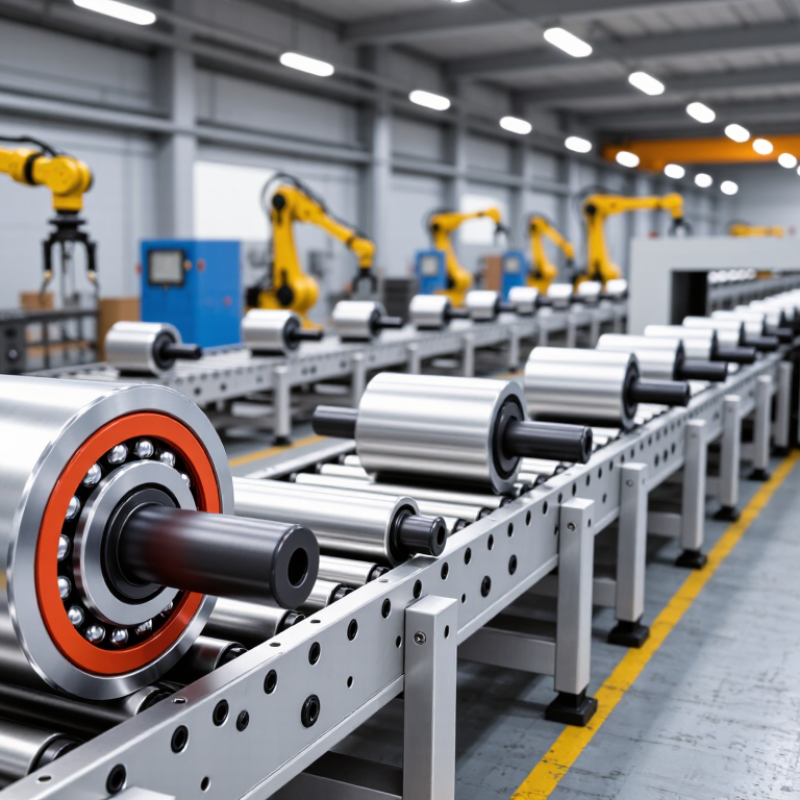
Conveyor rollers are cylindrical components that support and move cartons, pallets, bags, or bulk materials. A typical roller includes a tube, shaft, bearings, seals, and sometimes a powered drive. In warehouses, steel rollers carry heavy pallets, while polymer rollers reduce noise and surface marking. Small details matter. Poor alignment can increase friction, vibration, and belt wear.

Grand View Research estimated the global conveyor systems market at over USD 11 billion in 2023. Its report also forecasts continued growth through 2030, driven by e-commerce, manufacturing, and distribution facilities. China benefits from this demand. The United Nations Industrial Development Organization reports that China produces roughly one-third of global manufacturing value added. This industrial scale supports nearby steel mills, tube processors, bearing suppliers, machining workshops, and export ports.

In practical sourcing, Chinese roller factories can offer many shaft sizes, surface treatments, and bearing configurations. Buyers should request load calculations, runout limits, salt-spray results, and endurance-test records. A production visit can reveal more than a polished catalog. Listen for bearing noise. Check shaft straightness. Verify wall thickness with measurement tools. Low prices can be attractive, but not always efficient. Thin tubes, weak seals, or inconsistent welding may create replacement costs later. Even experienced buyers sometimes overlook installation conditions. Dust, moisture, temperature, and cleaning chemicals can change the correct roller specification.


Top 10 Conveyor Roller Manufacturers in China: What Conveyor Rollers Are and Why China Is a Major Manufacturing Hub

Conveyor rollers are cylindrical components that support and move conveyor belts, bulk materials, cartons, and other loads. The chart shows widely used nominal roller diameters in millimeters. These sizes are common in belt-conveyor design and are presented as industry reference dimensions rather than company or brand data. China's large metalworking, bearing, tube-processing, and export-manufacturing base enables suppliers to produce rollers across a broad range of standard sizes.

Key Criteria for Evaluating Conveyor Roller Manufacturers

Choosing among the top 10 conveyor roller manufacturers in China requires more than comparing prices. Begin with engineering capability. A reliable supplier should provide roller drawings, load calculations, shaft dimensions, bearing details, and surface-finish data. Ask whether these documents match the rollers shipped to customers. A polished catalog proves little.

Material control deserves close attention. Request evidence for tube steel, shaft hardness, bearing quality, and weld inspection. Check whether each batch has traceable records. During a factory visit, inspect machining equipment, assembly lines, and storage conditions. Dusty bearings or mixed components may indicate weak process discipline. Small details matter.

Testing should reflect real operating conditions. Ask for radial-load tests, runout measurements, noise checks, corrosion evaluation, and continuous running trials. Confirm the stated capacity at your belt speed and operating temperature. Service support also affects long-term value. Evaluate response time, spare-part availability, installation guidance, and warranty terms. A manufacturer with experienced engineers can help adjust roller spacing and prevent belt damage.

Price can mislead.

A low quotation may exclude testing, packaging, or replacement parts. I have also found that some evaluation forms focus too heavily on production scale. Large factories are not automatically better for every application. Smaller suppliers may offer closer technical communication, but their quality systems need careful verification. Compare samples, audit records, delivery consistency, and corrective-action reports before making a decision. One overlooked bearing seal can cost more than the initial savings.

Top 10 Conveyor Roller Manufacturers in China

Top 10 Conveyor Roller Manufacturers in China

China’s conveyor roller sector serves warehousing, mining, ports, parcel handling, and factory automation. MarketsandMarkets estimates the global conveyor system market will grow from about USD 10.2 billion in 2023 to USD 13.6 billion by 2028. This expansion increases demand for reliable rollers, not simply lower prices.

The top 10 manufacturers should be assessed through measurable evidence. Important checks include shaft runout, shell thickness, bearing protection, dynamic load testing, and salt-spray resistance. ISO 9001 certification supports process control, but it does not replace factory inspection. Strong suppliers usually provide inspection records, material certificates, dimensional drawings, and traceable batch numbers.

Practical experience matters here. A roller that performs well in a clean warehouse may fail quickly beside coal dust or moisture.

The China Federation of Logistics and Purchasing reported China’s total social logistics value at approximately RMB 352.4 trillion in 2023. That scale reflects intense operating pressure on material-handling equipment.

Buyers should compare noise levels, starting torque, replacement intervals, and after-sales response times. Shorter delivery promises can hide weak testing. I have also found that catalog specifications sometimes omit actual service-life conditions. This deserves scrutiny.

A balanced ranking should combine production capacity, export experience, engineering support, verified customer applications, and transparent quality data rather than relying on online visibility alone.

Product Ranges, Industry Applications, and Manufacturing Strengths

Top 10 Conveyor Roller Manufacturers in China

Chinese conveyor roller manufacturers offer gravity, powered, tapered, impact, return, and stainless-steel roller ranges. These products serve warehouses, ports, mines, parcel hubs, food plants, and automotive lines. Common options include 48–159 mm tube diameters, sealed bearings, rubber lagging, and customized shafts. Selection depends on load, speed, belt width, dust, moisture, and operating temperature.

MarketsandMarkets reported that the global conveyor system market could grow from about USD 9.4 billion in 2023 to USD 12.2 billion by 2028. This demand supports China’s strong manufacturing base, including CNC tube processing, automated welding, dynamic balancing, and batch testing. Leading factories usually provide drawing review, sample production, load testing, and traceable inspection records. These details matter more than a polished catalog. A ranking is useful, but imperfect.

Tips: Ask for bearing-life calculations, runout limits, coating thickness, and test videos. Request samples from the same production line. Check whether rollers remain quiet under real load. Low prices can hide poor seals or inconsistent shafts. Factory capacity also needs verification; monthly output claims are not always transparent. For mining, prioritize impact resistance. For food handling, confirm cleanable surfaces and suitable materials. For warehouses, compare noise, energy use, spare-part availability, and delivery reliability. Even experienced buyers can overlook installation alignment, which often causes premature wear.

Top 10 Conveyor Roller Manufacturers in China - Product Ranges, Industry Applications, and Manufacturing Strengths

Data note: Company and brand names are intentionally omitted. The entries below are representative capability profiles, not a verified company ranking; product and application descriptions reflect established conveyor-roller types and common industrial uses.

Profile Product Range Common Industry Applications Relevant Manufacturing Strengths
Profile 1
General-purpose steel rollers
Gravity rollers and light- to medium-duty steel conveyor rollers, with options for different tube diameters, lengths, and shaft ends. Parcel handling, packaging lines, warehouse conveyor systems, and general manufacturing. Standardized component production; adaptable roller dimensions; suitable for straight and gravity conveyor sections.
Profile 2
Heavy-duty bulk-handling rollers
Carrying, return, and impact rollers for belt conveyors; configurations can include larger-diameter tubes and reinforced components. Mining, quarrying, cement, ports, and bulk-material transport. Design focus on load support, robust construction, and resistance to demanding operating conditions.
Profile 3
Precision idler rollers
Carrying and return idlers, including flat and troughing arrangements used to support conveyor belts. Coal and mineral handling, power generation, aggregate processing, and bulk terminals. Attention to roller alignment, bearing fit, and consistent rotation to help support reliable belt operation.
Profile 4
Powered conveyor rollers
Motorized or drive-compatible rollers and related roller components for powered conveyor sections. Distribution centers, sorting systems, manufacturing, and intralogistics. Integration-oriented product design for controlled movement of unit loads along powered conveyor lines.
Profile 5
Stainless-steel rollers
Stainless-steel gravity or powered rollers, with material and finish options selected for the operating environment. Food processing, beverage production, pharmaceutical facilities, and washdown areas. Material selection and surface-finish options that support corrosion resistance and cleaning requirements.
Profile 6
Plastic and polymer rollers
Polymer roller tubes or components, including lightweight rollers for selected low- and medium-load applications. Packaging, light manufacturing, retail distribution, and environments where reduced roller weight is useful. Lightweight component options and material choices suited to specific handling and environmental requirements.
Profile 7
Grooved and belt-driven rollers
Grooved rollers and rollers designed for belt-driven conveyor layouts, with groove arrangements matched to system design. Assembly lines, carton handling, packaging, and light industrial conveying. Ability to produce groove features and roller configurations for line-specific drive arrangements.
Profile 8
Tapered and curve-conveyor rollers
Tapered rollers and related components used in curved conveyor sections and changes of direction. Parcel hubs, baggage handling, distribution centers, and packaging facilities. Geometry designed to support product movement through conveyor curves while maintaining roller spacing.
Profile 9
Impact and specialty rollers
Impact rollers and application-specific roller assemblies for areas subject to loading, abrasion, or unusual operating conditions. Bulk-material loading points, recycling, aggregate handling, and industrial transfer stations. Specialized component and material choices for high-impact or abrasive sections of conveyor systems.
Profile 10
Custom conveyor-roller systems
Custom-dimension rollers and assemblies produced to a buyer’s drawings or conveyor-system requirements. Equipment integration, automated production lines, material handling, and replacement-parts supply. Flexible specifications for dimensions, materials, shaft ends, and bearing arrangements, subject to project requirements.

How to Select the Right Chinese Conveyor Roller Manufacturer

How to Select the Right Chinese Conveyor Roller Manufacturer

China offers a broad supplier base, but a polished catalog proves very little. MarketsandMarkets valued the global conveyor system market at about USD 7.7 billion in 2023. It expects the market to reach USD 10.6 billion by 2028. This growth increases choice, but also increases the risk of inconsistent quality. Shortlist manufacturers that disclose roller diameter, tube thickness, shaft material, bearing type, and verified load ratings. Ask for drawings, inspection records, and samples made with the same process as mass production.

Check engineering capability, not only price. The supplier should calculate radial load, shaft deflection, bearing life, belt speed, and starting torque for your conveyor. Request runout measurements and noise results from a recorded test. A useful factory visit should include incoming steel inspection, welding control, assembly checks, and final dimensional testing. ISO 9001 certification supports process discipline, but it does not guarantee a suitable roller for your application. The details matter.

Review corrosion protection for humid, dusty, or washdown environments. Confirm spare-part availability, packaging strength, delivery terms, and response times in writing. Total cost includes replacement labor and unplanned stoppages. A low quotation can still be expensive. I have seen buyers approve samples before testing real loads; that decision often creates avoidable problems. One more check is never wasted. According to the MHI 2024 Industry Report, automation remains a major material-handling investment priority, so supplier flexibility and technical support deserve equal attention.

Powder Coat Booths

For those larger-sized parts, or smaller quantity runs, we have 2 independent powder coat booths and ovens. The quality, durability and affordability of today’s powder coating finishes make this the process of choice for world-class companies.

Powder coating advantages over other forms of coating are many. Materials used in the Powder coating process can be metals and non-metals that come in a multitude of thicknesses, textures, colors, etc. Another of Powder coating’s biggest advantages over conventional coatings is its ability to create finishes in many different textures. Powder Coating Booths allow us the ability to apply these advantages to large products.

Wet Paint Line

Tri-State Fabricators runs a full-service conveyor line for painting. Wet painting can provide protection or decoration to many different part styles. From start to finish, every project is easier to undergo random and point-based inspection by our skilled painting team.

Advantages to our Wet Paint Line are these lines start with product prep and ends with a thorough inspection of a high quality finished product. Our ability to complete large and small projects with a superior finish and doing so in a timely and economical fashion. This passes along the savings in production to our customers. When powder coating ins not an option, our Wet Paint Line gets the job done right the first time.

Wet Paint Booths

When the parts get big and heavy we roll-out our custom paint racks and oversize booth. By utilizing our partnerships with all the major paint brands, we can match virtually any color with wet paint.

The advantages of having access to a Wet Paint Booth are many. Large projects of many different shapes can be loaded into the booth. The Wet Paint Booth offers an environment that is much more controlled than a typical parts painting operation.

Not only are they used because of their controlled environment, but they’re are also advantageous when it comes to applying paint to parts that are needed in industries that require specialty coatings such as medical, aerospace, etc.

Military CARC

Our military forces have some very high standards when it comes to the finish of their vehicles and equipment. From the first pre-treatment step to final coat, it takes a great deal of knowledge and experience to protect the men and women of our armed forces. They deserve only the best, and Tri-State Fabricators provides it.

All of our processes are closely monitored by our staff and management teams. Both of which are highly trained in the processes of metal fabrication and finishing. Tri-State Fabricators’ goal is to always fully satisfy each and every customer, including the military. We will always put a 110% into what we do.

Glass-Bead Blasting

Abrasive media blasting is an excellent way to remove old paint, rust, and increase the paint/powder adhesion. Glass beads produce a much smoother and brighter finish than angular abrasives; leaving the part clean yet without any dimensional change. Chemically inert and environmentally friendly, we can recycle our beads approximately 30 times; making them a more preferred method of metal cleaning or surface finishing.

Advantages to Glass Bead Blasting are many. Glass bead blast media is used when a project is needing rough surfaces need to become smooth for applications of coatings such as paint. It is typically used to clean paint and rust from a product surface without deforming the surface it is being used on. Overall, compared to many other blasting media, Glass Bead Blasting is a very economical choice and those savings are always passed on to our customers.

Part Washing

Tri-State Fabricators utilize a zinc phosphate wash to clean and etch the material to ensure the best paint adhesion possible. The unique design of our 3-stage wash system does the work like a 5-stage. From Cleaning and rinsing to conversion coating and post-treatment, Our Part Washing process is a complete service and works throughout the fabrication service and the finishing service.

Along with the previously mentioned benefits, Curing is a vital chemical reaction that leaves the product finish hard and relatively safe from mild abrasion and aggressive corrosion. This process can be done in more than one way; ambient air-dry or in curing ovens at temps that exceed 240°.

Burn-Off Oven

From fixing paint mistakes (someone else’s of course) to simply cleaning our paint line hooks, our burn-off oven is put to good use. After a quick burn-off, a little clean up, and a fresh coat of paint, your parts will look better than new.

Why does our Burn-Off Oven work so well? Because super heating the air around parts turns the materials into ashes. From paint and powder coatings to rubber and machining oils, high temps do the job without degrading the integrity of the part.

Masking

Masking is a vital part of producing high quality products. We have die-cut masking patterns to protect machined surfaces as well as a wide range of plugs and caps to protect threaded holes and bolts. We provide permanent and temporary masking.

Masking allows the selected sections of a product to be protected from a fabrication or finishing service. This can be with both chemicals when etching and tapes, paints when only finishing just a section of the product. Masking is great in aiding the customization process of a project.

Screen Printing

Screen printing is a photographic process that transfers artwork onto a porous nylon screen which allows colored ink to flow through the screen and be deposited on an aluminum or plastic component. We can generally have just about any design created onto a screen for your parts.

Some of the advantages of Screen Printing are, brand recognition for your business displaying on your products, assembly instructions, product warnings/hazards, etc. Tri-State Fabricators produces Screen Printing of the highest quality so you know it’s durable.

Metal Finishing

Metal Finishing is the art of treating the exterior portion of product, often metal but can also be made of other materials, so that the surface is clean and free of any debris. Then the process of applying coats or either paint of powder coat takes place. This coating process improves the quality of the product in both appearance and resistance to wear and corrosion.

Tri-State Fabricators, Inc., understands that a project typically isn’t complete until a high-quality finish has been added to your product. This is why our painting and powder coating teams continuously inspect the products throughout the Metal Finishing process.
