


China Top 10 Central Air Conditioner Pump Manufacturers

Choosing a reliable Central Air Conditioner Pump manufacturer requires more than comparing product prices. Performance depends on flow rate, head pressure, motor efficiency, control systems, and long-term service support. A pump that looks suitable on paper may struggle when connected to long pipe runs or demanding commercial equipment.

This guide reviews China’s top manufacturers through practical and technical criteria. These include production experience, engineering capability, quality management, customization options, export support, and after-sales response. We also consider how manufacturers handle real applications, such as chilled-water circulation in office towers, hotels, hospitals, and industrial facilities. Clear certifications, documented testing, and transparent specifications provide stronger evidence than attractive marketing claims.

Details matter.

A dependable supplier should explain operating limits, material choices, noise levels, maintenance requirements, and expected service life. Site conditions can change everything. Water quality, ambient temperature, installation height, and seasonal loading may affect pump performance. Readers should verify these factors with qualified engineers before making a final decision.

The ranking is a practical reference, not an absolute judgment. Manufacturer capabilities can change with new equipment, management decisions, or market conditions. Some companies may offer excellent customization but weaker overseas support. Others may provide fast delivery while offering fewer engineering options. That trade-off deserves attention. By comparing evidence instead of slogans, buyers can identify a Central Air Conditioner Pump supplier that fits their system, budget, and reliability expectations. Mistakes remain possible, especially when published data lacks independent verification. Content should therefore be reviewed against current factory documents and project requirements.
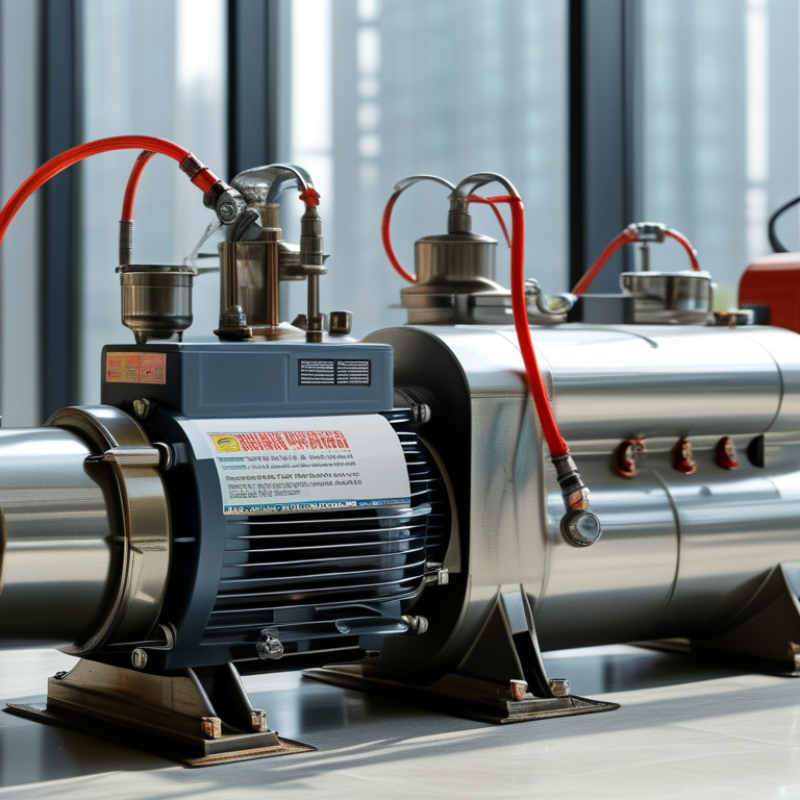
China Top 10 Central Air Conditioner Pump Manufacturers

What Central Air Conditioner Pumps Are and Why They Matter

China Top 10 Central Air Conditioner Pump Manufacturers

Central air conditioner pumps move chilled or heated water through coils, pipes, and heat exchangers. They are the system’s circulation heart. When flow weakens, rooms warm unevenly, valves struggle, and compressors may run longer. The International Energy Agency reported in The Future of Cooling that global cooling electricity demand could nearly triple by 2050, reaching about 6,200 TWh annually. Pump efficiency will therefore matter more as cooling capacity expands.

A pump’s value depends on more than motor power. Engineers should examine hydraulic efficiency, variable-speed control, noise, seal quality, and service access. The U.S. Department of Energy notes that properly matched variable-speed pumping can reduce energy use during partial-load operation. That detail matters because commercial buildings rarely operate at full demand all day. Oversized pumps waste energy. Small mistakes become constant costs.

Field commissioning also deserves attention. Measure differential pressure, flow, vibration, and operating temperature after installation. A catalogue efficiency figure is not enough. Actual performance changes with water quality, pipe resistance, climate, and maintenance. Reports from ASHRAE emphasize system-level optimization, yet many purchasing decisions still focus on the initial price. That approach is understandable, but incomplete. Manufacturers should provide test conditions, efficiency curves, replacement guidance, and responsive technical support. Even careful specifications can miss real-site behavior.


How China’s Top 10 Pump Manufacturers Are Selected

Selecting China’s top 10 central air conditioner pump manufacturers requires more than checking production volume. A credible evaluation combines field experience, engineering evidence, and transparent business records. We examine pump efficiency, flow stability, noise levels, corrosion resistance, and compatibility with chilled-water systems. Test reports should identify laboratory conditions, measurement dates, and applicable standards. Factory audits also review machining accuracy, assembly controls, inspection equipment, and after-sales procedures. Numbers matter, but context matters more.

We compare manufacturers using weighted criteria: product reliability, technical capability, quality management, delivery consistency, customization support, and documented project experience. Reference projects are checked where possible, including operating hours, climate conditions, maintenance records, and failure responses. A supplier with attractive specifications may still perform poorly under continuous summer loads. That gap deserves attention. Independent certifications strengthen confidence, yet certificates alone cannot prove long-term field performance. Our selection therefore combines documents with customer feedback and practical verification.

Tips: Request recent test data, not only catalog values. Ask how the pump performs at partial load and during frequent starts. Inspect sample units for casting quality, seal design, wiring protection, and service access. Keep scoring records for every candidate. This reduces personal bias, although no selection method is perfect. We also revisit rankings when new operating evidence appears, because manufacturing quality can change over time.

Profiles of China’s Leading Central Air Conditioner Pump Makers

China Top 10 Central Air Conditioner Pump Manufacturers

China’s leading central air conditioner pump makers serve commercial buildings, hospitals, hotels, and industrial facilities. Their product ranges often include chilled water pumps, condenser water pumps, and variable-speed circulation units. Experienced manufacturers design around flow rate, pressure head, water temperature, and operating hours. These details affect energy use more than appearance.

Strong suppliers usually maintain testing laboratories and documented quality procedures. Buyers should examine hydraulic performance curves, motor efficiency data, noise levels, and mechanical seal materials. A reliable factory can provide factory test reports, production records, and clear warranty terms. It should also explain how pumps perform under partial-load conditions. That is where many systems spend most of their time.

Factory capability varies widely. Some makers operate automated machining lines, while others rely heavily on manual assembly. That difference may influence consistency. Not always. A smaller workshop can still deliver careful workmanship, but verification becomes more important. Site audits, sample testing, and reference checks provide useful evidence. Engineers should compare actual measurements with catalog claims, especially for vibration and power consumption. Spare-part availability also matters when a pump runs continuously in a large chilled-water system. A polished brochure cannot replace field experience.

Key Technologies and Product Differences Among the Top Manufacturers

China’s leading central air conditioner pump manufacturers compete through efficiency, controls, and system reliability. Their core technologies differ noticeably. Some prioritize variable-speed scroll compressors, which adjust output smoothly during partial-load operation. Others use fixed-speed systems with simpler controls and lower purchase costs. In field inspections, inverter units usually reduce temperature swings, but their electronic modules need cleaner power and better maintenance.

Heat exchanger design creates another clear difference. Larger copper tubes can improve heat transfer, while microchannel coils reduce weight and refrigerant volume. However, smaller passages may collect dust faster in industrial environments. Several manufacturers now support low-global-warming-potential refrigerants, though local regulations and service skills should guide the final choice. Refrigerant selection is not merely a catalogue feature.

Pump and control integration also separates advanced products from ordinary ones. High-efficiency water pumps can adjust flow according to pressure demand, cutting unnecessary energy use. Smart controllers may connect chillers, cooling towers, and indoor units through one monitoring platform. Useful data includes leaving-water temperature, compressor frequency, vibration, and power consumption. It makes diagnosis faster.

Still, laboratory efficiency can mislead. Installation quality matters greatly. Poor pipe insulation, incorrect water balancing, or blocked filters can erase promised savings. A reliable comparison should include seasonal performance, noise at night, spare-part access, and response time from technical teams. I would also question unusually high performance claims without independent test conditions. Cost matters, but downtime costs more.

How to Compare and Choose a Suitable Chinese Pump Manufacturer

Choosing a suitable Chinese pump manufacturer requires more than comparing catalog prices. For central air-conditioning systems, match the pump’s flow rate, head, fluid temperature, noise level, and operating hours with your actual project data. A low-priced model may consume more electricity or fail under continuous summer loads. Request performance curves, material specifications, motor efficiency data, and test reports for the exact model.

Visit the factory when possible. Check assembly areas, test benches, machining equipment, and quality records. Ask how each pump is tested before shipment. Reliable manufacturers should explain tolerances, vibration limits, sealing methods, and corrosion protection in clear language. Verify certifications for your target market, but do not treat certificates as automatic proof of quality. Compare recent customer references, production capacity, spare-parts availability, and warranty response times.

Communication also matters. Send the same technical requirements to several manufacturers and compare their replies line by line. A capable supplier will ask about pipe length, system resistance, installation height, and control signals. Be careful when a salesperson promises instant delivery without checking production schedules. I have learned that polished brochures can hide weak engineering support. Sample testing is worth the extra time. Measure noise, power consumption, temperature rise, and flow stability under realistic conditions. Keep the test records, even when the results look disappointing. Those details often reveal whether the manufacturer can support long-term operation rather than merely complete one shipment.

China Top 10 Central Air Conditioner Pump Manufacturers - How to Compare and Choose a Suitable Chinese Pump Manufacturer

The table below uses anonymized, manufacturer-neutral evaluation criteria. The reference values are practical screening benchmarks for central air-conditioning water pumps and should be confirmed against the actual project duty point, applicable standards, and test documents.
No. Comparison Dimension Comparable Data Practical Screening Reference Why It Matters Verification Documents
1 Duty-Point Coverage Rated flow, head, temperature, liquid type, and operating frequency The selected pump should meet the design duty point with a reasonable operating margin, without relying on operation at the extreme end of its performance curve. A pump that does not match the actual chilled-water or condenser-water duty point may cause unstable flow, excess energy use, or insufficient cooling capacity. Certified performance curve, selection sheet, and project duty-point calculation
2 Pump Configuration End-suction, inline, split-case, multistage, or vertical in-line construction Use inline or end-suction designs for many compact HVAC systems; consider split-case construction for larger flows and easier maintenance access. Configuration affects footprint, service access, installation cost, alignment requirements, and suitability for parallel-pump operation. General arrangement drawing, sectional drawing, and installation manual
3 Flow and Head Range Flow in m³/h and head in m or pressure in kPa For preliminary comparison, central HVAC pumps commonly cover anything from several m³/h to hundreds of m³/h, with system heads often ranging from approximately 10 to 60 m; project calculations must determine the final value. A broad and well-documented product range makes it easier to select a pump near its best-efficiency region rather than oversizing the unit. Hydraulic performance curves, impeller-diameter data, and pump selection software output
4 Energy Efficiency Hydraulic efficiency, motor efficiency class, input power, and wire-to-water efficiency Compare total electrical input at the same flow and head. IE3 motors are a common industrial baseline in many markets; IE4 or IE5 options may reduce energy consumption where available and cost-effective. Electricity consumption over years of operation usually has a greater financial impact than the initial pump purchase price. Efficiency test report, motor nameplate, input-power data, and lifecycle-cost calculation
5 Variable-Speed Compatibility Frequency range, variable-frequency-drive compatibility, control signal, and minimum stable speed A typical supply frequency is 50 or 60 Hz. Select a motor and pump system that can operate across the project control range, often approximately 25–60 Hz when approved by the manufacturer. Variable-speed operation can match pump output to changing cooling loads and reduce throttling losses. VFD compatibility statement, control wiring diagram, operating envelope, and EMC data
6 Materials and Corrosion Resistance Casing, impeller, shaft, elastomer, coating, and fastener materials Common choices include cast iron for standard closed-loop water systems and stainless steel for higher corrosion resistance or specific water-quality conditions. Material selection influences service life, compatibility with treated water, and resistance to corrosion or erosion. Material certificate, coating specification, water-chemistry limits, and corrosion test information
7 Seal and Bearing Design Mechanical-seal material, bearing arrangement, lubrication method, and replaceability Carbon/silicon-carbide or equivalent seal combinations are commonly used for water applications; the final selection must match temperature, pressure, and fluid chemistry. Seal quality and bearing design directly affect leakage risk, vibration, maintenance frequency, and equipment uptime. Seal data sheet, bearing specification, spare-part list, and maintenance instructions
8 Noise and Vibration Sound pressure, vibration velocity, balance grade, and alignment requirements Request measured noise values in dB(A) and vibration results under defined test conditions. ISO 20816 series methods can be used as a reference for machine vibration evaluation. Low vibration and controlled noise are especially important in hotels, hospitals, offices, and residential buildings. Factory test report, vibration measurement record, balancing report, and acoustic data
9 Quality and Compliance Control Quality-management system, inspection process, traceability, and market-specific conformity Confirm an active ISO 9001-based quality system where required, plus the conformity documents applicable to the destination market, voltage, and equipment configuration. Documented quality control reduces the risk of inconsistent castings, assembly errors, incorrect motor ratings, and failed commissioning. Valid certificates, inspection and test plan, serial-number traceability, and sample inspection records
10 Service, Warranty, and Delivery Warranty period, spare-parts availability, lead time, technical support, and after-sales response Compare written warranty terms, standard spare-parts lead times, commissioning support, and the availability of local or regional service resources. Do not rely on verbal commitments. Fast access to seals, bearings, couplings, controllers, and technical assistance can significantly reduce downtime. Warranty document, service-level agreement, spare-parts quotation, delivery schedule, and reference projects
Recommended Weighting
Hydraulic fit: 25% · Energy efficiency: 20% · Quality and compliance: 15% · Reliability: 15% · Service support: 15% · Price and delivery: 10%
Minimum Comparison Rule
Compare all pump options at the same flow, head, liquid temperature, motor frequency, and operating condition before evaluating price.

Powder Coat Booths

For those larger-sized parts, or smaller quantity runs, we have 2 independent powder coat booths and ovens. The quality, durability and affordability of today’s powder coating finishes make this the process of choice for world-class companies.

Powder coating advantages over other forms of coating are many. Materials used in the Powder coating process can be metals and non-metals that come in a multitude of thicknesses, textures, colors, etc. Another of Powder coating’s biggest advantages over conventional coatings is its ability to create finishes in many different textures. Powder Coating Booths allow us the ability to apply these advantages to large products.

Wet Paint Line

Tri-State Fabricators runs a full-service conveyor line for painting. Wet painting can provide protection or decoration to many different part styles. From start to finish, every project is easier to undergo random and point-based inspection by our skilled painting team.

Advantages to our Wet Paint Line are these lines start with product prep and ends with a thorough inspection of a high quality finished product. Our ability to complete large and small projects with a superior finish and doing so in a timely and economical fashion. This passes along the savings in production to our customers. When powder coating ins not an option, our Wet Paint Line gets the job done right the first time.

Wet Paint Booths

When the parts get big and heavy we roll-out our custom paint racks and oversize booth. By utilizing our partnerships with all the major paint brands, we can match virtually any color with wet paint.

The advantages of having access to a Wet Paint Booth are many. Large projects of many different shapes can be loaded into the booth. The Wet Paint Booth offers an environment that is much more controlled than a typical parts painting operation.

Not only are they used because of their controlled environment, but they’re are also advantageous when it comes to applying paint to parts that are needed in industries that require specialty coatings such as medical, aerospace, etc.

Military CARC

Our military forces have some very high standards when it comes to the finish of their vehicles and equipment. From the first pre-treatment step to final coat, it takes a great deal of knowledge and experience to protect the men and women of our armed forces. They deserve only the best, and Tri-State Fabricators provides it.

All of our processes are closely monitored by our staff and management teams. Both of which are highly trained in the processes of metal fabrication and finishing. Tri-State Fabricators’ goal is to always fully satisfy each and every customer, including the military. We will always put a 110% into what we do.

Glass-Bead Blasting

Abrasive media blasting is an excellent way to remove old paint, rust, and increase the paint/powder adhesion. Glass beads produce a much smoother and brighter finish than angular abrasives; leaving the part clean yet without any dimensional change. Chemically inert and environmentally friendly, we can recycle our beads approximately 30 times; making them a more preferred method of metal cleaning or surface finishing.

Advantages to Glass Bead Blasting are many. Glass bead blast media is used when a project is needing rough surfaces need to become smooth for applications of coatings such as paint. It is typically used to clean paint and rust from a product surface without deforming the surface it is being used on. Overall, compared to many other blasting media, Glass Bead Blasting is a very economical choice and those savings are always passed on to our customers.

Part Washing

Tri-State Fabricators utilize a zinc phosphate wash to clean and etch the material to ensure the best paint adhesion possible. The unique design of our 3-stage wash system does the work like a 5-stage. From Cleaning and rinsing to conversion coating and post-treatment, Our Part Washing process is a complete service and works throughout the fabrication service and the finishing service.

Along with the previously mentioned benefits, Curing is a vital chemical reaction that leaves the product finish hard and relatively safe from mild abrasion and aggressive corrosion. This process can be done in more than one way; ambient air-dry or in curing ovens at temps that exceed 240°.

Burn-Off Oven

From fixing paint mistakes (someone else’s of course) to simply cleaning our paint line hooks, our burn-off oven is put to good use. After a quick burn-off, a little clean up, and a fresh coat of paint, your parts will look better than new.

Why does our Burn-Off Oven work so well? Because super heating the air around parts turns the materials into ashes. From paint and powder coatings to rubber and machining oils, high temps do the job without degrading the integrity of the part.

Masking

Masking is a vital part of producing high quality products. We have die-cut masking patterns to protect machined surfaces as well as a wide range of plugs and caps to protect threaded holes and bolts. We provide permanent and temporary masking.

Masking allows the selected sections of a product to be protected from a fabrication or finishing service. This can be with both chemicals when etching and tapes, paints when only finishing just a section of the product. Masking is great in aiding the customization process of a project.

Screen Printing

Screen printing is a photographic process that transfers artwork onto a porous nylon screen which allows colored ink to flow through the screen and be deposited on an aluminum or plastic component. We can generally have just about any design created onto a screen for your parts.

Some of the advantages of Screen Printing are, brand recognition for your business displaying on your products, assembly instructions, product warnings/hazards, etc. Tri-State Fabricators produces Screen Printing of the highest quality so you know it’s durable.

Metal Finishing

Metal Finishing is the art of treating the exterior portion of product, often metal but can also be made of other materials, so that the surface is clean and free of any debris. Then the process of applying coats or either paint of powder coat takes place. This coating process improves the quality of the product in both appearance and resistance to wear and corrosion.

Tri-State Fabricators, Inc., understands that a project typically isn’t complete until a high-quality finish has been added to your product. This is why our painting and powder coating teams continuously inspect the products throughout the Metal Finishing process.
