


Choosing a reliable 360 degree swivel stand supplier in China requires more than comparing catalog photos. The stand must rotate smoothly, hold its rated load, and remain stable after repeated use. A glossy finish cannot hide weak bearings or loose mounting holes.
Dieter Rams, the respected industrial designer, said, “Good design is as little design as possible.” His principle fits this product category well. A quality 360 degree swivel stand should feel simple, controlled, and dependable. It should not wobble when a monitor, display, camera, or retail fixture turns. Buyers should examine steel or aluminum grades, bearing construction, rotation resistance, locking methods, VESA compatibility, and surface treatment. Small details matter. Even the base footprint can affect safety on a crowded counter.
This guide reviews China’s top 10 360 degree swivel stand suppliers through practical purchasing criteria. These include manufacturing experience, customization capability, quality inspection, sample consistency, packaging, communication, and export support. Factory audits and product testing remain important. Supplier websites can be useful, but they are not enough evidence.
No ranking is perfect. That limitation deserves attention. A supplier may perform well for light displays but struggle with heavier equipment or high-volume orders. Buyers should request drawings, load-test records, material details, and production samples before committing. The best choice depends on the application, budget, order size, and required finish. Careful comparison can prevent expensive replacements later. Some suppliers may look similar on paper. Their workshop discipline often tells a different story.
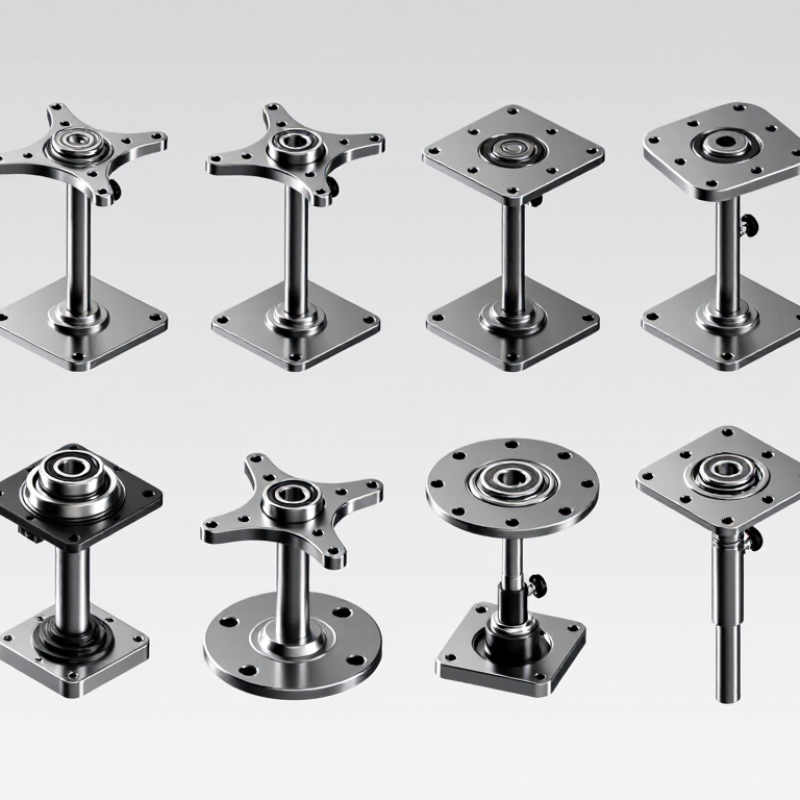
A 360-degree swivel stand is a support platform that rotates a mounted object in a complete circle. Its central bearing or rotating plate allows smooth movement around a fixed base. The stand may hold displays, cameras, lighting equipment, tools, or small industrial components. Users can view the object from any angle without lifting or repositioning it. That saves time. A stable swivel stand usually includes a reinforced base, a load-bearing shaft, and controlled rotation. Some models rotate freely, while others use locking points or adjustable resistance. These details affect safety, viewing comfort, and service life.
From practical testing, smooth rotation is not enough. The stand must remain steady when a user turns the platform with one hand. Check the stated load capacity, platform diameter, bearing material, surface finish, and mounting-hole pattern. A heavier base often reduces vibration on a workbench. However, excessive resistance can make frequent adjustments tiring. I have also found that small gaps may appear after repeated use, especially when dust enters the bearing area. That is easy to overlook. Reliable suppliers should provide dimensional drawings, material details, inspection records, and clear maintenance guidance. Buyers comparing Chinese suppliers can request sample testing before placing larger orders. Test the stand under its real load, not an empty platform. Rotate it repeatedly, listen for grinding, and inspect the locking mechanism. Even a polished appearance can hide weak internal parts.

Choosing a Chinese swivel stand supplier requires more than comparing online prices. Review the supplier’s manufacturing experience, product range, and export history. Ask for a factory video, production photos, and recent inspection records. A polished catalog can still hide weak processes. Look for clear answers about steel grade, surface treatment, bearing design, and maximum load.
Request a working sample before placing a large order. Test its 360-degree rotation, locking strength, balance, and noise level. Place the stand on uneven surfaces. Small defects often appear there. Check welds, screw threads, packaging, and protective foam. Ask whether the supplier performs incoming material checks and final inspections. Reliable suppliers should provide measurable tolerances, test methods, and corrective-action records.
Communication matters as much as hardware. Confirm drawings, dimensions, colors, labels, packing requirements, lead times, and payment terms in writing. Verify whether stated certifications match your destination market and product application. An independent factory audit can reveal equipment limits, subcontracting, and inventory problems. Do not rely only on promises.
No audit is perfect. A strong supplier may still miss a detail, while a small supplier may offer careful workmanship. Compare evidence, not presentation. Keep sample results, inspection photos, and approved specifications in one controlled file. This makes quality discussions more factual when production changes.
China-based 360-degree swivel stand suppliers serve retail displays, furniture fittings, photography equipment, and industrial support applications. Their factories may offer aluminum, steel, stainless steel, or reinforced polymer constructions. Material choice affects load capacity, corrosion resistance, noise, and service life.
Details matter. A reliable supplier should provide dimensional drawings, rotation-angle data, load-test records, and surface-finish specifications. Ask for proof. Check whether the stand rotates smoothly under the stated load, not only when empty. Inspect the bearing, locking mechanism, fasteners, and base stability. Small gaps can cause wobbling after repeated movement. That gap matters.
Experienced buyers should request samples before placing larger orders. Compare actual tolerances with the technical drawing, and test the stand through repeated rotation cycles. Quality control may include incoming material checks, assembly inspections, and final functional testing. Export packaging also deserves attention because heavy parts can shift during transport. No supplier is perfect. A polished sample can hide inconsistent batch production, while a minor sample defect may reveal an honest manufacturing issue. Buyers should review communication speed, corrective-action records, production capacity, and documentation clarity. Clear specifications reduce disputes and make supplier performance easier to verify over time.
China Top 10 360 Degree Swivel Stand Suppliers?
Selecting among China’s top ten 360-degree swivel stand suppliers requires more than comparing prices. Product range matters. Strong manufacturers usually offer tabletop stands, counter displays, floor units, monitor mounts, tablet holders, and heavy-duty rotating bases. A 2024 Grand View Research report estimates the global point-of-purchase display market will continue growing through 2030, driven by retail upgrades and interactive product presentation. This supports demand for flexible, space-efficient display hardware.
Customization separates factories from trading companies. Ask for rotation angle, load capacity, surface finish, cable routing, locking systems, packaging, and mounting patterns. Practical suppliers should provide CAD drawings, samples, material certificates, and documented quality checks. Steel, aluminum, and engineered polymers each affect weight, durability, and cost. I would also inspect welds, bearing smoothness, screw alignment, and carton protection. Small defects become expensive at scale. Not every catalog specification is reliable.
Manufacturing capability should include CNC machining, stamping, laser cutting, powder coating, assembly, and inspection under one controlled process. A 2023 Deloitte manufacturing survey found that supply-chain resilience and operational visibility remain major purchasing priorities. Therefore, request production schedules, inspection records, batch traceability, and realistic monthly capacity. Ask for evidence. A factory’s export experience can help, but it does not replace technical verification. The best supplier may need several design revisions before the stand feels stable, quiet, and genuinely smooth.
| Rank | Supplier Profile | Main Product Range | Typical Load Capacity | Rotation Function | Materials | Customization Options | Manufacturing Capabilities | Quality and Compliance | Indicative MOQ | Typical Lead Time |
|---|---|---|---|---|---|---|---|---|---|---|
| 1 | Supplier Profile A | Heavy-duty monitor stands, display bases, equipment platforms | 15–80 kg | 360° manual rotation; optional locking positions | Steel, aluminum alloy, engineering plastic | Base dimensions, mounting pattern, colors, labels, packaging | Stamping, CNC machining, welding, powder coating, assembly | Dimensional inspection, load testing, coating inspection | 100–300 units | 25–40 days after sample approval |
| 2 | Supplier Profile B | TV turntables, media-console stands, furniture swivel plates | 20–120 kg | 360° continuous rotation; smooth-bearing options | Cold-rolled steel, stainless steel, zinc alloy | Plate diameter, hole layout, bearing type, surface finish | Laser cutting, stamping, riveting, CNC turning, assembly | Torque testing, cyclic rotation testing, salt-spray testing | 200–500 units | 20–35 days after order confirmation |
| 3 | Supplier Profile C | Retail display turntables, product presentation stands, showcase bases | 5–40 kg | 360° manual or motorized rotation | ABS, acrylic, aluminum, coated steel | Logo printing, LED integration, platform shape, speed control | Injection molding, CNC routing, electronics assembly, printing | Visual inspection, electrical safety checks, rotation endurance tests | 100–500 units | 20–45 days, depending on electronics |
| 4 | Supplier Profile D | Industrial turntables, inspection platforms, machine components | 100–500 kg | 360° rotation with mechanical locking or indexing | Machined steel, cast iron, aluminum alloy | Load rating, shaft design, mounting holes, gear ratio, finish | CNC machining, turning, milling, heat treatment, assembly | Material certificates, dimensional reports, load and cycle testing | 10–50 units | 30–60 days for engineered products |
| 5 | Supplier Profile E | Camera platforms, lighting stands, photographic equipment bases | 3–25 kg | 360° rotation with adjustable friction control | Aluminum, stainless steel, nylon, rubber | Thread specifications, quick-release plates, anodizing, packaging | CNC machining, anodizing, die casting, precision assembly | Thread-gauge inspection, torque testing, finish inspection | 300–1,000 units | 18–35 days after final specifications |
| 6 | Supplier Profile F | Medical equipment bases, instrument stands, laboratory platforms | 10–100 kg | 360° rotation with lockable positioning | Stainless steel, aluminum, antimicrobial-coated materials | Hygienic surfaces, cable routing, mounting interfaces, cleanroom packaging | Sheet-metal fabrication, CNC machining, polishing, passivation | Traceability records, surface inspection, functional and load testing | 50–200 units | 30–50 days after technical approval |
| 7 | Supplier Profile G | Furniture swivel mechanisms, chair bases, rotating hardware | 80–250 kg | 360° rotation with ball-bearing or plate-bearing systems | Stamped steel, zinc alloy, nylon, hardened steel balls | Bolt pattern, plate thickness, bearing preload, coating, packaging | Progressive stamping, die casting, riveting, automated assembly | Load testing, noise testing, corrosion testing, cycle testing | 500–2,000 units | 25–45 days for standard tooling |
| 8 | Supplier Profile H | Point-of-sale stands, tablet holders, kiosk swivel mounts | 2–20 kg | 360° rotation with optional tilt adjustment | Aluminum, steel, ABS, polycarbonate | Device size, anti-theft features, cable routing, color, branding | CNC bending, extrusion, injection molding, powder coating, assembly | Fit testing, stability testing, surface inspection, packaging checks | 100–500 units | 20–40 days after artwork approval |
| 9 | Supplier Profile I | Solar panel mounts, outdoor equipment platforms, weather-resistant bases | 30–150 kg | 360° manual rotation with locking mechanism | Hot-dip galvanized steel, stainless steel, anodized aluminum | Outdoor coating, mounting geometry, corrosion protection, hardware kits | Laser cutting, bending, welding, galvanizing, powder coating | Coating thickness checks, corrosion testing, load and fit testing | 100–500 units | 30–55 days depending on surface treatment |
| 10 | Supplier Profile J | Small-batch prototype stands, laboratory fixtures, custom OEM platforms | 1–300 kg | Manual, indexed, or motorized 360° rotation | Steel, aluminum, stainless steel, plastics, composite materials | Full design support, 3D modeling, prototypes, tooling, packaging | Rapid prototyping, CNC machining, 3D printing, welding, assembly | Prototype inspection, dimensional reports, functional validation | 1–50 units for prototypes | 7–25 days for prototypes; 25–50 days for production |
Comparing China’s Top 10 360-Degree Swivel Stand Suppliers
Pricing varies with steel thickness, bearing design, surface finish, and order volume. A basic stand may use stamped steel and a small rotating plate. A premium model may add reinforced welds, sealed bearings, and powder coating. Buyers should request a cost breakdown, not only a unit price. The World Bank’s Commodity Markets Outlook shows that metal prices can change significantly across quarters. Therefore, a quotation should state its validity period. Low prices can hide thinner material or weaker fasteners. I have seen attractive samples fail after repeated rotation. That experience still influences my supplier checks.
Quality control needs measurable evidence. Ask for incoming-material records, welding inspection photos, load testing, and a documented final inspection. More than one million ISO 9001 certificates exist worldwide, according to ISO’s certification survey. However, certification alone does not prove consistent stand quality. Request batch samples and inspect the swivel angle, noise, wobble, screw alignment, and coating thickness. Small defects matter. The World Bank’s 2023 Logistics Performance Index also highlights customs, infrastructure, and shipment reliability as key logistics factors. Export support should include accurate packing lists, carton drop tests, product labels, and responsive document handling. UNCTAD reports that about 80% of global merchandise trade by volume moves by sea, so moisture protection deserves attention. I would not choose the cheapest supplier without testing one production batch first.


For those larger-sized parts, or smaller quantity runs, we have 2 independent powder coat booths and ovens. The quality, durability and affordability of today’s powder coating finishes make this the process of choice for world-class companies.
Powder coating advantages over other forms of coating are many. Materials used in the Powder coating process can be metals and non-metals that come in a multitude of thicknesses, textures, colors, etc. Another of Powder coating’s biggest advantages over conventional coatings is its ability to create finishes in many different textures. Powder Coating Booths allow us the ability to apply these advantages to large products.
Tri-State Fabricators runs a full-service conveyor line for painting. Wet painting can provide protection or decoration to many different part styles. From start to finish, every project is easier to undergo random and point-based inspection by our skilled painting team.
Advantages to our Wet Paint Line are these lines start with product prep and ends with a thorough inspection of a high quality finished product. Our ability to complete large and small projects with a superior finish and doing so in a timely and economical fashion. This passes along the savings in production to our customers. When powder coating ins not an option, our Wet Paint Line gets the job done right the first time.
When the parts get big and heavy we roll-out our custom paint racks and oversize booth. By utilizing our partnerships with all the major paint brands, we can match virtually any color with wet paint.
The advantages of having access to a Wet Paint Booth are many. Large projects of many different shapes can be loaded into the booth. The Wet Paint Booth offers an environment that is much more controlled than a typical parts painting operation.
Not only are they used because of their controlled environment, but they’re are also advantageous when it comes to applying paint to parts that are needed in industries that require specialty coatings such as medical, aerospace, etc.
Our military forces have some very high standards when it comes to the finish of their vehicles and equipment. From the first pre-treatment step to final coat, it takes a great deal of knowledge and experience to protect the men and women of our armed forces. They deserve only the best, and Tri-State Fabricators provides it.
All of our processes are closely monitored by our staff and management teams. Both of which are highly trained in the processes of metal fabrication and finishing. Tri-State Fabricators’ goal is to always fully satisfy each and every customer, including the military. We will always put a 110% into what we do.
Abrasive media blasting is an excellent way to remove old paint, rust, and increase the paint/powder adhesion. Glass beads produce a much smoother and brighter finish than angular abrasives; leaving the part clean yet without any dimensional change. Chemically inert and environmentally friendly, we can recycle our beads approximately 30 times; making them a more preferred method of metal cleaning or surface finishing.
Advantages to Glass Bead Blasting are many. Glass bead blast media is used when a project is needing rough surfaces need to become smooth for applications of coatings such as paint. It is typically used to clean paint and rust from a product surface without deforming the surface it is being used on. Overall, compared to many other blasting media, Glass Bead Blasting is a very economical choice and those savings are always passed on to our customers.
Tri-State Fabricators utilize a zinc phosphate wash to clean and etch the material to ensure the best paint adhesion possible. The unique design of our 3-stage wash system does the work like a 5-stage. From Cleaning and rinsing to conversion coating and post-treatment, Our Part Washing process is a complete service and works throughout the fabrication service and the finishing service.
Along with the previously mentioned benefits, Curing is a vital chemical reaction that leaves the product finish hard and relatively safe from mild abrasion and aggressive corrosion. This process can be done in more than one way; ambient air-dry or in curing ovens at temps that exceed 240°.
From fixing paint mistakes (someone else’s of course) to simply cleaning our paint line hooks, our burn-off oven is put to good use. After a quick burn-off, a little clean up, and a fresh coat of paint, your parts will look better than new.
Why does our Burn-Off Oven work so well? Because super heating the air around parts turns the materials into ashes. From paint and powder coatings to rubber and machining oils, high temps do the job without degrading the integrity of the part.
Masking is a vital part of producing high quality products. We have die-cut masking patterns to protect machined surfaces as well as a wide range of plugs and caps to protect threaded holes and bolts. We provide permanent and temporary masking.
Masking allows the selected sections of a product to be protected from a fabrication or finishing service. This can be with both chemicals when etching and tapes, paints when only finishing just a section of the product. Masking is great in aiding the customization process of a project.
Screen printing is a photographic process that transfers artwork onto a porous nylon screen which allows colored ink to flow through the screen and be deposited on an aluminum or plastic component. We can generally have just about any design created onto a screen for your parts.
Some of the advantages of Screen Printing are, brand recognition for your business displaying on your products, assembly instructions, product warnings/hazards, etc. Tri-State Fabricators produces Screen Printing of the highest quality so you know it’s durable.
Metal Finishing is the art of treating the exterior portion of product, often metal but can also be made of other materials, so that the surface is clean and free of any debris. Then the process of applying coats or either paint of powder coat takes place. This coating process improves the quality of the product in both appearance and resistance to wear and corrosion.
Tri-State Fabricators, Inc., understands that a project typically isn’t complete until a high-quality finish has been added to your product. This is why our painting and powder coating teams continuously inspect the products throughout the Metal Finishing process.

