China Best Transition Belt Conveyor Manufacturer?
Choosing the best transition belt conveyor manufacturer in China requires more than comparing prices. A reliable supplier should understand material flow, belt tension, transfer angles, and workplace conditions. The right China Transition Belt Conveyor can reduce product damage, improve line stability, and simplify daily cleaning. It must also fit the complete conveying system, not operate as an isolated machine.
This guide examines how experienced manufacturers design and build transition conveyors for food processing, packaging, logistics, mining, and general material handling. Practical details matter. A well-designed unit may include stainless-steel frames, sealed bearings, adjustable supports, tracking rollers, and guarding around moving parts. Engineers should review belt width, load weight, speed, elevation change, and available floor space before recommending a model. Factory experience is valuable, but documented testing is equally important. Look for load trials, belt tracking checks, noise observations, and clear inspection records.
Small details reveal manufacturing quality.
Welds should appear consistent. Surfaces should be easy to access. Spare parts should have identifiable specifications. A dependable manufacturer also explains installation, cleaning, lubrication, and preventive maintenance in clear language. Certifications can support credibility, but they should match the actual equipment and destination market. No supplier is perfect, and marketing claims deserve careful verification. Buyers should request drawings, reference projects, warranty terms, and realistic delivery information before making a decision. This article offers a practical framework for comparing manufacturers, recognizing engineering strengths, and avoiding choices based only on attractive photographs or low quotations.
What Is a Transition Belt Conveyor?
A transition belt conveyor connects two conveyor sections with different belt widths, elevations, or loading arrangements. Its job is to guide material smoothly from one belt to another. Without a suitable transition, bulk material may spill, pile up, or strike the receiving belt unevenly. You can picture it at a transfer point: crushed stone leaves a wide belt and lands on a narrower one. The transition section helps control that handoff.
Design depends on the material, belt speed, conveyor width, and transfer geometry. Engineers consider chute position, belt alignment, and the distance available for material to settle. A poorly matched transition can create dust, belt wear, or uneven loading. These problems may not appear during a brief empty run. They often show up after hours of carrying abrasive material. Real operating conditions matter.
Tips: Check belt tracking and material flow under load, not only during installation. Look for spillage near the transfer point, especially after changing belt speed or feed volume. Keep inspection access practical. It is easy to overlook maintenance when the transition is tucked behind supports. A simple layout can still need adjustment; conveyor behavior is sometimes less predictable than drawings suggest.
How Does a Transition Belt Conveyor Work?
How Does a Transition Belt Conveyor Work?
A transition belt conveyor moves material between two conveyor sections or changes its direction. A motor turns the drive pulley, pulling the belt forward. Rollers support the belt and keep it moving smoothly beneath the load. At the transfer point, material leaves one belt and lands on the next. The receiving belt is positioned to catch it with minimal spillage.
Belt speed, width, and alignment all affect the handoff. For example, a stream of gravel should land near the center of the receiving belt, not against its edge. Side guides can help control light or uneven loads, but they cannot fix poor alignment. In real installations, small tracking changes happen. Check the belt under load, not only when it is empty. That detail is easy to miss.
Tips: Watch material flow during startup. Look for belt drift, bouncing, or buildup near the transfer point. Adjust one setting at a time, then observe the result. A tidy transfer is useful, but it does not always mean the system is properly aligned.
What Makes a Chinese Manufacturer the Best Choice?
What Makes a Chinese Manufacturer the Best Choice?
A capable Chinese transition belt conveyor manufacturer should prove performance, not simply promise low prices. Look for engineering records showing how the belt’s profile changes between loading and discharge, where material can shift or spill. Ask for drawings, belt-speed calculations, and test results using your actual load and operating conditions. Small details matter. A dusty transfer point can reveal more than a polished brochure.
China’s manufacturing scale can support access to steel, motors, rollers, and fabrication services. World Steel Association data reported crude steel production of about 1.005 billion tonnes in China in 2024. That figure describes industrial capacity, not conveyor quality. Buyers still need to verify material certificates, weld inspections, component tolerances, and factory quality procedures. Request references for comparable installations, including operating hours and maintenance history. Independent inspection can help confirm what paperwork alone cannot.
Service capability deserves equal attention. A transition conveyor may need careful alignment where belt geometry changes, and poor tracking can wear edges quickly. Check whether the supplier provides commissioning guidance, spare-part lists, and clear response times. The U.S. Department of Energy’s 2014 report, Improving Motor and Drive System Performance, notes that motor-driven systems account for a large share of industrial electricity use. Efficient drives matter. Yet energy estimates should use the project’s real duty cycle; I have seen attractive calculations become less convincing once idle time and changing loads were included.
A strong transition belt conveyor manufacturer should support widely used nominal belt widths, provide accurate transition geometry, and match belt construction, pulley dimensions, loading conditions, and service requirements to recognized conveyor standards. The chart shows common nominal belt widths used in bulk material conveying, from 400 mm to 2,400 mm. Broader width capability can indicate greater flexibility when selecting equipment for different material capacities and plant layouts.
How to Evaluate Transition Belt Conveyor Quality
China Best Transition Belt Conveyor Manufacturer?
How to Evaluate Transition Belt Conveyor Quality
A transition belt conveyor must guide material smoothly between pulleys and loading zones. Check the transition length, belt trough angle, and pulley diameter against the supplier’s drawings. A short transition can force the belt edges to stretch unevenly. Watch the belt run during startup: does it track centrally, without edge curl or sudden vibration? Small details matter. Request material and splice test records, not just a polished sample.
ISO 14890:2013 sets requirements for rubber- or plastic-covered conveyor belts used in general applications, including specified physical properties and test methods. It is a useful reference, but it does not certify an entire conveyor system. CEMA’s Belt Conveyors for Bulk Materials also emphasizes matching conveyor design to the material and operating conditions. Ask for calculations using your actual load, belt speed, temperature, and transfer geometry. A brochure rating alone is not enough. I would also inspect the splice finish and belt edges in person; photographs can hide uneven workmanship.
Tips: Request a run test with your material, then check tracking under load. Record belt speed, vibration, and edge clearance. If test conditions differ from your site, ask why. A good supplier should explain the gap plainly.
Which Industries Use Transition Belt Conveyors?
Which Industries Use Transition Belt Conveyors?
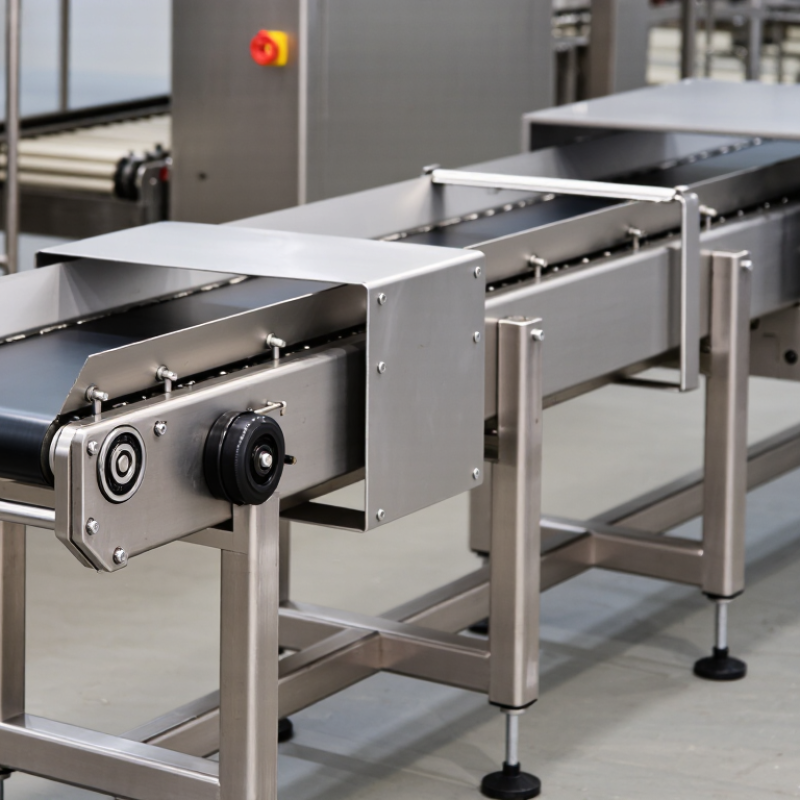
Transition belt conveyors are used wherever products need to move between conveyor sections with different widths, heights, or directions. In food processing plants, they can carry packaged goods from a narrow inspection belt to a wider sorting line. Smooth transfers help limit product jams. Belt materials and cleaning access matter, especially around wet or crumb-prone production areas.
Packaging and distribution facilities use them to connect filling, labeling, and case-handling equipment. A box may leave a short belt, cross a transition section, and enter a faster takeaway conveyor. Small height differences can still cause tipping, so engineers check belt speed, product dimensions, and transfer gaps. In practice, layouts are rarely perfect. Existing columns and crowded floors can complicate the design.
Manufacturing plants also use transition conveyors between assembly stations, while agricultural and recycling operations move bulk materials between processing stages. These settings may require belts suited to dust, moisture, or abrasive loads. The best arrangement depends on what is conveyed, how often the line runs, and how workers access the equipment. A transition that looks simple on a drawing may need adjustment after real products begin moving.





