China Best Storage Rack Upright Manufacturers and Suppliers
Choosing among China’s best Storage Rack Upright manufacturers and suppliers requires more than comparing prices. The upright is the load-bearing frame of a pallet rack. Its steel grade, profile, hole spacing, weld quality, and finish affect fit, stability, and service life. Small differences matter. A few millimeters can complicate beam installation or replacement.
Market investment also points to the value of dependable warehouse infrastructure. The 2024 MHI Annual Industry Report found that 55% of surveyed supply chain professionals were increasing investment in technology and innovation; 88% planned to increase it over the following five years. These figures describe broad supply chain priorities, not rack demand specifically. Still, they underline why storage systems should be selected with operational needs in mind. A well-designed layout can support safer handling and make better use of vertical space.
Yet a specification sheet is not a rack. Buyers should ask suppliers for material details, load-test records, dimensional tolerances, coating information, and project references. They should also confirm that capacity calculations match the intended beam, base plate, floor, and installation conditions. Local engineering requirements vary. A reputable manufacturer will explain its limits rather than promise a universal load rating. That distinction is easy to overlook.
This guide introduces China-based Storage Rack Upright manufacturers and suppliers, with practical points for comparing product quality, customization, production capability, and communication. Use it as a starting point, then verify claims against drawings, samples, and documented tests. Even careful sourcing cannot replace a site-specific review.
What Storage Rack Uprights Are and How They Support Racking Systems
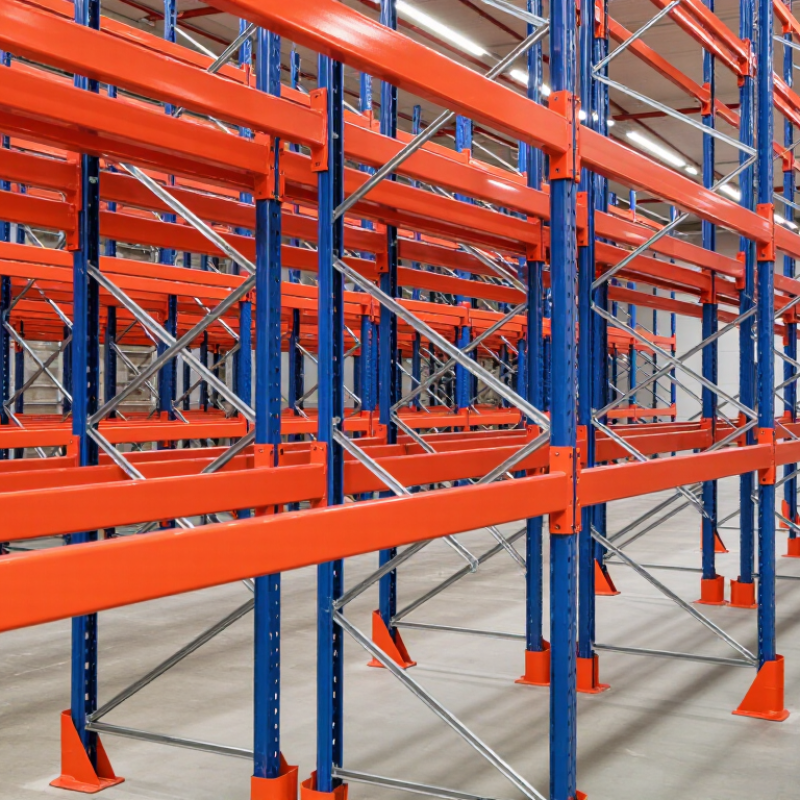
Storage rack uprights are the vertical frames that give a pallet racking system its height and structure. Most frames use two steel columns connected by horizontal and diagonal braces. Rows of slots or punched openings along each column allow compatible beams to connect at selected heights. The exact connection shape varies, so parts from different systems should not be assumed to fit. That detail matters.
Picture two upright frames supporting beams across a warehouse aisle. Pallets rest on those beams, while the uprights transfer forces toward the floor. Frame height, column size, bracing, beam position, and the specified load rating all affect how the system performs. A taller frame is not automatically suitable for heavier storage. Even a small change in beam level can alter the rated capacity.
During planning, check the intended pallet dimensions and the available aisle and ceiling space. Measure carefully. Uneven floors or a slightly misplaced frame can complicate installation, even when the components appear sound. This is often noticed too late: unusual pallet sizes may not become obvious until the storage layout is already planned. Use the manufacturer’s configuration details and have a qualified rack professional verify the proposed arrangement before loading it.
Common Types and Materials of Storage Rack Uprights
Storage rack uprights vary by frame design and load path. Teardrop uprights use punched slots, allowing compatible beams to lock into place without separate bolts. Slotted or bolted uprights provide more fixed connections and can suit layouts that change less often. For lighter shelving, angle uprights may work well for cartons and small parts. They are not a substitute for pallet-rack frames.
Steel is common because it withstands repeated loading and impact. Cold-formed steel keeps frames relatively light, while heavier structural steel may suit demanding applications. Finish matters, too. Powder coating helps resist everyday scratches, and galvanized surfaces are often selected for damp areas. Neither finish prevents all corrosion.
Check the details. Upright depth, steel thickness, hole pattern, and frame bracing all affect capacity. Two posts can look nearly identical yet have different load ratings. Inspect for bent columns, damaged welds, and beam connectors that do not seat fully. Capacity labels and supplier data should guide selection; visual guesses are unreliable. Published ratings depend on specific configurations, so changing beam levels or anchors may change the safe working load. This point is easy to overlook.
How Storage Rack Uprights Are Manufactured and Quality-Checked
In China, a storage rack upright typically begins as a coil of structural steel. Roll-forming stations shape it into a tall, slotted profile; operators then check hole pitch, flange width, and straightness with gauges. Some lines punch the slots before forming, while others punch afterward. The sequence affects tolerances. Small errors matter. The World Steel Association’s World Steel in Figures 2025 reports 1,882.6 million tonnes of crude steel production worldwide in 2024. That figure describes the wider steel supply, not rack-grade quality, so buyers should still request material certificates and traceable batch records.
Quality checks continue after forming. Inspectors look for burrs, cracks, uneven welds, and damaged edges, then verify dimensions against approved drawings. Coating checks can include visual inspection and thickness measurements; a neat surface alone does not prove consistent protection. Sample load tests may validate a design, but they do not replace process controls on each production run. ANSI/RMI MH16.1 provides design and testing criteria for industrial steel storage racks, making it a useful reference when reviewing technical documentation. One weak point remains: paperwork can look complete while measurements are poorly recorded. Ask how inspection results are logged, what sampling plan is used, and how rejected uprights are isolated before shipment.
Key Applications Across Warehouses and Industrial Facilities
Storage rack uprights support pallet loads in warehouses, distribution centers, and production facilities. Their height and frame depth help determine how much space each storage bay can use. In a busy warehouse, workers may handle pallets of different sizes throughout the day. Adjustable beam levels make it easier to accommodate these changes without rebuilding the entire system. Small details matter.
In industrial facilities, racks often sit near packing lines, machine areas, or staging zones. Uprights must suit the intended load and the way equipment moves through the building. Forklift clearance, aisle width, floor conditions, and pallet dimensions all affect the layout. A plan can look efficient on paper but still leave awkward turns for operators. That is worth checking before installation.
Dust, moisture, and frequent handling can also affect rack condition over time. Facilities should select finishes and components suited to their working environment, then inspect frames for visible damage and loose connections. This is especially relevant in cold storage, where condensation may occur during temperature changes. Suppliers can help clarify dimensions, load data, and installation requirements, but site measurements remain essential. Even careful planning has limits. A rack system should fit real operating habits, not just the storage capacity shown in a drawing.
China Storage Rack Upright Manufacturers and Suppliers: Standard Pallet Footprints
Common pallet sizes used in warehouse and industrial storage, compared by footprint area.
Pallet footprint affects rack bay and aisle planning. Rack uprights and beams must be selected for the actual load, layout, and applicable safety requirements; footprint area alone does not determine rack capacity. Dimensions are drawn from ISO 6780 pallet size specifications.
How to Evaluate Storage Rack Upright Manufacturers and Suppliers in China
China Best Storage Rack Upright Manufacturers and Suppliers
How to Evaluate Storage Rack Upright Manufacturers and Suppliers in China
Evaluating an upright supplier starts with evidence, not a polished catalogue. Ask for steel grade certificates, thickness tolerances, weld inspection records, and load-test reports linked to the production batch. Compare drawings against the actual sample: hole spacing, baseplate dimensions, and beam-connector fit should match. Small mismatches can complicate installation. They are easy to overlook.
Request the test method and loading conditions, not only a maximum-capacity figure. Confirm whether the stated capacity applies to a single upright, a frame, or a complete rack configuration. Check coating thickness and inspect cut edges for bare steel. A factory visit can reveal whether quality checks happen during production or only before shipment. Still, one visit is just a snapshot.
System compatibility matters too. MHI’s 2024 Annual Industry Report found that 55% of surveyed supply-chain leaders planned to increase technology investment. That figure is not a rack-quality measure, but it highlights why buyers should verify upright dimensions against forklifts, handling equipment, and planned warehouse systems. Request traceable inspection records and a written process for handling dimensional failures. I would not treat a neat report as proof by itself; repeat measurements on a sample, and record what does not match.





