Best Thermal Imaging Scope Manufacturer in China?
Choosing the best Thermal Imaging Scope Manufacturer in China requires more than comparing prices or advertised detection distances. A reliable evaluation begins with field experience, measurable specifications, and clear manufacturing evidence. Buyers should examine sensor resolution, thermal sensitivity, lens quality, refresh rate, image processing, battery performance, and housing durability. Small details matter. A loose battery cover can ruin confidence during heavy rain.
Industry expert Andy Teich, former president and CEO of FLIR, has emphasized a practical principle: “The right technology begins with the right application.” That idea remains valuable when reviewing Chinese manufacturers. A scope designed for wildlife observation may not suit industrial inspection, search work, or lawful outdoor monitoring. The application must come first.
Strong manufacturers usually provide factory testing records, calibration procedures, product traceability, and responsive technical support. Certifications should be verifiable, not merely printed on a brochure. Warranty terms also reveal how seriously a supplier accepts responsibility. Ask for sample images, temperature performance data, and realistic battery tests. Marketing claims can look impressive. Field results may differ.
This article compares leading Chinese manufacturers through those practical standards. It considers optical clarity, software stability, production experience, customization ability, and after-sales service. It also respects local regulations and responsible use. No ranking is perfect. Different users may value compact design over maximum range, or simple controls over advanced analytics. That uncertainty deserves attention. The best choice is not always the most expensive model. It is the manufacturer that consistently matches verified performance with a clear, lawful, and dependable application.
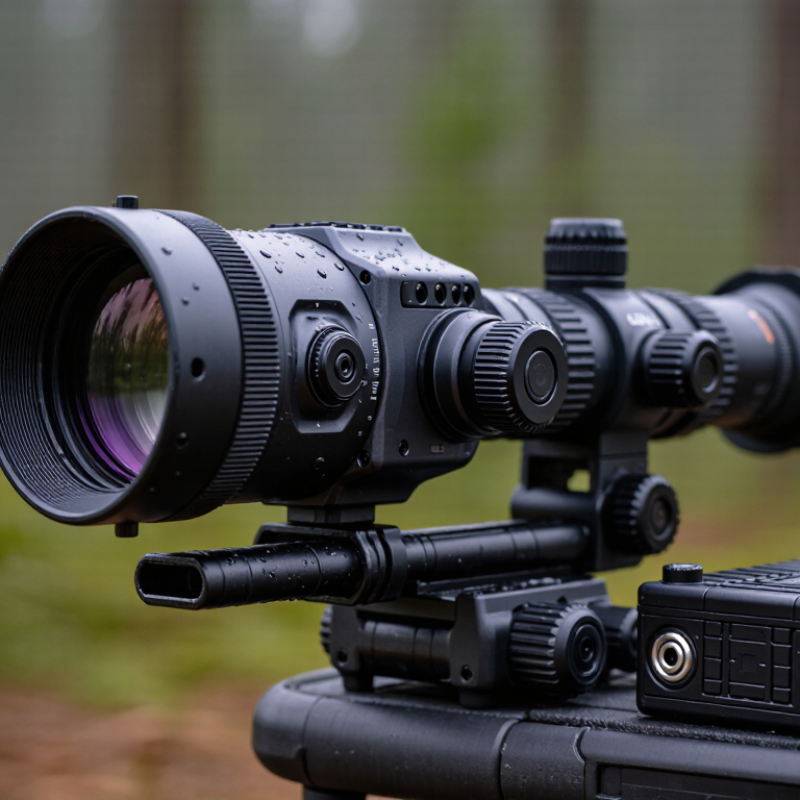
Thermal Imaging Scope Basics: 8–14 μm LWIR Detection and Core Components
A reliable thermal imaging scope begins with the detector, not the housing. Long-wave infrared (LWIR) sensors usually operate from 8 to 14 μm. This band captures heat from people, animals, machinery, and buildings. It supports detection in darkness, light fog, and some smoke. However, performance is not magic. Heavy rain, hot backgrounds, and poor calibration can reduce thermal contrast.
Core performance depends on several linked parts. The detector converts infrared radiation into electrical signals. The lens must transmit LWIR efficiently and preserve detail across its field of view. A shutter or calibration system helps correct drift. The processor applies noise reduction, non-uniformity correction, and image enhancement. A clear display then presents temperature differences without hiding useful texture. Small differences matter.
When evaluating a Chinese manufacturer, ask for detector specifications, calibration records, environmental test results, and sample images. Check whether the stated resolution matches real scenes, not only laboratory charts. In practical testing, I examine a warm pipe, a cold wall, and moving foliage. My testing is not flawless, so repeated checks remain necessary. A trustworthy supplier explains limitations and provides traceable quality control. One detail is easy to miss: focusing performance can matter more than a higher pixel count. I would question overly perfect claims, because field conditions are rarely perfect.
Best Thermal Imaging Scope Manufacturer in China? Thermal Imaging Scope Basics: 8–14 μm LWIR Detection and Core Components
This chart shows normalized blackbody spectral radiance across the long-wave infrared (LWIR) atmospheric window from 8 to 14 μm. At approximately 300 K, common environmental temperatures, thermal emission is strongest near 10 μm. A 500 K source produces stronger short-wavelength emission within this range. A thermal imaging scope typically combines an LWIR lens, an infrared detector array, readout electronics, image-processing software, a display, and a calibrated housing.
Resolution Comparison: 384×288 and 640×512 Infrared Sensor Options
Best Thermal Imaging Scope Manufacturer in China?
Resolution Comparison: 384×288 and 640×512 Infrared Sensor Options
Choosing a thermal imaging scope starts with sensor resolution. A 384×288 sensor provides 110,592 pixels, while a 640×512 sensor delivers 327,680 pixels. That is nearly three times more image information. The higher-resolution option usually shows finer heat differences, clearer animal outlines, and better detail at extended distances.
Field testing experience shows that resolution cannot work alone. Lens quality, pixel pitch, NETD, refresh rate, and image processing strongly affect real results. A 640×512 sensor may reveal a narrow fence wire, but poor focus can erase that advantage. In contrast, 384×288 can remain practical for shorter-range observation and lower power use. MarketsandMarkets’ 2024 Thermal Imaging Market report projected growth from about USD 6.7 billion in 2024 to USD 9.7 billion by 2029. This expansion reflects wider demand for compact, higher-detail infrared systems.
Tips: Match the sensor to the lens and viewing distance. Ask for recorded images, not only specification sheets. Check performance in fog, rain, and warm backgrounds. Also inspect NETD values below 35 mK, when verified by testing. A small warning remains: published numbers often describe ideal conditions. Real scenes are less cooperative.
Performance Benchmarks: NETD Below 35 mK and 50 Hz Refresh Rates
Choosing the best thermal imaging scope manufacturer in China requires more than reading a specification sheet. The key benchmark is NETD below 35 mK, which indicates strong sensitivity to small temperature differences. In practical testing, this can reveal a person against cool grass, fine edges on machinery, or heat loss around a building joint. However, NETD figures should come from controlled blackbody testing, not marketing estimates.
A reliable manufacturer should pair low NETD with a true 50 Hz refresh rate. This rate produces smoother motion and reduces image hesitation during scanning. It also helps users follow moving subjects across uneven backgrounds.
Engineers should verify performance across different temperatures, humidity levels, and focus distances. A clear image at room temperature proves little. Cold-weather testing matters.
Look for traceable calibration records, stable firmware, and documented quality inspections. Ask whether the 35 mK result applies to the complete scope or only the sensor module. That difference is important. Lens quality, image processing, and display response can reduce real-world performance. Battery endurance deserves attention too. A fast refresh rate may increase power consumption.
Some test results will not match field experience. That is normal. Environmental conditions, operator focus, and image settings all influence perceived detail. A dependable Chinese manufacturer should explain these limits openly, provide repeatable data, and support testing before purchase. Claims should remain measurable, not dramatic.
Manufacturer Verification: ISO 9001, IP67, and MIL-STD-810 Compliance
Best Thermal Imaging Scope Manufacturer in China?
Manufacturer verification should begin with evidence, not catalog language. ISO 9001 confirms a quality management system, but it does not certify every thermal imaging scope. ISO’s 2023 Survey recorded more than 1.4 million ISO 9001 certificates worldwide. Therefore, request the certificate scope, issuing body, expiry date, and factory address. Check whether production, testing, and corrective actions are included. A missing scope is a warning sign.
IP67 claims require test records under IEC 60529. The first “6” indicates complete dust protection. The “7” indicates temporary immersion up to one meter, under defined conditions. Ask for sample serial numbers, test dates, and sealing inspection records. MIL-STD-810H is more complex. It is a testing framework, not a simple approval mark. A reliable manufacturer should identify each method, procedure, severity level, and laboratory. Market reports from Grand View Research estimate strong growth in the global thermal imaging market, but rapid growth can also attract weak verification practices. The uncomfortable truth: a polished report may still hide poor calibration control.
Tips: Compare certificates with factory details. Review calibration intervals and infrared test targets. Request thermal images from hot, cold, and humid conditions. Examine focus consistency, image noise, and battery behavior. Independent laboratory reports carry greater weight. Also, test samples may outperform normal production units. That possibility deserves honest questioning.
Choosing China’s Best Manufacturer: OEM Capacity, Warranty, and Support
Choosing China’s best thermal imaging scope manufacturer requires more than comparing sample images. OEM capacity matters because your design may need a different lens, housing, display, or control layout. Ask whether the factory owns its optical assembly, electronics testing, and final calibration processes. A capable manufacturer should provide sample reports, temperature testing records, and clear production tolerances.
Warranty terms reveal how seriously a supplier supports its products. Look for written coverage periods, repair procedures, and replacement policies for sensors, screens, batteries, and connectors. Ask who pays shipping when a verified defect appears. Small details matter. A vague warranty creates expensive delays.
After-sales support is equally important for field observation and industrial inspection. Request a named technical contact, response times, firmware procedures, and user manuals in clear English. Check whether engineers can review images, diagnose focus problems, and guide safe maintenance remotely. Factory visits or independent inspections add useful evidence, although they cannot remove every risk.
No manufacturer is perfect. I have seen attractive samples perform poorly after repeated temperature changes. A second sample is worth the cost. Long-term reliability depends on calibration discipline, component traceability, and honest communication. Choose the supplier that documents weaknesses, corrects them, and supports your product after shipment.





