Best Polymer Tape Casting Machine Manufacturer in China
Choosing the Best Polymer Tape Casting Machine Manufacturer in China starts with the material, not a sales brochure. Polymer formulations behave differently during mixing, coating, drying, and winding. A suitable Polymer Tape Casting Machine should match the intended resin, solvent or water-based system, target thickness, and production width. These details shape practical choices, including the coating head, web-tension controls, drying-zone length, and winding method.
Look beyond headline speed. Ask manufacturers how they measure coating thickness, control temperature across the web, and manage tension when a tape is thin or delicate. Request relevant machine drawings, component specifications, and test-run records using a material similar to yours. A clear acceptance plan helps both sides agree on measurable results before shipment. Useful details include line speed under defined conditions, thickness variation, usable width, and the method used to inspect samples. Small details matter.
Supplier evaluation should also cover installation, operator training, spare parts, and response times for technical support. Confirm which services are included and which require additional fees. A polished specification sheet is helpful, but it cannot replace a properly documented trial. Still, specifications can mislead. Test conditions may not match your production floor, and sample results may vary with material preparation or ambient conditions. Ask what assumptions were used, and record the answers. No machine removes every process challenge. The strongest purchasing decision comes from matching verified capabilities to your actual production needs, then reviewing any remaining gaps honestly.
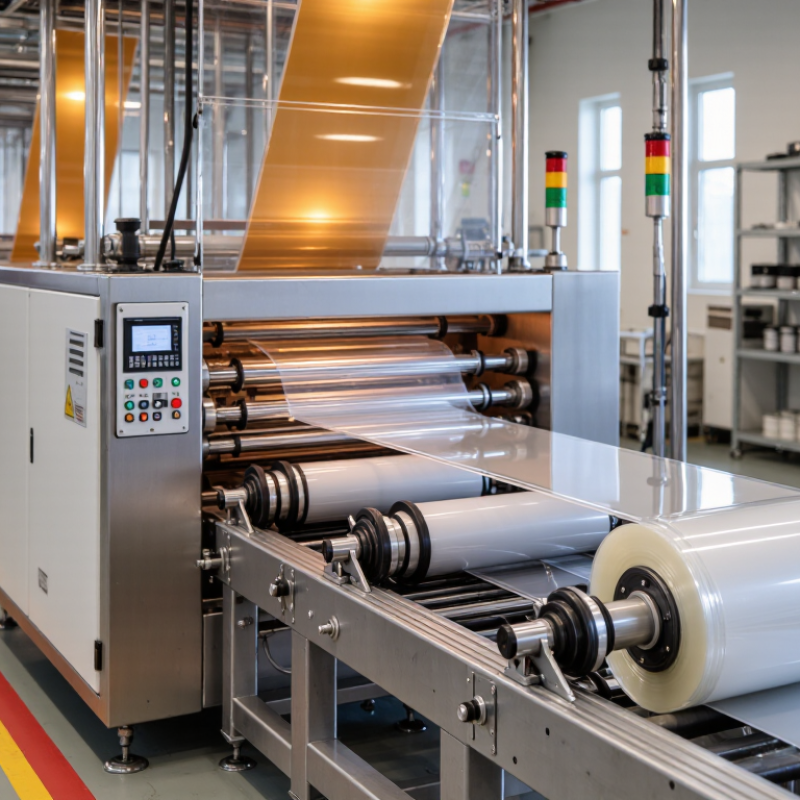
Polymer Tape Casting Machines: Definition and Purpose
A polymer tape casting machine converts a flowable polymer mixture into a thin, continuous sheet. It deposits material onto a moving carrier, often using a doctor blade or precision coating head. The wet layer passes through controlled drying zones before winding or further processing. The goal is control.
Operators adjust the coating gap, web speed, and drying temperature to influence thickness and surface quality. For example, a small change in blade clearance can create visible variation across a tape only a few hundred microns thick. Slurry viscosity and mixing also matter. No machine fixes a poorly prepared batch. Small changes matter.
These machines support the production of polymer films and functional tapes for later converting, testing, or assembly. A stable process can reduce streaks, bubbles, and uneven edges, but results depend on material behavior and operating conditions. A slight edge bead may remain, even when the center looks uniform. That is worth checking, not ignoring. Good process records help teams compare runs and identify whether a defect began during mixing, coating, or drying. The equipment provides repeatable control; it does not replace careful inspection or practical process judgment.
Best Polymer Tape Casting Machine Manufacturer in China - Polymer Tape Casting Machines: Definition and Purpose | Dimension | Description | Purpose or Practical Consideration |
| Definition | A polymer tape casting machine spreads a liquid or paste-like polymer formulation into a continuous layer on a moving or stationary carrier surface. | It produces a flat, continuous film or sheet whose thickness and surface quality depend on the formulation and process settings. |
| Typical process | The formulation is prepared, fed to a casting area, metered by a blade or coating head, and then dried or otherwise solidified. | Controlled, repeatable stages help create consistent material across a production run. |
| Casting head | A doctor blade or another metering head controls how much formulation is deposited onto the substrate. | Adjustment and alignment affect wet-layer thickness and coating uniformity. The appropriate head depends on the formulation and required product. |
| Substrate or carrier | A moving web or flat carrier supports the wet layer during casting and, where suitable, drying. | Substrate compatibility, surface condition, and release behavior can influence adhesion, defects, and removal of the finished tape. |
| Drying or solidification | Depending on the formulation, the deposited layer may be dried in a controlled zone or solidified by another suitable method. | Conditions should be matched to the material. Solvent-containing formulations also require appropriate ventilation and process-safety measures. |
| Key process controls | Common controls include feed rate, casting gap, web speed, tension, temperature, and drying conditions. | These variables interact; they should be selected and validated for the specific formulation, substrate, and target film properties. |
| Product characteristics | Relevant outcomes may include thickness consistency, width, surface appearance, flexibility, and dimensional stability. | Define measurable product requirements before choosing equipment or setting operating conditions. |
| Typical applications | Depending on the polymer formulation and machine configuration, cast polymer films may be used in areas such as membranes, functional films, or flexible sheet materials. | Application requirements determine the necessary material properties, process controls, and downstream handling. |
| Equipment selection | Compare usable casting width, metering method, substrate handling, drying capability, control system, cleaning access, and safety provisions. | Request trials or process validation using the intended formulation and substrate; confirm that the proposed configuration meets documented product requirements. |
| Quality checks | Inspection may include thickness measurement, visual examination, width checks, and tests relevant to the intended application. | Use a defined sampling plan and calibrated measurement methods to monitor consistency and identify process variation. |
How the Tape Casting Process Works
How the Tape Casting Process Works
Polymer tape casting turns a carefully prepared liquid mixture into a thin, continuous sheet. The process begins with mixing polymer, solvent, and functional additives until the slurry looks uniform. Small clumps matter. They can leave pinholes or rough patches in the finished tape. Removing trapped air is also important, though over-mixing may introduce more bubbles. Operators commonly check viscosity before feeding the slurry to the casting head.
A moving carrier film passes beneath a doctor blade, which spreads the slurry to a set wet thickness. The coated layer then travels through controlled drying zones. Gentle early heating helps prevent a sealed surface from trapping solvent underneath. As the tape dries, airflow, temperature, and line speed must stay balanced. Too much heat can cause curling or cracks; too little can leave the layer tacky. Not perfectly forgiving. After drying, the tape is peeled or wound, then checked for thickness, surface defects, and edge quality. A dependable casting machine makes these settings adjustable, but it cannot replace process observation. Even experienced teams sometimes need to revise a setting after seeing the actual tape.
Key Machine Components and Performance Factors
A polymer tape casting machine depends on several components working in sync. The extruder must deliver a steady melt, while the flat die distributes it evenly across the casting width. Small temperature differences can change flow and create uneven tape thickness. Not ideal.
The casting drum controls cooling and surface formation. Its temperature stability, surface finish, and alignment affect tape consistency. Downstream rollers and the winding unit then manage draw speed and tension; excessive tension can stretch the tape, while slack may cause wrinkles.
Practical checks include measuring thickness across the web, monitoring melt and drum temperatures, and inspecting roll edges. ASTM D882 provides a recognized method for testing the tensile properties of plastic films and sheeting.
Scale makes process control important. PlasticsEurope’s Plastics – the Fast Facts 2024 reports global plastics production of 413.8 million tonnes in 2023. That figure covers plastics broadly, not polymer tape alone, but it illustrates the scale of material processing. When comparing manufacturers in China, ask for operating data at your intended resin, tape width, and target speed. Request trial-run samples and check thickness variation, output stability, and energy use. Published specifications help, but they do not replace a production test. Real lines can behave differently.
Applications of Polymer Tape Casting Technology
Polymer tape casting spreads a polymer-based slurry into a thin, continuous layer on a temporary carrier. A controlled coating gap helps set thickness, while drying removes the liquid phase. The finished tape may be peeled away, laminated, or kept on its support for later processing. Small changes in slurry viscosity or drying temperature can alter the surface.
This technology serves applications where uniform, flexible sheets are useful. In energy storage, cast polymer films can act as separators or functional layers, depending on their formulation. Electronics manufacturers use thin films in flexible circuits, insulation, and sensor components. Porous polymer tapes also support filtration and membrane applications, where pore structure affects flow and selectivity. For medical and industrial devices, consistent thickness can simplify cutting and assembly. Details matter.
Process requirements differ widely. A dense electronic film may need a smooth surface and tight thickness control, while a filtration membrane needs suitable porosity. Operators typically monitor slurry mixing, coating speed, drying conditions, and edge quality. Not every formulation behaves neatly. A minor solvent imbalance may cause bubbles, curling, or uneven drying. That part is often underestimated. Trial runs help reveal these issues, though laboratory results do not always transfer directly to wider production lines.
How to Evaluate Manufacturers in China
Best Polymer Tape Casting Machine Manufacturer in China
How to Evaluate Manufacturers in China
Choosing a manufacturer takes more than comparing prices. Begin with your process requirements: slurry viscosity, tape width, target thickness, and drying conditions. Share real production parameters, not only ideal targets. Ask how the casting head, drying oven, and tension controls handle changes in material behavior. Small details matter. A slightly uneven coating can affect later processing.
Request a machine trial using your own slurry when possible. Check wet and dry thickness across the web, edge quality, and repeatability over several runs. Ask for measured results and the test conditions behind them. Review engineering drawings, component specifications, calibration procedures, and the proposed acceptance criteria. A polished showroom is reassuring, but it proves little. A live production test offers better evidence.
Also assess installation, operator training, spare-parts availability, and technical response times. Speak with existing customers who run similar materials or production volumes, if references are available. Visit the factory or arrange a detailed video inspection; observe assembly, wiring, and quality checks. Some explanations may sound convincing yet remain vague. Press for written answers, and compare them with the trial results. No supplier removes every process risk, so leave room for your own validation before committing to full-scale production.





