China Best Lead Flange Manufacturers and Suppliers
Finding the right Lead Flange supplier in China starts with the intended application, not a broad product claim. Buyers should confirm the flange’s material composition, dimensions, connection details, and design requirements before comparing quotations. Details matter.
Lead is relatively soft, so handling, machining, and installation can affect the finished part. Ask manufacturers how they control flatness, hole spacing, surface condition, and dimensional tolerances. Provide a clear drawing and specify any required lead grade or alloy. If the flange will be used in a pressure system, obtain qualified engineering guidance and verify that the design and material are suitable for that service.
A dependable supplier should explain its manufacturing process and provide traceable inspection records when requested. Check whether the quotation covers packaging, lead-time estimates, inspection, and any agreed documentation. Clear communication is useful, but it does not replace evidence. Request samples or measurement reports when appropriate, and compare the details against your drawings rather than relying on product photos alone.
This guide examines China-based manufacturers and suppliers through practical sourcing questions, including customization, quality checks, and after-sales support. “Best” depends on the project. A low price may still leave important specifications unclear, and even a polished catalog can omit details that matter. Treat supplier claims as information to verify, then choose a partner that can discuss requirements precisely and document what it delivers.
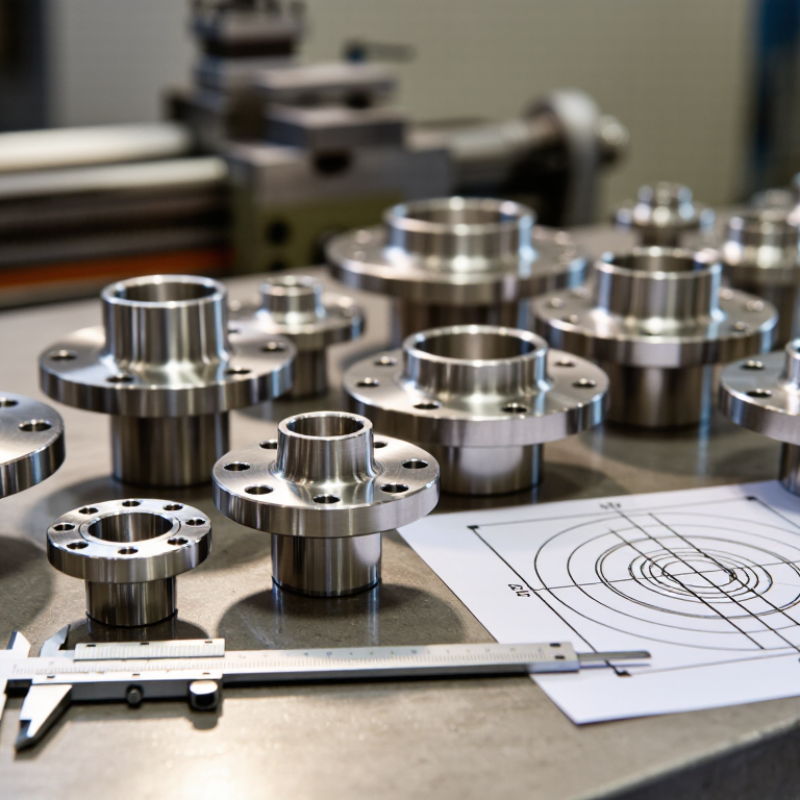
Lead Flanges: Definition, Properties, and Applications
China Best Lead Flange Manufacturers and Suppliers
Lead Flanges: Definition, Properties, and Applications
A lead flange is a flat connection component made from lead or incorporated into a lead-lined system. It joins pipe sections or equipment using bolts and a gasket. Its job is to create a sealed connection, not to carry heavy structural loads. Exact designs vary with pipe size, pressure, and the surrounding material.
Lead is dense, soft, and easy to shape. It can resist some corrosive environments, but performance depends on the specific chemical, temperature, and exposure time. It has low mechanical strength compared with steel. That matters. A flange may deform if bolts are tightened too firmly, so installation procedures and gasket selection deserve careful attention. The awkward part is that a material’s reputation for corrosion resistance can be mistaken for universal compatibility.
Lead flanges may appear in specialized piping, tanks, or equipment where lead’s chemical or shielding properties are required. They are not a default choice for ordinary high-pressure piping. Before specifying one, engineers should check operating conditions, joint design, and compatibility with adjoining materials. Lead also presents health risks if handled improperly; fabrication and maintenance need suitable controls to limit exposure. Small details, such as a damaged gasket or uneven bolt tightening, can undermine an otherwise carefully designed joint.
Common Lead Flange Types and Industry Standards
Lead flanges are used less often as stand-alone pressure components because lead is soft and can deform under load. In practice, a lead-lined steel flange or a fabricated lead-alloy connection may suit specific low-pressure, corrosion-control, or shielding applications. The distinction matters. A buyer should confirm whether the lead forms the flange itself or only lines its wetted surface.
Common flange faces include flat-face and raised-face designs. Slip-on and weld-neck styles usually describe the supporting steel flange, not a solid lead component. For steel mating flanges, ASME B16.5, ASME B16.47, EN 1092-1, or JIS B2220 may define dimensions and ratings, depending on the project. These standards do not automatically qualify lead as a pressure-bearing material. Check material specifications, operating temperature, pressure, and the exact flange interface.
Installation details can decide whether the connection lasts. Lead may creep when bolts are overtightened, so use a suitable gasket and a controlled tightening sequence. Inspect the flange face for dents, uneven lining, and exposed steel before assembly. Small flaws matter. One practical point is easy to miss: the connected steel flange may meet a standard while the lead layer does not. Request drawings and material records, then verify compatibility with the service conditions.
How Lead Flanges Are Manufactured and Quality-Tested
Lead flanges begin with a defined drawing, lead grade, and service requirement. Depending on their design, manufacturers may cast a near-net shape or machine the part from suitable stock. The flange face and bolt holes are then finished to specified dimensions. Lead is soft, so clamping and handling need care. Small marks matter.
Quality checks should compare measurements with the approved drawing, including thickness, outside diameter, hole spacing, and face flatness. Inspectors also look for cracks, folds, pores, and other visible defects. Material records help confirm the specified composition; hardness testing may be used when the specification calls for it. A bright finish is not proof of sound material.
Testing must match the flange’s intended use and the complete assembly. Where required, pressure or leak testing should follow an agreed procedure rather than an assumed universal test. Because lead can deform under load or over time, engineers should review contact pressure, support, and installation limits. One detail is easy to miss: a flange can pass dimensional checks yet still need careful evaluation at its sealing interface. That deserves a second look.
Lead-Flanged Assemblies: Reference Dimensions and Quality Checks
The chart shows selected reference dimensions, in inches, for an NPS 2 Class 150 raised-face steel flange under ASME B16.5: outside diameter, bolt-circle diameter, raised-face diameter, and flange thickness. These are reference dimensions for the steel backing flange, not universal dimensions for lead components. For lead-lined assemblies, verify dimensions against the approved drawing and inspect the lining and finished assembly against the applicable project requirements.
Key Factors for Choosing a Lead Flange Supplier in China
Choosing a lead flange supplier in China starts with the service conditions, not the lowest quotation. Specify the lead grade, flange dimensions, bolt pattern, face finish, and expected temperature and pressure. Ask for a material certificate that states composition and batch number, then check that the drawing matches the flange delivered. Small details matter: a few millimeters of misalignment can complicate installation and sealing. Verify machining tolerances and request inspection records for the actual production lot, not only a sample.
Supply reliability deserves equal attention. The USGS Mineral Commodity Summaries 2024 estimated global lead mine production at 4.4 million metric tons in 2023. That figure describes mined supply, not finished flange availability, so buyers should confirm lead sourcing, production capacity, and delivery schedules directly. Ask how the supplier handles dimensional inspection, packaging, and export documentation. For critical use, arrange independent testing or a pre-shipment inspection. Keep one caveat in mind: certificates do not replace checking the product itself, and an apparently complete quotation may still omit tooling, testing, or packing costs.
China’s Lead Flange Manufacturing and Supply Landscape
China’s lead-flange market is best viewed as a specialist, project-led niche, not a mass catalog sector. The USGS Mineral Commodity Summaries 2025 estimates China’s 2024 lead mine output at about 2 million metric tons, the world’s largest national output. The International Lead and Zinc Study Group’s October 2024 outlook forecast refined-lead surpluses of 49,000 tonnes in 2024 and 61,000 tonnes in 2025. These figures describe metal supply, not finished-flange capacity or quality.
In practice, suppliers may coordinate material selection, forming or casting, face machining, and inspection around customer drawings. Capabilities vary. Buyers should specify dimensions, bolt patterns, mating faces, service medium, and operating limits. Lead is soft; uneven bolt loading can deform a flange or compromise sealing. Do not assume a steel-flange standard transfers directly to lead. That detail is easy to miss.
Tips: Request a material certificate, dimensional inspection report, and sample approval before production. Confirm the sealing method and allowable loading with a qualified engineer. A low unit price is not enough.





