Best Feed Pellet Mill in China for Sale?
Choosing the best Feed Pellet Mill in China for sale involves more than comparing prices or advertised output. A machine that suits one farm may perform poorly with another feed mix, power supply, or production schedule. Capacity, pellet size, and the materials you plan to process all affect the right choice. Small details matter. For example, ask whether the quoted output is based on your actual ingredients or an ideal test material. Moisture, particle size, and formulation can change results.
A careful buyer should compare die and roller specifications, motor power, machine access for maintenance, and the availability of replacement parts. Request clear technical documents, a written quotation, and details about installation and after-sales support. If possible, discuss a sample run using your own feed ingredients; it can reveal practical limits that a brochure may not show. Ask how output is measured, what routine maintenance involves, and which parts are considered wear items. Still, even a detailed specification sheet cannot promise the same results at every site. That uncertainty deserves attention. This guide explains what to check when evaluating Chinese manufacturers, comparing models, and deciding whether a Feed Pellet Mill fits your operation. The goal is not to name a universal winner, but to help you make a better-informed purchase based on verifiable specifications, realistic production needs, and dependable supplier communication.
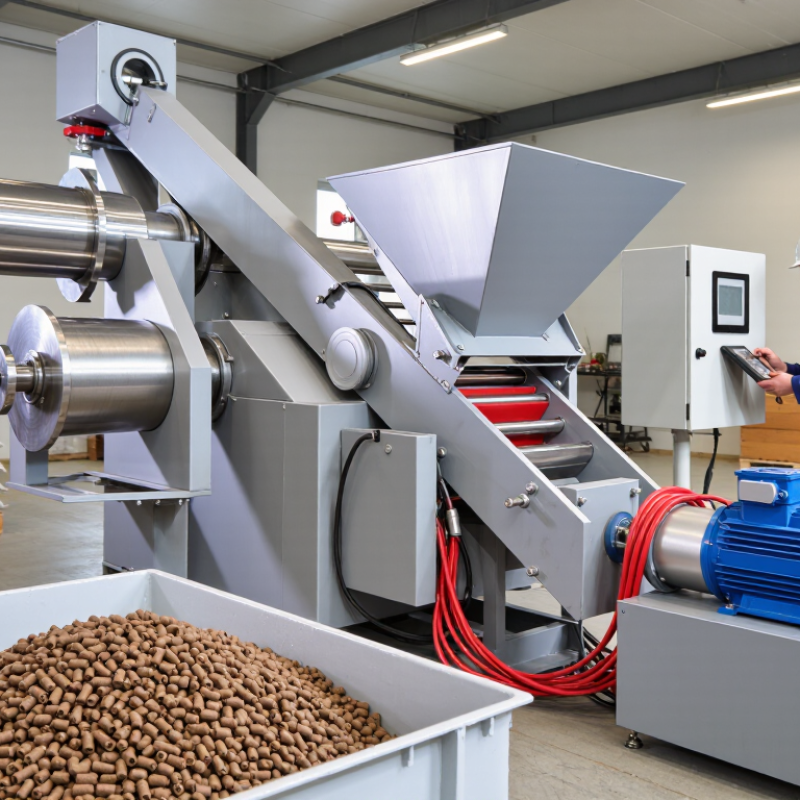
What a Feed Pellet Mill Is and How Its Main Components Work
A feed pellet mill turns a prepared mash into dense, uniform feed pellets. The 2024 Global Feed Survey estimated that global feed production reached 1.29 billion metric tons in 2023, across 142 countries. That scale helps explain why reliable pelletizing matters, but it does not determine the right mill size for a farm or feed plant.
The process starts at the feeder, which meters mash into the conditioner. There, steam and moisture soften the ingredients; the correct setting depends on the formula.
Next, rollers press the conditioned mash through holes in a rotating die. The die sets pellet diameter, while a knife trims length. The sequence matters.
Afterward, a cooler draws air through the warm pellets to reduce heat and surface moisture. A screen can remove fines for recycling. Operators should check roller wear, die condition, and pellet temperature regularly.
Small details count. A mill can appear simple, yet uneven feeding or poor conditioning can weaken pellets. Survey figures describe an industry, not a machine’s expected output. That distinction is easy to overlook.
Types of Feed Pellet Mills Available in China
Best Feed Pellet Mill in China for Sale?
Types of Feed Pellet Mills Available in China
China’s feed-mill market offers two common designs: flat-die and ring-die pellet mills. Flat-die machines suit smaller farms, trial batches, and workshops with limited floor space. Operators can inspect the die easily, but frequent production may require more manual attention. Ring-die mills are built for larger, continuous output. Their rotating die presses conditioned mash through radial holes, producing dense pellets for livestock or poultry. Aquaculture feed may need tighter control of size and water stability. One machine rarely handles every formula equally well.
The scale is significant. Alltech’s 2024 Agri-Food Outlook reported China produced about 262.7 million metric tons of animal feed in 2023. That figure describes the national industry, not demand for any single mill size. Small farms differ. Before buying, compare hourly capacity against your actual recipe, moisture level, and operating hours. Check die-hole diameter, motor power, spare-part access, and whether a conditioner is included. These details affect pellet consistency and energy use.
Tips: Ask the supplier to run your own ground ingredients through the machine. Measure pellet durability and output, not just the advertised capacity. A test batch may expose weak points. Also confirm cleaning access and die replacement time; these practical details are easy to overlook, even in a well-equipped plant.
Key Factors for Choosing a Pellet Mill for Your Feed
Choosing a feed pellet mill in China starts with the feed you actually make, not the largest output figure on a brochure. A poultry ration with fine grain behaves differently from a fibrous cattle mix. Ask the supplier to test your formula and report pellet durability, production rate, and power use under stated conditions. Numbers without the recipe are hard to compare.
Check the die and roller system, too. Die holes, compression ratio, and wear materials affect pellet shape and maintenance intervals. A mill that runs smoothly with a dry sample may struggle when moisture or fiber changes. That matters. Confirm that the motor suits your local power supply, and ask how quickly replacement rollers and dies can be obtained. A short service delay can stop a small feed line.
Consider the whole process, not just the machine. A conditioner may improve mixing and pellet quality, while a cooler helps remove heat and moisture before storage. I would not pretend one setup suits every farm. Even good specifications leave questions. Request a trial with your own ingredients, inspect the pellets after cooling, and check whether operators can clean and adjust the equipment safely. The cheapest quote may still cost more if parts, training, or commissioning are missing.
Best Feed Pellet Mill in China for Sale? Key Factors for Choosing a Pellet Mill for Your Feed
Typical pellet-diameter ranges are a practical starting point when selecting a mill die. Actual specifications vary with feed formulation, animal age, and local requirements.
Before purchasing, confirm that the mill can produce the required pellet sizes and that its die, capacity, and power match your feed and production needs. These ranges are general guidance, not universal standards.
How to Compare Chinese Manufacturers and Equipment Specifications
When comparing Chinese feed pellet mill manufacturers, start with the feed material and target output, not the largest capacity figure. A mill rated for 1.5 tonnes per hour may produce less with high-fiber ingredients or a fine pellet size. Ask for a test using your actual formula. Request the pellet diameter, moisture level, and measured output from that run. Numbers need context.
Compare the machine specifications line by line. Check motor power, die dimensions, roller design, and the materials used for wear parts. Ask how often the die and rollers typically need replacement under similar operating conditions. A clear parts list matters. So does a wiring diagram. I would be cautious if a quotation gives only a headline capacity and motor rating. It is easy to miss the cost of a spare die or the time needed to install it.
A manufacturer’s credibility is easier to assess with evidence than polished claims. Request recent workshop photos, an operating video, and contact details for customers using similar equipment, where available. Confirm what the price includes: commissioning support, operator training, manuals, and spare parts. Ask who handles technical questions after delivery, and how quickly common parts can be shipped. One detail may remain uncertain: a factory test cannot fully reproduce your daily production conditions. Check the assumptions, and record them before comparing offers.
What to Check Before Buying a Feed Pellet Mill in China
When comparing feed pellet mills for sale in China, begin with the feed you plan to process. A machine rated for one ton per hour may produce less with fibrous grass, damp mash, or a fine mixture. Ask for a test using your own recipe, and check pellet size, moisture, and output rate. A clear video should show the material entering the mill and the pellets leaving it.
Confirm that the motor voltage and frequency match your site. Check whether the die and rollers are easy to inspect and replace, and ask how long common spare parts take to ship. Small detail. Big cost. Clarify what the quoted price includes, such as controls, guards, installation guidance, and operator training. Request written warranty terms and a practical maintenance schedule.
Do not rely on a catalog capacity or polished demonstration alone. Ask what conditions produced the stated output, including feed preparation and operating hours. If possible, speak with a buyer processing similar ingredients. One imperfect point: a remote test cannot fully predict performance in your own workshop. Keep that uncertainty in your budget, and compare suppliers by documented test conditions, service responsiveness, and the clarity of their technical answers.





