


Choosing the China Best Carton Flow Racking Systems Manufacturer requires more than comparing prices. It demands practical warehouse knowledge, tested engineering, and dependable after-sales support. Carton Flow Racking Systems must match carton size, product weight, picking frequency, aisle width, and replenishment habits. A rack may look strong in a catalog. Real performance appears during a busy afternoon shift.
Warehouse strategist Dr. James A. Tompkins has said, “A warehouse is a place to move goods, not simply store them.” That principle fits carton flow design closely. The best Chinese manufacturer should help products move smoothly from replenishment lanes to picking faces. Look for adjustable rollers, durable frames, controlled carton speed, clear safety labeling, and accurate load calculations. Ask for factory photographs, project references, material specifications, and installation records. Small details matter. A poorly adjusted roller can stop a lightweight carton halfway down the lane.
Experience also deserves careful questioning. Does the supplier understand FIFO rotation? Can its engineers design around forklifts, conveyors, and human reach zones? Are replacement parts available after installation? These questions reveal more than polished brochures. No manufacturer is perfect. Even a strong design may need adjustment after operators test real cartons. That is normal, not failure.
This guide examines how to evaluate Chinese suppliers, compare manufacturing capability, and identify reliable Carton Flow Racking Systems for different warehouse conditions. The goal is practical judgment, not a shallow ranking. Safety, usability, production consistency, and long-term service should guide the final decision.
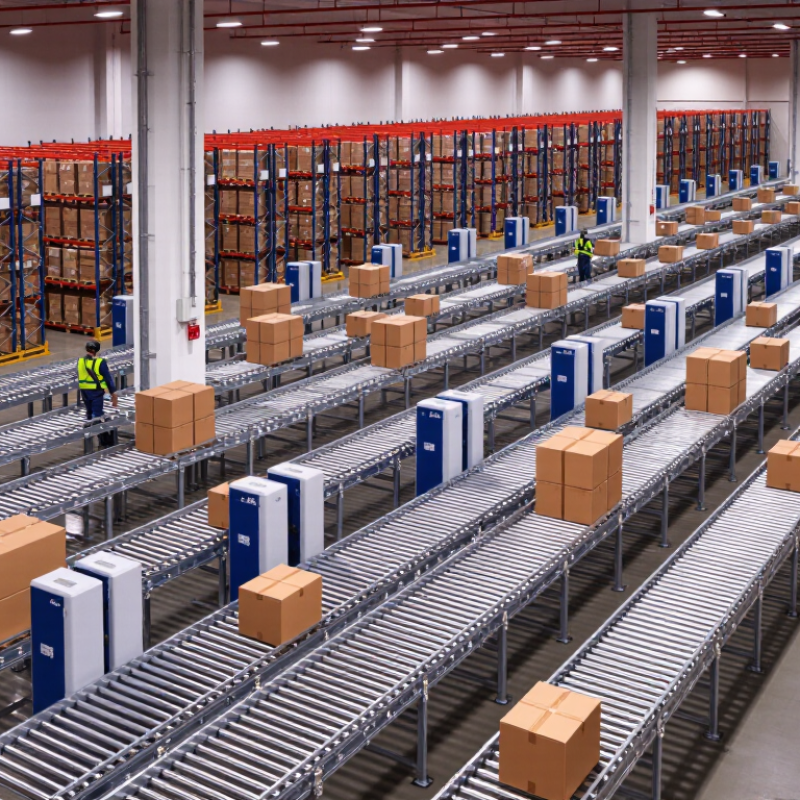
Carton flow racking is a gravity-fed storage system for cartons, totes, and small packages. Each lane uses rollers or wheels, allowing products to move from the loading side to the picking side. This layout supports FIFO, or first-in, first-out, because older stock reaches the picker first. It suits warehouses handling food packaging, spare parts, cosmetics, and fast-moving retail items.
Key terms include flow lane, pitch, load capacity, replenishment side, picking face, and lane depth. Operators load cartons from the rear and pick them from the front. A practical design usually combines adjustable dividers, entry guides, braking rollers, and lane labels. Poor carton dimensions can interrupt movement. Not every carton flows well. Testing real packaging is essential.
MHI’s 2024 Annual Industry Report stated that 55% of surveyed supply-chain professionals expected to increase technology investment within two years. Carton flow racking is not fully automated, but it can reduce walking and improve stock visibility when correctly planned. Experienced installers should check frame anchoring, roller spacing, floor levels, and maximum loads. A slightly steeper lane may improve movement, yet excessive slope can damage cartons. This detail is often underestimated.
When comparing a Chinese manufacturer, request load tests, material specifications, installation drawings, and evidence of quality control rather than relying on catalogue photos. The best system is the one that matches actual cartons, picking frequency, and replenishment habits.

Carton flow racks use gravity rollers to move cartons from the loading side to the picking side. Each SKU enters at the rear and leaves from the front. This physical sequence supports first-in, first-out inventory rotation without relying only on software. Clear labels, separated lanes, and adjustable dividers reduce picking mistakes. In a well-managed warehouse, operators can see the oldest cartons immediately.
The system works best when cartons have suitable dimensions, stable bases, and consistent weights. An experienced storage specialist checks these details before recommending roller pitch or lane depth. Heavy cartons may need stronger rollers. Small packages may require tighter spacing. Routine inspections should cover damaged rollers, loose frames, and blocked lanes. A simple date label also gives staff a visible control point.
Tips: Load new stock from the rear. Pick from the front. Keep one SKU per lane. Record exceptions daily. Clean rollers regularly.
No system guarantees perfect rotation alone. Mixed batches, incorrect labels, and rushed replenishment can interrupt FIFO. I have seen good layouts fail when workers bypass the loading side during busy periods. Training and sensible aisle access matter. Review slow-moving cartons each week, and adjust lane depth when product demand changes.
Carton flow rack design can increase storage density by 30–60% when aisle width, carton size, and picking routes work together. The result is not automatic. Poor layout can waste the same space it was meant to save.
A practical design starts with SKU data. Measure carton width, depth, height, weight, and daily picking frequency. Fast-moving cartons should sit between waist and shoulder height. Slower items can use upper or lower lanes. A 1.2-meter picking aisle may suit compact operations, while bulky cartons need more clearance. Every centimeter matters here.
Gravity rollers support front picking and rear replenishment. This creates a clear first-in, first-out workflow for suitable products. Lane dividers should prevent cartons from drifting sideways. Stop bars also need testing under real load conditions. Lightweight cartons may stall, while heavy cartons may move too quickly.
We often recommend a small trial section before full installation. It reveals problems that drawings miss. One early layout looked excellent on paper but caused awkward turning near the end bay. The aisle was technically usable, yet workers lost time there. That mistake changed the final spacing.
Density should never replace safe access. Check rack loading, floor capacity, emergency routes, and local requirements with qualified professionals. A reliable manufacturer should provide load calculations, installation guidance, and clear maintenance instructions.
Load capacity, roller pitch, and safety standards determine whether a carton flow lane performs reliably. Capacity must cover the heaviest carton, repeated handling, and uneven loading. Do not rate a lane by total rack weight alone. Check the permitted load for each roller, level, and support beam. Keep a safety margin for real warehouse variation.
Roller pitch should match the carton base, not only its length. Small cartons may need closer rollers to prevent tipping or stopping. Larger cartons can use wider spacing, but their weight may increase rolling resistance. Test several carton sizes with actual packaging. A lane that works empty may behave differently when full.
Safety depends on more than strong steel. Installers should verify frame anchoring, back stops, guide rails, and lane dividers. Operators need clear load limits and routine checks for bent rollers or loose connections. Standards such as EN 15635 and ANSI/RMI guidance can support inspection and maintenance planning, subject to local requirements. In practical warehouse assessments, poor carton tracking often comes from rushed commissioning. The design looked right on paper. It still needed adjustment. A short trial with live cartons can reveal friction, impact, and unsafe retrieval angles before daily use.
China Best Carton Flow Racking Systems Manufacturer?
Evaluating a Chinese carton flow racking manufacturer requires more than comparing quotations. Request factory photos, welding records, material certificates, and recent load-test reports. A reliable supplier should explain beam capacity, roller spacing, frame thickness, and corrosion protection clearly. Vague answers are warning signs. Visit the production site when possible. Check whether workers use calibrated torque tools and documented inspection points.
Use measurable quality data. Ask for static load results, roller start-force readings, frame deflection, and lane replenishment tests. For carton flow lanes, test the actual carton size, weight, and base material. A smooth sample carton can hide poor performance. MHI’s 2024 Annual Industry Report found that 55% of surveyed supply-chain leaders planned to increase technology investment. This supports careful data-based evaluation, not price-only purchasing.
Compare the manufacturer’s test method with relevant ISO and EN safety requirements. Request batch traceability from steel coil to finished frame. Grand View Research has reported continued growth in warehouse automation, increasing pressure for consistent equipment quality. Still, reports do not replace physical inspection. I would also ask for a third-party factory audit and a pilot lane before full production. One weakness remains: many suppliers provide excellent test samples, but their production consistency needs longer observation. Track roller alignment, noise, paint adhesion, and damaged cartons during a four-week trial.


For those larger-sized parts, or smaller quantity runs, we have 2 independent powder coat booths and ovens. The quality, durability and affordability of today’s powder coating finishes make this the process of choice for world-class companies.
Powder coating advantages over other forms of coating are many. Materials used in the Powder coating process can be metals and non-metals that come in a multitude of thicknesses, textures, colors, etc. Another of Powder coating’s biggest advantages over conventional coatings is its ability to create finishes in many different textures. Powder Coating Booths allow us the ability to apply these advantages to large products.
Tri-State Fabricators runs a full-service conveyor line for painting. Wet painting can provide protection or decoration to many different part styles. From start to finish, every project is easier to undergo random and point-based inspection by our skilled painting team.
Advantages to our Wet Paint Line are these lines start with product prep and ends with a thorough inspection of a high quality finished product. Our ability to complete large and small projects with a superior finish and doing so in a timely and economical fashion. This passes along the savings in production to our customers. When powder coating ins not an option, our Wet Paint Line gets the job done right the first time.
When the parts get big and heavy we roll-out our custom paint racks and oversize booth. By utilizing our partnerships with all the major paint brands, we can match virtually any color with wet paint.
The advantages of having access to a Wet Paint Booth are many. Large projects of many different shapes can be loaded into the booth. The Wet Paint Booth offers an environment that is much more controlled than a typical parts painting operation.
Not only are they used because of their controlled environment, but they’re are also advantageous when it comes to applying paint to parts that are needed in industries that require specialty coatings such as medical, aerospace, etc.
Our military forces have some very high standards when it comes to the finish of their vehicles and equipment. From the first pre-treatment step to final coat, it takes a great deal of knowledge and experience to protect the men and women of our armed forces. They deserve only the best, and Tri-State Fabricators provides it.
All of our processes are closely monitored by our staff and management teams. Both of which are highly trained in the processes of metal fabrication and finishing. Tri-State Fabricators’ goal is to always fully satisfy each and every customer, including the military. We will always put a 110% into what we do.
Abrasive media blasting is an excellent way to remove old paint, rust, and increase the paint/powder adhesion. Glass beads produce a much smoother and brighter finish than angular abrasives; leaving the part clean yet without any dimensional change. Chemically inert and environmentally friendly, we can recycle our beads approximately 30 times; making them a more preferred method of metal cleaning or surface finishing.
Advantages to Glass Bead Blasting are many. Glass bead blast media is used when a project is needing rough surfaces need to become smooth for applications of coatings such as paint. It is typically used to clean paint and rust from a product surface without deforming the surface it is being used on. Overall, compared to many other blasting media, Glass Bead Blasting is a very economical choice and those savings are always passed on to our customers.
Tri-State Fabricators utilize a zinc phosphate wash to clean and etch the material to ensure the best paint adhesion possible. The unique design of our 3-stage wash system does the work like a 5-stage. From Cleaning and rinsing to conversion coating and post-treatment, Our Part Washing process is a complete service and works throughout the fabrication service and the finishing service.
Along with the previously mentioned benefits, Curing is a vital chemical reaction that leaves the product finish hard and relatively safe from mild abrasion and aggressive corrosion. This process can be done in more than one way; ambient air-dry or in curing ovens at temps that exceed 240°.
From fixing paint mistakes (someone else’s of course) to simply cleaning our paint line hooks, our burn-off oven is put to good use. After a quick burn-off, a little clean up, and a fresh coat of paint, your parts will look better than new.
Why does our Burn-Off Oven work so well? Because super heating the air around parts turns the materials into ashes. From paint and powder coatings to rubber and machining oils, high temps do the job without degrading the integrity of the part.
Masking is a vital part of producing high quality products. We have die-cut masking patterns to protect machined surfaces as well as a wide range of plugs and caps to protect threaded holes and bolts. We provide permanent and temporary masking.
Masking allows the selected sections of a product to be protected from a fabrication or finishing service. This can be with both chemicals when etching and tapes, paints when only finishing just a section of the product. Masking is great in aiding the customization process of a project.
Screen printing is a photographic process that transfers artwork onto a porous nylon screen which allows colored ink to flow through the screen and be deposited on an aluminum or plastic component. We can generally have just about any design created onto a screen for your parts.
Some of the advantages of Screen Printing are, brand recognition for your business displaying on your products, assembly instructions, product warnings/hazards, etc. Tri-State Fabricators produces Screen Printing of the highest quality so you know it’s durable.
Metal Finishing is the art of treating the exterior portion of product, often metal but can also be made of other materials, so that the surface is clean and free of any debris. Then the process of applying coats or either paint of powder coat takes place. This coating process improves the quality of the product in both appearance and resistance to wear and corrosion.
Tri-State Fabricators, Inc., understands that a project typically isn’t complete until a high-quality finish has been added to your product. This is why our painting and powder coating teams continuously inspect the products throughout the Metal Finishing process.

