China Best Ammonium Sulfate Nitrogen Suppliers?
Choosing China’s best Ammonium Sulfate Nitrogen suppliers takes more than comparing prices or polished product pages. Buyers should look for clear specifications, consistent batch quality, and responsive technical support. Details matter. Ask for current product data, including nitrogen and sulfur content, moisture, particle size, and packaging options. A certificate of analysis can help, but it should match the batch being offered. Where practical, compare a sample with the supplier’s stated specifications before placing a larger order.
A dependable supplier should also explain its production capacity, quality checks, traceability practices, and experience serving agricultural or industrial customers. Request relevant documents, such as safety data sheets and quality certificates, and confirm their scope and validity directly. Communication is another useful signal: precise answers about lead times, storage, and shipping are more convincing than broad promises. Very low quotations deserve careful review. They may reflect different grades, packaging, or delivery terms, rather than a genuine saving.
This guide introduces practical ways to assess Chinese suppliers without treating any single company as universally “best.” Needs vary by crop, soil conditions, application method, and local requirements. Even a thorough review has limits; documents cannot replace independent testing or a clear purchase agreement. Use the comparisons as a starting point, then verify critical details with qualified advisers and the supplier. Small checks can prevent costly surprises.
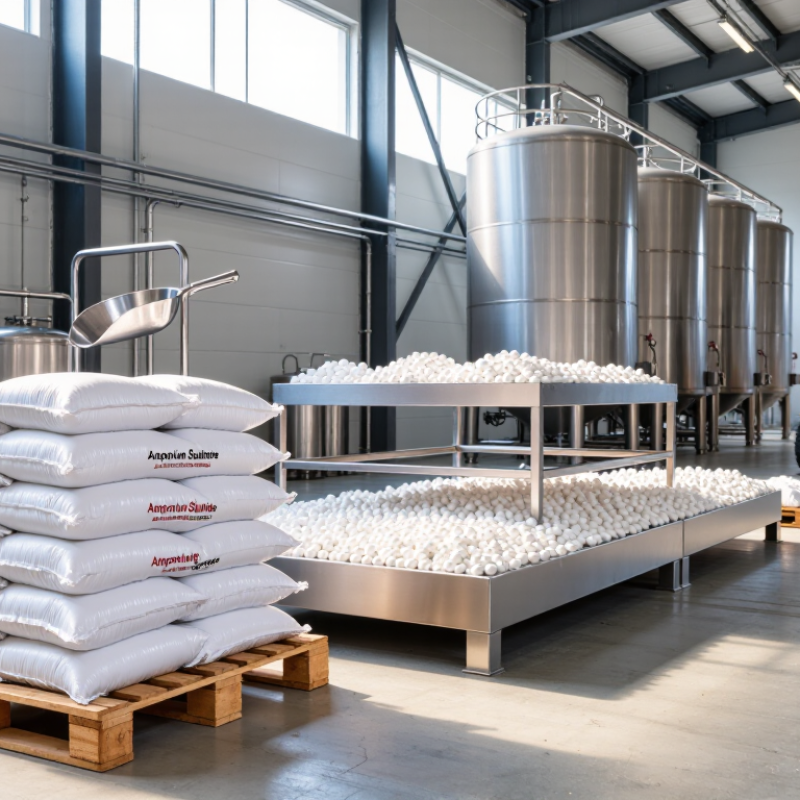
Ammonium Sulfate as a Nitrogen Fertilizer: Composition and Uses
Ammonium sulfate, with the formula (NH₄)₂SO₄, is a widely used nitrogen fertilizer that also supplies sulfur. A typical grade contains about 21% nitrogen and 24% sulfur, though the guaranteed analysis should be checked for each product. Its nitrogen is in ammonium form, which plants can use after uptake from the soil. Small crystals, real impact. The sulfur supports protein formation and can be valuable where soil tests show a deficiency.
This fertilizer suits crops with meaningful nitrogen and sulfur needs, including some cereals and oilseeds. It dissolves readily, so rainfall or irrigation can move nutrients into the root zone. Application rates should follow soil tests, crop needs, and local guidance; excess nitrogen is not a harmless shortcut. Repeated use may contribute to soil acidification, especially in already acidic soils. That detail is easy to overlook.
For buyers comparing suppliers in China, request a current certificate of analysis and confirm nitrogen and sulfur content, moisture, and granule consistency. Consistent sizing helps with storage and even spreading. A low price alone says little about field performance. Nor does a neat label replace a soil test. The practical choice depends on crop demand, soil condition, and whether sulfur is actually needed.
Ammonium Sulfate as a Nitrogen Fertilizer: Composition and Uses
Typical commercial ammonium sulfate is labeled 21-0-0-24S: it supplies about 21% nitrogen and 24% sulfur by weight, with no declared phosphate or potash. It is used to provide nitrogen and sulfur to crops; nutrient content can vary by product.
Key Quality Standards for Ammonium Sulfate Products
For buyers comparing China ammonium sulfate suppliers, quality starts with verified composition, not a bright-white appearance. The International Plant Nutrition Institute’s nutrient-source guide reports typical ammonium sulfate at about 21% nitrogen and 24% sulfur. Ask for a recent batch certificate showing measured nitrogen, sulfur, moisture, and free acidity. The declared analysis should match the delivered lot.
Physical consistency matters too. Check the agreed particle-size range, fines, caking, and water-insoluble residue; these affect storage, spreading, and dissolution. Request representative samples and compare them with the supplier’s certificate using an independent laboratory when volumes justify it. A clean-looking sample can still vary chemically. One common blind spot is accepting a specification sheet without confirming its test method or sampling date.
Tips: Compare results against your purchase specification and applicable product standard. Keep sealed samples from each shipment. Small details matter: moisture can rise in poor storage, and excessive fines may complicate handling. A perfect checklist is not enough; inspect actual batches.
Overview of China’s Ammonium Sulfate Supplier Landscape
China’s ammonium sulfate supply is closely tied to industrial by-product streams. Producers recover it from caprolactam manufacturing, coke-oven gas treatment, and some flue-gas processes. This means supply locations often cluster around chemical plants and steel or coking hubs. Product form can vary, from fine crystals to compact granules, with differences in moisture, particle size, and handling performance.
The International Fertilizer Association’s 2024 short-term outlook projected global fertilizer use at 192.5 million tonnes of nutrients for 2023/24. That figure covers all major fertilizers, not ammonium sulfate alone, but it shows the wider market’s scale. For buyers comparing Chinese suppliers, published capacity is only a starting point. Check recent production records, batch certificates, nitrogen content, moisture, particle-size distribution, packaging, and port logistics. The picture is not perfectly tidy: by-product output may shift when a plant changes its main production rate.
Tips: Ask for a recent certificate of analysis and a representative sample. Confirm whether quoted tonnage is actual product weight, and check how granules behave after transport or storage. Small details matter.
How to Evaluate and Compare Chinese Suppliers
China Best Ammonium Sulfate Nitrogen Suppliers?
How to Evaluate and Compare Chinese Suppliers
Supplier comparisons should begin with the same specification, not the lowest quoted price. Commercial ammonium sulfate commonly contains about 21% nitrogen and 24% sulfur, but particle size, moisture, and solubility can vary. Request a recent certificate of analysis, then compare it with an independent test from the actual shipment batch. Check whether the sample is crystalline or granular; a handful in a clear cup can reveal uneven sizing or excess dust.
Small details matter.
The International Fertilizer Association’s 2024 outlook estimated global fertilizer demand at roughly 205 million tonnes of nutrients for 2024, covering nitrogen, phosphate, and potash—not ammonium sulfate alone. This broader demand figure gives context, but it cannot verify a supplier’s capacity or product quality. Ask for batch traceability, production capacity, packing details, and recent shipment records.
Compare delivered cost, including freight and handling, rather than factory price alone. A polished certificate is not enough; match its batch number to the bags and shipping documents. Even a careful checklist has limits. I would still ask how the supplier handles a moisture or quality dispute.
Sourcing, Shipping, and Regulatory Considerations
China Best Ammonium Sulfate Nitrogen Suppliers? Sourcing, Shipping, and Regulatory Considerations
Choosing an ammonium sulfate supplier in China starts with a clear product specification. Confirm nitrogen and sulfur content, moisture limits, particle size, and whether the material is granular or crystalline. Request a recent certificate of analysis and safety data sheet, then check that the documents match the shipment lot. Ask how the producer controls batch consistency and handles complaints. Small details matter. A low quotation is not proof of dependable quality; compare packaging, payment terms, and delivery estimates as well.
Shipping needs practical attention. Ammonium sulfate can cake when exposed to moisture, so confirm whether bags have suitable liners and how containers will be protected from rain. For bulk orders, agree on loading weight, inspection points, and what happens if cargo arrives wet or damaged. Ask for evidence. Before booking, verify the current product classification and transport requirements against the safety data sheet and carrier guidance. Import rules differ by destination: check customs classification, labeling, documentation, and any local fertilizer registration or import requirements with the relevant authorities. Rules can change, and a checklist can still miss a local detail. A qualified customs broker can help confirm the paperwork before cargo leaves port.





