


China Best Hydraulic Pedal Lever Valve Supplier?

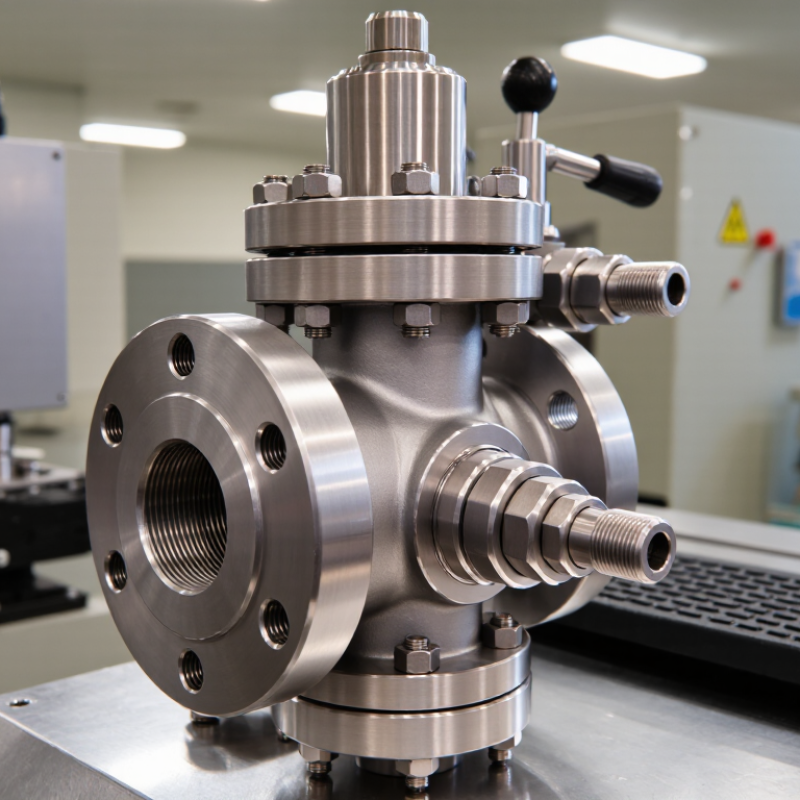
Choosing the right China Hydraulic Pedal Lever Valve supplier requires more than comparing prices and catalog photographs. These valves control hydraulic flow through foot-operated movement, often in compact machines, mobile equipment, and industrial control panels. A reliable supplier should explain pressure ratings, port sizes, spool configurations, sealing materials, and expected service life. Small details matter. A stiff pedal can delay machine response. A leaking connection can stain the workshop floor and interrupt production.

Fluid-power educator Anthony Esposito wrote, “The purpose of fluid power is to transmit and control energy.” That principle remains practical when evaluating a Hydraulic Pedal Lever Valve manufacturer. The best supplier should connect design choices with real operating conditions, including oil temperature, contamination levels, pedal frequency, and installation space. Requesting test records, dimensional drawings, material specifications, and sample feedback can reveal more than attractive marketing language. Factory experience also matters, especially when engineers can adjust spring force, detent action, or mounting dimensions.

China offers a broad manufacturing base, but quality is not uniform. Some suppliers provide excellent machining and inspection. Others may rely too heavily on standard claims. No supplier is perfect. A thoughtful buyer should question unclear tolerances and verify actual test methods. Look for traceable quality procedures, responsive technical support, and consistent communication before placing a large order. This guide examines supplier capabilities, product performance, customization, certification evidence, and after-sales support. The goal is not to name a winner too quickly, but to identify the supplier that performs reliably under real hydraulic pressure.
China Best Hydraulic Pedal Lever Valve Supplier?

Hydraulic Pedal Lever Valve Basics: ISO 4413 Safety and 250–315 bar Ratings

China Best Hydraulic Pedal Lever Valve Supplier?

A hydraulic pedal lever valve converts foot movement into controlled fluid flow. For industrial systems, ISO 4413 requires risk assessment, pressure control, safe maintenance, and protection against unexpected movement. A 250–315 bar rating does not mean every installation can operate safely at that pressure. It must match the valve body, seals, tubing, fittings, and actuator. Rated pressure is not burst pressure. Confusing them is a costly mistake.

Grand View Research estimated the global hydraulic equipment market at about USD 49.8 billion in 2023, with continued growth through 2030. This expansion increases demand for compact manual controls, but market growth does not replace engineering checks. During practical testing, technicians should inspect pedal return, mounting stability, leakage, and response under cold and warm oil conditions. Small differences matter. A stiff pedal may indicate contamination, poor alignment, or excessive spring force.

Tips: Check the ISO 4413 documentation before purchasing. Confirm continuous pressure, peak pressure, port size, fluid compatibility, and test standards in writing. Ask for pressure-test records and material details. Do not select a 315 bar valve only because the number looks stronger. I have seen specifications appear complete, yet omit temperature limits or return-line pressure. That omission deserves a second review.

China Best Hydraulic Pedal Lever Valve Supplier? - Hydraulic Pedal Lever Valve Basics: ISO 4413 Safety and 250–315 bar Ratings

Typical engineering reference values for hydraulic pedal-operated directional control valves. Confirm final specifications, compatibility, and safety arrangements with the valve manufacturer and system designer.
Evaluation Dimension Typical Specification or Range Technical Meaning Selection and Safety Notes
Valve function Manual pedal-operated directional control valve Uses foot movement to shift a spool and control hydraulic flow to an actuator. Choose a guarded or shrouded pedal where accidental operation could create a hazard.
Common spool configurations 3/2, 4/2, and 4/3 directional configurations The first number indicates ports; the second indicates spool positions. A 4/3 valve may provide neutral, actuator-extend, and actuator-retract positions. Check the exact center condition.
Nominal port size G1/4, G3/8, G1/2, or equivalent SAE port options Port size affects connection compatibility and practical flow capacity. Do not select solely by thread size; compare rated flow, pressure drop, sealing method, and hose requirements.
Rated working pressure 250–315 bar typical product class The maximum continuous pressure permitted by the specific valve design and documentation. The complete circuit must be rated for the highest possible pressure, including pressure spikes.
Pressure range to verify Working, peak, and proof-test pressure Working pressure is continuous service; peak pressure is short-duration capability; proof pressure is a test value. Never use proof or peak pressure as the normal operating pressure unless the technical documentation explicitly allows it.
Typical flow capacity Approximately 20–80 L/min, depending on bore, spool, and pressure drop Flow capacity determines actuator speed and energy loss through the valve. Use the manufacturer’s flow-versus-pressure-drop curve rather than port size alone.
Actuation method Direct mechanical pedal or pedal with lever linkage Mechanical input shifts the spool without electrical power. Evaluate pedal travel, operating force, return mechanism, mounting rigidity, and operator ergonomics.
Return and detent options Spring return, maintained position, or detented position Defines whether the spool returns automatically or remains in the selected position. For safety-critical motion, a spring-return or monitored neutral arrangement may be preferable, subject to risk assessment.
Hydraulic fluid Mineral-based hydraulic oil commonly specified around ISO VG 32–68 Fluid viscosity and cleanliness influence leakage, wear, response, and service life. Confirm seal compatibility before using water-glycol, fire-resistant, biodegradable, or other specialty fluids.
Operating temperature Common design range: approximately −20°C to +80°C Temperature limits apply to the valve, seals, fluid, and surrounding environment. Actual limits vary by seal material and fluid. Verify cold-start viscosity and maximum fluid temperature.
Mounting orientation Panel, base, or manifold mounting Mounting style affects installation space, service access, and mechanical alignment. Provide positive mechanical support and prevent side loads on the valve body or pedal linkage.
ISO 4413 relevance Hydraulic-system safety principles and general rules ISO 4413 addresses safe design, installation, operation, maintenance, and risk reduction for hydraulic systems. Assess pressure limitation, safe isolation, stored energy, hose routing, guarding, leakage control, and emergency procedures.
Pressure protection System relief valve sized for the circuit Limits system pressure to protect the valve, actuator, hoses, and connected equipment. A directional valve is not automatically a substitute for a correctly adjusted and accessible relief valve.
Neutral-position behavior Closed center, open center, tandem center, or float-related design The center spool land arrangement determines pump unloading, actuator holding, and downstream circuit behavior. Match the center condition to fixed-displacement or variable-displacement pump requirements.
Leakage and cleanliness Low internal leakage; filtration commonly selected near ISO 4406 cleanliness target 18/16/13 or cleaner, as required Contamination can cause spool sticking, accelerated wear, and shortened service life. The correct cleanliness level depends on the whole hydraulic system and component sensitivity; follow the equipment specification.
Supplier qualification criteria Documented pressure, flow, cycle, leakage, material, and inspection data Objective technical evidence helps compare equivalent valves without relying only on price. Request dimensional drawings, performance curves, inspection records, traceability information, and replacement-seal availability.

Key Performance Data: Flow Capacity, Response Time, Leakage, and Cycle Life

China Best Hydraulic Pedal Lever Valve Supplier?

A reliable pedal lever valve should be judged by measured performance, not catalogue appearance. Flow capacity commonly ranges from 20 to 80 L/min in compact mobile equipment. However, port size, pressure drop, and oil viscosity can change the result. Ask suppliers for flow curves tested under ISO 4413:2010 safety practices.

Response time deserves a real test. Published hydraulic valve evaluations often report spool response between 30 and 80 milliseconds. Faster is not always better. Excessive sensitivity may cause machine shock or operator fatigue. Request rise-time data at cold-start conditions, not only at 40°C oil temperature. The ISO 10771-1 fatigue-testing approach also supports pressure-cycle verification, although it does not define one universal service life.

Leakage should be recorded in millilitres per minute at rated pressure. A practical purchasing target is below 0.1 to 1.0 mL/min, depending on valve size and application. Internal leakage can increase when contamination exceeds ISO 4406 cleanliness limits. Cycle life is often quoted between one and five million actuations, but this figure needs test conditions. Pressure, load, pedal force, and fluid cleanliness must be stated. I would treat any unsupported “five-million-cycle” claim cautiously. Real workshop testing may expose weaknesses that laboratory figures miss. Ask for raw test records, calibration dates, sample size, and failure definitions before selecting a supplier.

China Supplier Evaluation: Certifications, Testing Standards, and 98%+ QC Targets

China Best Hydraulic Pedal Lever Valve Supplier?

A reliable supplier should prove quality through records, not attractive claims. Check ISO 9001 certification, audit dates, production scope, and corrective-action history. Certification alone does not confirm valve performance. Ask whether certificates cover the actual factory and product process.

Testing should reflect field use. Each production lot needs pressure, leakage, return-force, and dimensional checks. A calibrated test bench should record gauge accuracy and test duration. ISO 4413 principles can guide hydraulic safety and system testing. Review material certificates, heat-treatment records, and spool surface measurements. Small scratches can cause internal leakage.

Look closely at the 98%+ QC target. What does 98% mean? It should state the inspection stage, sample size, defect definition, and rework treatment. A valve passing assembly inspection may still fail after endurance cycling. Request traceable lot numbers, inspection photos, calibration logs, and failure reports. Useful evidence includes repeated pedal tests under low temperature, dust exposure, and pressure variation. Real results matter.

Be careful here. A high percentage can hide recurring minor failures. A stronger supplier studies rejected parts instead of deleting them from statistics. Trial orders should verify pedal feel, neutral return, mounting accuracy, and leakage after storage. Independent inspection adds confidence, although it increases cost and may slow delivery. Reliability needs patience.

Product Comparison: Manual Control, Port Sizes, Pressure Classes, and Materials

China Best Hydraulic Pedal Lever Valve Supplier?

Selecting a hydraulic pedal lever valve requires more than comparing price. In field installations, manual control gives direct feedback, but pedal travel can become tiring during repeated cycles. A 2024 Grand View Research report estimated the global hydraulic valves market at over USD 8 billion, showing strong demand for reliable, application-specific designs. However, market growth does not guarantee correct sizing.

Port size affects flow speed and pressure loss. Common choices include G1/4, G3/8, and G1/2 connections. A larger port may reduce restriction, but it can increase valve weight and installation space. Pressure classes should match the circuit, not only the pump rating. ISO 4413 recommends controlling pressure, leakage, and mechanical hazards within hydraulic systems. I usually check the rated flow at the actual working pressure. Catalog figures can look optimistic.

Tips: Confirm the mounting interface against ISO 4401 when applicable. Choose steel for impact resistance and aluminum for lighter assemblies. Stainless steel may suit humid environments, but it can raise cost. Verify seal compatibility with the selected hydraulic fluid. I once underestimated contamination risk; the valve operated well during testing, then responded slowly onsite. That mistake was avoidable. Ask for pressure-test records, material certificates, and cycle-test data before approving a supplier.

How to Select China’s Best Supplier: Quality, Customization, Lead Time, and Cost

Selecting China’s best hydraulic pedal lever valve supplier requires more than comparing online prices. Start with evidence of engineering experience. Ask for pressure test records, material certificates, and dimensional inspection reports. A reliable factory should explain spool design, sealing choices, flow ratings, and operating temperature limits clearly. Request samples from current production, not specially polished prototypes. Small details matter. Check pedal return force, mounting accuracy, surface finish, and leakage after repeated cycling. In my sourcing experience, unclear test methods caused more trouble than visible defects.

Customization should begin with a usable drawing and application data. Share port size, circuit pressure, installation space, control angle, and expected duty cycle. The supplier should confirm tolerances before quoting. For a custom lever, review spring feel, detent position, thread type, and protective coating. Ask whether tooling charges and engineering revisions are included. A thoughtful supplier can suggest changes without overriding the operator’s needs. This is where judgment matters. The cheapest design may be difficult to service.

Lead time needs a production plan, not a hopeful date. Confirm sample approval, raw material availability, machining capacity, inspection points, and shipping preparation. Get milestones in writing. Cost should include tooling, testing, packaging, spare seals, and possible rework. Compare total delivered cost, not unit price alone. Still, forecasts can fail. A delayed shipment or revised drawing may expose weak communication. Keep a small contingency and require prompt updates when conditions change. Supplier audits, video inspections, and traceable records improve confidence, but they never replace practical testing in the intended hydraulic system.

How to Select China’s Best Hydraulic Pedal Lever Valve Supplier

This 100-point procurement model prioritizes quality and customization while also considering lead time and total cost. Buyers should validate each supplier through technical documents, samples, production capacity, inspection records, and written quotations.

The percentages represent a practical evaluation framework rather than company-specific performance data.

Powder Coat Booths

For those larger-sized parts, or smaller quantity runs, we have 2 independent powder coat booths and ovens. The quality, durability and affordability of today’s powder coating finishes make this the process of choice for world-class companies.

Powder coating advantages over other forms of coating are many. Materials used in the Powder coating process can be metals and non-metals that come in a multitude of thicknesses, textures, colors, etc. Another of Powder coating’s biggest advantages over conventional coatings is its ability to create finishes in many different textures. Powder Coating Booths allow us the ability to apply these advantages to large products.

Wet Paint Line

Tri-State Fabricators runs a full-service conveyor line for painting. Wet painting can provide protection or decoration to many different part styles. From start to finish, every project is easier to undergo random and point-based inspection by our skilled painting team.

Advantages to our Wet Paint Line are these lines start with product prep and ends with a thorough inspection of a high quality finished product. Our ability to complete large and small projects with a superior finish and doing so in a timely and economical fashion. This passes along the savings in production to our customers. When powder coating ins not an option, our Wet Paint Line gets the job done right the first time.

Wet Paint Booths

When the parts get big and heavy we roll-out our custom paint racks and oversize booth. By utilizing our partnerships with all the major paint brands, we can match virtually any color with wet paint.

The advantages of having access to a Wet Paint Booth are many. Large projects of many different shapes can be loaded into the booth. The Wet Paint Booth offers an environment that is much more controlled than a typical parts painting operation.

Not only are they used because of their controlled environment, but they’re are also advantageous when it comes to applying paint to parts that are needed in industries that require specialty coatings such as medical, aerospace, etc.

Military CARC

Our military forces have some very high standards when it comes to the finish of their vehicles and equipment. From the first pre-treatment step to final coat, it takes a great deal of knowledge and experience to protect the men and women of our armed forces. They deserve only the best, and Tri-State Fabricators provides it.

All of our processes are closely monitored by our staff and management teams. Both of which are highly trained in the processes of metal fabrication and finishing. Tri-State Fabricators’ goal is to always fully satisfy each and every customer, including the military. We will always put a 110% into what we do.

Glass-Bead Blasting

Abrasive media blasting is an excellent way to remove old paint, rust, and increase the paint/powder adhesion. Glass beads produce a much smoother and brighter finish than angular abrasives; leaving the part clean yet without any dimensional change. Chemically inert and environmentally friendly, we can recycle our beads approximately 30 times; making them a more preferred method of metal cleaning or surface finishing.

Advantages to Glass Bead Blasting are many. Glass bead blast media is used when a project is needing rough surfaces need to become smooth for applications of coatings such as paint. It is typically used to clean paint and rust from a product surface without deforming the surface it is being used on. Overall, compared to many other blasting media, Glass Bead Blasting is a very economical choice and those savings are always passed on to our customers.

Part Washing

Tri-State Fabricators utilize a zinc phosphate wash to clean and etch the material to ensure the best paint adhesion possible. The unique design of our 3-stage wash system does the work like a 5-stage. From Cleaning and rinsing to conversion coating and post-treatment, Our Part Washing process is a complete service and works throughout the fabrication service and the finishing service.

Along with the previously mentioned benefits, Curing is a vital chemical reaction that leaves the product finish hard and relatively safe from mild abrasion and aggressive corrosion. This process can be done in more than one way; ambient air-dry or in curing ovens at temps that exceed 240°.

Burn-Off Oven

From fixing paint mistakes (someone else’s of course) to simply cleaning our paint line hooks, our burn-off oven is put to good use. After a quick burn-off, a little clean up, and a fresh coat of paint, your parts will look better than new.

Why does our Burn-Off Oven work so well? Because super heating the air around parts turns the materials into ashes. From paint and powder coatings to rubber and machining oils, high temps do the job without degrading the integrity of the part.

Masking

Masking is a vital part of producing high quality products. We have die-cut masking patterns to protect machined surfaces as well as a wide range of plugs and caps to protect threaded holes and bolts. We provide permanent and temporary masking.

Masking allows the selected sections of a product to be protected from a fabrication or finishing service. This can be with both chemicals when etching and tapes, paints when only finishing just a section of the product. Masking is great in aiding the customization process of a project.

Screen Printing

Screen printing is a photographic process that transfers artwork onto a porous nylon screen which allows colored ink to flow through the screen and be deposited on an aluminum or plastic component. We can generally have just about any design created onto a screen for your parts.

Some of the advantages of Screen Printing are, brand recognition for your business displaying on your products, assembly instructions, product warnings/hazards, etc. Tri-State Fabricators produces Screen Printing of the highest quality so you know it’s durable.

Metal Finishing

Metal Finishing is the art of treating the exterior portion of product, often metal but can also be made of other materials, so that the surface is clean and free of any debris. Then the process of applying coats or either paint of powder coat takes place. This coating process improves the quality of the product in both appearance and resistance to wear and corrosion.

Tri-State Fabricators, Inc., understands that a project typically isn’t complete until a high-quality finish has been added to your product. This is why our painting and powder coating teams continuously inspect the products throughout the Metal Finishing process.


