


China has become an important source of poultry equipment, and choosing a Chicken Layer Cage supplier takes more than comparing prices. Farm owners need to consider bird capacity, ventilation, wire quality, feeder access, and cleaning routines. Small details matter. A drinker set too high, or a feeder poorly aligned, can complicate daily work.
Poultry scientist Dr. David B. Karcher’s research offers a useful principle: housing decisions should be assessed through measurable bird welfare and farm performance, not appearance alone. This is a paraphrase, not a direct quotation. It also points to a practical question for buyers: how will the system perform after months of use, when dust, moisture, and routine maintenance become part of the picture?
This article examines what to look for in a China-based Chicken Layer Cage manufacturer and supplier, from materials and production consistency to customization, spare parts, and communication. Ask for clear specifications, product photos, and realistic lead times. Where available, review factory quality procedures and request references from comparable farms. No supplier can make every installation identical. A cage system that works well in one building may need changes in another. That deserves a closer look. The goal is not to accept confident claims at face value, but to compare documented details with your farm’s layout, management practices, and applicable requirements.
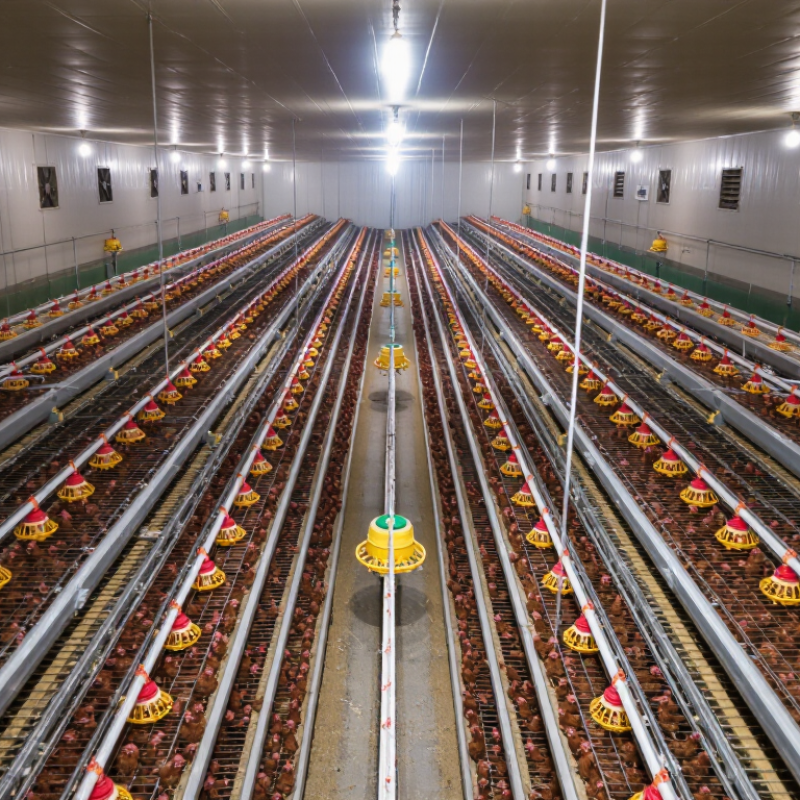
A layer cage system houses laying hens in organized compartments, with equipment arranged for routine feeding, watering, egg collection, and manure removal. A typical setup includes feed troughs, nipple drinkers, and egg belts. These parts help workers deliver feed consistently and collect eggs with less handling. That can reduce breakage, though results depend on maintenance and flock management.
A well-adjusted system can make feed and water access easier to monitor and keep eggs moving from the nest area to collection points. It does not guarantee higher output. Poor belt alignment, blocked drinkers, or uneven ventilation can still affect flock performance. Design choices also need to reflect current welfare expectations and applicable standards.
FAOSTAT’s Crops and Livestock Products database reports approximately 91.7 million tonnes of hen eggs in shell produced worldwide in 2022.
Tips: Check drinker flow and belt alignment during daily rounds. Look for wet spots, cracked eggs, and feed buildup. Small faults matter. Record recurring issues; a system that looks efficient on paper may need practical adjustments in the house.

A layer-cage system depends on several parts working together: cage frames, feed troughs, drinker lines, egg belts, manure belts, and ventilation equipment. Frames support the birds and provide access to feed and water. Egg belts carry eggs toward collection points, while manure belts help remove waste from beneath the tiers. Small alignment errors can cause cracked eggs or uneven belt movement.
The FAO Statistical Yearbook 2023 reports that global egg production reached about 86 million tonnes in 2021. That scale makes reliable feeding, water delivery, and egg collection important design considerations.
Common layouts include A-frame systems, often used in smaller buildings, and H-frame systems, which can accommodate multiple tiers. The right choice depends on building width, flock size, service access, and ventilation capacity. More tiers are not automatically better; workers still need room to inspect drinkers and clear blockages.
Tips: Check nipple flow and belt tracking before placement. Keep spare connectors on site. One detail is easy to miss: uneven floor levels can affect both manure removal and egg movement. A simple commissioning checklist helps, though it cannot replace regular hands-on inspection.
China plays a significant role in layer cage manufacturing through its broad network of metalworking, welding, coating, and equipment suppliers. This concentration can help factories source wire, frames, feeding lines, and drinker systems within one production region. The result is often shorter coordination between component makers and assembly teams. Details matter. A consistent wire diameter, smooth welds, and an even protective coating can affect cage fit and service life. Buyers should ask how samples are checked against production batches, not just how quickly an order can be shipped.
Supply capability depends on more than factory size. Exporters need clear drawings, accurate packing lists, spare-part planning, and realistic lead times. For a layer house, aisle width, ventilation layout, and manure-removal equipment should be reviewed before cage dimensions are finalized. A detailed installation guide helps local teams avoid costly adjustments. Still, scale alone is not proof of quality. Inspection records, material specifications, and responses to technical questions offer more useful evidence. Some suppliers may communicate well but provide limited documentation; that gap deserves attention. A careful comparison should consider long-term maintenance, replacement parts, and how the system suits the farm’s daily workflow.
China Top Chicken Layer Cage Manufacturer and Supplier
How to Evaluate a Chinese Layer Cage Manufacturer and Supplier
Choosing a layer cage supplier takes more than comparing quoted prices. Ask for a current factory video or visit the production floor. Look closely at wire joints, frame alignment, and the finish on cut edges. These details can affect installation and daily cleaning. Ask for written specifications, including wire diameter, material coating, cage dimensions, and tier capacity. Vague answers are a warning sign. Ask for proof.
Request a sample section or clear close-up photographs before placing a large order. Check that doors open smoothly and feeders sit level. A small mismatch can become frustrating across hundreds of cages. Confirm the supplier can share packing lists, assembly instructions, and a realistic production schedule. If a technical answer changes between emails, ask for clarification in writing.
Experience matters, but claims need evidence. Ask how the supplier handles replacement parts, installation questions, and transport damage. Request references from farms with a similar climate and flock size, then ask what required adjustment after delivery. Some buyers focus only on the lowest price; that can miss coating quality or support costs. I would not treat one successful customer story as conclusive. Compare specifications, sample quality, and communication together, and keep a record of any unresolved questions before committing.
Check whether the supplier’s cage specifications meet the requirements of the markets where the equipment will be used.
EU enriched-cage requirements: at least 750 cm² of cage area per hen, including at least 600 cm² of usable area. Confirm applicable local regulations and request technical drawings and measurements from the supplier. Source: Council Directive 1999/74/EC.
China Top Chicken Layer Cage Manufacturer and Supplier
Ordering, Installation, and After-Sales Support for Layer Cage Systems
Ordering a layer cage system starts with clear house measurements and flock targets. Share usable floor space, bird numbers, aisle widths, and ventilation details with the supplier. These details affect cage layout, equipment quantities, and delivery planning. FAOSTAT’s 2022 data puts global hen-egg production above 90 million tonnes, showing the scale of the sector. Yet a large production market does not make every house design suitable. Request a written bill of materials, shipping schedule, and drawings before confirming an order. Check that drinker lines, feed equipment, manure belts, and spare parts match the proposed layout.
Installation quality matters. A slightly uneven floor can cause belt tracking problems or uneven manure removal. Before assembly, confirm foundations, power access, water pressure, and unloading arrangements. Ask for installation guidance and a commissioning checklist. During handover, test each line under operation and record any adjustments. Small details matter.
Tips: Keep a dated photo record of installation and save equipment settings. It helps when troubleshooting later.
After-sales support should include a clear contact route, parts identification, and response expectations. Ask which wear parts should be kept on site, such as belt joints or drinker nipples. Supplier advice is useful, but it cannot replace routine inspections by trained farm staff. Even a good installation may need adjustment after the first weeks. Review feed flow, water access, and belt movement with the service team, then document what changes.
| Project Stage | Data Dimension | Planning Details | Information to Confirm |
|---|---|---|---|
| Farm assessment | Building layout | System layout depends on house length and width, column positions, doors, service areas, and equipment access. | Provide dimensioned drawings, clear internal measurements, and photographs where available. |
| Capacity planning | Bird numbers and housing design | Required capacity should be planned alongside applicable local welfare rules, flock management practices, and available floor area. | Confirm target bird count, production type, applicable regulations, and preferred cage configuration. |
| Equipment selection | Cage configuration | Layer systems may use different tier arrangements and cage dimensions. The selected design affects house layout, access, and maintenance. | Review cage drawings, tier count, aisle widths, and access for inspection and bird handling. |
| Equipment selection | Feeding and watering | Feed delivery and nipple-drinker lines are commonly integrated with layer cage systems; the layout should support routine operation and cleaning. | Specify feed delivery method, water supply details, drinker-line layout, and required control equipment. |
| Equipment selection | Egg collection | Egg belts and collection conveyors can be configured to move eggs toward a collection or packing area. | Confirm conveyor direction, transfer points, packing-room location, and the required level of automation. |
| Equipment selection | Manure handling | Manure belts or other removal arrangements should be coordinated with the building layout and the farm’s handling plan. | Confirm removal frequency, discharge location, belt arrangement, and any planned manure-drying equipment. |
| Quotation and order | Commercial scope | A quotation should identify the included equipment, quantities, technical specifications, packaging, and any excluded items. | Check whether installation, commissioning, freight, taxes, and spare parts are included or quoted separately. |
| Production planning | Delivery schedule | Manufacturing and delivery schedules vary with system configuration, order size, production capacity, and shipping arrangements. | Request a project-specific schedule covering drawing approval, production, dispatch, and estimated transit time. |
| Pre-installation | Site readiness | The house should be prepared with suitable foundations or supports, power and water connections, and clear access for equipment handling. | Review installation drawings and confirm site measurements and utility requirements before equipment arrives. |
| Installation | Assembly and alignment | Installation typically involves assembling and leveling frames, fitting cage components, and aligning feeding, watering, egg, and manure systems. | Agree who is responsible for labor, tools, lifting equipment, installation supervision, and safety procedures. |
| Commissioning | System checks | Before flock placement, test moving equipment and inspect belt tracking, water flow, feed delivery, electrical connections, and safety guards. | Document test results, operator training, adjustments, and any outstanding items. |
| After-sales support | Maintenance and spare parts | Routine inspection and timely replacement of worn components can help maintain reliable operation. | Request maintenance guidance, a recommended spare-parts list, warranty terms, and the process for technical support. |
Planning details are general guidance. Final specifications, capacity, schedule, installation scope, and compliance requirements should be confirmed for each farm and project.


For those larger-sized parts, or smaller quantity runs, we have 2 independent powder coat booths and ovens. The quality, durability and affordability of today’s powder coating finishes make this the process of choice for world-class companies.
Powder coating advantages over other forms of coating are many. Materials used in the Powder coating process can be metals and non-metals that come in a multitude of thicknesses, textures, colors, etc. Another of Powder coating’s biggest advantages over conventional coatings is its ability to create finishes in many different textures. Powder Coating Booths allow us the ability to apply these advantages to large products.
Tri-State Fabricators runs a full-service conveyor line for painting. Wet painting can provide protection or decoration to many different part styles. From start to finish, every project is easier to undergo random and point-based inspection by our skilled painting team.
Advantages to our Wet Paint Line are these lines start with product prep and ends with a thorough inspection of a high quality finished product. Our ability to complete large and small projects with a superior finish and doing so in a timely and economical fashion. This passes along the savings in production to our customers. When powder coating ins not an option, our Wet Paint Line gets the job done right the first time.
When the parts get big and heavy we roll-out our custom paint racks and oversize booth. By utilizing our partnerships with all the major paint brands, we can match virtually any color with wet paint.
The advantages of having access to a Wet Paint Booth are many. Large projects of many different shapes can be loaded into the booth. The Wet Paint Booth offers an environment that is much more controlled than a typical parts painting operation.
Not only are they used because of their controlled environment, but they’re are also advantageous when it comes to applying paint to parts that are needed in industries that require specialty coatings such as medical, aerospace, etc.
Our military forces have some very high standards when it comes to the finish of their vehicles and equipment. From the first pre-treatment step to final coat, it takes a great deal of knowledge and experience to protect the men and women of our armed forces. They deserve only the best, and Tri-State Fabricators provides it.
All of our processes are closely monitored by our staff and management teams. Both of which are highly trained in the processes of metal fabrication and finishing. Tri-State Fabricators’ goal is to always fully satisfy each and every customer, including the military. We will always put a 110% into what we do.
Abrasive media blasting is an excellent way to remove old paint, rust, and increase the paint/powder adhesion. Glass beads produce a much smoother and brighter finish than angular abrasives; leaving the part clean yet without any dimensional change. Chemically inert and environmentally friendly, we can recycle our beads approximately 30 times; making them a more preferred method of metal cleaning or surface finishing.
Advantages to Glass Bead Blasting are many. Glass bead blast media is used when a project is needing rough surfaces need to become smooth for applications of coatings such as paint. It is typically used to clean paint and rust from a product surface without deforming the surface it is being used on. Overall, compared to many other blasting media, Glass Bead Blasting is a very economical choice and those savings are always passed on to our customers.
Tri-State Fabricators utilize a zinc phosphate wash to clean and etch the material to ensure the best paint adhesion possible. The unique design of our 3-stage wash system does the work like a 5-stage. From Cleaning and rinsing to conversion coating and post-treatment, Our Part Washing process is a complete service and works throughout the fabrication service and the finishing service.
Along with the previously mentioned benefits, Curing is a vital chemical reaction that leaves the product finish hard and relatively safe from mild abrasion and aggressive corrosion. This process can be done in more than one way; ambient air-dry or in curing ovens at temps that exceed 240°.
From fixing paint mistakes (someone else’s of course) to simply cleaning our paint line hooks, our burn-off oven is put to good use. After a quick burn-off, a little clean up, and a fresh coat of paint, your parts will look better than new.
Why does our Burn-Off Oven work so well? Because super heating the air around parts turns the materials into ashes. From paint and powder coatings to rubber and machining oils, high temps do the job without degrading the integrity of the part.
Masking is a vital part of producing high quality products. We have die-cut masking patterns to protect machined surfaces as well as a wide range of plugs and caps to protect threaded holes and bolts. We provide permanent and temporary masking.
Masking allows the selected sections of a product to be protected from a fabrication or finishing service. This can be with both chemicals when etching and tapes, paints when only finishing just a section of the product. Masking is great in aiding the customization process of a project.
Screen printing is a photographic process that transfers artwork onto a porous nylon screen which allows colored ink to flow through the screen and be deposited on an aluminum or plastic component. We can generally have just about any design created onto a screen for your parts.
Some of the advantages of Screen Printing are, brand recognition for your business displaying on your products, assembly instructions, product warnings/hazards, etc. Tri-State Fabricators produces Screen Printing of the highest quality so you know it’s durable.
Metal Finishing is the art of treating the exterior portion of product, often metal but can also be made of other materials, so that the surface is clean and free of any debris. Then the process of applying coats or either paint of powder coat takes place. This coating process improves the quality of the product in both appearance and resistance to wear and corrosion.
Tri-State Fabricators, Inc., understands that a project typically isn’t complete until a high-quality finish has been added to your product. This is why our painting and powder coating teams continuously inspect the products throughout the Metal Finishing process.

