A Carbon Flanges Quote is more than a unit price. Global buyers need to compare material grade, flange type, pressure class, dimensions, machining, inspection, and delivery terms. A low figure can look attractive beside a neat spreadsheet. Then a missing test document or unclear tolerance changes the calculation.
For this introduction, the named expert and quotation are illustrative, not independently verified. Procurement specialist Daniel Mercer puts the buyer’s challenge this way: “A useful quote makes every assumption visible, from steel grade to shipment.” That is the point. Ask suppliers to identify applicable specifications, such as the requested ASME or EN standard, and confirm whether inspection records and material certificates are included. Check quantities, surface finish, packaging, and lead time in writing. Small details matter.
Look closely. A flange on a warehouse pallet may appear correct, yet its marking, bore, or facing could differ from the purchase order. Buyers should compare like with like and request clarification before approval. This guide explores how to assess a China Carbon Flanges Quote, prepare precise inquiries, and weigh price against documented quality and dependable communication. No single checklist removes all uncertainty. Suppliers may interpret a request differently, and buyers can overlook details too. Careful questions help expose those gaps before they become costly surprises.
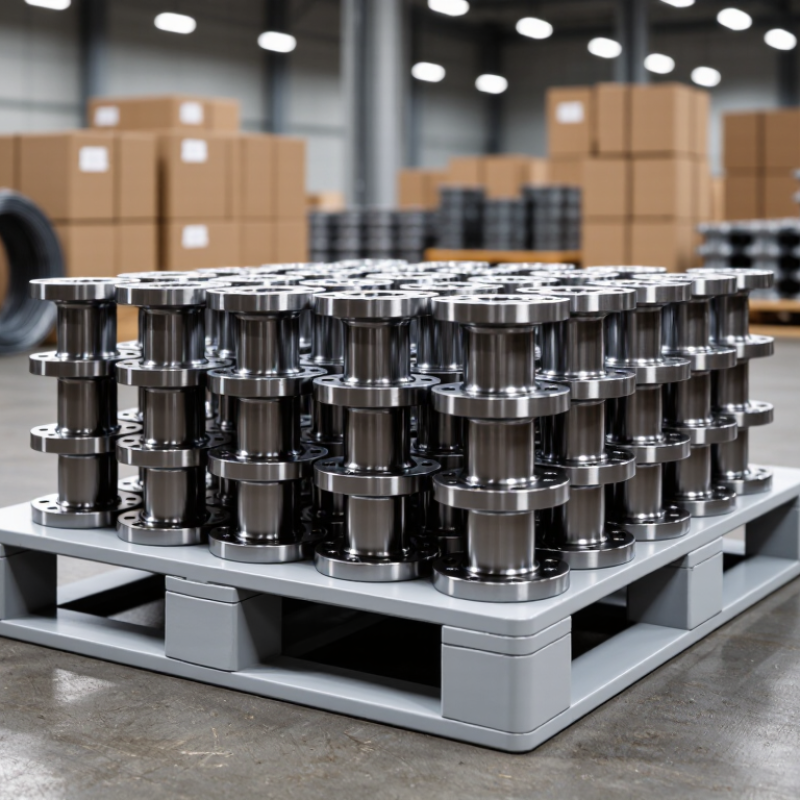
Carbon flanges are carbon-steel components that create detachable joints between pipe sections, valves, pumps, and vessels. Bolts pull two flange faces together, compressing a gasket to help prevent leakage. A small interface. Yet its dimensions and sealing surfaces affect alignment, maintenance, and pressure containment. Common designs include weld-neck, slip-on, and blind flanges; each serves a different layout or closure need. ASME B16.5 specifies dimensions, pressure-temperature ratings, materials, and marking requirements for many flanges from NPS ½ to NPS 24. Buyers should match the flange class and material to the piping design, operating temperature, and service conditions—not just the pipe diameter.
The scale of piping makes consistent connections important. The U.S. Energy Information Administration’s Natural Gas Explained resource reports roughly 3 million miles of natural-gas pipelines in the United States. That figure covers a broad network, not flange counts, but it illustrates the infrastructure context where standardized components matter. In practice, installers check the flange faces for damage, align bolt holes, and tighten bolts in a controlled sequence. Gasket selection and surface finish also matter. Details matter. It is tempting to treat a flange as a simple ring; that misses how the gasket, bolts, and faces work together. Even a well-specified joint can fail if assembly checks are rushed.
China’s carbon flange industry serves global buyers through forging, machining, inspection, and export coordination. A useful quotation depends on clear details: pipe size, pressure class, facing type, material grade, and applicable standard. Small omissions matter. A raised-face flange and a flat-face flange can look similar in a catalog, yet they may not suit the same joint. Confirm dimensions and tolerances against project drawings before comparing prices.
Manufacturers may offer forged or plate-cut flanges, depending on size and application. For demanding service, ask how heat treatment, product marking, and dimensional checks are documented. Inspection reports and material test certificates help buyers review orders remotely. Still, paperwork is useful only when it matches the shipped batch. A mismatch can delay installation. Requesting batch details and clear product photos can reduce uncertainty, though no review method catches everything.
Export suppliers can arrange protective packing and shipment schedules, but these details should appear in the order. Confirm the port, delivery terms, quantity tolerance, and lead time before approving a quote. Price differences may reflect material grade, machining depth, testing scope, or freight. A low quote deserves a second look. Communication across time zones can be slow, and drawings are sometimes misread. A marked-up drawing helps.
China Top Carbon Flanges Quote for Global Buyers
Carbon steel flanges are commonly made from ASTM A105, a forged carbon-steel grade for piping components. For colder service, ASTM A350 LF2 is often specified, subject to the project’s temperature and impact-test requirements. ASME B16.5 covers flange dimensions and pressure classes for sizes through NPS 24; larger sizes may fall under ASME B16.47. Common designs include weld-neck, slip-on, blind, and socket-weld flanges. Check the full specification, not just the material name. “Carbon steel” alone is not enough.
World Steel Association’s World Steel in Figures 2024 reports global crude-steel production of about 1.89 billion tonnes in 2023. That figure describes the wider steel supply base, not flange availability or quality. Manufacturing usually starts with forged blanks, followed by heat treatment where required, machining, and dimensional inspection. A raised face should be clean and even; bolt holes should align without forcing. Quote comparisons should include grade, standard, pressure class, facing, size, testing, and documentation. A low price may exclude important inspection steps.
Tips: Send a clear drawing and service temperature with your inquiry. Confirm material test certificates, flange dimensions, and marking requirements before shipment. Small omissions cause delays. Forging routes and inspection scope can vary, so verify them against the purchase specification.
A carbon flange quote depends on more than its nominal diameter. Material grade, pressure class, wall thickness, machining tolerance, and inspection requirements all affect the price. A small difference in bolt-hole spacing can mean rework. Ask suppliers to itemize material, machining, testing, packing, and freight. That makes competing quotes easier to compare.
Steel-market conditions matter. The World Steel Association’s April 2024 Short Range Outlook forecast global steel demand would rise 1.7% in 2024, to 1.793 billion tonnes. This is market context, not a direct forecast of flange prices. Buyers should check quote validity and whether raw-material changes can trigger revisions. A low unit price may exclude tests, certificates, or export packing. Read the details.
Delivery costs depend on shipment weight, crate dimensions, port routing, and the agreed shipping terms. UNCTAD’s Review of Maritime Transport 2024 reported maritime trade growth of 2.4% in 2023 and noted disruption-related pressure on shipping routes and costs. Request a packed-weight estimate, dispatch window, and separate freight line. Leave room for schedule uncertainty. A quote can still miss the mark when drawings change after production begins.
When comparing China carbon flange quotes, check more than the unit price. Confirm the flange type, nominal size, pressure class, facing, bore, and applicable dimensional standard. A raised-face flange and a flat-face flange are not interchangeable in every installation. Small details matter.
Ask each supplier to state the material grade and provide the relevant inspection documents. Confirm whether testing, marking, surface protection, and export packaging are included in the quoted price. Request a clear breakdown of tooling or sample charges, minimum order quantities, production time, and shipping terms. Two quotes may look similar but cover different scopes.
Send a controlled drawing or specification sheet, then ask the supplier to confirm it in writing before production. Check that dimensions, tolerances, and requested documentation match your project requirements. If a detail is unclear, pause and resolve it rather than relying on an assumption. Even experienced buyers can overlook a facing detail when comparing several offers. That can mean rework, delays, or a flange that does not fit. Keep the approved specification and quote together for later inspection.



For those larger-sized parts, or smaller quantity runs, we have 2 independent powder coat booths and ovens. The quality, durability and affordability of today’s powder coating finishes make this the process of choice for world-class companies.
Powder coating advantages over other forms of coating are many. Materials used in the Powder coating process can be metals and non-metals that come in a multitude of thicknesses, textures, colors, etc. Another of Powder coating’s biggest advantages over conventional coatings is its ability to create finishes in many different textures. Powder Coating Booths allow us the ability to apply these advantages to large products.
Tri-State Fabricators runs a full-service conveyor line for painting. Wet painting can provide protection or decoration to many different part styles. From start to finish, every project is easier to undergo random and point-based inspection by our skilled painting team.
Advantages to our Wet Paint Line are these lines start with product prep and ends with a thorough inspection of a high quality finished product. Our ability to complete large and small projects with a superior finish and doing so in a timely and economical fashion. This passes along the savings in production to our customers. When powder coating ins not an option, our Wet Paint Line gets the job done right the first time.
When the parts get big and heavy we roll-out our custom paint racks and oversize booth. By utilizing our partnerships with all the major paint brands, we can match virtually any color with wet paint.
The advantages of having access to a Wet Paint Booth are many. Large projects of many different shapes can be loaded into the booth. The Wet Paint Booth offers an environment that is much more controlled than a typical parts painting operation.
Not only are they used because of their controlled environment, but they’re are also advantageous when it comes to applying paint to parts that are needed in industries that require specialty coatings such as medical, aerospace, etc.
Our military forces have some very high standards when it comes to the finish of their vehicles and equipment. From the first pre-treatment step to final coat, it takes a great deal of knowledge and experience to protect the men and women of our armed forces. They deserve only the best, and Tri-State Fabricators provides it.
All of our processes are closely monitored by our staff and management teams. Both of which are highly trained in the processes of metal fabrication and finishing. Tri-State Fabricators’ goal is to always fully satisfy each and every customer, including the military. We will always put a 110% into what we do.
Abrasive media blasting is an excellent way to remove old paint, rust, and increase the paint/powder adhesion. Glass beads produce a much smoother and brighter finish than angular abrasives; leaving the part clean yet without any dimensional change. Chemically inert and environmentally friendly, we can recycle our beads approximately 30 times; making them a more preferred method of metal cleaning or surface finishing.
Advantages to Glass Bead Blasting are many. Glass bead blast media is used when a project is needing rough surfaces need to become smooth for applications of coatings such as paint. It is typically used to clean paint and rust from a product surface without deforming the surface it is being used on. Overall, compared to many other blasting media, Glass Bead Blasting is a very economical choice and those savings are always passed on to our customers.
Tri-State Fabricators utilize a zinc phosphate wash to clean and etch the material to ensure the best paint adhesion possible. The unique design of our 3-stage wash system does the work like a 5-stage. From Cleaning and rinsing to conversion coating and post-treatment, Our Part Washing process is a complete service and works throughout the fabrication service and the finishing service.
Along with the previously mentioned benefits, Curing is a vital chemical reaction that leaves the product finish hard and relatively safe from mild abrasion and aggressive corrosion. This process can be done in more than one way; ambient air-dry or in curing ovens at temps that exceed 240°.
From fixing paint mistakes (someone else’s of course) to simply cleaning our paint line hooks, our burn-off oven is put to good use. After a quick burn-off, a little clean up, and a fresh coat of paint, your parts will look better than new.
Why does our Burn-Off Oven work so well? Because super heating the air around parts turns the materials into ashes. From paint and powder coatings to rubber and machining oils, high temps do the job without degrading the integrity of the part.
Masking is a vital part of producing high quality products. We have die-cut masking patterns to protect machined surfaces as well as a wide range of plugs and caps to protect threaded holes and bolts. We provide permanent and temporary masking.
Masking allows the selected sections of a product to be protected from a fabrication or finishing service. This can be with both chemicals when etching and tapes, paints when only finishing just a section of the product. Masking is great in aiding the customization process of a project.
Screen printing is a photographic process that transfers artwork onto a porous nylon screen which allows colored ink to flow through the screen and be deposited on an aluminum or plastic component. We can generally have just about any design created onto a screen for your parts.
Some of the advantages of Screen Printing are, brand recognition for your business displaying on your products, assembly instructions, product warnings/hazards, etc. Tri-State Fabricators produces Screen Printing of the highest quality so you know it’s durable.
Metal Finishing is the art of treating the exterior portion of product, often metal but can also be made of other materials, so that the surface is clean and free of any debris. Then the process of applying coats or either paint of powder coat takes place. This coating process improves the quality of the product in both appearance and resistance to wear and corrosion.
Tri-State Fabricators, Inc., understands that a project typically isn’t complete until a high-quality finish has been added to your product. This is why our painting and powder coating teams continuously inspect the products throughout the Metal Finishing process.


