


China Best Apao Hot Melt Adhesive Raw Material Supplier

Choosing a China-based supplier for Apao Hot Melt Adhesive Raw Material involves more than comparing prices. The material’s softening point, viscosity, and compatibility with tackifiers can affect how an adhesive performs on a production line. A clear introduction to suppliers should therefore explain what buyers need to check before requesting a quote or sample.

Start with the application. Packaging, woodworking, and nonwoven products can require different bonding behavior and processing conditions. Ask for a current technical data sheet, safety data sheet, and batch identification details. These documents help buyers compare grades and understand handling requirements. Then test a sample using the temperatures, substrates, and equipment planned for actual production. Small details matter. A material that behaves well in a laboratory may run differently on a fast line, especially when equipment settings or ambient conditions change.

A dependable supplier should answer technical questions clearly and provide consistent product information. Buyers can also ask how the supplier manages quality checks and communicates changes between batches. No single specification proves that a grade will suit every process. That part is easy to overlook. Even experienced purchasers may need a second trial when a formulation, substrate, or production speed changes. This guide examines practical supplier-selection criteria, material properties, and questions worth asking when sourcing from China. It aims to support informed decisions, not promise that one supplier or grade is the right choice for every buyer.
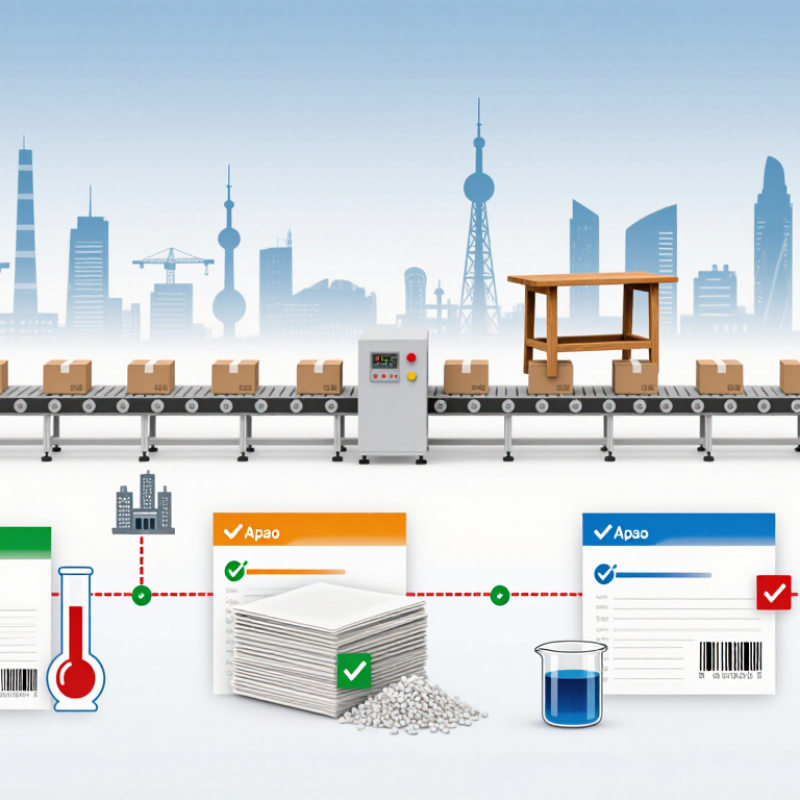
China Best Apao Hot Melt Adhesive Raw Material Supplier

What Is APao Hot Melt Adhesive and How Is It Used?

APAO hot melt adhesive is a thermoplastic bonding material made mainly from amorphous poly-alpha-olefins. It is usually supplied as solid pellets or blocks and heated until it flows. After application, it cools and sets, creating a bond without a lengthy curing step. It cools quickly.

In manufacturing, APAO adhesives are used in packaging, bookbinding, woodworking, and some nonwoven products. A nozzle can apply a narrow bead to a carton flap, while a roller may spread adhesive across a panel edge. The bond depends on more than the adhesive itself. Surface condition, application temperature, and open time all matter. Dust or a cold substrate can weaken results.

APAO is often considered when flexibility and resistance to moisture are useful, but performance varies by formulation. It may not suit every plastic, coating, or high-heat environment. Test the actual materials under production conditions, including the time available for positioning parts. This step can feel repetitive, yet skipping it is a common source of avoidable bonding problems. Follow the supplier’s technical data for handling and equipment settings.


Key Raw Materials in APao Hot Melt Adhesive Production

APAO hot melt adhesive starts with amorphous polyalphaolefin, the polymer that forms the adhesive’s main body. Its grade affects viscosity, flexibility, and working time. A production team should compare melt viscosity and softening behavior under consistent test conditions. Small differences matter. Tackifier resin is added to improve wetting and initial tack on surfaces such as carton board or plastic film. Compatibility with the polymer is essential; a resin that looks suitable on paper may still cause haze or poor bonding. Not always obvious.

Wax can help control setting speed and melt flow, but too much may reduce adhesion. Antioxidants protect the blend during heating and storage, while fillers may adjust cost or texture when the application permits them. Each addition changes the balance, so trial batches are useful.

Check raw materials for batch consistency, moisture, and clear technical specifications. A supplier’s documents help, but they do not replace testing in the intended equipment. It is easy to overlook that point. Test the adhesive on the actual substrate, at the planned application temperature, and record bond strength after cooling and aging.

How APao Hot Melt Adhesives Are Manufactured and Quality-Controlled

APAO hot melt adhesive production starts with carefully selected amorphous polyalphaolefin resin. Operators melt and blend it with tackifiers, waxes, and stabilizers in heated vessels. Temperature and mixing speed affect consistency. The molten batch then passes through filters to remove particles before cooling and pelletizing. Small details matter. A short temperature drift can change flow and bonding behavior.

Quality checks begin with raw-material identification and continue through production. ASTM D3236 provides a method for measuring hot-melt viscosity, while ASTM E28 measures softening point. These results help confirm that a batch meets its formulation targets. Manufacturers also test open time, heat stability, and adhesion on the intended substrate. A neat lab result can still mislead if the test surface differs from real packaging or assembly conditions. That gap deserves attention.

Demand makes reliable control important. Grand View Research valued the global hot melt adhesives market at USD 9.7 billion in 2023 and projected a 6.4% compound annual growth rate from 2024 to 2030. Market growth does not guarantee product consistency, though. Retained samples, calibrated instruments, and recorded batch conditions help trace variation. Operators should review unexpected results rather than simply retesting until a passing number appears.

Industries and Applications for APao Hot Melt Adhesives

China Best APao Hot Melt Adhesive Raw Material Supplier

Industries and Applications for APao Hot Melt Adhesives

APao hot melt adhesives are used where manufacturers need quick bonding without a water-based drying stage. In packaging, they can seal cartons, attach labels, and secure paper components. Fast set matters. On a busy line, operators can handle finished packs sooner, while consistent application helps reduce messy glue strings and weak seams.

Furniture and woodworking operations use APao adhesives to bond edge materials, decorative laminates, and some porous substrates. In hygiene products, they can secure nonwoven layers and elastic components. Automotive suppliers may apply them to interior trim, carpets, and lightweight insulation. Each use brings different demands: a flexible bond for fabric, or reliable adhesion across changing temperatures. Small trials help.

Performance depends on more than the adhesive itself. Substrate surface, application temperature, coating weight, and open time all affect the finished bond. A dusty board or cool work area can cause trouble, even when the material specification looks right. That gap between a laboratory sample and a production line deserves attention. Buyers should test APao grades on their actual equipment and materials, then review bond strength, odor, and aging behavior before scaling up.

China Best Apao Hot Melt Adhesive Raw Material Supplier - Industries and Applications for APao Hot Melt Adhesives

Industry Typical Applications Common Substrates Relevant Adhesive Requirements Formulation Considerations
Packaging and Carton Sealing Case and carton closing, tray forming, and end-of-line packaging Coated and uncoated paperboard, corrugated board, and some paper-to-film structures Fast setting, adequate open time for the machine, reliable fiber tear where achievable, and resistance to the expected storage conditions APAO polymer is commonly combined with tackifiers and waxes or other viscosity-control components. The balance should suit the coating method, board surface, and line speed.
Hygiene Products Construction, elastic attachment, and component bonding in disposable absorbent products Polyolefin films, nonwoven fabrics, tissue, and elastic strands Flexibility, adhesion to low-surface-energy materials, suitable viscosity for application, and resistance to ageing under intended use conditions Polymer grade, tackifier compatibility, and application temperature need to be matched to the substrate and coating pattern. Product safety and odor requirements should be checked for the intended market.
Woodworking and Furniture Edge banding, profile wrapping, and assembly of selected components Decorative paper, veneer, PVC or other edge materials, and wood-based panels Consistent wetting, controlled open time, bond strength after cooling, and compatibility with the equipment and finishing materials Selection depends on the edge material, panel surface, machine speed, and service temperature. Heat-sensitive substrates require particular attention to application temperature and heat exposure.
Automotive and Transportation Selected interior trim, fabric lamination, and component assembly Textiles, foams, films, and selected plastic or composite surfaces Flexibility, adhesion to the specific substrates, resistance to heat and ageing, and low emissions where required by the application APAO-based formulations may be considered for selected applications, but qualification must include substrate-specific adhesion, thermal ageing, odor, and regulatory testing.
Filter Manufacturing Pleat stabilization, filter-media assembly, and selected end-cap or component bonding Filter paper, nonwoven media, synthetic fibers, and selected plastics Controlled application, adhesion without excessive penetration, flexibility, and resistance to the operating environment Viscosity and set behavior should be matched to the media porosity and bead or spray pattern. Chemical, temperature, and fluid exposure requirements vary by filter type.
Textile and Nonwoven Converting Lamination, web bonding, and assembly of selected fabric products Woven fabrics, nonwovens, foams, and films Soft hand where needed, flexible bonds, suitable open time, and limited strike-through or stiffness Coating weight, application pattern, and adhesive viscosity affect fabric feel and bond performance. Trials should reflect the actual web speed and substrate construction.
Bookbinding and Paper Converting Selected spine, cover, and paper-product bonding operations Paper, coated paper, paperboard, and selected cover materials Even application, suitable setting behavior, flexibility after cooling, and adhesion appropriate to the paper coating and product design The required balance of tack, viscosity, and open time depends on the converting process and paper surface. Compatibility should be tested on the finished construction.

Note: APAO hot melt adhesive performance depends on polymer grade, formulation, equipment, substrates, and service conditions. Application suitability and processing settings should be verified through testing with the intended materials.

How to Evaluate APao Hot Melt Adhesive Suppliers in China

Evaluating an APao hot melt adhesive supplier in China starts with evidence, not polished sales claims. Ask for a current technical data sheet and a certificate of analysis for the specific grade and batch. Compare viscosity, softening point, color, and recommended application temperature with your production needs. Test methods matter; otherwise, two suppliers’ figures may not be comparable. Small details count.

Request samples from more than one batch and test them on your own equipment. Record bonding strength, open time, and any odor or stringing under normal line conditions. A sample is useful, but it cannot prove consistent supply throughout the year. Ask how each production lot is identified, how material is packed, and what happens when a batch misses agreed specifications. Clear answers are a good sign. Also check whether the supplier can provide stable lead times and practical technical support. Some information may be incomplete at first; ask for clarification rather than assuming. Keep your test results and acceptance criteria in writing before placing a larger order.

Powder Coat Booths

For those larger-sized parts, or smaller quantity runs, we have 2 independent powder coat booths and ovens. The quality, durability and affordability of today’s powder coating finishes make this the process of choice for world-class companies.

Powder coating advantages over other forms of coating are many. Materials used in the Powder coating process can be metals and non-metals that come in a multitude of thicknesses, textures, colors, etc. Another of Powder coating’s biggest advantages over conventional coatings is its ability to create finishes in many different textures. Powder Coating Booths allow us the ability to apply these advantages to large products.

Wet Paint Line

Tri-State Fabricators runs a full-service conveyor line for painting. Wet painting can provide protection or decoration to many different part styles. From start to finish, every project is easier to undergo random and point-based inspection by our skilled painting team.

Advantages to our Wet Paint Line are these lines start with product prep and ends with a thorough inspection of a high quality finished product. Our ability to complete large and small projects with a superior finish and doing so in a timely and economical fashion. This passes along the savings in production to our customers. When powder coating ins not an option, our Wet Paint Line gets the job done right the first time.

Wet Paint Booths

When the parts get big and heavy we roll-out our custom paint racks and oversize booth. By utilizing our partnerships with all the major paint brands, we can match virtually any color with wet paint.

The advantages of having access to a Wet Paint Booth are many. Large projects of many different shapes can be loaded into the booth. The Wet Paint Booth offers an environment that is much more controlled than a typical parts painting operation.

Not only are they used because of their controlled environment, but they’re are also advantageous when it comes to applying paint to parts that are needed in industries that require specialty coatings such as medical, aerospace, etc.

Military CARC

Our military forces have some very high standards when it comes to the finish of their vehicles and equipment. From the first pre-treatment step to final coat, it takes a great deal of knowledge and experience to protect the men and women of our armed forces. They deserve only the best, and Tri-State Fabricators provides it.

All of our processes are closely monitored by our staff and management teams. Both of which are highly trained in the processes of metal fabrication and finishing. Tri-State Fabricators’ goal is to always fully satisfy each and every customer, including the military. We will always put a 110% into what we do.

Glass-Bead Blasting

Abrasive media blasting is an excellent way to remove old paint, rust, and increase the paint/powder adhesion. Glass beads produce a much smoother and brighter finish than angular abrasives; leaving the part clean yet without any dimensional change. Chemically inert and environmentally friendly, we can recycle our beads approximately 30 times; making them a more preferred method of metal cleaning or surface finishing.

Advantages to Glass Bead Blasting are many. Glass bead blast media is used when a project is needing rough surfaces need to become smooth for applications of coatings such as paint. It is typically used to clean paint and rust from a product surface without deforming the surface it is being used on. Overall, compared to many other blasting media, Glass Bead Blasting is a very economical choice and those savings are always passed on to our customers.

Part Washing

Tri-State Fabricators utilize a zinc phosphate wash to clean and etch the material to ensure the best paint adhesion possible. The unique design of our 3-stage wash system does the work like a 5-stage. From Cleaning and rinsing to conversion coating and post-treatment, Our Part Washing process is a complete service and works throughout the fabrication service and the finishing service.

Along with the previously mentioned benefits, Curing is a vital chemical reaction that leaves the product finish hard and relatively safe from mild abrasion and aggressive corrosion. This process can be done in more than one way; ambient air-dry or in curing ovens at temps that exceed 240°.

Burn-Off Oven

From fixing paint mistakes (someone else’s of course) to simply cleaning our paint line hooks, our burn-off oven is put to good use. After a quick burn-off, a little clean up, and a fresh coat of paint, your parts will look better than new.

Why does our Burn-Off Oven work so well? Because super heating the air around parts turns the materials into ashes. From paint and powder coatings to rubber and machining oils, high temps do the job without degrading the integrity of the part.

Masking

Masking is a vital part of producing high quality products. We have die-cut masking patterns to protect machined surfaces as well as a wide range of plugs and caps to protect threaded holes and bolts. We provide permanent and temporary masking.

Masking allows the selected sections of a product to be protected from a fabrication or finishing service. This can be with both chemicals when etching and tapes, paints when only finishing just a section of the product. Masking is great in aiding the customization process of a project.

Screen Printing

Screen printing is a photographic process that transfers artwork onto a porous nylon screen which allows colored ink to flow through the screen and be deposited on an aluminum or plastic component. We can generally have just about any design created onto a screen for your parts.

Some of the advantages of Screen Printing are, brand recognition for your business displaying on your products, assembly instructions, product warnings/hazards, etc. Tri-State Fabricators produces Screen Printing of the highest quality so you know it’s durable.

Metal Finishing

Metal Finishing is the art of treating the exterior portion of product, often metal but can also be made of other materials, so that the surface is clean and free of any debris. Then the process of applying coats or either paint of powder coat takes place. This coating process improves the quality of the product in both appearance and resistance to wear and corrosion.

Tri-State Fabricators, Inc., understands that a project typically isn’t complete until a high-quality finish has been added to your product. This is why our painting and powder coating teams continuously inspect the products throughout the Metal Finishing process.
