China Best Aluminum Pipe Bending Machine Price?
A China-made Aluminum Pipe Bending Machine can look like a bargain on a supplier’s page, but the listed price rarely tells the whole story. Buyers should compare machine capacity, bending accuracy, control system, tooling, and after-sales support. A compact unit for thin-wall tubing is not comparable to a heavy-duty machine built for large-diameter pipe. The difference shows up in the frame, drive system, and the finished bend.
For an honest perspective, the following quote is illustrative, not a verified statement from a real person. Fictional industry specialist Michael Chen puts it this way: “The best price is the one that keeps bend quality stable after thousands of cycles.” That is a useful test. Ask what materials and pipe sizes the machine can handle, whether sample bends are available, and what the quoted package includes. A control cabinet, dies, shipping, installation, or operator training may be priced separately. Small details matter.
This guide examines what shapes Aluminum Pipe Bending Machine prices in China and how to compare quotations without focusing on the lowest number alone. Request clear specifications and confirm warranty terms in writing. Still, specifications do not tell every story. A machine may suit your pipe dimensions on paper yet struggle with your actual wall thickness or production rhythm. Treat sample parts and direct technical answers as evidence, not sales language. Then you can judge whether the asking price fits your workshop, expected output, and tolerance requirements.
What Is an Aluminum Pipe Bending Machine?
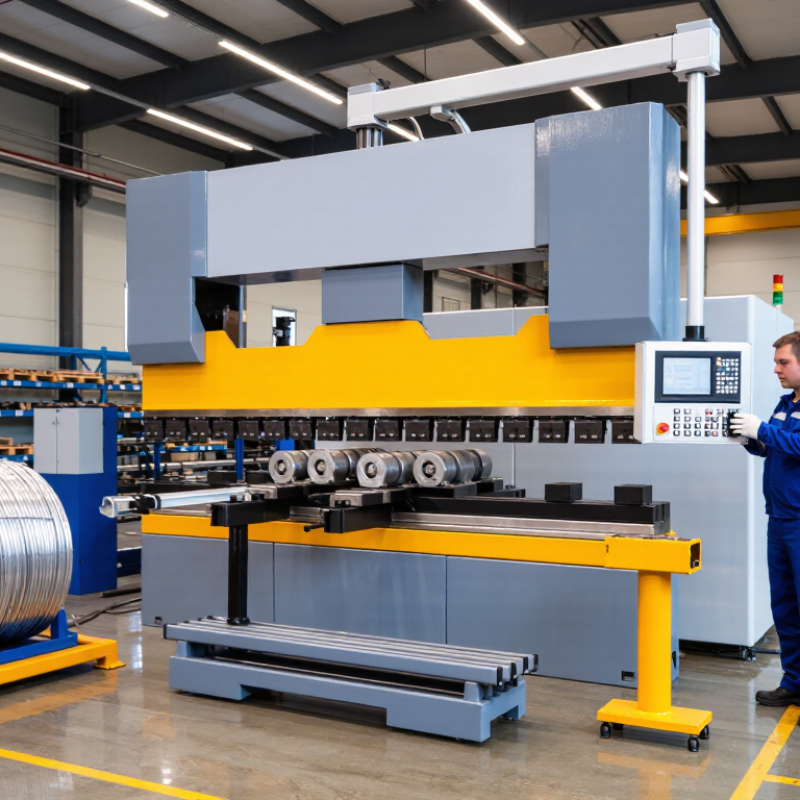
An aluminum pipe bending machine shapes hollow aluminum tubes into controlled curves without cutting them into separate sections. A clamp holds the tube while a rotating bend die guides it around a defined radius. Depending on the machine, a mandrel may support the tube from inside and reduce flattening or wrinkles. That support matters. Thin-wall tubing can deform quickly, especially on tight bends.
The International Aluminium Institute reports that about 75% of all aluminum ever produced remains in use. Its recycling data also indicates that recycled aluminum requires roughly 5% of the energy used for primary production. These figures help explain aluminum’s continued use in transport, construction, and equipment, but they do not determine which bending machine is suitable. That depends on tube diameter, wall thickness, alloy, bend radius, and production volume. A quote should specify those details, plus tooling and setup requirements. Price alone can mislead. A machine that bends a sample tube neatly may still struggle with a longer production run; I would treat a successful test bend as necessary, not conclusive.
China Best Aluminum Pipe Bending Machine Price? - What Is an Aluminum Pipe Bending Machine?
An aluminum pipe bending machine shapes aluminum tubes or pipes to a specified angle or radius without cutting them. Depending on the machine, bending may be performed manually, hydraulically, or with CNC-controlled tooling. The indicative China price ranges below are in USD and may vary with capacity, tooling, automation, and configuration.
| Machine type | Typical tube outside diameter | Typical bending method | Common applications | Indicative China price (USD) |
| Manual pipe bender | About 6–25 mm | Hand-operated lever and die | Small workshops, repairs, and occasional low-volume bends | $300–$1,500 |
| Hydraulic semi-automatic bender | About 10–50 mm | Hydraulic bending with manual or programmed angle control | Furniture frames, handrails, and general fabrication | $2,000–$8,000 |
| NC rotary-draw bender | About 10–60 mm | Motor- or hydraulically driven rotary-draw bending with numerical control | Repeated bends for frames, components, and production batches | $8,000–$30,000 |
| CNC servo pipe bender | About 10–100 mm or more, depending on model | Programmable, multi-axis bending; optional automatic feeding | High-volume production and parts requiring repeatable, complex bends | $20,000–$100,000+ |
| Mandrel-equipped rotary-draw bender | Varies by machine and tooling; commonly selected for thin-wall tubing | Rotary-draw bending with an internal mandrel to help support the tube | Tight-radius bends and applications where cross-section distortion must be controlled | $15,000–$80,000+ |
Price note: These are broad indicative equipment ranges, not formal quotations. Confirm the tube diameter, wall thickness, aluminum alloy and temper, bend radius, production volume, tooling, delivery terms, and installation requirements when comparing prices. Actual bending limits depend on the machine and the material.
How Machine Type and Capacity Influence Its Price
China Best Aluminum Pipe Bending Machine Price?
How Machine Type and Capacity Influence Its Price
The price of an aluminum pipe bending machine depends heavily on its type and working capacity. A manual machine may suit simple, low-volume jobs, while a CNC model can handle repeat bends with more consistent angles. That matters. Larger pipe diameters, thicker walls, and tighter bending radii usually require stronger frames and more powerful drives. These features can raise the purchase price, as can mandrels, automatic feeding, and custom tooling. A low quote may exclude these essentials.
Tips: Compare machines using the same pipe diameter, wall thickness, and bend radius. Ask whether tooling, installation, and operator training are included. Check the maximum capacity, not just the advertised standard setup.
Before choosing a machine, estimate daily output and the range of parts you expect to produce. A smaller-capacity model may cost less, but frequent changes or difficult bends can slow production. Conversely, paying for capacity you rarely use may not be worthwhile. Request a detailed specification sheet and sample bends using your actual material. Price alone can be misleading; I would still verify service support and replacement-part availability before placing an order.
China Aluminum Pipe Bending Machine Prices: Type and Capacity
Indicative budgetary price ranges for new machines, grouped by machine type and typical capacity class. Larger tube capacity and more advanced controls generally increase the purchase price.
Prices are broad estimates in US dollars, not supplier quotations. Actual prices vary with tube diameter and wall thickness, tooling, automation, configuration, and shipping. Confirm specifications and current pricing with manufacturers.
Which Features Affect the Cost of a Bending Machine?
China Best Aluminum Pipe Bending Machine Price?
Which Features Affect the Cost of a Bending Machine?
An aluminum pipe bending machine’s price depends on the work it must repeat accurately. A small workshop bending thin-wall tubes may need less capacity than a production line handling large-diameter pipe. Tube diameter, wall thickness, bend radius, and material springback all affect the required frame strength and control system. That changes the quote.
Automation adds cost, but it can reduce manual handling. CNC control, extra bending axes, and automatic feeding suit repeat orders with several bend angles. Mandrels and custom dies matter too: a tight radius may need an internal support to prevent wrinkles or flattening. The International Aluminium Institute’s 2023 production statistics report about 70.6 million tonnes of primary aluminium output worldwide. That is useful industry context, not a machine-price benchmark; production scale alone cannot predict a buyer’s equipment needs.
Compare the full setup, not just the machine body. Ask whether the quote includes dies for your tube sizes, commissioning, operator training, and spare parts. Hydraulic systems may suit heavy-duty work, while servo-driven options can offer precise control; the better choice depends on duty cycle and local service access. I would not price from a brochure alone. A sample bend, measured for ovality and angle accuracy, can expose mismatches early. Even then, estimates can miss real shop-floor variation.
How to Compare Prices from Chinese Manufacturers
China Best Aluminum Pipe Bending Machine Price? How to Compare Prices from Chinese Manufacturers
A low quotation can hide a different machine specification. Send every supplier the same tube material, outside diameter, wall thickness, bend radius, and production volume. Ask whether the price includes tooling, mandrels, software, installation, and operator training. A machine quoted without matching dies may look cheaper, but the missing tooling can delay production.
Compare the delivered cost, not only the factory price. Request separate figures for the machine, packing, freight, insurance, commissioning, and spare parts. Check the payment schedule, warranty period, response time for technical support, and availability of wear parts. Get the control system and machine configuration in writing. Small wording differences matter.
The International Federation of Robotics’ World Robotics 2024 report recorded 276,288 industrial robot installations in China in 2023, about 51% of the global total. This indicates a large automation market, but it is not a benchmark for pipe-bender prices. Treat supplier quotations and a matched technical specification as your real comparison. I would still double-check the stated bending capacity against sample parts; catalog limits do not always reflect the tube and radius you need. Ask for a test bend, photos of the setup, and a written list of excluded costs.
What Extra Costs Should Buyers Include in Their Budget?
Beyond the machine’s quoted price, buyers should budget for freight, insurance, unloading, and installation. These costs depend on machine weight, crate dimensions, delivery distance, and site access. UNCTAD’s Review of Maritime Transport 2021 reported that container freight rates more than quadrupled during the pandemic-era surge. That figure is not a current shipping quote, but it shows why a fixed freight allowance can be risky. Request a delivered-to-site estimate and confirm whether rigging, electrical connection, and commissioning are included.
Tooling can also add up. Include bending dies for each tube diameter, test material, and any optional mandrels or clamps. Small items add up. Ask for a written list of included tooling and prices for replacements. Budget for operator training, spare parts, and routine maintenance, too. Electricity use depends on motor size, working hours, and local tariffs; ask the supplier for rated power and expected duty cycle rather than guessing. One detail buyers sometimes miss is floor preparation: a heavy machine may need anchoring or a level, reinforced base. I would keep a contingency line for these site costs, because the final bill can differ from the neat number on the quotation.





