China Top 515036 Hub Assembly Manufacturers and Suppliers

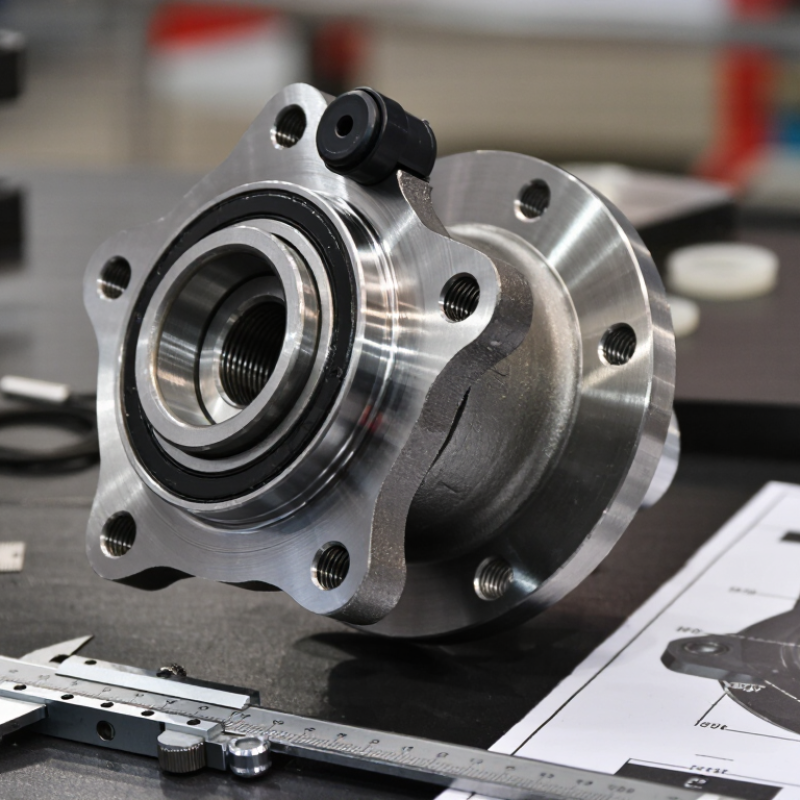
A 515036 Hub Assembly connects the wheel to the vehicle’s suspension and supports smooth rotation under changing road loads. Depending on the application, its design may include a bearing, flange, seals, and an ABS encoder. Small differences in dimensions or connector style can affect fit and sensor operation. Details matter.

China has a broad network of automotive component manufacturers and suppliers, but a supplier’s location alone does not confirm quality. Buyers should check application data, material specifications, production controls, and inspection records. Ask whether samples are available for checking flange dimensions, bearing play, seal condition, and connector compatibility. Clear documentation helps, too.

This guide explores what to look for when comparing 515036 Hub Assembly manufacturers and suppliers in China. It covers product fitment, quality assurance, customization, communication, and delivery considerations. Request evidence that matches the intended vehicle application, rather than relying only on a catalog image or a general claim. That is not enough. No supplier is perfect, and even a detailed listing can leave questions unanswered. Confirm critical specifications directly, and review test results before making a sourcing decision.

China Top 515036 Hub Assembly Manufacturers and Suppliers

What Is a 515036 Hub Assembly?

A 515036 hub assembly is a wheel-end unit identified by a catalog number, not a universal fitment standard. Its core parts typically include a hub flange, bearing, seals, and, on some designs, an integrated ABS encoder. The flange holds the wheel studs; the bearing lets the wheel rotate while supporting vehicle loads. Small details matter. Bolt pattern, axle interface, sensor connector, and bearing offset must match the vehicle.

FHWA’s Highway Statistics 2023 reports approximately 3.26 trillion vehicle-miles traveled in the United States that year. That figure describes the scale of road use, not the service life of any particular hub. Still, it helps explain why precise fit and sound sealing matter: the assembly faces repeated impacts, heat, moisture, and vibration. A rough road can make a marginal bearing feel louder, though noise alone does not confirm the cause.

For a 515036 replacement, compare the original unit’s measurements and sensor configuration with the supplier’s application data. Check flange dimensions and connector shape, not just the catalog code. One caveat: catalogs can omit useful details, and similar-looking assemblies may differ internally. Verify before installation.

Key Specifications and Vehicle Applications of the 515036 Hub Assembly

The 515036 hub assembly combines a wheel hub and bearing to support smooth rotation and maintain a stable connection between the wheel and suspension. Its precise dimensions, bolt pattern, and bearing design should be confirmed against a reliable parts catalog. A matching part number alone may not confirm fitment.

Key checks include flange diameter, mounting-hole spacing, axle position, and whether the assembly includes an ABS sensor or encoder. Compare connector shape and cable routing with the vehicle’s original part. Installation also depends on correct fastener torque and a clean mounting surface. Small details matter.

Vehicle applications can vary by model year, trim, drivetrain, and front or rear position. Use the vehicle identification number and axle location to verify compatibility before ordering. If fitment information is incomplete, ask a qualified parts specialist to cross-check the specifications. Guessing is risky. A hub that appears similar may still produce sensor faults, noise, or poor wheel alignment, so inspect the old unit and confirm catalog data before installation.

How Chinese Manufacturers Produce 515036 Hub Assemblies

Producing a 515036 hub assembly starts with the approved drawing and material requirements. The factory checks steel certificates and inspects incoming stock for surface flaws. A small defect matters. Depending on the design, the hub body may be forged before machining. Turning and drilling operations establish mounting faces, bolt holes, and bearing seats.

Heat treatment gives the steel its required hardness, while controlled cooling helps limit distortion. Technicians then grind bearing raceways to tight dimensional tolerances. Cleanliness is essential. Fine metal particles can damage rolling surfaces, so parts are washed and checked before assembly. Workers fit the bearing, seals, and lubricant according to the specified process. Press force and alignment need close control; excessive force can shorten bearing life.

Quality checks may include dimensional measurements, runout inspection, seal checks, and rotation tests. Some producers also monitor noise and vibration. Each result should be traceable to its production batch. The exact process can vary with the 515036 design and customer drawing, so a generic checklist is not enough. This is easy to underestimate. A final inspection can catch defects, but it cannot replace stable control at every manufacturing stage.

What to Compare When Evaluating Chinese 515036 Hub Assembly Suppliers

What to Compare When Evaluating Chinese 515036 Hub Assembly Suppliers

A 515036 part number alone does not confirm vehicle fitment. Compare the supplier’s dimensional drawings, mounting-face tolerances, connector details, and encoder configuration against your application. OICA’s 2023 production statistics report 93.5 million motor vehicles produced worldwide. That scale makes repeatable manufacturing and clear lot identification practical sourcing priorities. Ask for material specifications, heat-treatment records, and inspection results for inner diameter, flange runout, and bearing noise. Request a sample with its measurement report. Check that the part marking and packaging label match the quoted specification.

Process evidence matters. Review the supplier’s quality-system certification, traceability procedure, and documented checks at each production stage. Ask how it controls seal installation and grease quantity; these details are easy to overlook. IEA’s Global EV Outlook 2025 reports that electric-car sales exceeded 17 million in 2024, reflecting a changing vehicle mix. That does not make every hub design interchangeable. Confirm application coverage and sensor compatibility directly. Compare lead times, minimum order quantities, and the supplier’s process for handling nonconforming parts. A polished audit file helps, but it cannot replace consistent sample measurements. I would also verify one shipment independently; it adds effort, but catches assumptions before a larger order.

China Top 515036 Hub Assembly Manufacturers and Suppliers - What to Compare When Evaluating Chinese 515036 Hub Assembly Suppliers

Evaluation Dimension What to Compare Evidence to Request Why It Matters
Part-number identification Confirm that “515036” is matched to the intended application, axle position, vehicle configuration, and any required ABS or sensor arrangement. Do not rely on the part number alone. A written application cross-reference, product drawing, and confirmation of the reference source used. Check that the buyer’s vehicle or original-equipment reference is included. Part-number or application mismatches can lead to incorrect fitment, sensor incompatibility, or installation problems.
Dimensional compatibility Compare mounting points, flange dimensions, bolt pattern, bearing interface, overall dimensions, and connector or sensor details against the approved drawing or sample. A dimensioned drawing with tolerances, inspection records for critical dimensions, and a sample measured against the same revision. Dimensional conformity supports correct installation and alignment with the intended vehicle assembly.
Design and configuration Clarify the assembly design, included hardware, sealing arrangement, encoder or tone-ring configuration where applicable, and whether the product is supplied as a complete unit. Product specification sheet, exploded view or assembly drawing, bill of materials, and a clear list of included components. Configuration differences can affect installation, ABS operation, and service requirements.
Materials and manufacturing Review the specified materials and the controls used for forging or machining, heat treatment, grinding, and assembly, as applicable to the design. Material specifications, process flow chart, heat-treatment records where relevant, and sample inspection documentation. Controlled materials and processes help support consistent mechanical performance and product repeatability.
Bearing performance Compare the supplier’s stated operating limits and performance requirements with the intended vehicle application. Ensure that test conditions and acceptance criteria are defined. Applicable validation reports, test methods, sample identification, test conditions, and pass/fail criteria. Avoid comparing results produced under different methods. Comparable test evidence provides a more reliable basis for assessing durability and suitability than unsupported performance claims.
ABS sensor and signal Where the application uses an integrated sensor or magnetic encoder, verify connector type, signal compatibility, sensor position, and the specified test procedure. Connector drawings, electrical specifications where applicable, encoder or sensor inspection records, and test results for the proposed configuration. A mechanically compatible assembly may still be unsuitable if its sensing components or signal characteristics do not match the vehicle system.
Quality management Check whether the production site has a current quality-management certificate appropriate to automotive manufacturing, and confirm its scope and validity. A current certificate and verification of the certified site, scope, and expiry date. ISO 9001 and IATF 16949 are examples of quality-management standards to verify where relevant. A functioning quality system supports controlled production, corrective action, and consistent record keeping.
Inspection and traceability Compare incoming-material checks, in-process controls, final inspection, lot identification, and the supplier’s process for handling nonconforming products. A sample inspection plan, anonymized inspection records, lot-code format, and documented corrective-action procedure. Traceability helps isolate affected production lots and investigate quality issues efficiently.
Validation and change control Ask how the supplier validates a new or revised product and how changes to materials, tooling, processes, or sub-suppliers are reviewed and communicated. Validation plan, change-control procedure, approval records, and written confirmation that changes require customer notification or approval when agreed. Uncontrolled changes can alter product fit, function, or consistency without the buyer’s knowledge.
Warranty and field support Compare warranty duration, claim submission requirements, response time, failure-analysis support, and responsibility for confirmed defects. Written warranty terms, claim workflow, required documentation, and an example of a failure-analysis report with confidential details removed. Clear procedures make post-sale issue resolution more predictable and measurable.
Production capacity and lead time Review available production capacity, normal and peak lead times, minimum order quantity, and the supplier’s approach to forecast changes. A written capacity statement, recent lead-time data, production planning process, and agreed order or forecast terms. Realistic capacity information helps reduce supply interruptions and avoid relying on unverified delivery promises.
Packaging and shipment Check protection against impact, moisture, and contamination; labeling requirements; carton or pallet configuration; and export-document support. Packaging specification, label sample, shipment photos or sample packaging, and confirmation of the documents provided for export. Suitable packaging and clear identification help protect parts in transit and support receiving and inventory control.
Quotation and total cost Compare unit price alongside tooling charges, sample costs, payment terms, packaging, shipping basis, and any volume-based pricing conditions. A written quotation with currency, validity period, Incoterms® rule and named place, order quantity, included items, and a breakdown of additional charges. A complete quotation makes supplier offers easier to compare and reduces the risk of hidden or misunderstood costs.
Supplier verification Confirm the actual manufacturing or trading role, production location, product-specific experience, and the point of contact responsible for technical and quality matters. Business and factory documentation appropriate to the transaction, a remote or on-site audit where practical, and direct answers to technical questions. Understanding the supplier’s role and capabilities helps buyers assess accountability and verify claims before placing orders.

How to Select a Reliable 515036 Hub Assembly Manufacturer in China

Selecting a reliable 515036 hub assembly manufacturer in China starts with checking technical fit, not just price. Share the vehicle application, dimensions, and operating conditions, then ask the supplier to confirm compatibility in writing. A useful manufacturer can explain bearing preload, seal design, material choices, and allowable runout in clear terms. Vague answers are a warning.

Ask for a sample and inspect the machining, mounting faces, and connector before approving an order. Request inspection records for key dimensions, plus details on heat treatment and production traceability. If possible, compare measurements with your drawing using calibrated tools. Small deviations matter. Also review how the factory handles rejected parts and corrective actions. A polished catalog is not proof of consistent production; I would not treat one good sample as a guarantee. Some suppliers may need time to provide complete records, and that is worth discussing rather than ignoring.

Communication is part of quality. Send a technical question and note whether the response is specific, timely, and supported by evidence. Clarify packaging, lead times, and batch inspection before production begins. Ask for a written specification sheet. Then check whether the delivered assembly matches it. A dependable partner should welcome reasonable verification, even when it slows the first order.

Powder Coat Booths

For those larger-sized parts, or smaller quantity runs, we have 2 independent powder coat booths and ovens. The quality, durability and affordability of today’s powder coating finishes make this the process of choice for world-class companies.

Powder coating advantages over other forms of coating are many. Materials used in the Powder coating process can be metals and non-metals that come in a multitude of thicknesses, textures, colors, etc. Another of Powder coating’s biggest advantages over conventional coatings is its ability to create finishes in many different textures. Powder Coating Booths allow us the ability to apply these advantages to large products.

Wet Paint Line

Tri-State Fabricators runs a full-service conveyor line for painting. Wet painting can provide protection or decoration to many different part styles. From start to finish, every project is easier to undergo random and point-based inspection by our skilled painting team.

Advantages to our Wet Paint Line are these lines start with product prep and ends with a thorough inspection of a high quality finished product. Our ability to complete large and small projects with a superior finish and doing so in a timely and economical fashion. This passes along the savings in production to our customers. When powder coating ins not an option, our Wet Paint Line gets the job done right the first time.

Wet Paint Booths

When the parts get big and heavy we roll-out our custom paint racks and oversize booth. By utilizing our partnerships with all the major paint brands, we can match virtually any color with wet paint.

The advantages of having access to a Wet Paint Booth are many. Large projects of many different shapes can be loaded into the booth. The Wet Paint Booth offers an environment that is much more controlled than a typical parts painting operation.

Not only are they used because of their controlled environment, but they’re are also advantageous when it comes to applying paint to parts that are needed in industries that require specialty coatings such as medical, aerospace, etc.

Military CARC

Our military forces have some very high standards when it comes to the finish of their vehicles and equipment. From the first pre-treatment step to final coat, it takes a great deal of knowledge and experience to protect the men and women of our armed forces. They deserve only the best, and Tri-State Fabricators provides it.

All of our processes are closely monitored by our staff and management teams. Both of which are highly trained in the processes of metal fabrication and finishing. Tri-State Fabricators’ goal is to always fully satisfy each and every customer, including the military. We will always put a 110% into what we do.

Glass-Bead Blasting

Abrasive media blasting is an excellent way to remove old paint, rust, and increase the paint/powder adhesion. Glass beads produce a much smoother and brighter finish than angular abrasives; leaving the part clean yet without any dimensional change. Chemically inert and environmentally friendly, we can recycle our beads approximately 30 times; making them a more preferred method of metal cleaning or surface finishing.

Advantages to Glass Bead Blasting are many. Glass bead blast media is used when a project is needing rough surfaces need to become smooth for applications of coatings such as paint. It is typically used to clean paint and rust from a product surface without deforming the surface it is being used on. Overall, compared to many other blasting media, Glass Bead Blasting is a very economical choice and those savings are always passed on to our customers.

Part Washing

Tri-State Fabricators utilize a zinc phosphate wash to clean and etch the material to ensure the best paint adhesion possible. The unique design of our 3-stage wash system does the work like a 5-stage. From Cleaning and rinsing to conversion coating and post-treatment, Our Part Washing process is a complete service and works throughout the fabrication service and the finishing service.

Along with the previously mentioned benefits, Curing is a vital chemical reaction that leaves the product finish hard and relatively safe from mild abrasion and aggressive corrosion. This process can be done in more than one way; ambient air-dry or in curing ovens at temps that exceed 240°.

Burn-Off Oven

From fixing paint mistakes (someone else’s of course) to simply cleaning our paint line hooks, our burn-off oven is put to good use. After a quick burn-off, a little clean up, and a fresh coat of paint, your parts will look better than new.

Why does our Burn-Off Oven work so well? Because super heating the air around parts turns the materials into ashes. From paint and powder coatings to rubber and machining oils, high temps do the job without degrading the integrity of the part.

Masking

Masking is a vital part of producing high quality products. We have die-cut masking patterns to protect machined surfaces as well as a wide range of plugs and caps to protect threaded holes and bolts. We provide permanent and temporary masking.

Masking allows the selected sections of a product to be protected from a fabrication or finishing service. This can be with both chemicals when etching and tapes, paints when only finishing just a section of the product. Masking is great in aiding the customization process of a project.

Screen Printing

Screen printing is a photographic process that transfers artwork onto a porous nylon screen which allows colored ink to flow through the screen and be deposited on an aluminum or plastic component. We can generally have just about any design created onto a screen for your parts.

Some of the advantages of Screen Printing are, brand recognition for your business displaying on your products, assembly instructions, product warnings/hazards, etc. Tri-State Fabricators produces Screen Printing of the highest quality so you know it’s durable.

Metal Finishing

Metal Finishing is the art of treating the exterior portion of product, often metal but can also be made of other materials, so that the surface is clean and free of any debris. Then the process of applying coats or either paint of powder coat takes place. This coating process improves the quality of the product in both appearance and resistance to wear and corrosion.

Tri-State Fabricators, Inc., understands that a project typically isn’t complete until a high-quality finish has been added to your product. This is why our painting and powder coating teams continuously inspect the products throughout the Metal Finishing process.