A Chicken Cage Manure Belt is a mechanical system used to collect poultry manure beneath caged birds. It usually consists of durable belts positioned under each cage tier. As manure falls through the cage floor, the belt carries it toward a discharge point. The process looks simple. Its value depends on careful design.
In daily operation, a motor moves the belt at a controlled speed. Scrapers or rollers help remove manure from the belt surface. At the end, the material may drop into a trailer, storage area, or drying system. This reduces manual handling and can keep manure away from birds for longer periods. Cleaner surroundings may also support better air management.
However, the belt is not a complete solution. Moisture, feed waste, belt tension, and ventilation affect performance. A poorly adjusted belt can leave deposits beneath the cages. Small problems become expensive quickly. Farm technicians should inspect motors, bearings, scrapers, and belt alignment regularly. Manufacturer instructions remain essential because systems differ in capacity and layout.
Practical experience shows that maintenance often matters more than advanced features. A belt that runs smoothly can reduce labor and improve manure consistency. Yet, this picture is incomplete. Climate, flock size, building design, and cleaning routines change the results. Reliable evaluation should include operating records, repair history, odor observations, and worker feedback. Understanding these details helps producers decide whether a Chicken Cage Manure Belt suits their facility and management goals.
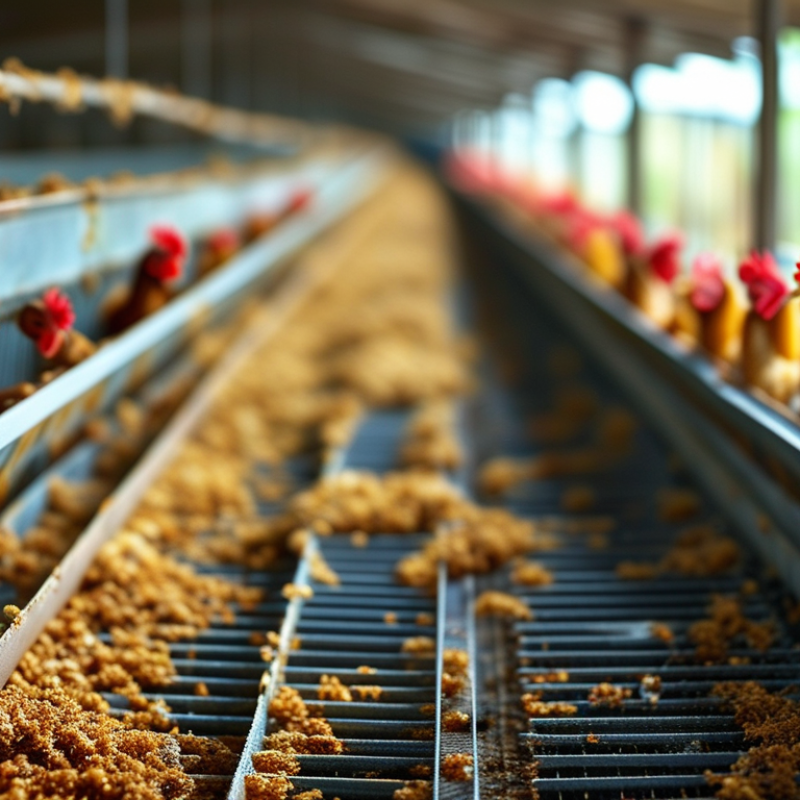
A chicken cage manure belt is a continuous conveyor installed beneath each cage row. It receives droppings, feathers, and small amounts of spilled feed. The belt then carries this material toward a collection point outside the house. Compared with deep-litter systems, it keeps manure more contained and supports more regular removal. Cleaner aisles can also improve daily inspection.
The main components include a durable belt, support rollers, drive rollers, a motor, and a tensioning device. Side guides help prevent manure from falling over the edges. A scraper removes residue near the discharge end, although some material may remain after one pass. Control switches regulate belt movement and allow operators to stop the system during inspection. Good ventilation matters because fresh manure can release strong ammonia. In practice, belt alignment is easy to underestimate. A small sideways shift can create uneven loading and faster wear.
Tips: Check belt tension before operation. Remove trapped debris from rollers. Inspect scrapers for damage. Keep electrical parts dry and protected. Record unusual noise, slipping, or belt tracking changes. Short checks matter. A practical cleaning schedule should match flock size, manure moisture, and local working conditions. Over-cleaning may waste energy, while delayed removal can increase odor and moisture. Professional guidance and equipment instructions should support these decisions.
A chicken cage manure belt is a moving conveyor installed beneath tiered cages. As birds drop manure, the belt carries it toward a cross conveyor or collection point. Scrapers, rollers, and a drive motor keep the surface moving at scheduled intervals. This system separates waste collection from daily bird handling and reduces manual shoveling.
The European Commission’s 2017 Best Available Techniques Reference Document describes cage systems removing manure at least twice weekly. Frequent removal leaves less time for ammonia to form inside the house. Belt speed, ventilation, and manure moisture still change the result. A poorly adjusted belt can smear wet manure beneath the cages.
Tips: Keep belt edges aligned and inspect them before each collection cycle. Record removal times, belt speed, moisture, and visible buildup. U.S. Environmental Protection Agency AgSTAR guidance supports routine inspection and maintenance for agricultural waste systems. Use these records with ventilation data, not guesswork. Even then, no belt removes every particle. Uneven cage floors may drop manure outside the belt, creating hidden work. Walk beneath each tier after collection. Look for damp streaks, clumps, or flies. If these signs persist, adjust tension and airflow before increasing speed.
A manure belt runs beneath the cage rows, receives droppings, and carries them to a discharge point where a scraper removes the waste. The chart estimates the fresh manure moved during each cleaning event for 1,000 laying hens, using 0.12 kg of manure per hen per day.
Estimated values: actual manure quantity varies with bird age, feed, water intake, housing conditions, and moisture content.
A chicken cage manure belt is a moving conveyor installed beneath elevated cages. It starts beneath the birds. As manure falls through the cage floor, the belt collects it instead of leaving waste on the house floor. The U.S. Department of Agriculture’s 2022 Census of Agriculture recorded more than 370 million egg-laying chickens nationwide, showing why controlled removal matters at commercial scale. In practice, belt width, ventilation, stocking density, and manure moisture all affect performance.
The step-by-step process is straightforward. Birds deposit manure onto the belt. A motor then moves the belt toward the house end, usually on a scheduled cycle. Scrapers or rollers help release material from the belt surface. The manure drops into a transfer point, trailer, storage area, or composting system. Some facilities run ventilation over the belt to dry manure before removal. The European Commission’s 2017 Best Available Techniques Reference Document identifies belt drying and frequent manure removal as recognized techniques for reducing emissions from intensive poultry housing. However, the report also shows that results depend on operating conditions, not equipment alone.
Keep the belt aligned. Small tracking errors become larger tears. A wet clump can overload the discharge point. Not glamorous. Operators should inspect tension, bearings, scraper edges, and accumulated dust each cycle. A clean belt does not always mean complete removal; manure can remain under joints, near supports, or inside transfer chutes. That detail is easy to miss.
A chicken cage manure belt is a moving conveyor placed beneath cage rows. It collects droppings and carries them toward a discharge point. Most belts use reinforced polypropylene or polyethylene, because these materials resist moisture, tearing, and repeated washing. The surface should remain flexible in cold conditions. A belt that becomes brittle can crack under tension.
The drive system normally includes an electric motor, gearbox, rollers, and tensioning devices. When the motor turns the drive roller, the belt moves at a controlled speed. Proper alignment matters. Even a small deviation can make manure gather along one edge. Scrapers remove residue near the discharge area, while brushes or low-pressure water help clean the belt. Excessive water may spread contamination and increase drying time. In practice, operators often adjust speed after observing moisture levels, though this judgment is not always consistent.
Inspect belt edges, roller bearings, and tension every day. Remove hard buildup before it damages the surface. Keep cleaning tools separate from feed equipment. Record unusual noise, slipping, or belt tracking. These small notes can reveal larger problems early. A dry cleaning step is often useful before washing. Do not rely on appearance alone; hidden residue may remain beneath rollers. Ventilation also affects drying, and this detail is sometimes overlooked.
A chicken cage manure belt is a moving conveyor fitted beneath tiered cages. It collects droppings before they fall onto the floor. A motor moves the belt toward a discharge point. Workers can then transfer the manure for composting or approved agricultural use. Some systems add airflow to reduce moisture and odor. The exact performance depends on belt material, ventilation, flock size, and cleaning frequency.
The main benefit is cleaner housing. Manure leaves the building faster, which can reduce ammonia buildup and insect pressure. It also lowers manual labor compared with frequent shovel removal. Drier manure is easier to handle and may have better value as a soil amendment. However, these benefits are not automatic. Poor ventilation or overloaded belts can still create wet, compacted manure and unpleasant odors.
Maintenance requires routine inspection. Operators should check belt alignment, tension, motor noise, and buildup around rollers. Small tears need prompt attention because a damaged belt can spread manure across the house. Scraping or washing should follow the equipment maker’s instructions, with enough drying time afterward. This detail is often underestimated. Manure belts suit layer houses, pullet facilities, and other caged poultry operations where regular waste removal is practical. Farms with uneven floors, weak drainage, or limited labor should assess installation costs carefully before choosing one.



For those larger-sized parts, or smaller quantity runs, we have 2 independent powder coat booths and ovens. The quality, durability and affordability of today’s powder coating finishes make this the process of choice for world-class companies.
Powder coating advantages over other forms of coating are many. Materials used in the Powder coating process can be metals and non-metals that come in a multitude of thicknesses, textures, colors, etc. Another of Powder coating’s biggest advantages over conventional coatings is its ability to create finishes in many different textures. Powder Coating Booths allow us the ability to apply these advantages to large products.
Tri-State Fabricators runs a full-service conveyor line for painting. Wet painting can provide protection or decoration to many different part styles. From start to finish, every project is easier to undergo random and point-based inspection by our skilled painting team.
Advantages to our Wet Paint Line are these lines start with product prep and ends with a thorough inspection of a high quality finished product. Our ability to complete large and small projects with a superior finish and doing so in a timely and economical fashion. This passes along the savings in production to our customers. When powder coating ins not an option, our Wet Paint Line gets the job done right the first time.
When the parts get big and heavy we roll-out our custom paint racks and oversize booth. By utilizing our partnerships with all the major paint brands, we can match virtually any color with wet paint.
The advantages of having access to a Wet Paint Booth are many. Large projects of many different shapes can be loaded into the booth. The Wet Paint Booth offers an environment that is much more controlled than a typical parts painting operation.
Not only are they used because of their controlled environment, but they’re are also advantageous when it comes to applying paint to parts that are needed in industries that require specialty coatings such as medical, aerospace, etc.
Our military forces have some very high standards when it comes to the finish of their vehicles and equipment. From the first pre-treatment step to final coat, it takes a great deal of knowledge and experience to protect the men and women of our armed forces. They deserve only the best, and Tri-State Fabricators provides it.
All of our processes are closely monitored by our staff and management teams. Both of which are highly trained in the processes of metal fabrication and finishing. Tri-State Fabricators’ goal is to always fully satisfy each and every customer, including the military. We will always put a 110% into what we do.
Abrasive media blasting is an excellent way to remove old paint, rust, and increase the paint/powder adhesion. Glass beads produce a much smoother and brighter finish than angular abrasives; leaving the part clean yet without any dimensional change. Chemically inert and environmentally friendly, we can recycle our beads approximately 30 times; making them a more preferred method of metal cleaning or surface finishing.
Advantages to Glass Bead Blasting are many. Glass bead blast media is used when a project is needing rough surfaces need to become smooth for applications of coatings such as paint. It is typically used to clean paint and rust from a product surface without deforming the surface it is being used on. Overall, compared to many other blasting media, Glass Bead Blasting is a very economical choice and those savings are always passed on to our customers.
Tri-State Fabricators utilize a zinc phosphate wash to clean and etch the material to ensure the best paint adhesion possible. The unique design of our 3-stage wash system does the work like a 5-stage. From Cleaning and rinsing to conversion coating and post-treatment, Our Part Washing process is a complete service and works throughout the fabrication service and the finishing service.
Along with the previously mentioned benefits, Curing is a vital chemical reaction that leaves the product finish hard and relatively safe from mild abrasion and aggressive corrosion. This process can be done in more than one way; ambient air-dry or in curing ovens at temps that exceed 240°.
From fixing paint mistakes (someone else’s of course) to simply cleaning our paint line hooks, our burn-off oven is put to good use. After a quick burn-off, a little clean up, and a fresh coat of paint, your parts will look better than new.
Why does our Burn-Off Oven work so well? Because super heating the air around parts turns the materials into ashes. From paint and powder coatings to rubber and machining oils, high temps do the job without degrading the integrity of the part.
Masking is a vital part of producing high quality products. We have die-cut masking patterns to protect machined surfaces as well as a wide range of plugs and caps to protect threaded holes and bolts. We provide permanent and temporary masking.
Masking allows the selected sections of a product to be protected from a fabrication or finishing service. This can be with both chemicals when etching and tapes, paints when only finishing just a section of the product. Masking is great in aiding the customization process of a project.
Screen printing is a photographic process that transfers artwork onto a porous nylon screen which allows colored ink to flow through the screen and be deposited on an aluminum or plastic component. We can generally have just about any design created onto a screen for your parts.
Some of the advantages of Screen Printing are, brand recognition for your business displaying on your products, assembly instructions, product warnings/hazards, etc. Tri-State Fabricators produces Screen Printing of the highest quality so you know it’s durable.
Metal Finishing is the art of treating the exterior portion of product, often metal but can also be made of other materials, so that the surface is clean and free of any debris. Then the process of applying coats or either paint of powder coat takes place. This coating process improves the quality of the product in both appearance and resistance to wear and corrosion.
Tri-State Fabricators, Inc., understands that a project typically isn’t complete until a high-quality finish has been added to your product. This is why our painting and powder coating teams continuously inspect the products throughout the Metal Finishing process.


