


A Chenglong Emergency Vehicle is built to move people, equipment, and vital services when ordinary transport cannot respond quickly enough. It may serve as a fire rescue truck, ambulance support vehicle, mobile command unit, water carrier, or emergency supply carrier. Its role depends on the body design, chassis configuration, payload, and onboard equipment.
Wang Jun, a commercial-vehicle engineer familiar with Chenglong truck applications, explains, “An emergency vehicle must remain dependable when roads, weather, and time create pressure.” This practical view highlights more than engine power. A Chenglong Emergency Vehicle may need reinforced suspension, strong braking performance, reliable electrical systems, warning lights, communication tools, and organized storage compartments. Inside, cabinets may hold medical kits, hoses, generators, ropes, or protective clothing. The exterior may include scene lighting and access steps for faster work.
However, no vehicle solves every emergency. A heavy rescue truck may struggle on narrow streets. A large water tank may reduce available payload. Complex equipment can also increase maintenance demands. These limitations deserve honest attention.
The best choice starts with the mission. Operators should examine terrain, climate, response distance, crew size, and equipment weight. They should also review training requirements and service support. In real conditions, a dependable vehicle is not merely impressive. It must start quickly, carry safely, and remain manageable under stress. That is where the Chenglong Emergency Vehicle can provide practical value, when properly specified and maintained.
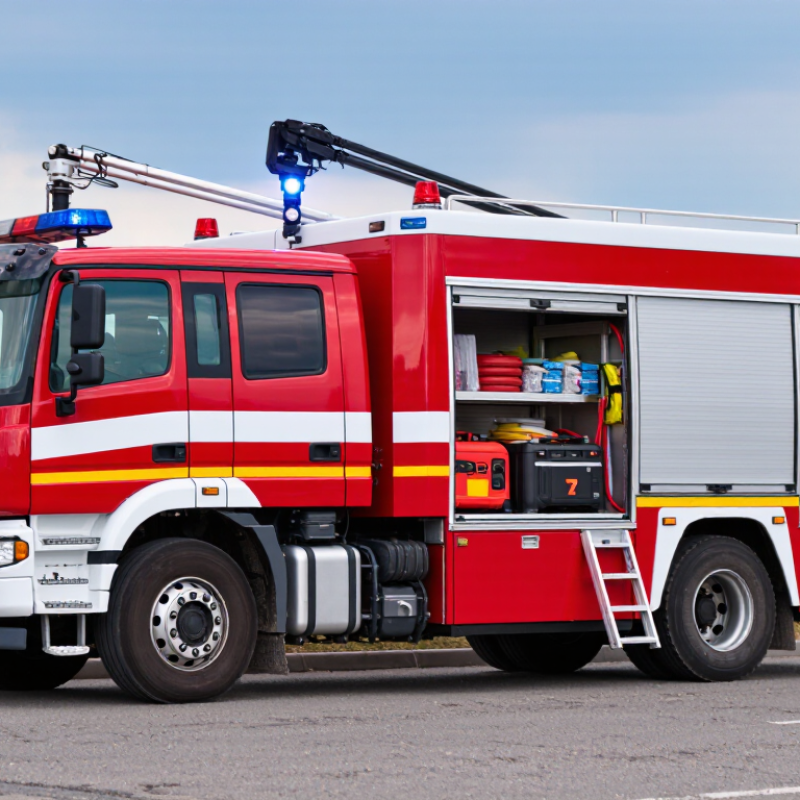
An emergency vehicle is a specially configured truck built for urgent response work. It may carry medical supplies, rescue tools, water tanks, power equipment, or communication systems. The exact layout depends on its mission. Some models support roadside rescue, while others serve fire teams, disaster crews, or mobile medical units. A strong chassis, stable handling, and reliable braking are essential when roads are damaged or crowded.
In practical use, operators may load stretchers, oxygen equipment, cutting tools, protective clothing, and portable lights. Storage must keep every item secure but quickly reachable. The vehicle can also provide lighting during a night rescue or electricity after a storm. However, equipment weight affects balance and fuel use. That detail is easy to overlook. Experienced crews inspect tire pressure, warning lights, radios, and compartments before departure. A written inspection record improves accountability, although busy teams may still miss small faults.
Tips: Match the vehicle to its actual duty, not its appearance. Check local emergency standards before purchasing or modifying it. Keep heavy tools low and secure loose equipment. Train every driver on braking distance, turning space, and limited visibility. Test communication equipment regularly. A short road exercise can reveal problems that a parked inspection cannot. Safety planning should involve mechanics, drivers, and field responders, because each group notices different risks.

A Chenglong emergency vehicle is designed to support demanding emergency response tasks in difficult conditions. Its large chassis can carry rescue tools, water, medical supplies, protective clothing, and communication equipment. This capacity helps crews reach industrial sites, highways, rural areas, and disaster zones with essential resources.
Which emergency response tasks can it perform? Depending on its configuration, the vehicle may support firefighting, road rescue, flood response, and emergency medical assistance. Crews can use onboard pumps and tanks to control fires, while hydraulic tools may help remove damaged vehicle doors. During floods or severe storms, it can transport personnel, portable generators, lighting systems, and relief materials. Some configurations also function as mobile command units, giving team leaders a stable space for radio coordination and situation tracking.
Its value depends on preparation, not size alone. Trained operators must inspect pumps, hoses, tires, warning systems, and medical equipment before deployment. Local emergency procedures also determine what the vehicle can legally and safely do. It may perform poorly on narrow roads, unstable ground, or routes with low bridges. That limitation matters. A powerful vehicle still needs accurate dispatch information, skilled crews, and regular maintenance. Small oversights can delay a rescue.
| Response Category | Emergency Response Task | How the Vehicle Supports the Task | Operational Notes |
|---|---|---|---|
| Fire and Rescue | Firefighting Support | Carries firefighting equipment such as hoses, portable pumps, extinguishers, water tanks, breathing apparatus, and hand tools. The vehicle can transport personnel and equipment to the incident area. | Configurable Water capacity and pump specification depend on the vehicle body and mission design. |
| Fire and Rescue | Urban Search and Rescue | Provides space for rescue tools, cutting equipment, lifting devices, ropes, lighting systems, protective clothing, and temporary scene-support supplies. | Suitable Best used with trained rescue teams and dedicated equipment. |
| Medical Response | Emergency Medical Transport | A properly equipped conversion can carry medical personnel, stretchers, first-aid supplies, oxygen equipment, monitoring devices, and patients requiring urgent transport. | Conversion-based Medical layouts and equipment must comply with applicable local regulations. |
| Medical Response | On-Site First Aid | Can be configured as a mobile treatment or first-aid unit for basic assessment, wound care, casualty triage, oxygen support, and preparation for hospital transfer. | Configurable It is not a substitute for a hospital or advanced clinical facility. |
| Traffic Incidents | Road Crash Response | Transports rescue crews and equipment for vehicle stabilization, casualty access, traffic-scene lighting, debris removal, and initial hazard control. | Suitable Response teams should coordinate with police, medical services, and road authorities. |
| Hazardous Conditions | Hazardous-Material Support | May carry chemical protective clothing, detection instruments, containment materials, absorbents, decontamination supplies, and warning equipment. | Specialized Actual hazardous-material capability depends on certified equipment and crew training. |
| Disaster Relief | Flood and Storm Response | Supports evacuation, delivery of emergency supplies, portable lighting, water removal, communications, and transport of personnel during floods, storms, or severe weather events. | Mission-dependent Ground clearance, traction, and payload must match local terrain and weather conditions. |
| Disaster Relief | Earthquake and Structural Emergency Support | Carries generators, lighting towers, power tools, shoring materials, lifting equipment, emergency shelters, and supplies for temporary field operations. | Suitable Structural rescue requires specialist assessment and properly trained personnel. |
| Command and Control | Mobile Incident Command | Can be fitted with radios, satellite or cellular communication systems, workstations, mapping tools, display screens, and power systems for coordinating emergency teams. | Configurable Communication coverage depends on local networks and installed systems. |
| Logistics | Emergency Equipment Delivery | Transports rescue personnel, fuel, food, water, medical supplies, temporary barriers, spare equipment, and other resources between the depot and incident site. | General-purpose Payload must remain within the approved vehicle limits. |
| Public Safety | Perimeter and Evacuation Support | Supports cordon setup, evacuation operations, public-address announcements, warning-light deployment, temporary shelter logistics, and controlled access to hazardous areas. | Suitable Public-safety procedures must follow the incident command plan. |
| Power and Lighting | Emergency Power Supply | A utility configuration can include a generator, batteries, power distribution equipment, floodlights, and cable management for temporary lighting and essential field operations. | Optional Electrical systems require appropriate protection, grounding, and operator training. |
An emergency vehicle is designed to reach dangerous scenes quickly and support trained responders. It may transport medical teams, rescue equipment, communication tools, and temporary lighting. Its purpose can include road accidents, fires, floods, industrial incidents, and urgent medical calls. Every compartment should have a clear function. During a night response, bright scene lights can illuminate broken glass, while reflective markings help other drivers notice the vehicle sooner.
Main features support safe and organized operations. A reinforced body protects essential equipment during difficult travel. High ground clearance can help on muddy roads or uneven access routes. Powerful warning lights and an audible alert system improve visibility, but drivers still need judgment. Inside, secure storage prevents oxygen cylinders, tools, and medical cases from shifting during sudden braking. Reliable radio communication helps teams share location details and changing hazards. Some vehicles also include climate control, backup power, non-slip flooring, and washable surfaces. These details seem small. They matter under pressure.
Tips: Check equipment positions before every shift. Test lights, radios, batteries, and door locks. Keep walkways clear. Clean high-touch surfaces after each operation. Do not overload storage compartments. I have found that realistic drills reveal weak points, especially poor lighting or confusing labels. A capable vehicle is not automatically a safe one. Its performance depends on maintenance, crew training, road conditions, and disciplined use.รีเมียร์Twitter
A Chenglong emergency vehicle is commonly used where rapid response, heavy equipment, and dependable transport are necessary.
It often serves municipal rescue teams, highway maintenance units, industrial facilities, construction areas, and rural communities. Its strong chassis can support rescue tools, water tanks, lighting systems, or communication equipment, depending on the configuration.
On busy highways, crews may use it after collisions, severe weather, or vehicle breakdowns. Industrial zones often rely on similar vehicles for fire support, first aid transport, and equipment recovery.
In remote villages, the vehicle can carry personnel and supplies across rough roads that smaller vans may struggle to manage. It is also useful near ports, warehouses, tunnels, and large public events. Conditions differ widely.
Tips: Check the road surface before deployment. Confirm the payload and equipment layout. Keep emergency lights, radios, and medical supplies accessible. Local operators should receive practical training, not only classroom instruction.
A common mistake is treating every emergency vehicle as a universal solution.
A large truck may reach difficult areas, but narrow streets can limit its movement. Fuel use, turning space, maintenance access, and weather conditions also affect performance. From field experience, a careful route survey often prevents delays. The equipment may be excellent, yet poor preparation can still reduce its value.
An emergency vehicle is a mobile work platform, not simply a truck with flashing lights. Its configuration changes with terrain, incident type, crew size, and response distance. A road-rescue vehicle may carry hydraulic cutters, spreaders, stabilization struts, medical kits, and high-visibility lighting. Its storage must keep heavy tools low and accessible, especially beside a damaged vehicle.
Fire and rescue planning should follow evidence, not appearance. The World Health Organization reported about 1.19 million annual road-traffic deaths in its Global Status Report on Road Safety 2023. That risk supports quick medical access, scene lighting, and protected equipment compartments. NFPA’s U.S. Fire Loss 2023 report recorded about 1.39 million fires, showing why thermal protection, breathing-apparatus storage, and reliable water equipment matter.
Flood response needs sealed electrics, traction aids, recovery points, and portable pumps. Urban rescue may require a compact body, radios, battery lighting, and patient-access space. Wildland operations often need larger water capacity and heat-resistant equipment.
The difficult part is balance. More equipment can reduce payload, visibility, or crew movement. A vehicle may look fully equipped yet perform poorly when drawers jam or tools are too heavy. Operators should test layouts during drills, record access times, and revise the configuration after real incidents. Even small failures matter.


For those larger-sized parts, or smaller quantity runs, we have 2 independent powder coat booths and ovens. The quality, durability and affordability of today’s powder coating finishes make this the process of choice for world-class companies.
Powder coating advantages over other forms of coating are many. Materials used in the Powder coating process can be metals and non-metals that come in a multitude of thicknesses, textures, colors, etc. Another of Powder coating’s biggest advantages over conventional coatings is its ability to create finishes in many different textures. Powder Coating Booths allow us the ability to apply these advantages to large products.
Tri-State Fabricators runs a full-service conveyor line for painting. Wet painting can provide protection or decoration to many different part styles. From start to finish, every project is easier to undergo random and point-based inspection by our skilled painting team.
Advantages to our Wet Paint Line are these lines start with product prep and ends with a thorough inspection of a high quality finished product. Our ability to complete large and small projects with a superior finish and doing so in a timely and economical fashion. This passes along the savings in production to our customers. When powder coating ins not an option, our Wet Paint Line gets the job done right the first time.
When the parts get big and heavy we roll-out our custom paint racks and oversize booth. By utilizing our partnerships with all the major paint brands, we can match virtually any color with wet paint.
The advantages of having access to a Wet Paint Booth are many. Large projects of many different shapes can be loaded into the booth. The Wet Paint Booth offers an environment that is much more controlled than a typical parts painting operation.
Not only are they used because of their controlled environment, but they’re are also advantageous when it comes to applying paint to parts that are needed in industries that require specialty coatings such as medical, aerospace, etc.
Our military forces have some very high standards when it comes to the finish of their vehicles and equipment. From the first pre-treatment step to final coat, it takes a great deal of knowledge and experience to protect the men and women of our armed forces. They deserve only the best, and Tri-State Fabricators provides it.
All of our processes are closely monitored by our staff and management teams. Both of which are highly trained in the processes of metal fabrication and finishing. Tri-State Fabricators’ goal is to always fully satisfy each and every customer, including the military. We will always put a 110% into what we do.
Abrasive media blasting is an excellent way to remove old paint, rust, and increase the paint/powder adhesion. Glass beads produce a much smoother and brighter finish than angular abrasives; leaving the part clean yet without any dimensional change. Chemically inert and environmentally friendly, we can recycle our beads approximately 30 times; making them a more preferred method of metal cleaning or surface finishing.
Advantages to Glass Bead Blasting are many. Glass bead blast media is used when a project is needing rough surfaces need to become smooth for applications of coatings such as paint. It is typically used to clean paint and rust from a product surface without deforming the surface it is being used on. Overall, compared to many other blasting media, Glass Bead Blasting is a very economical choice and those savings are always passed on to our customers.
Tri-State Fabricators utilize a zinc phosphate wash to clean and etch the material to ensure the best paint adhesion possible. The unique design of our 3-stage wash system does the work like a 5-stage. From Cleaning and rinsing to conversion coating and post-treatment, Our Part Washing process is a complete service and works throughout the fabrication service and the finishing service.
Along with the previously mentioned benefits, Curing is a vital chemical reaction that leaves the product finish hard and relatively safe from mild abrasion and aggressive corrosion. This process can be done in more than one way; ambient air-dry or in curing ovens at temps that exceed 240°.
From fixing paint mistakes (someone else’s of course) to simply cleaning our paint line hooks, our burn-off oven is put to good use. After a quick burn-off, a little clean up, and a fresh coat of paint, your parts will look better than new.
Why does our Burn-Off Oven work so well? Because super heating the air around parts turns the materials into ashes. From paint and powder coatings to rubber and machining oils, high temps do the job without degrading the integrity of the part.
Masking is a vital part of producing high quality products. We have die-cut masking patterns to protect machined surfaces as well as a wide range of plugs and caps to protect threaded holes and bolts. We provide permanent and temporary masking.
Masking allows the selected sections of a product to be protected from a fabrication or finishing service. This can be with both chemicals when etching and tapes, paints when only finishing just a section of the product. Masking is great in aiding the customization process of a project.
Screen printing is a photographic process that transfers artwork onto a porous nylon screen which allows colored ink to flow through the screen and be deposited on an aluminum or plastic component. We can generally have just about any design created onto a screen for your parts.
Some of the advantages of Screen Printing are, brand recognition for your business displaying on your products, assembly instructions, product warnings/hazards, etc. Tri-State Fabricators produces Screen Printing of the highest quality so you know it’s durable.
Metal Finishing is the art of treating the exterior portion of product, often metal but can also be made of other materials, so that the surface is clean and free of any debris. Then the process of applying coats or either paint of powder coat takes place. This coating process improves the quality of the product in both appearance and resistance to wear and corrosion.
Tri-State Fabricators, Inc., understands that a project typically isn’t complete until a high-quality finish has been added to your product. This is why our painting and powder coating teams continuously inspect the products throughout the Metal Finishing process.

