


Choosing a Car Battery Jumper is less about buying the biggest number on the box and more about matching the tool to your vehicle. A compact unit may suit a small sedan, while a larger engine can demand higher starting current. Check your owner’s manual and the jumper’s specifications before comparing prices. Small details matter.
For this guide, automotive electrical specialist Evan Brooks offers a practical reminder: “A reliable jumper is one you can use confidently, with the right capacity and safety features for your vehicle.” Look beyond peak amps. Compare voltage, supported engine size, clamp design, cable reach, and reverse-polarity protection. A short cable can make awkward parking-lot connections harder. Read the instructions before an emergency, not beside a dark roadside.
The buying tips ahead also consider battery chemistry, charging options, built-in lights, storage, warranty, and cold-weather performance. Some features sound reassuring but may add little for your routine. Be honest about that. Check the unit’s charge level regularly, and replace damaged cables or clamps rather than hoping they will hold. No portable device fits every car or every situation. These points help buyers judge trade-offs, ask better questions, and choose a Car Battery Jumper suited to everyday needs—not just an impressive package.
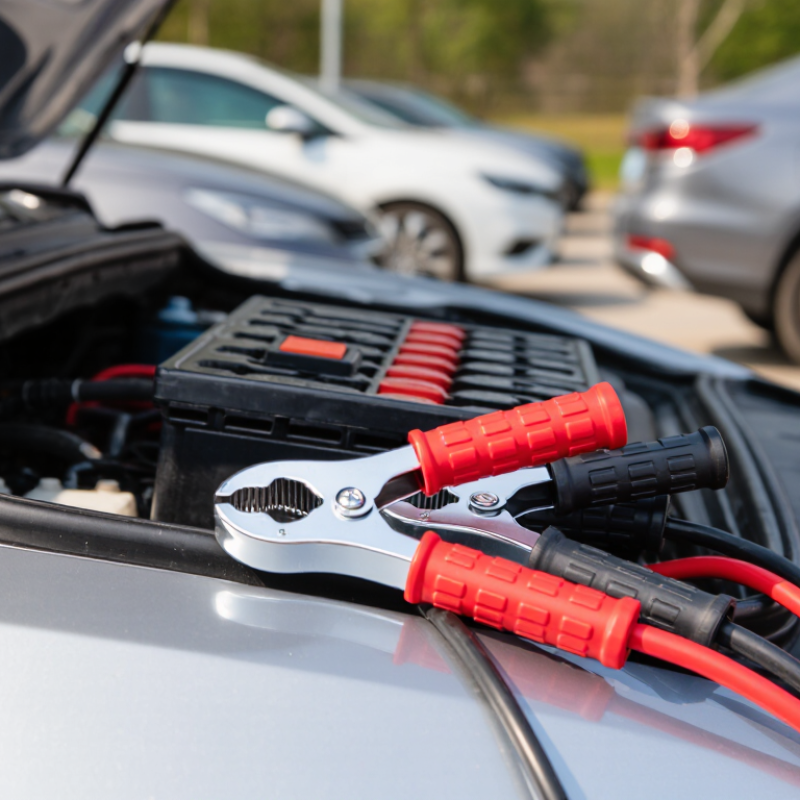
Before comparing starting current, confirm your vehicle’s electrical system voltage. Most passenger cars use 12 volts, but some commercial vehicles use 24 volts. Check the owner’s manual or the battery label rather than guessing from the vehicle’s size. A voltage mismatch can prevent a safe, proper connection. Check the label. Also confirm that the jumper’s clamps and instructions suit your vehicle’s battery layout, especially if the battery is tucked under a seat or cover.
Next, match the jumper’s starting-current rating to your engine and conditions. A small petrol engine usually needs less starting power than a large diesel, and cold weather makes cranking harder. Use the vehicle manual and the jumper’s stated engine-size guidance as your reference. Cold mornings matter. Look for a clear starting-current figure, not only a dramatic peak-current number; those figures may describe different things. If your vehicle is near the upper limit, choose a unit with a suitable margin rather than relying on optimistic assumptions. I’ve found product labels can be confusing, so compare like-for-like ratings and ask the manufacturer when specifications are unclear. A higher number alone does not prove compatibility.

When comparing a car battery jumper, read “CCA” carefully. Under SAE J537, a fully charged 12-volt lead-acid battery is cooled to 0°F (-18°C), then tested for 30 seconds. It must maintain at least 7.2 volts during that test. That is a demanding cold-weather measure, not a promise that every jumper can deliver the same current.
Check what the number describes. CCA usually rates a battery, while portable jump starters may advertise peak amps or other output figures. These figures are not interchangeable. Look for the test standard, operating temperature, and clear instructions about compatible engine sizes. If details are missing, ask how the claimed output was measured. Small print matters.
Cold mornings expose weak batteries fast. A dashboard may glow, yet the starter only clicks. A jumper’s advertised number can help with shopping, but cable quality, clamp contact, and charge level also affect performance. Keep the clamps clean and firmly attached to the correct terminals. Not glamorous, but important. I would not choose by the largest number alone; specifications can be confusing, and I still double-check what each one measures.
A jump starter’s capacity and starting current describe different things. Peak amps indicate short bursts of cranking power; watt-hours better show stored energy. Compare watt-hours when available, because a milliamp-hour rating without its test voltage can mislead. A 12-volt pack may deliver less usable energy than its headline figure suggests. Check the rated capacity, output voltage, and stated cranking current.
Cycle life also separates lithium-ion and lead-acid packs. Battery University’s technical comparison reports roughly 200–300 cycles for lead-acid batteries at full discharge, versus about 500–1,000 for lithium-ion cells. These are broad reference ranges, not guarantees. Chemistry, temperature, charging habits, and discharge depth all affect lifespan. That comparison is imperfect. Many jump starters are retired because of age, poor storage, or a forgotten charge—not because they reached a laboratory cycle limit.
For a driver who keeps a pack in the trunk, weight and maintenance matter. A lithium-ion unit is usually lighter and easier to carry between cars. Lead-acid models are often bulkier, and deep discharges can shorten their service life. Look for a clear capacity rating and cycle-life conditions, then compare like with like. I would not choose by peak amps alone. A large number looks reassuring, but it says little about how many starts the pack can support. Keep the device charged, and avoid leaving it in a hot vehicle for long periods.
When comparing car battery jump starters, check whether the exact model is certified to UL 2743, a safety standard for portable power packs. That matters. Look for the certification mark on the unit or packaging, then confirm the model number in a reliable certification directory. A product page that merely says “tested” is not the same as verified certification.
Reverse-polarity protection is another feature worth checking. It can detect clamps connected to the wrong battery terminals and may warn you with a light or sound before power flows. Picture connecting the red clamp to the black terminal in a dim parking lot: a clear warning can prevent a stressful mistake. Still, protection is a backup, not permission to ignore the instructions. Confirm the positive and negative symbols, and attach the clamps in the order stated by the manual.
Read the manual before an emergency, not beside a dead car in the rain. Check what the indicator means and whether the unit stops output automatically. These safeguards reduce risk, but they cannot correct damaged cables, a cracked case, or careless use. I would also compare clamp quality and instruction clarity; certification alone does not tell the whole story. A small detail, perhaps, but easy to overlook.
Cable length matters when the battery sits far from a safe standing position. Check the jumper’s cable reach, then picture the clamps traveling from the device to both battery terminals without stretching. Measure twice. A short lead can force awkward positioning, especially in a crowded engine bay. Extra length helps, but thick cables can be stiff in cold weather, so consider how easily they bend and store. Look for clear polarity markings and clamp insulation, and follow the vehicle and jumper instructions. Never rely on cable reach if the clamps cannot attach securely.
Operating temperature is more than a comfort detail. A unit kept in a freezing trunk may deliver less power, and some models should not be used outside their stated temperature range. Check both the use and storage limits. Cold morning? Give the device time to warm only as its instructions allow; do not heat it directly. Recharge time also varies with the unit’s capacity, remaining charge, and input source. A small indicator can prevent guesswork, but it may not show an exact percentage. Consider whether a full recharge fits your routine, and recharge after use according to the manual. I once assumed a partly charged unit was ready; that was poor planning. A visible charge level and a practical charging method make readiness easier to verify.
| # | Buying Tip | What to Check | Practical Guidance | Why It Matters |
|---|---|---|---|---|
| 1 | Match the unit to your vehicle | Supported engine type and displacement | Check the manufacturer’s compatibility chart for your petrol or diesel engine and its displacement. | A unit that is undersized for the vehicle may not provide enough starting power. |
| 2 | Compare starting-current ratings carefully | Starting current, peak current, and test conditions | Prioritize a clearly stated starting-current rating and vehicle compatibility; peak-current figures alone may not be directly comparable. | Rating terms and measurement methods can vary between products. |
| 3 | Assess cable reach | Cable length from the unit to each clamp | Measure the likely battery-to-placement distance in your vehicle and choose leads long enough to reach without stretching. | Adequate reach makes it easier to position the pack safely and connect the clamps securely. |
| 4 | Check cable flexibility and clamp access | Cable flexibility, clamp opening, and grip | Look for insulated leads and clamps that can grip the battery terminals or approved connection points firmly. | Stiff or short leads and poorly fitting clamps can make a secure connection difficult, especially in cramped engine bays. |
| 5 | Verify the operating-temperature range | Minimum and maximum operating temperatures | Compare the published range with the climate where you will store and use the unit; check whether charging has a separate temperature limit. | Battery performance and safe charging conditions can change with temperature. |
| 6 | Estimate recharge time | Full-charge time, charging input, and included charger | Use the stated recharge time for the supplied charging method, and check whether a faster charging adapter is required or sold separately. | A depleted unit is only useful if you can recharge it in time for your next trip. |
| 7 | Review electrical safety protections | Reverse-polarity, short-circuit, and overcurrent protection | Confirm which protections are provided and read the connection instructions before use. | Protective features can help reduce the risk of damage from common connection errors. |
| 8 | Consider battery capacity and charge retention | Published capacity, self-discharge guidance, and maintenance interval | Follow the recommended charging and storage schedule; compare capacity figures only when the units and test conditions are clear. | Stored units can lose charge over time and may need periodic recharging. |
| 9 | Check portability and storage | Weight, dimensions, case, and cable storage | Choose a size that fits your vehicle storage area and keeps the clamps protected when not in use. | A compact, organized unit is easier to carry and less likely to have damaged leads. |
| 10 | Read the instructions and warranty terms | Permitted battery types, duty cycle, warranty, and support | Check the manual for approved use, waiting periods between attempts, storage guidance, and warranty coverage. | Correct use helps protect the vehicle and the jumper, while clear warranty terms set expectations for service. |


For those larger-sized parts, or smaller quantity runs, we have 2 independent powder coat booths and ovens. The quality, durability and affordability of today’s powder coating finishes make this the process of choice for world-class companies.
Powder coating advantages over other forms of coating are many. Materials used in the Powder coating process can be metals and non-metals that come in a multitude of thicknesses, textures, colors, etc. Another of Powder coating’s biggest advantages over conventional coatings is its ability to create finishes in many different textures. Powder Coating Booths allow us the ability to apply these advantages to large products.
Tri-State Fabricators runs a full-service conveyor line for painting. Wet painting can provide protection or decoration to many different part styles. From start to finish, every project is easier to undergo random and point-based inspection by our skilled painting team.
Advantages to our Wet Paint Line are these lines start with product prep and ends with a thorough inspection of a high quality finished product. Our ability to complete large and small projects with a superior finish and doing so in a timely and economical fashion. This passes along the savings in production to our customers. When powder coating ins not an option, our Wet Paint Line gets the job done right the first time.
When the parts get big and heavy we roll-out our custom paint racks and oversize booth. By utilizing our partnerships with all the major paint brands, we can match virtually any color with wet paint.
The advantages of having access to a Wet Paint Booth are many. Large projects of many different shapes can be loaded into the booth. The Wet Paint Booth offers an environment that is much more controlled than a typical parts painting operation.
Not only are they used because of their controlled environment, but they’re are also advantageous when it comes to applying paint to parts that are needed in industries that require specialty coatings such as medical, aerospace, etc.
Our military forces have some very high standards when it comes to the finish of their vehicles and equipment. From the first pre-treatment step to final coat, it takes a great deal of knowledge and experience to protect the men and women of our armed forces. They deserve only the best, and Tri-State Fabricators provides it.
All of our processes are closely monitored by our staff and management teams. Both of which are highly trained in the processes of metal fabrication and finishing. Tri-State Fabricators’ goal is to always fully satisfy each and every customer, including the military. We will always put a 110% into what we do.
Abrasive media blasting is an excellent way to remove old paint, rust, and increase the paint/powder adhesion. Glass beads produce a much smoother and brighter finish than angular abrasives; leaving the part clean yet without any dimensional change. Chemically inert and environmentally friendly, we can recycle our beads approximately 30 times; making them a more preferred method of metal cleaning or surface finishing.
Advantages to Glass Bead Blasting are many. Glass bead blast media is used when a project is needing rough surfaces need to become smooth for applications of coatings such as paint. It is typically used to clean paint and rust from a product surface without deforming the surface it is being used on. Overall, compared to many other blasting media, Glass Bead Blasting is a very economical choice and those savings are always passed on to our customers.
Tri-State Fabricators utilize a zinc phosphate wash to clean and etch the material to ensure the best paint adhesion possible. The unique design of our 3-stage wash system does the work like a 5-stage. From Cleaning and rinsing to conversion coating and post-treatment, Our Part Washing process is a complete service and works throughout the fabrication service and the finishing service.
Along with the previously mentioned benefits, Curing is a vital chemical reaction that leaves the product finish hard and relatively safe from mild abrasion and aggressive corrosion. This process can be done in more than one way; ambient air-dry or in curing ovens at temps that exceed 240°.
From fixing paint mistakes (someone else’s of course) to simply cleaning our paint line hooks, our burn-off oven is put to good use. After a quick burn-off, a little clean up, and a fresh coat of paint, your parts will look better than new.
Why does our Burn-Off Oven work so well? Because super heating the air around parts turns the materials into ashes. From paint and powder coatings to rubber and machining oils, high temps do the job without degrading the integrity of the part.
Masking is a vital part of producing high quality products. We have die-cut masking patterns to protect machined surfaces as well as a wide range of plugs and caps to protect threaded holes and bolts. We provide permanent and temporary masking.
Masking allows the selected sections of a product to be protected from a fabrication or finishing service. This can be with both chemicals when etching and tapes, paints when only finishing just a section of the product. Masking is great in aiding the customization process of a project.
Screen printing is a photographic process that transfers artwork onto a porous nylon screen which allows colored ink to flow through the screen and be deposited on an aluminum or plastic component. We can generally have just about any design created onto a screen for your parts.
Some of the advantages of Screen Printing are, brand recognition for your business displaying on your products, assembly instructions, product warnings/hazards, etc. Tri-State Fabricators produces Screen Printing of the highest quality so you know it’s durable.
Metal Finishing is the art of treating the exterior portion of product, often metal but can also be made of other materials, so that the surface is clean and free of any debris. Then the process of applying coats or either paint of powder coat takes place. This coating process improves the quality of the product in both appearance and resistance to wear and corrosion.
Tri-State Fabricators, Inc., understands that a project typically isn’t complete until a high-quality finish has been added to your product. This is why our painting and powder coating teams continuously inspect the products throughout the Metal Finishing process.

