


What Are Canadian Ultra Light Cigarettes?

Canadian ultra-light cigarettes are often understood as cigarettes once marketed with terms such as “ultra light” or “low tar.” These labels described machine-measured smoke yields, not a dependable measure of what a person inhales. Health Canada warns that light and mild cigarettes do not reduce the health risks of smoking. The label can mislead.

The evidence is important. The World Health Organization’s 2023 Tobacco fact sheet estimates that tobacco causes more than eight million deaths each year worldwide, including deaths among people exposed to second-hand smoke. A cigarette’s appearance, filter design, or historic tar rating does not make it safe. Smokers may also change how they puff, making machine-test figures a poor guide to individual exposure. Real use is not a lab test.

People searching “where to buy canadian ultra light cigarettes” should know that “ultra light” is a legacy marketing description, not a health category. Canadian tobacco rules restrict misleading descriptors, and product availability and age requirements depend on current local regulations. This introduction does not direct readers to sellers. It explains what the term means and why it deserves caution. Health Canada’s tobacco information and the WHO report are stronger references than product claims or retail descriptions. I should add one caveat: historical names still appear online, and that can make their meaning seem clearer than it is. A familiar label is not proof of lower risk.
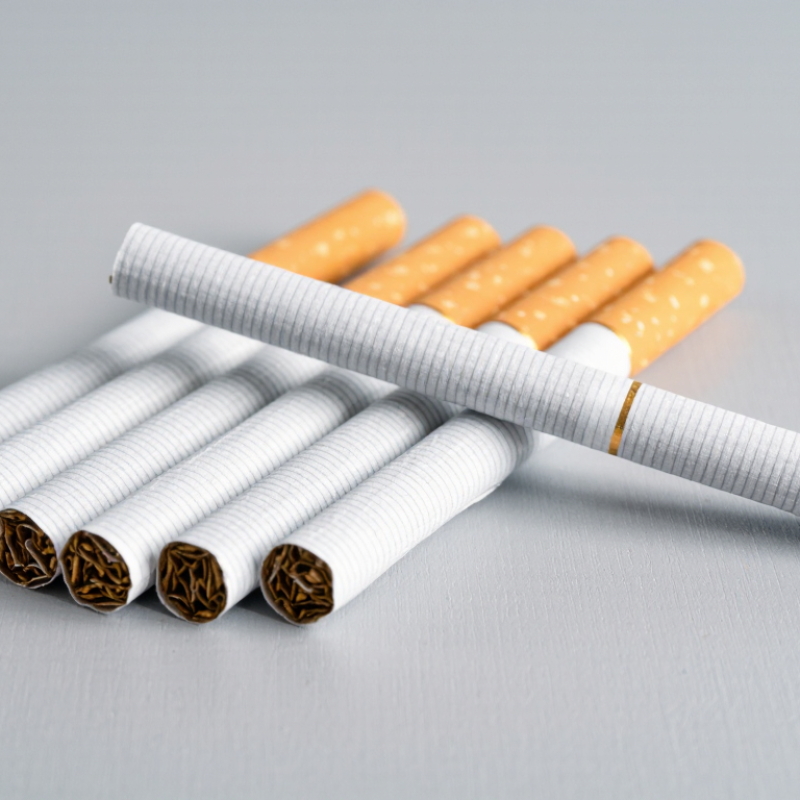
What Are Canadian Ultra Light Cigarettes?

Definition: “Ultra-Light” Was a Marketing Label, Not a Canadian Legal Category

In Canada, “ultra-light” was a marketing label, not a legal cigarette category. It did not certify a product as safer or place it in a special government-defined class. Canadian rules restrict misleading package descriptions, so the phrase is best understood as marketing language, not an official classification. That distinction matters. A pale pack or a “lighter” description could suggest reduced harm without proving it.

The term was often associated with lower machine-measured tar and nicotine yields. Those figures came from testing machines, not from measuring what an individual smoker actually absorbed. People may take deeper puffs, smoke more often, or block tiny ventilation holes with their fingers. Human behavior is messy. So a lower test result does not reliably mean lower exposure or lower health risk. The label can still sound reassuring, which is part of why it deserves careful scrutiny. When reading older packaging or descriptions, treat “ultra-light” as a sales claim from its time, not as evidence of a safer cigarette. The distinction is easy to miss.


Canadian Rules: “Light” and “Mild” Descriptors Were Banned in 2007

What Are Canadian Ultra Light Cigarettes?

In Canada, “ultra light” is best understood as a historical marketing term, not a reliable measure of safety. For years, cigarette packages used words such as “light” and “mild” to suggest a gentler product. That impression could be misleading. A pale package or a softer-sounding label did not mean a smoker faced little risk.

Canadian rules changed in 2007. The words “light” and “mild” were banned from tobacco packaging and promotion because they could imply reduced harm. The change affected how cigarettes could be described, not the underlying health risks. A cigarette did not become safer simply because its label changed. That distinction is easy to miss.

People sometimes used “ultra light” to describe cigarettes associated with lower machine-measured tar or nicotine yields. But those test results do not reliably predict what a person absorbs. Smoking habits matter: someone may take deeper puffs, inhale more often, or cover ventilation holes with their fingers. Small details. Big difference. It is also worth questioning old assumptions; familiar wording can sound factual even when it mainly shaped expectations. Today, Canadian packaging rules restrict misleading impressions, so “ultra light” should not be treated as an official safety category.

Canadian Ultra-Light Cigarettes: The “Light” and “Mild” Descriptor Ban

“Ultra-light” was a marketing term, not a reliable indicator of lower health risk. Canada prohibited “light” and “mild” descriptors on tobacco packaging in 2007; the chart shows the descriptor status, not cigarette strength or health effects.

Machine Testing: ISO 3308 Uses 35-mL Puffs Every 60 Seconds

What Are Canadian Ultra Light Cigarettes?

Machine testing offers a controlled way to compare cigarette emissions. Under ISO 3308, a smoking machine draws a 35-millilitre puff every 60 seconds. Each puff lasts two seconds. The cigarette is held in a fixed position, while the machine follows the same pattern for each test. Consistent conditions matter. They make laboratory results easier to compare.

But a machine is not a person. It does not change puff size, pause, or respond to taste. Its results describe emissions under a specific test method, not the amount an individual will inhale. That distinction is easy to miss. Small ventilation holes in a filter can also affect machine readings; fingers or lips may partly cover them during ordinary use.

“Ultra light” is not a dependable measure of personal exposure. A lower machine-measured yield does not establish that a cigarette is safer or that someone will take in less smoke. Real smoking patterns vary, and testing cannot capture every variation. The numbers are useful, but limited. That limitation deserves attention.

What Are Canadian Ultra Light Cigarettes? - Machine Testing: ISO 3308 Uses 35-mL Puffs Every 60 Seconds

Dimension Accurate information How to interpret it
Meaning of “ultra light” “Ultra light” is a historical marketing-style description, not a separate scientific cigarette category with a universal definition. The term alone does not establish a product’s emissions, nicotine delivery, or health risk.
Canadian labelling context Canadian tobacco rules restrict misleading representations about a tobacco product’s effects on health. “Light” and “mild” descriptors have been prohibited on cigarette packages and in advertising. “Ultra light” should not be treated as an official Canadian safety rating or a reliable measure of lower exposure.
ISO 3308 puff volume The standard machine-smoking regime uses a puff volume of 35 mL per puff. This is a controlled laboratory setting, not a measurement of how much a person actually inhales.
ISO 3308 puff timing The standard regime uses a 2-second puff once every 60 seconds. Changing puff volume, duration, or frequency can change measured machine yields.
Ventilation during ISO testing Under the ISO routine method, filter ventilation holes are not deliberately blocked as they are in some more intensive machine-testing protocols. Ventilation can dilute smoke drawn by the machine and affect reported yields; it does not mean a smoker will inhale the same amounts.
What machine yields represent Machine tests can measure emissions such as nicotine, tar (nicotine-free dry particulate matter), and carbon monoxide under the specified conditions. Results describe emissions under that test method; they are not a direct prediction of an individual’s exposure or disease risk.
Canadian Intense testing Health Canada’s Canadian Intense smoking regime uses 55-mL puffs every 30 seconds and blocks filter ventilation holes. Its conditions are more intensive than ISO 3308’s routine regime, so results from the two methods should not be compared as if they were produced identically.
Health interpretation Machine-measured yields and “light” or “ultra light” descriptions do not establish that a cigarette is safe or that switching reduces health risk. All combustible cigarettes expose users to harmful substances; no machine-test result makes smoking safe.

Method note: ISO 3308 describes a standard laboratory smoking-machine regimen. Actual smoking behaviour varies, so machine yields should not be read as personal intake figures. Canadian regulatory and testing information is provided for context; no company or brand data are included.

Why Machine Yields Do Not Predict Individual Smoke Exposure

What Are Canadian Ultra Light Cigarettes?

“Ultra light” has historically referred to cigarettes with lower tar and nicotine yields in standardized machine tests. Those figures describe a test setup, not a person. A machine takes controlled puffs at set intervals. Real smoking is less predictable.

That difference matters. A person may take larger or more frequent puffs, inhale more deeply, or smoke closer to the filter. Small ventilation holes in some filters can also be partly covered by fingers or lips, changing the air drawn through the cigarette. Habit, stress, and smoking patterns vary too. The test cannot capture all of that. Not even close.

A lower machine yield does not reliably predict lower exposure for an individual. It is easy to read a number as a personal forecast; it is not. Researchers assess exposure using methods such as measuring chemicals or their breakdown products in the body, though these measures have limits as well. The details can feel unsatisfying, because one simple number would be easier to compare. Still, machine results should not be treated as proof that a cigarette is safer. Public health guidance is clear that no cigarette is risk-free, and a label cannot tell someone exactly how much smoke their body receives.

Health Context: Tobacco Use Causes Over 8 Million Deaths Each Year Worldwide

What Are Canadian Ultra Light Cigarettes?

Health Context: Tobacco Use Causes Over 8 Million Deaths Each Year Worldwide

“Ultra light” describes cigarettes once associated with lower machine-measured smoke yields. Tiny ventilation holes in filters can dilute smoke during testing. A person may inhale more deeply, take extra puffs, or block those holes without noticing. The label sounds reassuring. It does not mean the product is safe or that exposure is reliably lower.

The World Health Organization reports that tobacco use causes more than 8 million deaths each year worldwide, including deaths linked to secondhand smoke. Tobacco smoke contains toxic substances that can damage the lungs, heart, and blood vessels. Risk is not always visible: smoke may linger in a room after the cigarette is gone. Even so, people often underestimate exposure when a product seems mild. That perception deserves a closer look.

Tips: Check trusted public-health sources rather than relying on packaging language. Keep indoor spaces smoke-free, and ask a healthcare professional about support for quitting. If you already smoke, changing to a lighter-sounding product does not remove the health risks.

Powder Coat Booths

For those larger-sized parts, or smaller quantity runs, we have 2 independent powder coat booths and ovens. The quality, durability and affordability of today’s powder coating finishes make this the process of choice for world-class companies.

Powder coating advantages over other forms of coating are many. Materials used in the Powder coating process can be metals and non-metals that come in a multitude of thicknesses, textures, colors, etc. Another of Powder coating’s biggest advantages over conventional coatings is its ability to create finishes in many different textures. Powder Coating Booths allow us the ability to apply these advantages to large products.

Wet Paint Line

Tri-State Fabricators runs a full-service conveyor line for painting. Wet painting can provide protection or decoration to many different part styles. From start to finish, every project is easier to undergo random and point-based inspection by our skilled painting team.

Advantages to our Wet Paint Line are these lines start with product prep and ends with a thorough inspection of a high quality finished product. Our ability to complete large and small projects with a superior finish and doing so in a timely and economical fashion. This passes along the savings in production to our customers. When powder coating ins not an option, our Wet Paint Line gets the job done right the first time.

Wet Paint Booths

When the parts get big and heavy we roll-out our custom paint racks and oversize booth. By utilizing our partnerships with all the major paint brands, we can match virtually any color with wet paint.

The advantages of having access to a Wet Paint Booth are many. Large projects of many different shapes can be loaded into the booth. The Wet Paint Booth offers an environment that is much more controlled than a typical parts painting operation.

Not only are they used because of their controlled environment, but they’re are also advantageous when it comes to applying paint to parts that are needed in industries that require specialty coatings such as medical, aerospace, etc.

Military CARC

Our military forces have some very high standards when it comes to the finish of their vehicles and equipment. From the first pre-treatment step to final coat, it takes a great deal of knowledge and experience to protect the men and women of our armed forces. They deserve only the best, and Tri-State Fabricators provides it.

All of our processes are closely monitored by our staff and management teams. Both of which are highly trained in the processes of metal fabrication and finishing. Tri-State Fabricators’ goal is to always fully satisfy each and every customer, including the military. We will always put a 110% into what we do.

Glass-Bead Blasting

Abrasive media blasting is an excellent way to remove old paint, rust, and increase the paint/powder adhesion. Glass beads produce a much smoother and brighter finish than angular abrasives; leaving the part clean yet without any dimensional change. Chemically inert and environmentally friendly, we can recycle our beads approximately 30 times; making them a more preferred method of metal cleaning or surface finishing.

Advantages to Glass Bead Blasting are many. Glass bead blast media is used when a project is needing rough surfaces need to become smooth for applications of coatings such as paint. It is typically used to clean paint and rust from a product surface without deforming the surface it is being used on. Overall, compared to many other blasting media, Glass Bead Blasting is a very economical choice and those savings are always passed on to our customers.

Part Washing

Tri-State Fabricators utilize a zinc phosphate wash to clean and etch the material to ensure the best paint adhesion possible. The unique design of our 3-stage wash system does the work like a 5-stage. From Cleaning and rinsing to conversion coating and post-treatment, Our Part Washing process is a complete service and works throughout the fabrication service and the finishing service.

Along with the previously mentioned benefits, Curing is a vital chemical reaction that leaves the product finish hard and relatively safe from mild abrasion and aggressive corrosion. This process can be done in more than one way; ambient air-dry or in curing ovens at temps that exceed 240°.

Burn-Off Oven

From fixing paint mistakes (someone else’s of course) to simply cleaning our paint line hooks, our burn-off oven is put to good use. After a quick burn-off, a little clean up, and a fresh coat of paint, your parts will look better than new.

Why does our Burn-Off Oven work so well? Because super heating the air around parts turns the materials into ashes. From paint and powder coatings to rubber and machining oils, high temps do the job without degrading the integrity of the part.

Masking

Masking is a vital part of producing high quality products. We have die-cut masking patterns to protect machined surfaces as well as a wide range of plugs and caps to protect threaded holes and bolts. We provide permanent and temporary masking.

Masking allows the selected sections of a product to be protected from a fabrication or finishing service. This can be with both chemicals when etching and tapes, paints when only finishing just a section of the product. Masking is great in aiding the customization process of a project.

Screen Printing

Screen printing is a photographic process that transfers artwork onto a porous nylon screen which allows colored ink to flow through the screen and be deposited on an aluminum or plastic component. We can generally have just about any design created onto a screen for your parts.

Some of the advantages of Screen Printing are, brand recognition for your business displaying on your products, assembly instructions, product warnings/hazards, etc. Tri-State Fabricators produces Screen Printing of the highest quality so you know it’s durable.

Metal Finishing

Metal Finishing is the art of treating the exterior portion of product, often metal but can also be made of other materials, so that the surface is clean and free of any debris. Then the process of applying coats or either paint of powder coat takes place. This coating process improves the quality of the product in both appearance and resistance to wear and corrosion.

Tri-State Fabricators, Inc., understands that a project typically isn’t complete until a high-quality finish has been added to your product. This is why our painting and powder coating teams continuously inspect the products throughout the Metal Finishing process.
